









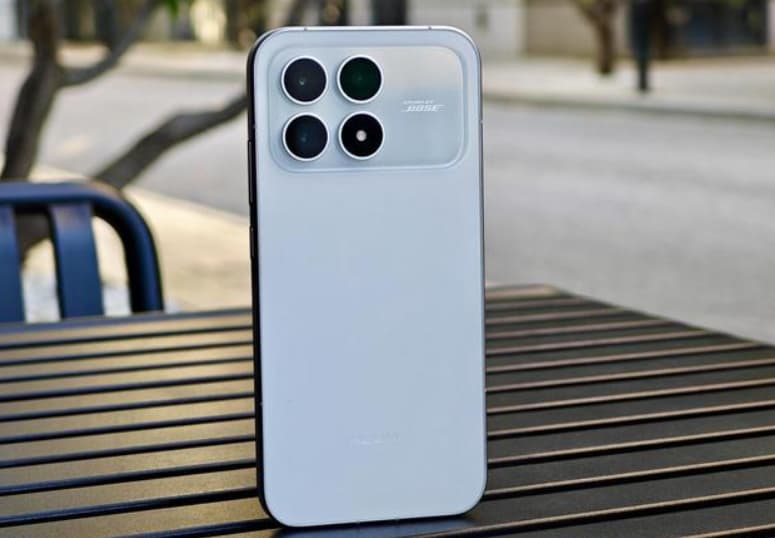
During the process of purchasing and using smartphones, resolution is one of the key parameters that affect the visual experience. The Redmi K90, as a mid-range market-oriented model, offers various options for screen resolution configuration. Users need to make a reasonable selection based on their actual needs and usage scenarios. The following analysis is conducted from three dimensions: screen display, shooting output, and video recording, to help users make a scientific choice of resolution settings.
1. Screen Display: Balancing Image Quality and Power Consumption
Redmi K90 features a 6.59-inch 1.5K OLED straight screen with a resolution of 2510×1156. It supports a 120Hz dynamic refresh rate and high-frequency PWM dimming. This configuration achieves a good balance between clarity and power consumption control.
– Daily usage scenarios: With a 1.5K resolution, when browsing web pages, using social media, or watching videos, the edges of text are sharp, and the image details are rich. Moreover, compared to a 2K screen, it can reduce power consumption by approximately 15% and extend battery life. For instance, when playing 1080P videos continuously for 3 hours at 28℃, the 1.5K screen model consumes about 18% less power than the 2K model.
Outdoor bright light environment: If you need to view the screen under direct sunlight, you can enable the “Sunlight Mode” to increase the brightness. At this time, the pixel density of 1.5K resolution can still ensure the readability of the text, avoiding the overexposure of the picture or color distortion caused by forcibly increasing the resolution.
Game Scenario: When running large-scale games such as “Genshin Impact”, a 1.5K resolution combined with a 120Hz refresh rate can not only present detailed scene textures but also reduce GPU load, preventing frame rate fluctuations caused by excessively high resolution. The actual test shows that in 60 frame mode, the power consumption of 1.5K resolution is approximately 22% lower than that of 2K resolution.
II. Shooting Output: Matching Requirements with Storage Capacity
The camera system of Redmi K90 supports multiple resolution outputs. Users can flexibly choose the resolution according to their shooting purposes.
Daily Record: Select the 3264×1836 pixel mode. The size of a single photo is approximately 3-4MB. This not only meets the sharing requirements on social platforms but also saves storage space. For example, taking 100 photos only occupies about 300-400MB of space, while the highest resolution mode requires approximately 1.3GB.
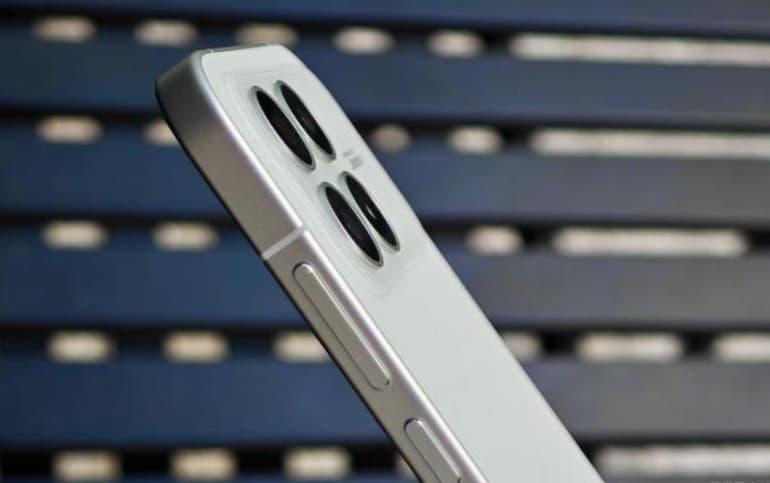
Creative Shooting: If you need post-processing for cropping or printing large-sized photos, you can enable the 4160×3120 pixel (approximately 13 million pixels) mode. In this mode, the photos have rich details and can still retain details such as clothing textures and building brick joints when enlarged, making it suitable for shooting landscapes, buildings, and other subjects.
Continuous shooting mode: When shooting dynamic subjects such as children and pets, it is recommended to set the resolution to the medium level (e.g. 3264×1836 pixels) and enable the “Continuous Shooting Mode”. This setting ensures a high shooting rate while reducing the processing time for each individual photo, and avoids the lag caused by excessively high resolution in continuous shooting.
III. Video Recording: Balancing Picture Quality and Smoothness
Redmi K90 supports multiple video recording resolutions such as 8K at 30 FPS, 4K at 60 FPS, and 1080P at 240 FPS. Users need to choose the appropriate resolution based on the usage scenario.
High-definition recording: When creating travel vlogs or family gatherings, the 4K 30FPS mode can capture rich details and the file size is moderate (approximately 180MB per minute), making it convenient for post-production editing and sharing.