










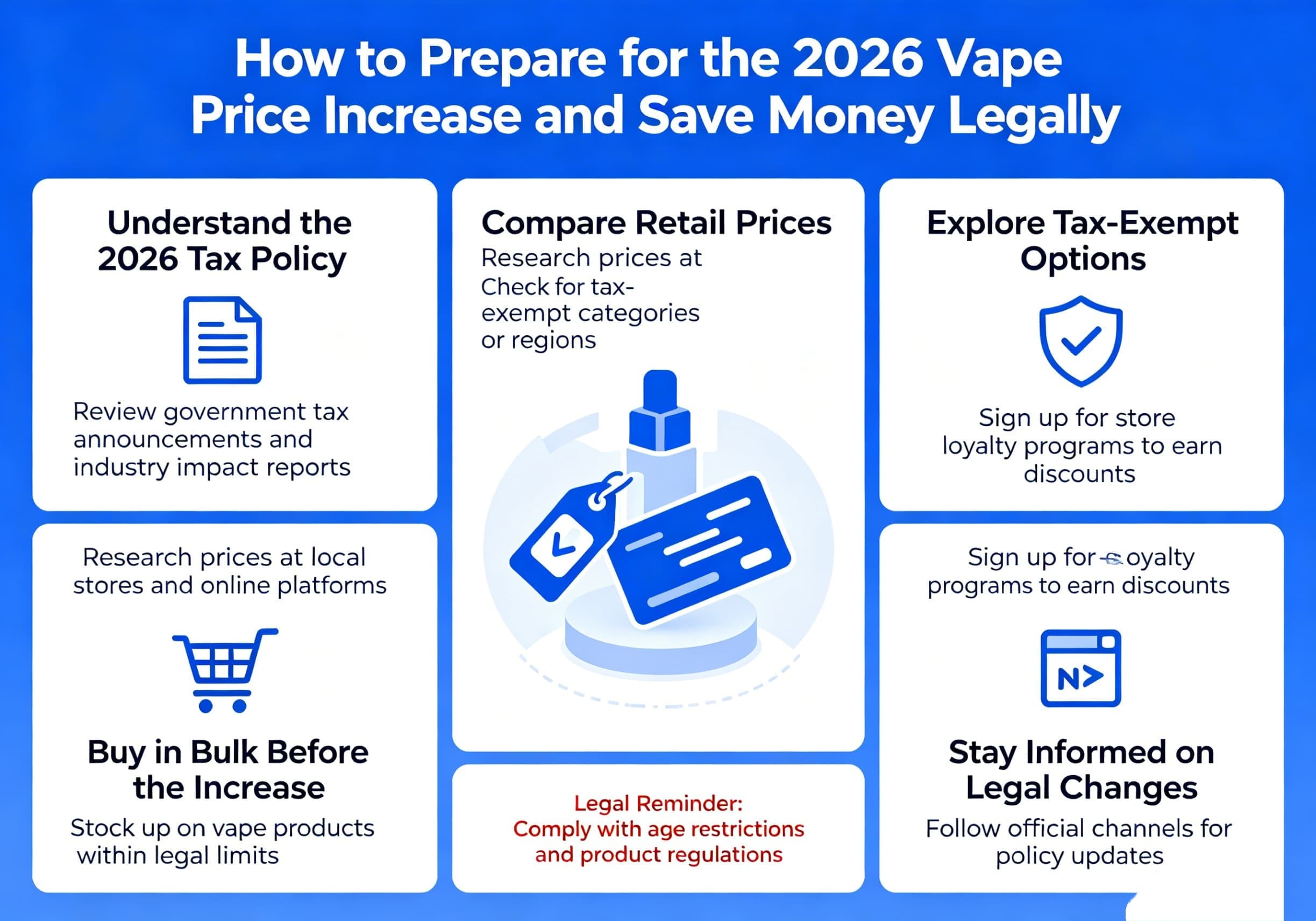
Many vapers are concerned about rising costs as new vape taxes and excise duties take effect in various regions during 2026. Depending on where you live, these changes may significantly increase the price of e-liquids, prefilled pods, and disposable vape products. Several countries and U.S. states have already introduced new taxes or announced higher rates for vaping products.
While higher prices may be unavoidable, there are several legal ways to reduce your vaping expenses and manage your budget more effectively.
Understand What Is Being Taxed
Vape taxes vary by jurisdiction. Some regions tax products based on e-liquid volume, while others apply a percentage-based excise tax on wholesale or retail prices. In many places, prefilled pods, disposables, and bottled e-liquid are all affected.
Understanding your local rules can help you make smarter purchasing decisions.
Switch from Disposables to Refillable Devices
For regular users, refillable pod systems are often more economical than repeatedly purchasing disposable devices.
Benefits include:
- Lower long-term cost
- Less packaging waste
- Greater flavor selection
- Replaceable coils or pods
- Better control over nicotine strength
Although the initial device may cost more, ongoing operating expenses are usually much lower.
Buy from Authorized Retailers
When prices rise, some consumers are tempted by suspiciously cheap products. However, purchasing from authorized retailers helps ensure product authenticity, compliance with local regulations, and product safety.
Counterfeit or non-compliant products may contain unknown ingredients or fail quality-control standards.
Take Advantage of Legal Promotions
Many retailers offer:
- Multi-buy discounts
- Loyalty programs
- Seasonal sales
- Newsletter coupons
- Bundle offers
Planning purchases around legitimate promotions can help offset future price increases.
Reduce E-Liquid Consumption
Small changes in vaping habits can have a noticeable impact on monthly costs.
Ways to reduce consumption include:
- Lowering device wattage
- Using more efficient coils
- Avoiding unnecessary chain vaping
- Selecting nicotine strengths that better satisfy cravings
Many users find that efficient low-power devices use significantly less e-liquid than high-wattage setups.
Consider Long-Term Cost per Puff
The cheapest product upfront is not always the least expensive over time.
When evaluating products, consider:
- E-liquid consumption
- Coil lifespan
- Battery longevity
- Replacement pod costs
- Overall operating expenses
A device with slightly higher initial cost may deliver better value over several months of use.
Stay Informed About Regulatory Changes
Vape regulations continue to evolve worldwide. For example, the UK’s Vaping Products Duty is scheduled to begin in October 2026, while numerous U.S. states have implemented or expanded vape excise taxes.
Following updates from government agencies and reputable industry sources can help consumers prepare for future price changes.
Consider Quitting Nicotine
For users interested in reducing expenses entirely, gradually lowering nicotine consumption or quitting nicotine products altogether can eliminate future tax-related costs.
Many public-health organizations recommend structured cessation programs, nicotine-replacement therapies, and support services for individuals who want to stop using nicotine.
Final Thoughts
The 2026 vape price increases are likely to affect many consumers, but attempting to evade taxes or purchase products through illegal channels can create legal and safety risks. The smartest approach is to focus on legal cost-saving strategies such as using refillable devices, reducing e-liquid consumption, taking advantage of promotions, and staying informed about regulatory changes.
By planning ahead and choosing cost-efficient products, adult consumers can better manage rising vape expenses while remaining compliant with local laws.