









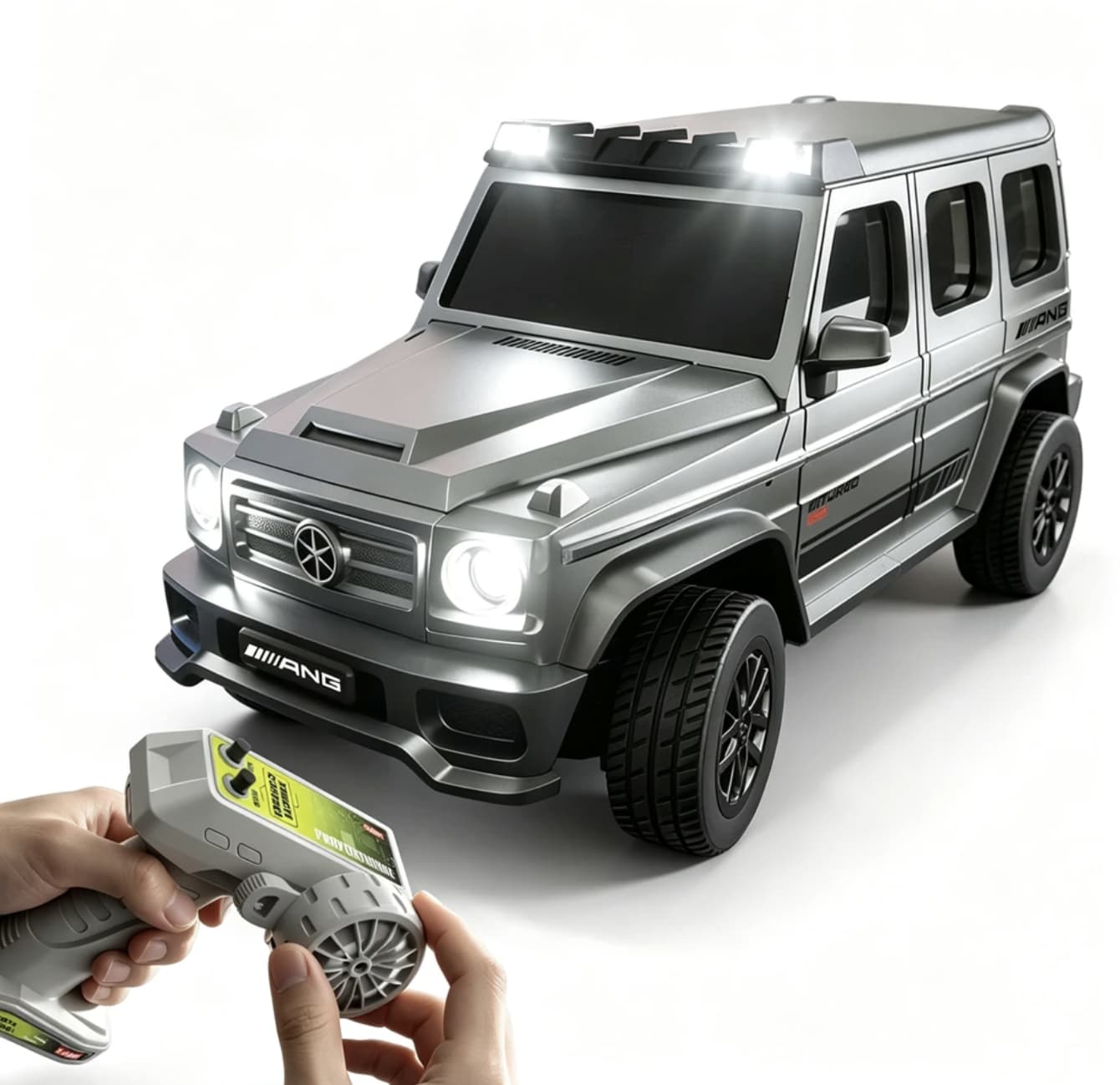
A remote-control car does not need a large chassis or a powerful motor to make driving entertaining. The K23 1/64 Mini RC Car takes a different approach, packing a compact off-road-inspired design, proportional controls and LED lighting into a vehicle that measures just 7.5 cm long.
Designed for small indoor spaces, this rear-wheel-drive (RWD) micro RC car is aimed at hobbyists who enjoy miniature vehicles, tabletop obstacle courses and quick driving sessions without setting up a large track. Its rechargeable battery and 2.4GHz remote controller also make it a practical option for people who want a small RC model to keep on a desk or carry between locations.
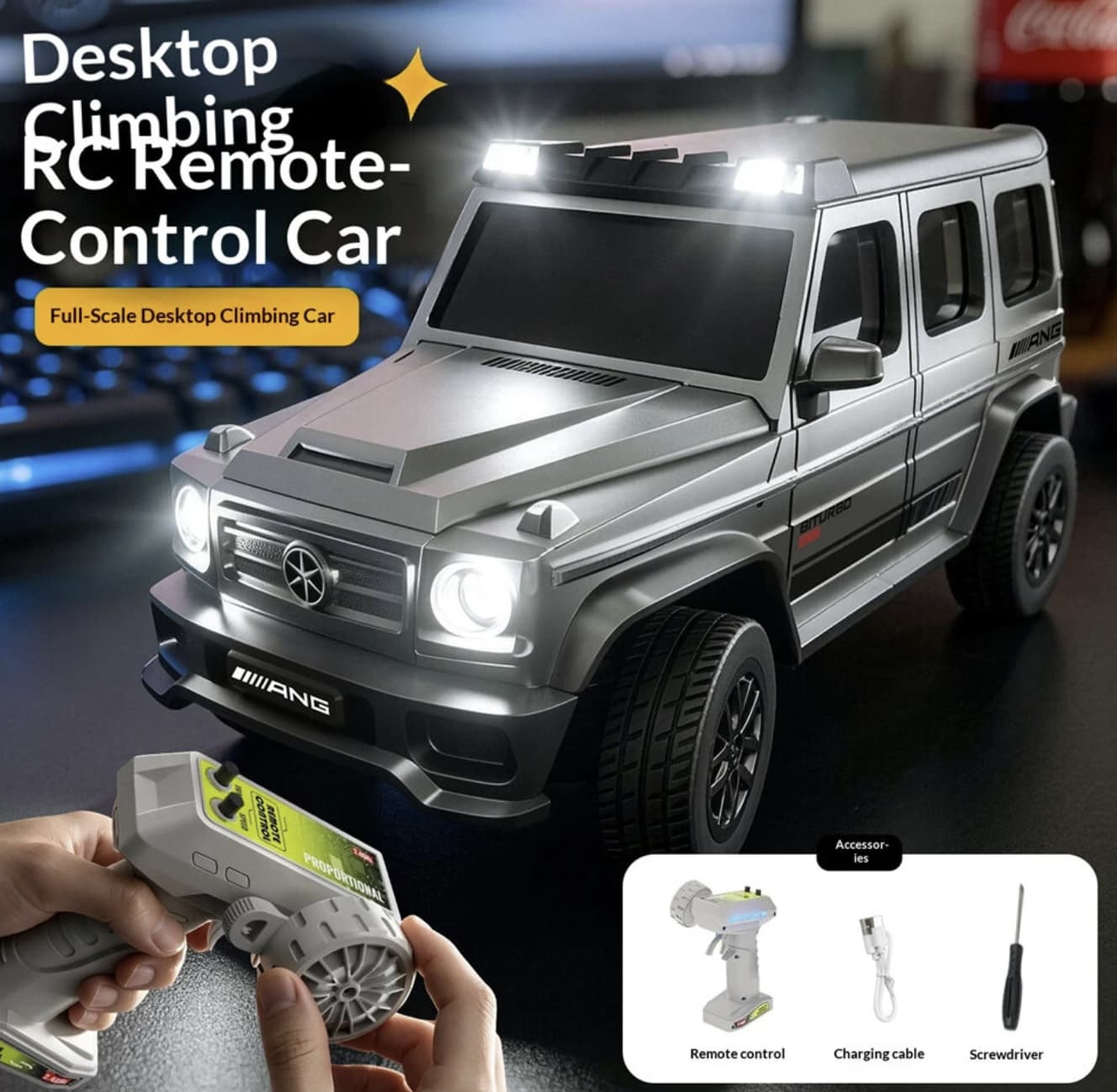
But how much can a car this small actually offer? Here is a closer look at the K23’s control system, driving potential, battery performance and the things to consider before buying.
K23 Mini RC Car: Main Specifications
| Feature | Details |
|---|---|
| Model | K23 |
| Scale | 1:64 |
| Drive system | Rear-wheel drive (RWD) |
| Motor | Mini brushed motor |
| Wireless frequency | 2.4GHz |
| Control | Proportional driving and steering functions |
| Lighting | LED vehicle lights |
| Car battery | 3.7V 150mAh lithium-ion battery |
| Claimed driving time | Approximately 15–20 minutes |
| Charging time | Approximately 25 minutes |
| Listed control range | Approximately 30 metres |
| Vehicle dimensions | 7.5 × 3.7 × 3.5 cm |
| Body material | ABS and electronic components |
Specifications are based on the product listing. Actual battery life and wireless range can vary with driving conditions, and buyers should check the exact channel configuration and package contents for their selected version.
A 1:64 RC Truck That Fits on Your Desk
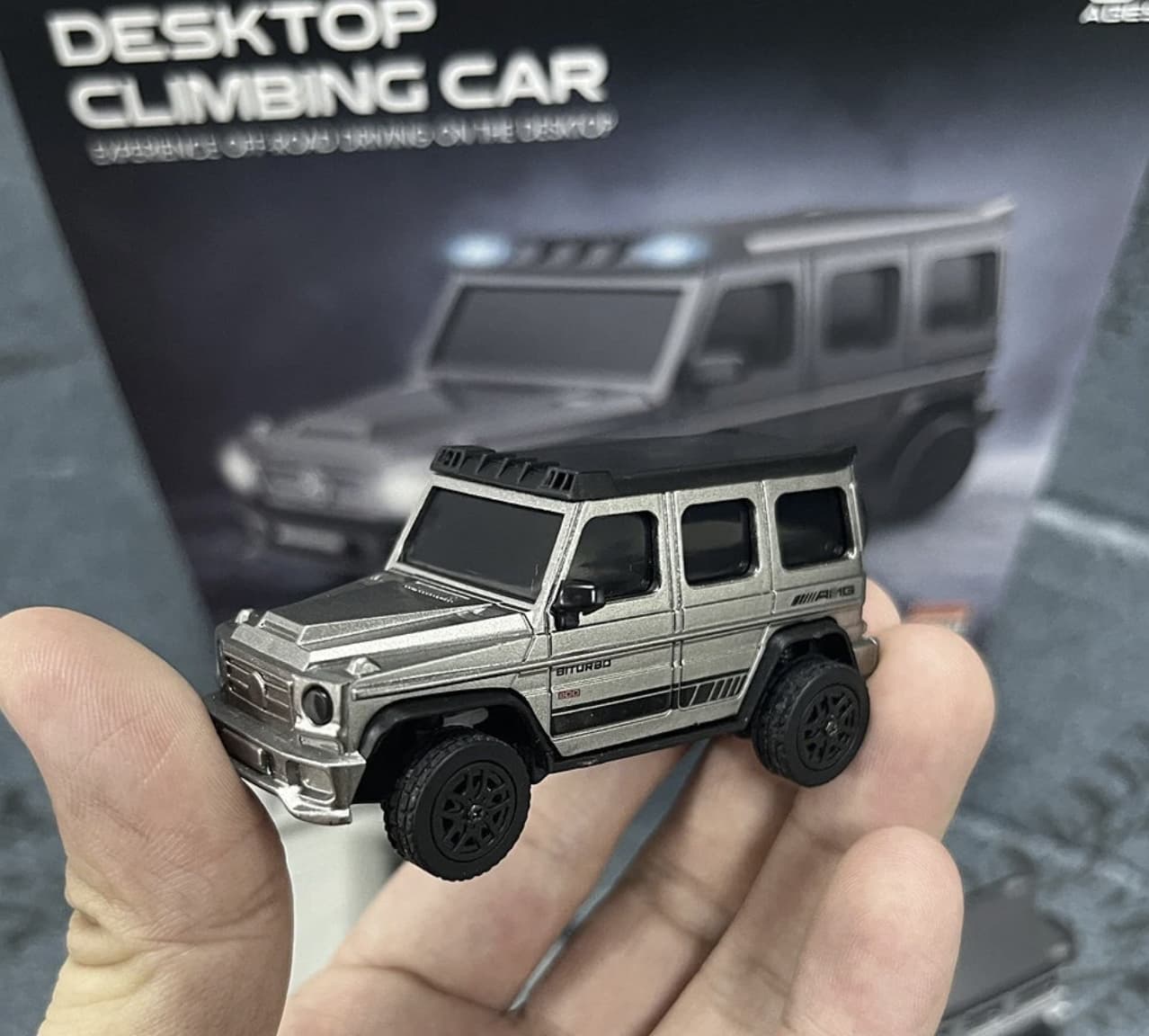
The K23’s biggest advantage is its size. At only 7.5 cm long, it is small enough to fit comfortably on a desk, shelf or compact tabletop course. This makes it different from conventional RC trucks that need more room to turn and manoeuvre.
Its off-road-inspired body gives the miniature vehicle a rugged appearance, while the compact proportions make it suitable for display when it is not being driven. For collectors, that combination of model-car styling and functional remote control is part of the appeal.
The small footprint also makes it easier to create a driving course with everyday objects. Cardboard ramps, books, small boxes and other low obstacles can become part of a miniature route. The experience is less about covering a large area at high speed and more about navigating tight spaces with careful steering.
There is an important limitation, however. The K23’s off-road appearance does not mean it can handle every outdoor surface. Its tiny wheels and chassis are better suited to smooth indoor floors and carefully arranged tabletop obstacles than gravel, thick grass or rough ground.
If you are comparing miniature vehicles for indoor driving, our WLtoys 6402 1/64 mini RC car review explains what to expect from a small-scale RC car on desks, tabletops and smooth floors.”
Proportional Control Makes Small Movements More Useful
For a miniature RC car, control precision matters more than raw size. The K23 advertises proportional remote control, allowing driving inputs to be adjusted rather than relying exclusively on simple on-or-off commands.
This is particularly useful when practising slow turns, approaching narrow gaps or trying to keep the vehicle on a small track. More controlled inputs can make the driving experience feel less abrupt and give users better opportunities to develop their steering skills.
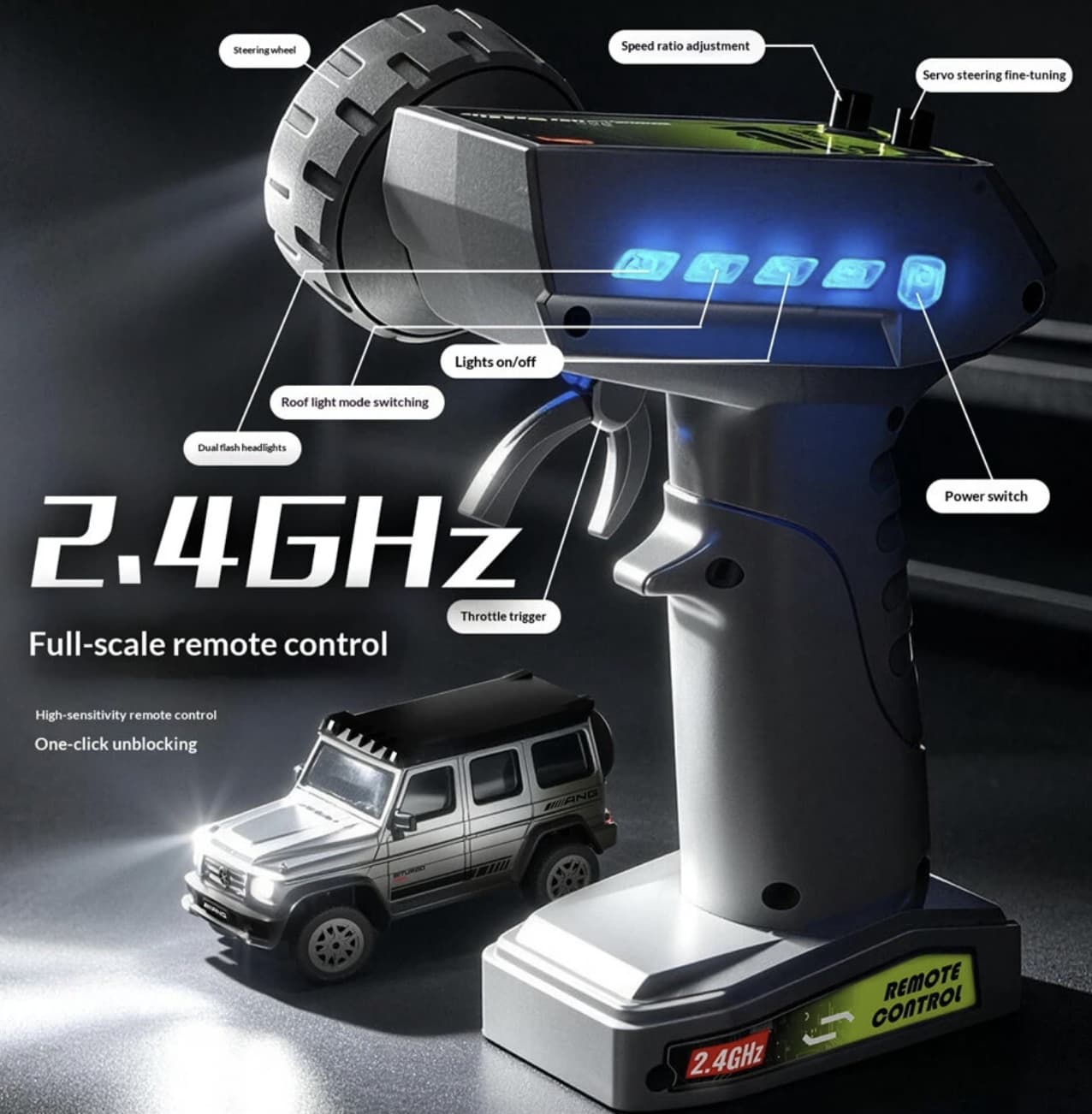
The listed control functions include forward and reverse movement, servo steering, lighting control, mode switching, idle trim and steering trim. These adjustments can help users fine-tune the car’s behaviour, although the exact controls depend on the supplied transmitter and version.
Because the K23 is rear-wheel drive, the rear wheels provide the driving force while the front wheels handle steering. On a small course, this layout can make the car enjoyable to manoeuvre, but available traction will depend on the surface and the way power is applied.
If you are new to RC vehicles, start with wide turns and open spaces before moving on to tighter obstacles. A miniature car can still be challenging to control accurately when the available driving area is only slightly larger than the vehicle itself.
LED Lighting Adds Detail to the Miniature Design
The K23 includes LED vehicle lighting, adding visibility and visual detail to its compact body. The lights help give the truck a more realistic appearance and make it more noticeable during indoor driving sessions.
Lighting control is also listed among the transmitter functions, allowing users to manage the vehicle’s lights through the remote-control system.
The feature is especially appealing to people who enjoy miniature vehicle displays. Rather than serving only as a static model, the K23 can be driven around a small course and then returned to a desk or shelf.
LED lighting should not be confused with a complete night-driving system. The vehicle is still a small RC model, and adequate ambient light is important for seeing obstacles and controlling its movements safely.
Rear-Wheel Drive and Textured Tires for Miniature Obstacles
The K23 combines a rear-wheel-drive layout with textured tires and an off-road-style chassis. These features are intended to provide traction on suitable surfaces and help the car navigate small, stationary obstacles.
For indoor use, a simple homemade course can make the most of this design. Users can arrange gentle slopes, short passages and low barriers to practise approaching obstacles at different angles. Such a setup can provide more variety than repeatedly driving the car across an open tabletop.
However, expectations should remain realistic. A 1:64 vehicle has limited ground clearance and a short wheelbase, so an obstacle that looks small to an adult can be difficult for the car to cross. Sharp edges, loose fabric and deep gaps can stop its wheels or leave the chassis stuck.
For the best results, use firm surfaces, keep obstacles low and avoid forcing the vehicle over barriers it cannot clear. This approach makes the K23 more enjoyable to drive while reducing unnecessary strain on its small components.
For another compact off-road-style model, see our Q246 1/64 mini RC car review, which covers a different approach to miniature driving with 2WD and LED lighting.”
Battery Life: 15–20 Minutes of Driving
The K23 comes with a built-in 3.7V 150mAh lithium-ion battery. According to the product listing, a full charge takes approximately 25 minutes and provides around 15–20 minutes of use.
That runtime is reasonable for short tabletop driving sessions. You can set up a small obstacle course, practise several manoeuvres and take a break while the car charges. Its relatively short charging time also makes it easier to fit a quick session into a busy day.
Actual runtime will depend on driving style, surface resistance, steering activity and how frequently the lights and other functions are used. Continuous manoeuvring around obstacles may produce different results from driving on a smooth, open surface.
The transmitter requires three 1.5V AAA batteries, which are not included according to the listing. Remember to account for those batteries when calculating the total cost of getting started.
Since the vehicle uses a built-in battery, buyers should also check the charging instructions and use the supplied USB charging cable as directed.
2.4GHz Remote Control and a Listed 30-Metre Range
The K23 uses a 2.4GHz wireless connection, with a listed control distance of approximately 30 metres. That gives it flexibility for use around a room, although a miniature car is often more enjoyable when driven within a much smaller area.
The remote controller supports forward and reverse movement, steering, light control and several adjustment functions. These controls provide more flexibility than a basic toy that offers only a few preset actions.
The product page contains inconsistent channel information across its listing details, so it is worth confirming the exact transmitter configuration before ordering. Do not assume that every version has the same number of channels or identical controls.
For most indoor users, a stable connection and predictable response are more important than reaching the maximum advertised distance. Keep the vehicle within sight and avoid operating it near stairs, table edges or areas where it could fall and become damaged.
Who Is the K23 1/64 Mini RC Car For?
The K23 is best suited to people who enjoy small-scale vehicles and compact driving challenges.
Miniature RC collectors may appreciate its 1:64 proportions, off-road styling and LED details. It can serve as a display model while also offering the option of active driving.
Desk-toy enthusiasts can use it for short breaks or create small obstacle courses on a suitable surface. Its small dimensions make storage and transport straightforward.
RC beginners can practise basic steering, forward and reverse control, and low-speed manoeuvres without needing a large driving area. The small size can make precision challenging, but it also keeps the setup simple.
Gift buyers may consider it for someone interested in miniature cars or remote-control hobbies. Check the manufacturer’s age guidance and supervise younger users as appropriate, especially around small components and charging equipment.
The K23 is less suitable for drivers who want high speed, outdoor trail performance, advanced suspension or long sessions between charges. Those priorities generally call for a larger RC car with more capable hardware.
What to Check Before Buying the K23
Before placing an order, review these practical points:
- Vehicle size: At 7.5 cm long, the K23 is a micro RC car, not a full-size off-road truck.
- Driving surface: Smooth indoor flooring and carefully constructed tabletop courses are the most sensible starting points.
- Battery runtime: The advertised 15–20 minutes is an estimate rather than a guaranteed result.
- Transmitter batteries: Three AAA batteries are listed as required but not included.
- Control configuration: Confirm the channel count and functions of the exact version being sold.
- Package contents: The listing specifies the car, built-in battery, transmitter, manual and USB charging cable; verify these details before checkout.
- Intended use: Decide whether you want a collectible miniature, a desk-driving toy or a vehicle for more demanding RC terrain.
These details will help you decide whether the K23’s compact format matches your expectations.
Final Verdict: Is the K23 Mini RC Car Worth Considering?
K23 1/64 Mini RC Car is designed around convenience and precision rather than speed or size. Its 7.5 cm body, rear-wheel-drive layout, proportional controls, LED lighting and rechargeable battery make it an appealing option for miniature RC fans who want something easy to keep on a desk or use in a small indoor space.
Its strongest feature is the opportunity to build a miniature driving experience almost anywhere there is a suitable flat surface. A few simple obstacles can turn a tabletop into a small technical course, giving the car a purpose beyond being a static model.
The main compromises are its limited scale, modest battery capacity and restricted ability to tackle rough terrain. It should be approached as a micro RC car for indoor manoeuvres, not as a replacement for a larger rock crawler or high-speed RC truck.
If you value compact size, controlled driving and miniature off-road styling, the K23 is worth considering. Check the current price, colour options, transmitter details and package contents on the Banggood K23 Mini RC Car product page before making your decision.