









The earclip earbud market has grown rapidly, with options now spanning everything from affordable $30 models to premium offerings priced at $250 or more. With so many choices competing for attention, finding a capable budget option can be challenging. The Lenovo RS103 targets the entry-level end of the market, offering an inexpensive way to experience the open-ear, earclip design without making a significant investment.
But here’s the question every budget-conscious buyer asks: Is a $30 earclip earbud a smart purchase, or is it a waste of money that will leave you wishing you’d spent more?
To answer that, let’s look at what the premium end of the market offers and see exactly what you gain—and lose—by choosing the budget option.

The Premium Benchmark: What $70+ Gets You
To understand the value proposition of the Lenovo RS103, we first need to establish what a “good” earclip earbud looks like. The $70–$130 segment has become the sweet spot for quality clip-on earbuds.
Take the EarFun Clip, a well-regarded model in this category. Priced around $70–$80, it offers:
-
Sound quality: Decent audio for open earbuds with satisfying mids and enough energy for workout tracks
-
Comfort: A flexible silicone-coated nickel-titanium alloy arm that holds firm without pinching, comfortable enough for all-day wear
-
Battery: 10 hours on a single charge, 40 hours total with the case
-
Features: Bluetooth 6.0, LDAC support for higher-quality audio, IP55 sweat resistance
The Baseus Bowie MC2, another popular choice at around $60, improves on its predecessor with superior sound and a more comfortable design featuring an upgraded “slim wave C-ring” and air cushions in three sizes . It offers 11.5 hours of battery life and an IP67 rating—fully waterproof and dustproof .
These are the benchmarks the Lenovo RS103 must compete against. At $30, it’s roughly half the price. The question is: what half did you lose?

What $30 Likely Gets You: The Practical Trade-offs
Based on user experiences across the budget earclip segment, here’s what you can expect from a $30 entry like the Lenovo RS103.
The Good: You Get Into the Category
The biggest advantage is simply access. For $30, you can experience the open-ear, clip-on form factor without a significant financial commitment. You can decide if this style of earbud works for your ears and your lifestyle before investing more.
The form factor itself is genuinely appealing: open-ear earbuds allow you to hear your surroundings, which is safer for running, cycling, and commuting, and they avoid the ear fatigue that comes with traditional in-ear buds . The Lenovo RS103 will deliver this core benefit.

For users with sensitive ear canals or those who wear glasses, clip-on earbuds are a game-changer, and the budget entry point is the most accessible way to try them. The flexible C-bridge design common to these earbuds—including the RS103—typically accommodates glasses comfortably .
The Compromises: Where Budget Cuts Show
The $30 price point exacts a toll in several key areas:
1. Comfort and Fit
Premium earclip earbuds invest heavily in the materials and engineering of the clip itself. The EarFun Clip’s nickel-titanium alloy arm is both flexible and sturdy, adapting to different ear shapes without pinching . Budget models often use cheaper, less refined materials.
The larger problem: many budget earclip earbuds suffer from poor weight distribution. The speaker and battery housing sit at different points, and cheap models can cause pressure points or feel “top-heavy” on your ear . This means you might not be able to wear them for extended periods without discomfort.
2. Sound Quality
This is where the gap widens most dramatically. Open-ear clip-on earbuds already face an uphill battle—because the speaker doesn’t sit inside your ear canal, you naturally lose bass response, isolation, and overall detail .
Premium models compensate with better drivers (the EarFun Clip 2 uses a 12mm titanium composite driver), advanced tuning, and high-quality codecs like LDAC . Budget models use smaller, cheaper drivers that result in thinner, flatter sound.
The Lenovo RS103, at $30, will likely deliver adequate sound for podcasts, audiobooks, and casual music listening—but it won’t deliver the richness or fullness of its premium counterparts. If you’re a music lover who values sound quality, this is a meaningful compromise.
3. Build Quality and Durability
CNET’s review of the Baseus Bowie MC2 notes that early budget clip-ons “sounded pretty mediocre and looked pretty cheap, too” . Premium models use better materials, have tighter tolerances, and feel more refined.
For the RS103, you can expect:
-
Less refined plastics and finishes
-
Potentially weaker hinges or clips that lose tension over time
-
Fewer water resistance features (or none at all)
-
A charging case that feels cheap and may not protect the buds well
4. Features
Premium models offer a suite of extras: full-featured companion apps with customizable EQ, LDAC support for high-resolution audio, multipoint Bluetooth for connecting to two devices simultaneously, gaming modes to reduce latency, and better call quality with multiple microphones and ENC (environmental noise cancellation) .
A $30 budget model typically strips away most of these extras. You’ll get basic Bluetooth connectivity and perhaps touch controls, but little else.
5. Call Quality
The EarFun Clip, at $70, offers good voice-calling capabilities with two microphones per bud that help isolate your voice from background noise . Budget models typically have inferior microphone arrays, resulting in call quality that suffers in noisy environments—a significant drawback if you plan to use them for work calls or meetings.
6. Sound Leakage
Budget earclip earbuds tend to have more sound leakage, especially at higher volumes . This means people near you—on public transport, in an office, or at the gym—may hear your audio. Premium models incorporate better acoustic engineering to direct sound more precisely toward your ear canal, minimizing this issue .
The Verdict: Who Should Buy What?
The answer isn’t as simple as “premium is always better.” It depends entirely on how you plan to use your earbuds.
Choose the Lenovo RS103 if:
-
You’re a first-time user of earclip earbuds and want to test the form factor affordably
-
You primarily listen to podcasts, audiobooks, or spoken-word content (sound quality is less critical)
-
You use earbuds for short periods (under 2 hours at a time, minimizing comfort issues)
-
Budget is your primary constraint, and you need to stay under $40
-
You don’t need advanced features like multipoint connectivity, LDAC, or app control
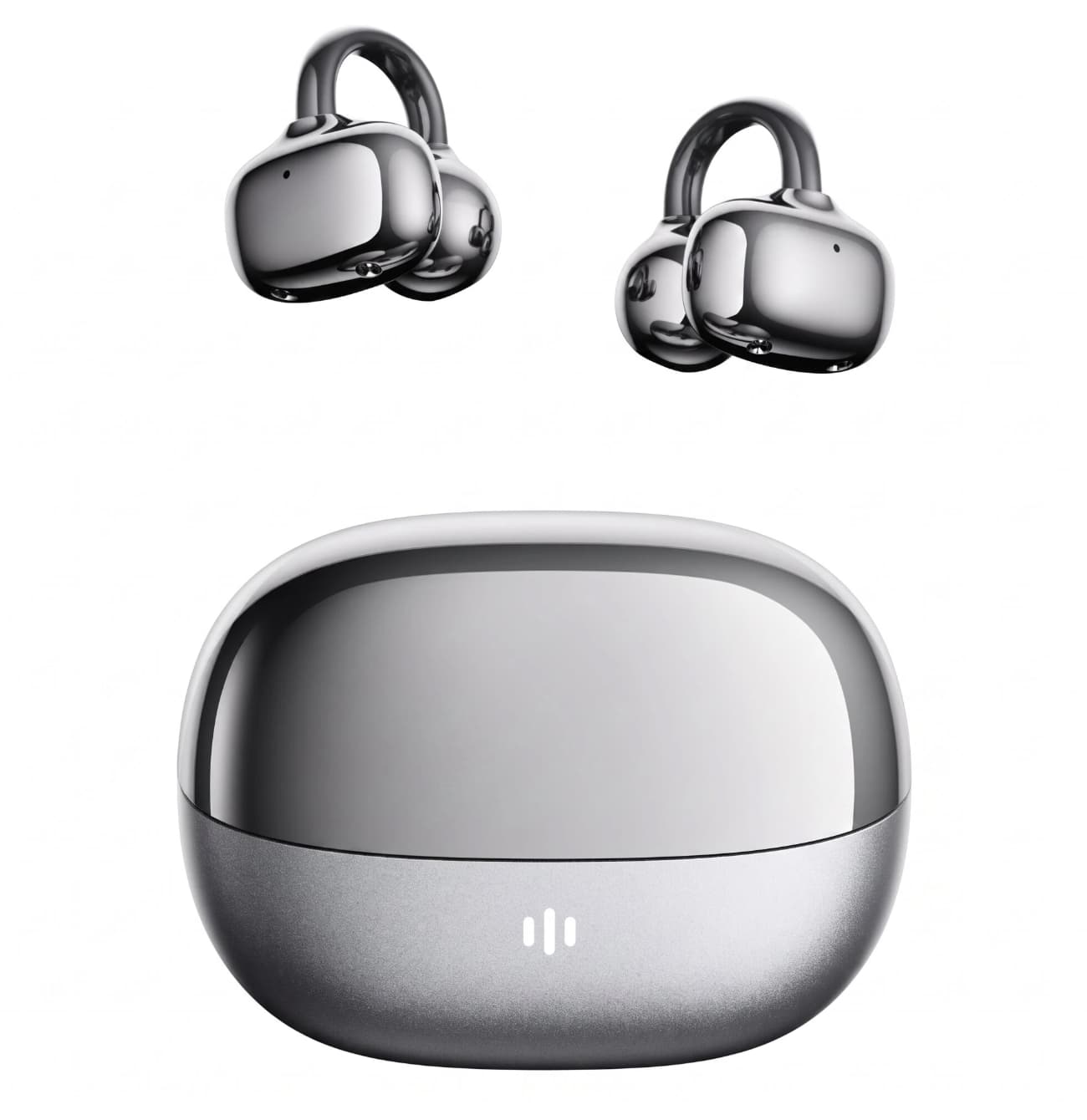
Invest in a premium model ($60–$80) if:
-
Sound quality matters to you—you enjoy music and want a richer, more detailed listening experience
-
You wear earbuds for extended periods (3+ hours daily) and need all-day comfort
-
You want reliability and durability—you don’t want to replace your earbuds in 6 months
-
You need good call quality for work calls or frequent phone conversations
-
You use earbuds during workouts and need better water resistance
-
You want a better overall experience—better case, better controls, better features
The Bottom Line: Value Is in the Details
At around $30, the Lenovo RS103 isn’t necessarily a bad pair of earbuds—it’s simply a budget model built around a lower price point. Like most affordable audio products, it makes some compromises to keep costs down, and whether those compromises matter depends on how you plan to use it.
For casual listeners who want to explore the open-ear, clip-on design without spending much, the RS103 can be a sensible starting point. However, users who prioritize sound quality, all-day comfort, or consistently clear calls may find it worthwhile to spend more on a higher-end alternative.
The jump from roughly $30 to $70 isn’t always reflected in a longer specification sheet. In everyday use, it can be the difference between something that’s simply good enough and something you genuinely enjoy wearing and listening to every day. To see which premium models are worth your money, check out our roundup of best earclip earbuds.