









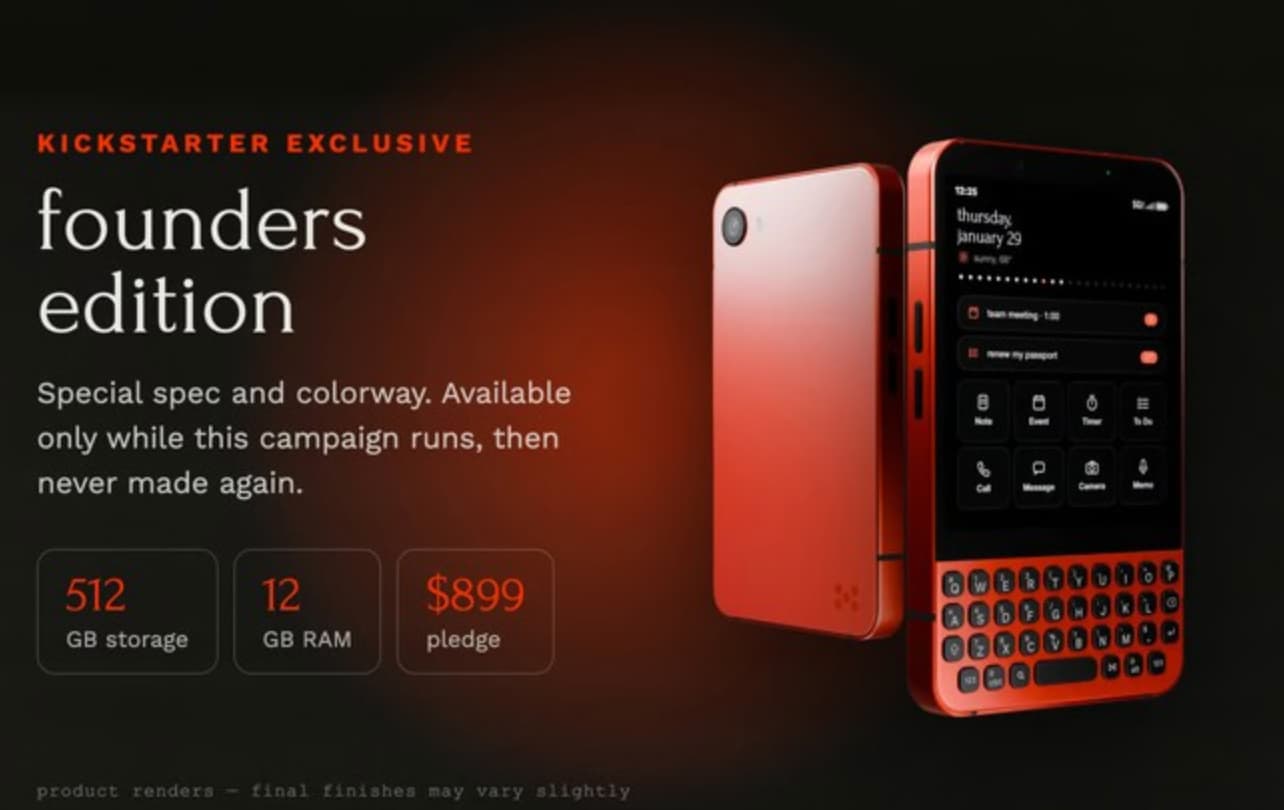
The Minimal Phone 2 is becoming more interesting as its Kickstarter campaign progresses. Originally announced with 8GB of RAM in its standard configuration, the compact Android phone is now set to receive a memory upgrade as the crowdfunding campaign approaches the $1.7 million level.
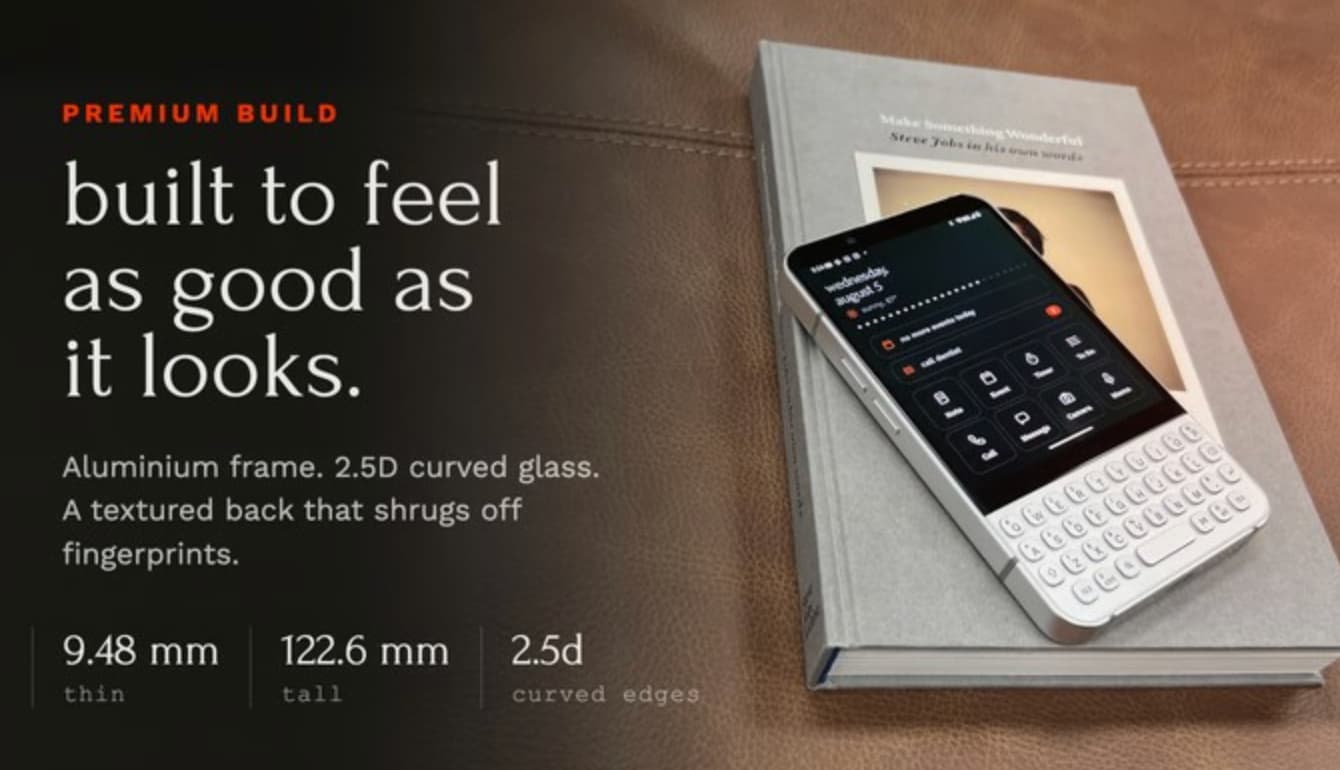
That change sounds simple, but it is more significant when you look at what Minimal is trying to build. The Phone 2 is not competing with conventional flagship phones on screen size or camera hardware. Instead, it combines a small 3.92-inch OLED display, a physical QWERTY keyboard, Android-based software and a compact body designed around focused smartphone use.
The latest RAM upgrade therefore raises a bigger question: does the additional memory make the Minimal Phone 2 a more practical everyday smartphone, or is its real appeal still the unusual keyboard-first experience?
Minimal Phone 2 RAM Upgrade Changes the Standard Configuration
The standard Minimal Phone 2 was originally listed with 8GB of RAM, while the Kickstarter Founders Edition offered a higher memory configuration.
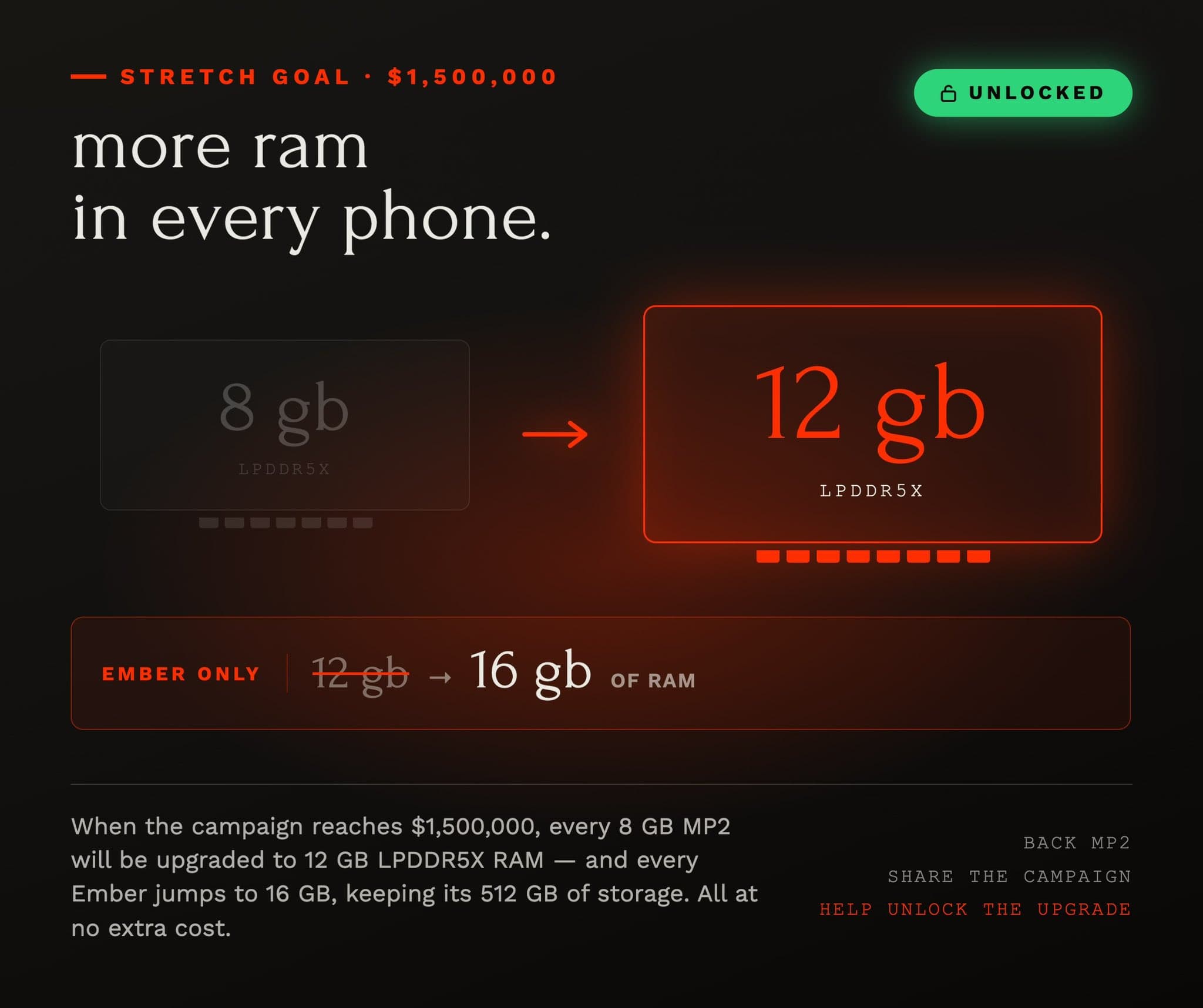
Minimal has since announced an upgrade that increases the standard model to 12GB of RAM. The campaign’s official update also indicates that existing 8GB backers can receive the higher-memory configuration if the relevant funding milestone is reached.
This is more than a specification-sheet improvement.
The Minimal Phone 2 runs an Android-based operating system and is designed to handle normal smartphone applications rather than functioning as a restricted feature phone. More RAM can therefore give the device additional headroom when switching between messaging, navigation, email, productivity tools and other applications.
However, 12GB of RAM should not automatically be interpreted as flagship-level performance. Memory capacity is only one part of the equation. The Dimensity 8300 processor, software optimization and application compatibility will ultimately determine how responsive the phone feels in everyday use.
Why the Minimal Phone 2 Is Different From a Normal Smartphone
The most interesting thing about the Minimal Phone 2 isn’t actually the 12GB RAM.
It is the combination of physical keyboard, compact OLED display and Minimal OS.
The phone measures approximately 122.6 × 72 × 9.48mm, making it considerably smaller than the large-screen smartphones that dominate today’s market. Its 3.92-inch OLED display has a 1080 × 1240 resolution and a 90Hz refresh rate.
That small screen changes the way the device is likely to be used.
Watching long videos or browsing image-heavy websites will naturally be less comfortable than on a conventional 6.5-inch or larger smartphone. But the smaller display can also make the phone feel more intentional. Users can still access smartphone functions while having less physical screen space for endless scrolling.
This is an important distinction because Minimal is not trying to remove Android completely. Instead, the company is attempting to make everyday smartphone functions more accessible without making the device feel like another large entertainment screen.
The QWERTY Keyboard Remains the Main Attraction
The physical keyboard is still the feature that gives the Minimal Phone 2 its identity.
Instead of relying entirely on an on-screen keyboard, users can type messages, notes and other short-form content using physical keys. That could be particularly appealing to people who prefer tactile feedback when writing.
The keyboard also works with the phone’s software-focused approach. Minimal OS is built on Android and includes tools intended to make common actions quicker while reducing unnecessary interaction with individual apps.
That makes the Phone 2 different from simply buying a small Android phone.
The hardware and software are being designed around a particular behavior: use the phone when you need it, then put it away.
Whether that philosophy works in practice will depend heavily on keyboard comfort, software responsiveness and how well the interface handles everyday tasks.
A 90Hz OLED Display Replaces the E-Ink Approach
One of the biggest changes from the previous Minimal Phone is the move away from E-Ink.
The Minimal Phone 2 uses a 3.92-inch OLED panel with a 90Hz refresh rate. The change makes the new model much more conventional from a display perspective and should provide a smoother experience for applications, animations, maps and other visual content.
That creates an interesting contradiction.
The original Minimal Phone’s E-Ink display was itself part of the distraction-reduction concept. By moving to OLED, the Phone 2 becomes much more capable as a conventional smartphone.
But that does not necessarily defeat the idea behind Minimal.
The company is shifting more of the anti-distraction responsibility from the display hardware to the operating system and physical design. The smaller screen, keyboard and software controls now have to do more of the work that E-Ink previously handled naturally.
In other words, the Minimal Phone 2 is less about making the screen deliberately slow and more about making the entire phone less tempting to use unnecessarily.
Dimensity 8300 Gives It Enough Headroom for Android
The phone uses MediaTek’s Dimensity 8300 chipset.
This is an important choice because the Minimal Phone 2 is not supposed to be a simple minimalist feature phone. It retains Android compatibility while adding modern connectivity and smartphone functions.
The processor should provide enough performance for everyday activities such as messaging, web browsing, navigation and productivity applications.
The 12GB RAM upgrade also gives the device more memory headroom than the original 8GB configuration.
Still, buyers shouldn’t purchase the phone because the RAM number looks impressive. The more meaningful question is whether Minimal can keep the software responsive while maintaining its low-distraction philosophy.
A highly optimized 8GB phone can feel better than a poorly optimized 12GB phone. The real test will come when consumers begin using the finished hardware.
Camera and Battery Specifications
The Minimal Phone 2 also moves beyond the deliberately limited hardware of its predecessor.
It features a 50MP rear camera with an f/1.8 aperture and a 20MP front-facing camera. The device also carries a 3,000mAh battery with support for 27W wired charging and 15W wireless charging.
The battery capacity looks small by 2026 standards, but the phone’s compact OLED display changes the comparison.
A smaller panel does not automatically guarantee excellent battery life, of course. Processor efficiency, network connectivity, brightness, software behavior and user habits will all have an impact.
This is another area where the final retail product matters more than the specification sheet.
If Minimal manages to optimize the software effectively, the 3,000mAh battery could be sufficient for its intended audience. If background applications and 5G usage consume more power than expected, the compact battery could become one of the phone’s biggest limitations.
Connectivity Is More Complete Than the Design Suggests
The Minimal Phone 2 isn’t minimalist in terms of connectivity.
The specifications include 5G, Bluetooth 5.4, NFC, Wi-Fi 6E and dual-SIM support using a physical SIM and eSIM. There is also a side-mounted fingerprint reader, a 3.5mm headphone jack, dual speakers and dual microphones.
The USB-C port supports USB 3.2, DisplayPort output and USB-C audio.
These features are significant because they prevent the phone from becoming overly restrictive.
Someone could use the Minimal Phone 2 as a normal connected smartphone while still taking advantage of the smaller display and physical keyboard.
That balance is arguably more important than the RAM upgrade itself.
The $599 Price Makes the RAM Upgrade More Interesting
Kickstarter pricing starts at $599 for the 256GB configuration, while the 512GB version is priced higher. The campaign also includes a special Founders Edition with its own memory and storage configuration.
At $599, the Minimal Phone 2 isn’t trying to be the cheapest Android smartphone available.
That means buyers are paying for the concept as much as the hardware.
A conventional phone at this price can offer a much larger display, more cameras and a more familiar design. The Minimal Phone 2 instead spends part of its hardware budget on features that are increasingly uncommon, especially the physical QWERTY keyboard and 3.5mm headphone jack.
The move to 12GB RAM improves the specification without changing the phone’s basic identity.
For existing backers, the upgrade is particularly appealing because additional memory can extend the phone’s practical lifespan as Android applications become more demanding.
The Real Question Is Whether the Concept Works
The Minimal Phone 2 has enough hardware to look convincing on paper.
It has a modern OLED panel, a Dimensity 8300 processor, 5G, up to substantial storage, wireless charging and a much larger RAM configuration than originally planned.
But none of those features answers the most important question.
Is a small QWERTY Android phone actually better for everyday use?
For users who spend much of their day writing messages, emails, notes and short replies, the physical keyboard could be a genuine advantage.
For people who primarily watch video, edit photos, play games or browse social media, the 3.92-inch display will probably feel restrictive.
That means the Minimal Phone 2 isn’t necessarily trying to beat mainstream smartphones.
It is trying to attract people who want a smartphone that encourages a different pattern of use.
What the 12GB Upgrade Really Means
The jump to 12GB RAM is useful, but it shouldn’t be viewed as the reason to buy the Minimal Phone 2.
The more important development is that Minimal is gradually turning a niche minimalist-phone concept into a more capable Android smartphone.
The original product leaned heavily on hardware limitations to discourage phone use. The Phone 2 takes a different route: a responsive OLED screen, modern connectivity and a capable processor are combined with a smaller physical footprint, a QWERTY keyboard and software designed to reduce distraction.
That is a much harder balance to achieve.
The phone needs to remain useful enough that owners don’t feel forced to carry a second device, while still being different enough from a conventional smartphone to justify its price.
The 12GB RAM upgrade helps with the first part of that equation.
The keyboard and compact design are responsible for the second.
Final Take
The Minimal Phone 2 is becoming one of the more unusual smartphone projects of 2026, not because it has the highest specifications, but because it deliberately moves away from the standard smartphone formula.
The 12GB RAM upgrade gives the standard model more breathing room, while the Dimensity 8300, 90Hz OLED display, 5G connectivity and modern charging features make it far more capable than a traditional minimalist phone.
But the biggest reason to consider the device remains the same: the physical keyboard and the different way it encourages users to interact with Android.
For buyers who want a compact productivity-focused phone, that combination could be compelling. For users who want a large display, powerful cameras or an entertainment-first smartphone, there are more conventional choices that make better sense.
The Kickstarter campaign’s growing funding shows that there is interest in the idea. The real test will begin when the finished phones reach users and the keyboard, battery life, software and everyday Android experience can be judged outside the specification sheet.