









On November 12th, a digital blogger released a design drawing of the imaging module of a new mobile phone.
Some netizens speculate that this might be the imaging module of Huawei’s upcoming Mate80 series mobile phones.
Judging from the exposed pictures, the camera module of Huawei Mate80 series continues the series’ signature centered circular “star ring” design. The overall structure is composed of double-layer concentric circular rings, maintaining the consistent recognition of this series.
The internal layout of the module is strictly symmetrical: there is a lens on each side of the top, two vertical bar openings (possibly for flash) placed side by side in the middle, and a larger circular lens in the center of the bottom.
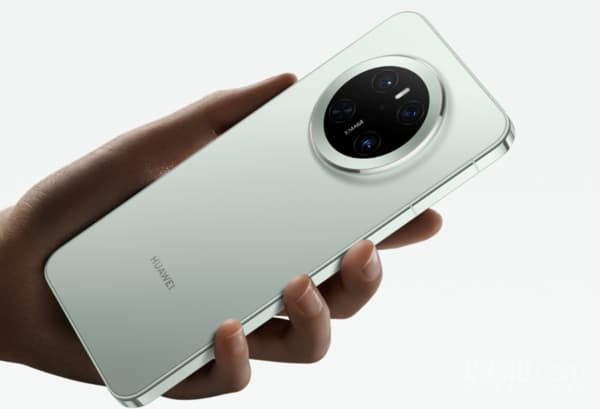
It is worth noting that there is a circular punch hole at the center of the circular module. It is speculated that this punch hole might correspond to a multispectral lens.
It is understood that the Huawei Mate80 series will be the first to be equipped with the Kirin 9030 chip.
In terms of the screen, the entire Mate80 series is expected to return to a straight screen design. The standard version is equipped with a 6.75-inch 1.5K screen, while the Pro and later versions will be upgraded to a 6.89-inch 1.5K dual-layer OLED straight screen, with a screen-to-body ratio as high as 94.5%, a peak brightness of up to 4000 nits, and support for 3D face recognition.
The imaging system has also been upgraded. The Pro+ version is expected to be equipped with a 1-inch large sensor main camera, combined with a ten-stop physical variable aperture and RYYB color filter array, significantly enhancing the low-light shooting capability.
In terms of battery life, the Huawei Mate80 series is expected to be equipped with a 6000mAh silicon-carbon anode battery across the board, supporting 100W wired fast charging and 80W wireless fast charging.
It is worth noting that Pro and above models may integrate a micro cooling fan in the camera module to ensure continuous release of high performance. In addition, the entire series will support two-way satellite communication functions, enhancing connectivity in scenarios without ground networks.