










Introduction: The Frustration of Modern Streaming
We’ve all experienced that moment—the video call freezing mid-sentence, the movie buffering at the climax, the presentation stuttering during the key slide. In our increasingly wireless world, we often blame “bad signal” without understanding why it happens.
But what if your wireless HDMI system could intelligently navigate signal traffic, like a skilled driver switching lanes to avoid congestion? This isn’t futuristic thinking—it’s the reality of modern HDMI wireless video transmission, where intelligent frequency management solves one of wireless video’s most persistent challenges.
The Silent Spectrum War: Understanding Wireless Congestion
Our Crowded Airwaves
Every day, our homes and offices become more crowded—not with people, but with signals. Wi-Fi routers, Bluetooth devices, smart home sensors, and neighboring networks all compete for limited radio space. Traditional wireless HDMI extender systems often struggle in these environments, like trying to have a clear conversation in a noisy room.
The result? Dropped frames, pixelated images, and that frustrating spinning wheel. This is where next-generation wireless HDMI transmitter and receiver technology separates itself from earlier attempts.
Why 5GHz is Your Wireless Highway
Beyond the Basics
You’ve probably seen “5GHz” listed as a feature, but what does it actually mean for your video quality? The 5GHz band offers significantly more space than the crowded 2.4GHz spectrum most household devices use. Think of it as moving from a narrow country road to a multi-lane highway.
But space alone isn’t enough—what happens when even that highway gets busy? This is where intelligent frequency management transforms a good wireless HDMI connection into a great one.
The Intelligence Behind Automatic Channel Tuning
How Smart Frequency Management Works
The SVBONY TansAir3 employs “5G automatic channel tuning”—a feature that sounds technical but operates with elegant simplicity. Here’s the practical reality:
- Continuous Environmental Scanning
- The system constantly monitors signal strength and interference
- It assesses multiple channels in real-time, 24/7
- No manual intervention required—it works autonomously
- Intelligent Channel Selection
- When congestion is detected, it automatically shifts to clearer channels
- The system predicts potential interference before it affects your video
- Multiple factors are considered for optimal path selection
- Seamless User Experience
- Channel changes happen without video interruption
- No blinking screens or connection drops
- Maintains low latency HDMI performance throughout
Real-World Applications
This technology proves particularly valuable for:
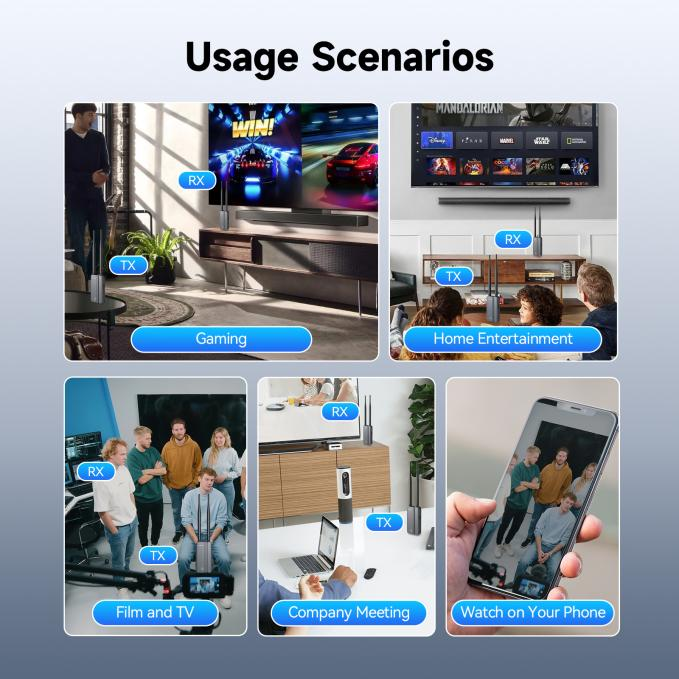
- HDMI for conference room setups with multiple simultaneous wireless devices
- HDMI multi-room streaming through various interference sources
- HDMI for live streaming where reliability is non-negotiable
Transformative Benefits in Daily Use
The Busy Family Home Scenario
Imagine streaming a movie while family members are video calling, gaming online, and using smart home devices. A standard wireless HDMI extender might stutter or drop resolution. With automatic channel tuning, your wireless HDMI transmitter and receiver maintains a stable, high-quality connection by continuously finding the clearest path through the wireless landscape.
Professional Environment Demands
In conference rooms and business settings, video lag during important presentations is unacceptable. HDMI for live streaming of product launches or corporate announcements demands absolute reliability. Automatic frequency selection ensures your video remains crisp and stable, regardless of how many devices are connected nearby.
Whole-Home Entertainment Systems
When using HDMI multi-room streaming to send content throughout your home, the signal must navigate various obstacles. Intelligent channel management ensures consistent quality in every room, from basement home theaters to bedroom displays.
The Synergy with Other Advanced Features
Enhancing Low Latency Performance
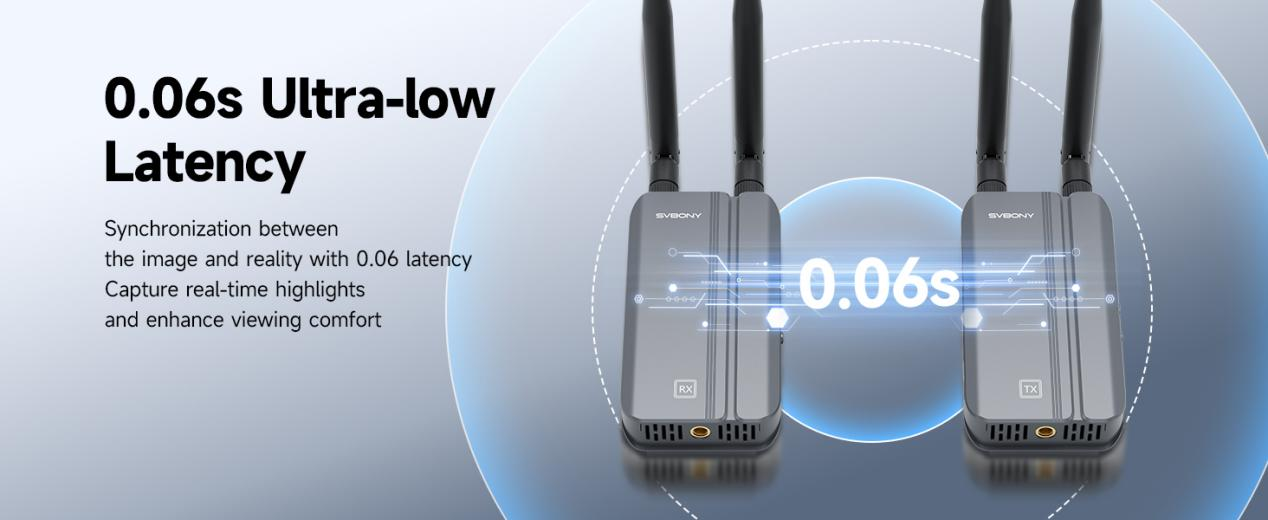
A true low latency HDMI connection requires both speed and consistency. By maintaining a clean signal path, automatic channel tuning ensures that the ultra-low 0.06s delay remains stable—crucial for gaming and live presentations where every millisecond counts.
Supporting High-Resolution Video
5GHz HDMI transmission with intelligent channel management provides the stable foundation needed for consistent 1080P/60Hz video. Without this stability, even the highest resolution specifications can be undermined by signal quality issues.
The Evolution of Wireless Reliability
From Manual to Automatic
Early wireless video systems often required manual channel selection—a technical process that frustrated average users. The shift to automatic tuning represents more than just convenience; it marks wireless HDMI’s maturation from niche technology to mainstream solution.
This evolution mirrors what happened with Wi-Fi technology, where early routers required technical configuration but modern systems automatically optimize performance based on environment.
Practical Impact Across User Types
Content Creators and Videographers
For professionals, reliable wireless video monitoring can mean the difference between capturing the perfect shot and missing a critical moment. Automatic frequency management provides peace of mind when filming in unpredictable wireless environments.
Home Theater Enthusiasts
Movie nights should involve entertainment, not technical troubleshooting. A wireless HDMI system that automatically maintains optimal signal quality lets you focus on content rather than connection stability.
Business Professionals
In professional settings, technology should be invisible. A plug and play HDMI solution with intelligent frequency management means presentations simply work, without IT intervention or technical hiccups disrupting important moments.
The Future of Wireless Video Transmission
Looking Ahead
As our wireless environments become increasingly crowded, intelligent frequency management will only grow more important. The technology in systems like the TansAir3 represents a crucial step toward wireless HDMI that’s not just convenient, but genuinely reliable.
Future developments may include:
- More sophisticated predictive channel selection
- Machine learning algorithms for pattern recognition
- Enhanced interference avoidance capabilities
Conclusion: The Quiet Revolution
The most impressive technology often isn’t the most visible. While resolution numbers and latency statistics grab attention, it’s frequently the underlying intelligence—like automatic frequency management—that determines whether a wireless HDMI system genuinely works in real-world conditions.
By solving the challenge of signal interference with elegance and automation, modern wireless HDMI technology has moved from being a compromise to being a compelling choice for anyone who values both convenience and quality.
The next time you enjoy seamless wireless video, remember there’s an invisible dance happening in the airwaves—a sophisticated exchange that ensures your content arrives perfectly, regardless of the wireless chaos surrounding it.