









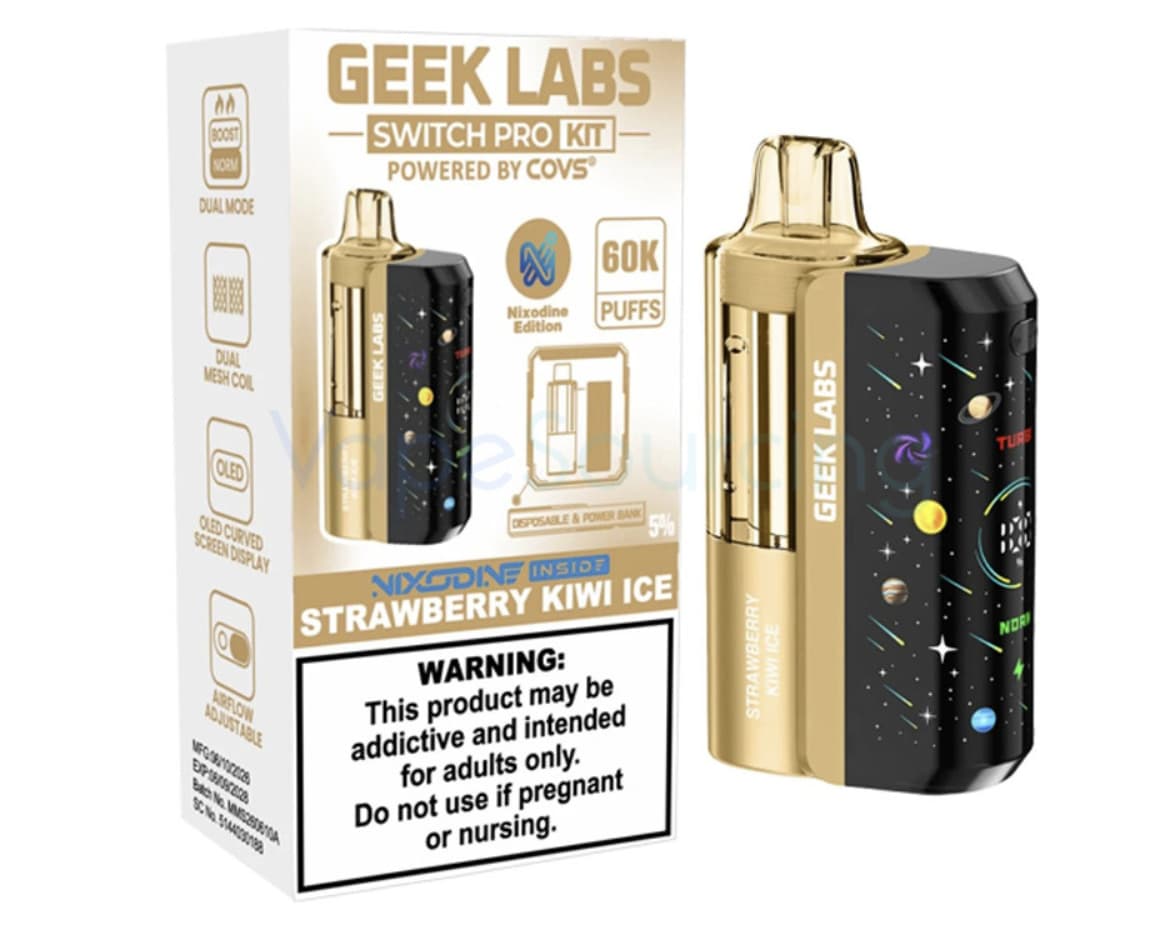
When Geek Labs Switch Pro 60K Disposable Vape entered the market, one specification quickly sparked curiosity among vape users: Nixodine. Alongside its claimed 60,000-puff capacity and 28ml e-liquid volume, the device lists a 5% Nixodine strength, introducing a term that many consumers may not be familiar with. So, what does Nixodine actually mean, and how does it differ from conventional nicotine?
The term doesn’t appear in standard vaping glossaries. It’s not a widely recognized chemical compound or a common industry abbreviation. This lack of clarity makes it one of the most intriguing aspects of the device, raising important questions about what vapers are actually inhaling.
The Mystery of the Name
Let’s start with the obvious: Nixodine is not a standard term in the vaping or pharmaceutical industries. We’re familiar with nicotine. We’re familiar with salt nicotine. But Nixodine sits outside these established categories, and the product page offers no explanation of its chemical composition or origin.
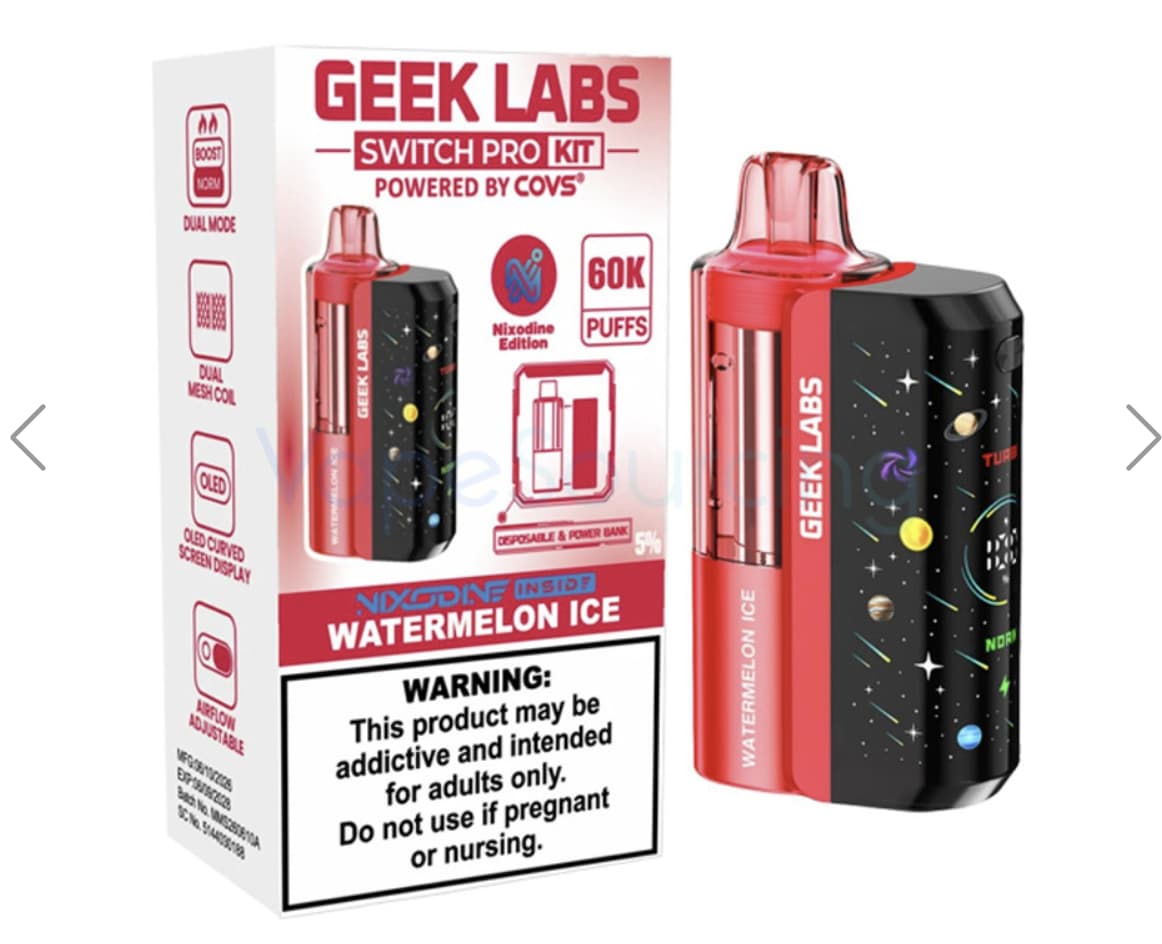
This immediately invites speculation. Is it a proprietary formulation? A clever marketing rebranding of an existing compound? Or something genuinely new?
The “5% Nixodine Strength” phrasing is particularly interesting because it mirrors how nicotine strength is typically stated. But if it were simply nicotine, the product would likely just say “5% Nicotine.” The use of a distinct name suggests that Geek Labs is either using a different active compound or a proprietary blend of compounds that they consider unique enough to brand.
What Nixodine Might Be
Without an official chemical breakdown, we’re left with educated guesses based on what we know about the industry and the product’s context.
Option 1: A Salt Nicotine Formulation With a Brand Name
This is the most conservative interpretation. Some manufacturers brand their specific salt nicotine formulations to differentiate them from competitors, even if the base compound remains nicotine.
The “5% Nixodine” could be similar to how synthetic nicotine was marketed under names like “TFN” (Tobacco-Free Nicotine). In that case, the compound was chemically identical to nicotine but sourced differently. Here, Geek Labs could be applying a similar branding strategy.
If this is the case, the actual chemical structure might be identical to standard nicotine or salt nicotine, but the formulation might include a proprietary blend of acids or other additives designed to alter the throat hit or absorption profile.
Option 2: A Modified Nicotine Compound
There’s also the possibility that Nixodine represents an actual chemical derivative of nicotine. This would be a more significant development, potentially designed to create a different physiological effect or to navigate regulatory frameworks.
For example, minor modifications to the nicotine molecule could theoretically alter its pharmacokinetics, changing how quickly it’s absorbed or how it interacts with receptors. The term “Nixodine” itself sounds like it could combine “nicotine” with a suffix suggesting a synthetic or modified origin.
Option 3: A Marketing Gimmick
We can’t ignore the simplest explanation: that “Nixodine” is primarily a marketing tool. In a crowded market, distinctive branding can make a product stand out. A unique-sounding ingredient name can spark curiosity and differentiate the product from the dozens of other disposables on the shelf.
This interpretation doesn’t mean the ingredient is ineffective or problematic—just that the naming choice might be more about branding than chemistry.
What This Means for Vapers
The uncertainty around Nixodine raises practical questions that users should consider.
1. The Need for Transparency
The vaping industry has made significant strides toward transparency, but a product using an unverified ingredient name places the burden of research back on the consumer. Without clear communication from the manufacturer about what Nixodine actually is, it’s difficult for users to make fully informed decisions.
2. The Experience Factor
Whatever Nixodine is, the user’s experience will be the ultimate test. If the throat hit, flavor delivery, and satisfaction are comparable to or better than standard 5% nicotine formulations, vapers may not care about the chemistry. The real test will be whether the promised 60,000 puffs deliver a consistent and satisfying experience.
3. Regulatory Considerations
In some regions, nicotine replacement therapies and vaping products are subject to strict regulations regarding ingredients. If Nixodine is a novel compound or a modified form of nicotine, its legal status might be unclear or subject to change.
The Case for Curiosity
The term “Nixodine” raises more questions than it answers, and that’s precisely why it’s worth discussing. The vaping industry is no stranger to proprietary formulations and branded ingredients. But vapers deserve to know what they’re consuming.
A clearer understanding would require the manufacturer to publish detailed information about Nixodine, including its chemical composition, molecular structure, and how it differs from conventional nicotine. Without that information, questions about the substance’s exact identity and properties are likely to remain unanswered.
For now, the Geek Labs Switch Pro 60K highlights an important issue in the development of new vaping products: distinctive terminology can attract attention, but transparent ingredient information is equally important. Until more verifiable scientific details about Nixodine become available, consumers should treat claims surrounding the compound with caution.