









Most RC cars are built with one environment in mind: solid ground. 1212 RTR 1/12 2.4G 4WD RC Car takes a more unusual approach by combining conventional off-road driving with an amphibious design. That immediately raises a more interesting question than simply asking how fast it can go:
Can an RC car designed for both land and water actually make amphibious driving useful, or is the water capability mainly a novelty?
The 1212 RTR is advertised as a 1/12-scale, 2.4GHz, 4WD stunt truck with amphibious operation, simulated spray, one-touch standing mode, and lighting. Its current product listing has no customer reviews, so these features should be viewed as advertised capabilities rather than independently verified long-term performance.
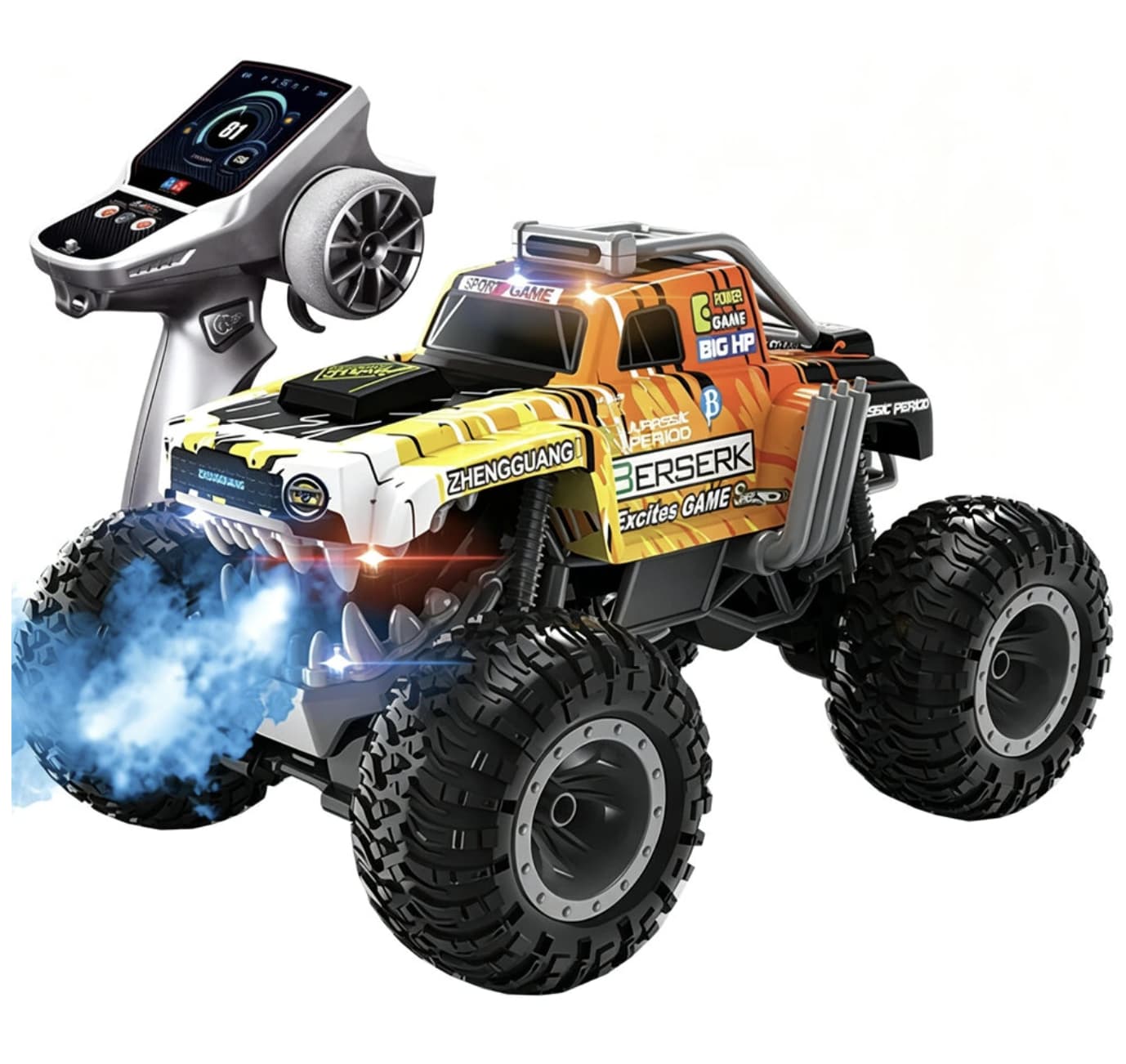
That distinction is important when evaluating an unusual RC vehicle like this.
What Does “Amphibious” Mean for an RC Car?
In simple terms, an amphibious RC vehicle is designed to operate across more than one type of environment, typically allowing it to move on land and on water.
That sounds straightforward, but water changes the driving equation considerably.
On pavement or dirt, the wheels provide traction against a solid surface. In water, the vehicle has to generate movement through a completely different interaction with the environment. Buoyancy, balance, water resistance, body shape, propulsion, and sealing all become important.
That’s why an amphibious RC car isn’t simply an ordinary 4WD truck with permission to get wet.
The 1212 RTR’s appeal comes from this change of environment. Instead of being restricted to a driveway, garden, trail, or indoor floor, its design is intended to give users another type of driving experience.
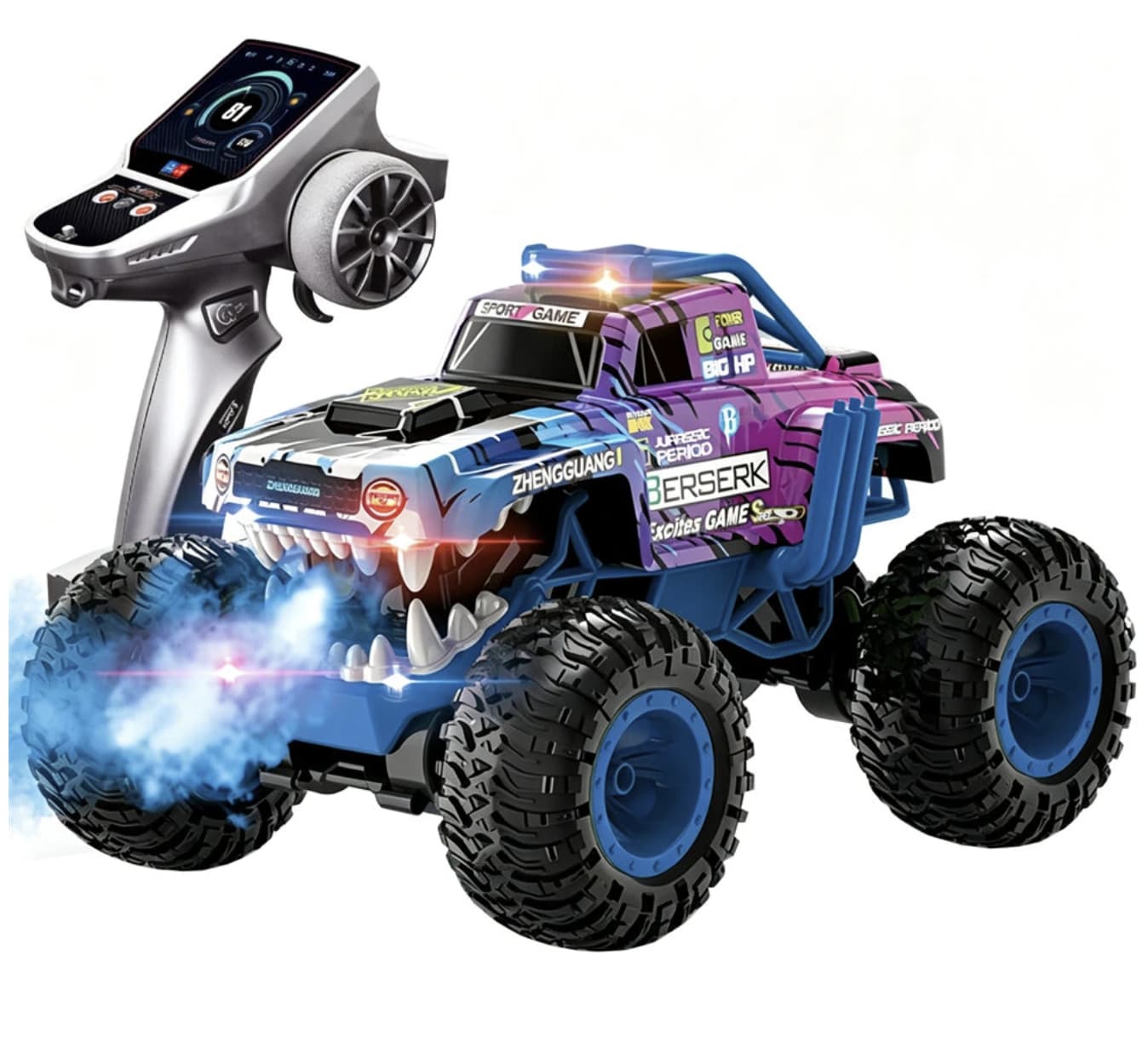
The 1212 RTR’s 4WD System Matters on Land
Before discussing water, it’s worth looking at what happens when the vehicle is back on solid ground.
The 1212 RTR uses four-wheel drive, which is a logical choice for a vehicle designed around outdoor versatility. Powering all four wheels can help distribute traction across the vehicle when driving over loose or uneven surfaces.
For recreational driving, that can make a difference on:
- Grass
- Dirt
- Gravel
- Packed soil
- Uneven outdoor surfaces
- Small obstacles
However, 4WD shouldn’t automatically be interpreted as extreme off-road capability.
A drivetrain is only one part of an RC vehicle’s performance. Tire design, ground clearance, suspension, weight distribution, motor output, and overall chassis construction also determine how effectively it handles difficult terrain.
The 1212 RTR’s 4WD system therefore makes sense as part of its multi-terrain concept, rather than as proof that it is a dedicated competition crawler.
Why Water Changes Everything
Driving an RC truck through water introduces challenges that don’t exist on dry ground.
The vehicle needs to remain sufficiently buoyant while keeping important electronic components protected. It also needs a way to generate useful movement through water.
This is why users should avoid interpreting the word “amphibious” as equivalent to “completely waterproof under every condition.”
Water resistance has limits.
The depth of the water, speed of the vehicle, duration of operation, water temperature, contaminants, and condition of seals can all affect the outcome. Even a vehicle specifically designed for water operation still requires sensible handling.
The manufacturer’s instructions should therefore take priority over assumptions based on the product’s appearance or marketing description.
Is the 1212 RTR Better in Water or on Land?
That depends on what you expect from it.
If you’re looking for precise handling, predictable steering, and traditional off-road driving, solid ground will naturally provide a more familiar experience.
Water is where the 1212 RTR becomes more interesting.
Instead of simply driving around obstacles, you can experiment with transitions between land and water and see how the vehicle behaves in a completely different environment.
This makes the 1212 RTR less about achieving the fastest lap time and more about creating different driving scenarios.
For casual RC users, that variety can be more valuable than raw speed.
The Simulated Spray Effect Fits the Concept
The 1212 RTR also includes a simulated spray effect, which complements its amphibious design.
On a conventional RC car, a feature like this might seem purely cosmetic. On an amphibious truck, however, it reinforces the vehicle’s water-oriented character.
It also makes the vehicle more visually interesting during demonstrations.
The important point is to distinguish between a simulated effect and actual water propulsion. The spray feature should not be treated as evidence that the truck can operate in deeper or more demanding water conditions.
It is primarily part of the vehicle’s entertainment-focused design.
One-Touch Standing Mode Makes Stunts More Accessible
Another unusual feature is the one-touch standing mode.
For experienced RC hobbyists, performing stunts manually can involve learning how throttle and steering inputs affect the vehicle. A dedicated standing function can reduce that learning curve.
This makes the 1212 RTR particularly interesting for casual users who want to perform tricks without spending a long time mastering advanced controls.
It also changes how you might use the vehicle.
Instead of simply driving from point A to point B, you can incorporate standing maneuvers and other visual tricks into a session.
Combined with the lighting and simulated spray effect, the result is clearly designed around entertainment and spectacle, not just transportation-like driving.
What About the 2.4GHz Remote?
The 1212 RTR uses a 2.4GHz control system, a common wireless setup for modern recreational RC vehicles.
For beginners, this is a relatively straightforward approach because the user doesn’t have to deal with the older frequency-selection process associated with some traditional RC systems.
The more important question for this particular vehicle is how consistently the control system performs in the environments where you plan to use it.
A water-focused RC session, for example, should still take place in an open area where the vehicle remains visible and easy to recover if it stops responding.
Where Should You Test an Amphibious RC Car?
This is where expectations need to remain realistic.
A small pond may look like the perfect place to test the 1212 RTR, but not every body of water is appropriate.
Before entering the water, consider:
Depth: Avoid assuming that deeper water is automatically better. Start conservatively and follow the manufacturer’s guidance.
Current: Moving water can quickly carry a lightweight RC vehicle away.
Visibility: You should always be able to see where the vehicle is going.
Obstacles: Plants, rocks, sticks, mud, and other debris can interfere with operation.
Recovery: Think about how you will retrieve the vehicle if it stops moving.
Water quality: Muddy or dirty water can create more cleanup and maintenance work than clean water.
The safest approach is to treat amphibious driving as a controlled recreational activity rather than simply throwing the vehicle into the nearest body of water.
What Happens After Water Driving?
This is perhaps the least exciting part of owning an amphibious RC car—and one of the most important.
Water use shouldn’t end when you switch off the remote.
After a wet session, users should inspect the vehicle and follow the manufacturer’s recommended drying and maintenance procedure. Particular attention should be paid to areas where water, dirt, or debris could remain trapped.
If the vehicle has been used in dirty or contaminated water, cleaning becomes even more important.
Saltwater deserves particular caution because salt can be corrosive. Unless the manufacturer specifically states that a vehicle is suitable for saltwater operation, it is better to avoid treating it like a marine-grade RC platform.
The basic rule is simple:
Water capability does not mean maintenance-free water capability.
Is Amphibious Driving Actually Useful?
For some RC enthusiasts, absolutely.
The value isn’t necessarily that the vehicle performs better than a conventional RC truck. Instead, it gives you more places and situations in which to use it.
A conventional RC car might be excellent on dirt but completely unusable once it reaches a pond.
The 1212 RTR is designed to make that transition part of the experience.
That could make it particularly attractive for:
- Families looking for a recreational RC vehicle
- Beginners who want something more interesting than a standard RC car
- Hobbyists who enjoy stunt driving
- Users interested in unusual RC designs
- People who want both land and water play
- Owners who prioritize entertainment over racing performance
Where the Amphibious Feature May Not Be Enough
There are also situations where a conventional RC vehicle could make more sense.
If your priority is high-speed racing, a purpose-built racing model may offer a more focused setup.
If rock crawling is your main interest, a specialized crawler with appropriate suspension geometry and drivetrain features could be a better choice.
Likewise, if you’re looking for a serious waterproof hobby-grade vehicle, you should examine the manufacturer’s specifications for water resistance, electronics protection, serviceability, and replacement parts rather than relying solely on the term “amphibious.”
The 1212 RTR is most compelling when you value variety and stunt-oriented fun.
Amphibious Doesn’t Mean “Drive Anywhere”
This is the most important takeaway.
The word amphibious can make an RC vehicle sound almost indestructible, but that isn’t what it means.
It means the vehicle is designed to operate in both land and water environments under appropriate conditions.
That still leaves plenty of variables.
A vehicle may handle shallow, calm water well but struggle with strong currents. It may operate successfully during a short session but require additional maintenance after prolonged exposure. It may perform well on a clean surface but become difficult to recover in mud or vegetation.
Understanding those limitations will make the experience much more enjoyable.
The 1212 RTR’s Real Appeal
The 1212 RTR isn’t interesting because it has one extraordinary specification.
Its appeal comes from how several features work together.
You get a 1/12-scale 4WD truck, amphibious capability, a 2.4GHz control system, one-touch standing mode, simulated spray, and lighting. The current Banggood listing identifies it specifically as a stunt-oriented amphibious RC truck.
That combination creates a vehicle aimed at people who want something to play with, rather than simply something to drive quickly.
It’s closer to an RC toy built around variety and visual tricks than a specialized racing machine.
Final Verdict: Is the 1212 RTR Really Ready for Water?
The 1212 RTR 1/12 2.4G 4WD RC Car stands out because its amphibious capability changes the way you can use it.
On land, the 4WD system and truck-style design make it suited to recreational outdoor driving. On water, the amphibious concept adds a completely different dimension, while the simulated spray, lighting, and one-touch standing mode reinforce its stunt-focused personality.
But there’s an important distinction between water-capable and waterproof under every circumstance.
If you buy the 1212 RTR expecting a versatile RC vehicle for controlled land-and-water fun, its design is genuinely interesting. If you expect it to behave like an unrestricted boat, crawler, or professional-grade waterproof RC platform, expectations should be lower.
Its biggest advantage isn’t that it conquers every environment—it’s that it gives you more environments to explore.
That makes the 1212 RTR an appealing option for recreational users who value experimentation, stunts, and variety over pure speed or competition performance.