










When discussing which is better between all-in-one computers and desktop computers, we need to conduct a thorough analysis from multiple perspectives so that consumers can make a wise choice based on their own needs.
I. Performance Evaluation
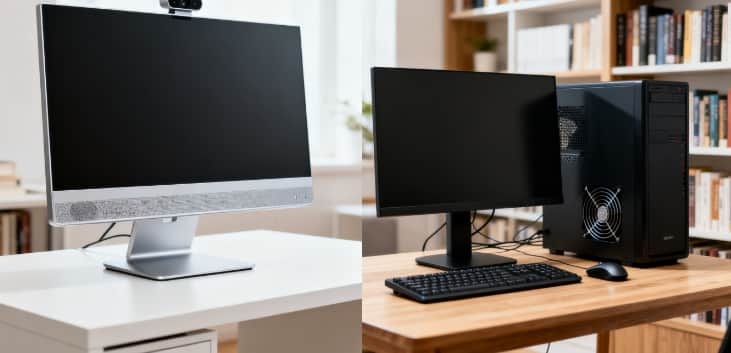
Desktop computers usually have an advantage in terms of performance. Due to their larger size, they can accommodate more powerful processors, larger memory, and more advanced graphics cards. This enables desktop computers to perform better when handling complex tasks such as high-definition video editing, large-scale games, or the operation of professional software. In contrast, all-in-one computers are limited by their compact design, and the selection of performance components is relatively limited, which may not be able to meet the demands for ultimate performance.
II. Space Occupancy and Portability
All-in-one computers have a significant advantage in terms of space utilization. They integrate the display and the main unit into one, significantly reducing the desktop space and making the office environment cleaner. At the same time, all-in-one computers are usually designed to be relatively thin and light, making them easy to move and place. In contrast, desktop computers occupy more space and are inconvenient to move due to their separate design of the main unit and the display.
III. Price Factors
In terms of price, both all-in-one computers and desktop computers have their own advantages. All-in-one computers usually integrate high-quality displays and audio systems, and are beautifully designed, so their prices are generally higher. However, for users who demand high performance, they may need to equip their desktop computers with high-performance components, which leads to an increase in overall costs. Therefore, when making a choice, consumers need to weigh their own budget and performance requirements.
IV. Maintenance and Upgrades
Desktop computers are more flexible in terms of maintenance and upgrading. Users can easily replace or upgrade components such as processors, memory, and hard drives to meet changing needs. However, since all-in-one computers have compact designs, the internal components are often difficult to replace or upgrade, which to some extent limits their long-term usage potential.
In conclusion, both all-in-one computers and desktop computers have their own advantages and disadvantages. When making a choice, consumers should consider their own needs, budget, and usage scenarios comprehensively.