










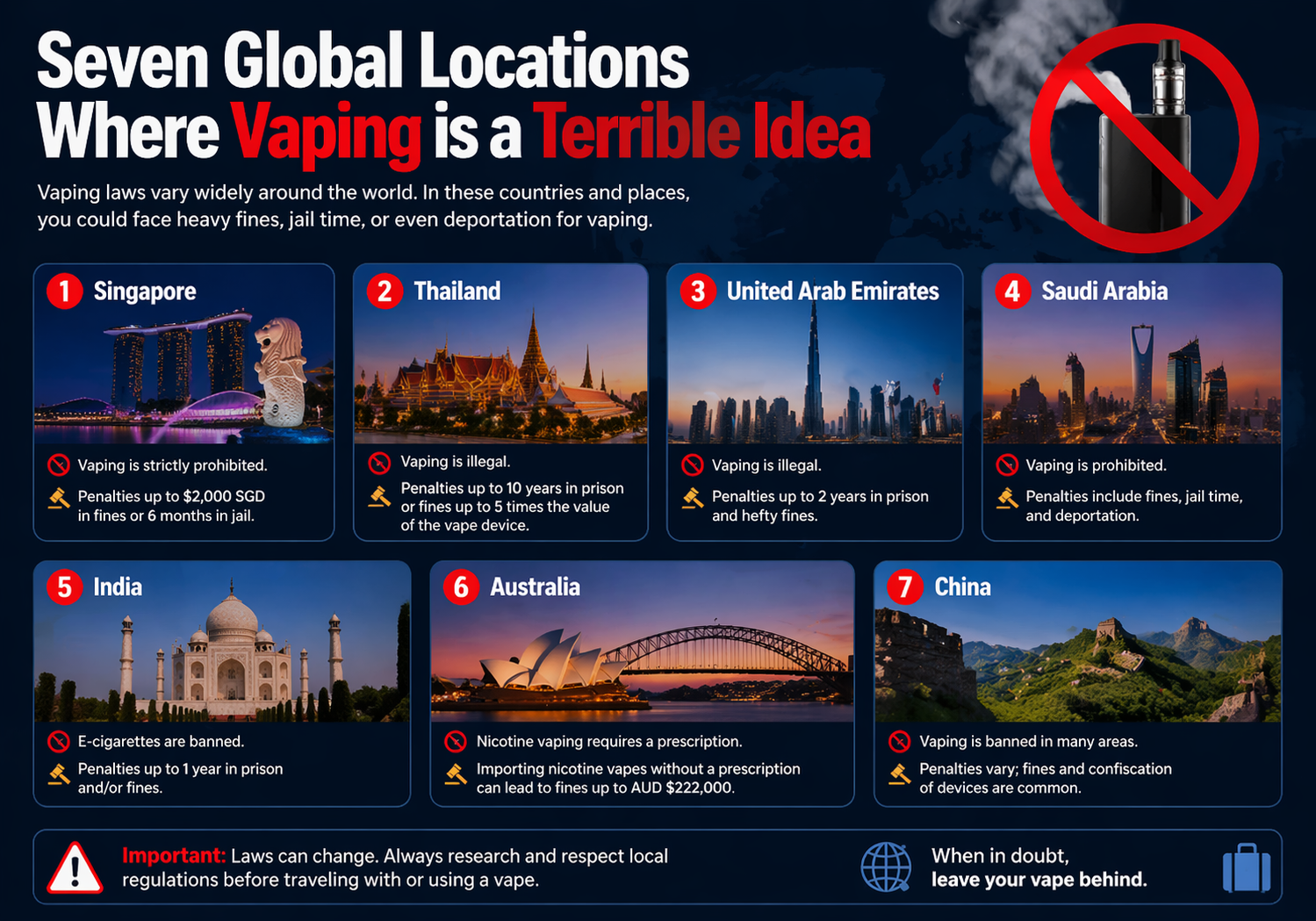
Vaping has become a global phenomenon, with millions of people turning to e-cigarettes as an alternative to traditional smoking. However, despite its rise in popularity, there are still places around the world where vaping is either heavily regulated, outright banned, or simply considered inappropriate due to cultural or legal factors. Whether due to health concerns, governmental restrictions, or social norms, here are seven global locations where vaping is a terrible idea.
1. Singapore: A Strict Ban on Vaping
Singapore has one of the strictest anti-vaping laws in the world. In 1992, the government passed legislation that prohibits the sale, import, and distribution of e-cigarettes. In 2018, the ban was further reinforced with penalties for anyone caught vaping in public. Not only can you face fines up to SGD 10,000 (approximately USD 7,500), but repeat offenders could face imprisonment for up to six months.
The rationale behind the ban is to protect public health, as the government views vaping as a potential gateway to smoking for young people, as well as concerns over the unknown long-term effects of e-cigarette use. Given the heavy fines and legal risks, vaping in Singapore is undoubtedly a terrible idea.
2. Thailand: A High Risk of Fines and Jail Time
Since 2014, Thailand has enforced a ban on vaping, making it illegal to sell, possess, or use e-cigarettes in the country. The penalties for breaking this law are severe, with offenders facing fines of up to 100,000 Thai Baht (roughly USD 3,000) or up to 10 years in prison.
The Thai government has not shied away from taking a hard stance against vaping, citing health concerns and the protection of youth from the perceived dangers of e-cigarettes. While many tourists may not be aware of this law, vaping in public places or even possessing e-cigarettes can lead to serious legal consequences.
3. Australia: Heavy Restrictions and Ongoing Debate
While Australia has not outright banned vaping, it has implemented strict regulations that make vaping a cumbersome activity for both locals and visitors. As of 2021, it is illegal to possess, sell, or use nicotine e-liquids without a prescription in most states. While vaping devices can be purchased legally, the nicotine component requires a prescription from a licensed medical practitioner.
In regions like New South Wales and Queensland, laws around vaping are especially strict, with hefty fines for those caught vaping in public spaces. For those visiting Australia, it’s essential to be aware of these regulations, as ignorance of the law can lead to penalties.
4. Japan: A Strict Approach to Vaping Products
Japan is another country with a complex stance on vaping. Although nicotine-free e-cigarettes are allowed for sale, vaping products containing nicotine are strictly regulated. The sale of nicotine-based e-liquids is prohibited unless one has a prescription, and importing nicotine e-liquids can lead to confiscation at customs.
Even with the legality of non-nicotine e-cigarettes, many public places in Japan have designated smoking areas, and using a vape in non-smoking zones could attract unwanted attention or fines. If you’re planning to visit Japan, it’s best to research the local laws and etiquette carefully.
5. United Arab Emirates (UAE): Heavy Fines and Restrictions
The UAE is home to strict regulations regarding smoking and vaping, with several rules in place to protect public health. While e-cigarettes are legal to purchase, they are highly regulated, and the sale of vaping products is only allowed in licensed stores. Public use of e-cigarettes is also subject to restrictions, with vaping banned in many public areas like malls, restaurants, and public transport systems.
In 2019, the UAE also imposed heavy taxes on vaping products and prohibited the sale of flavored e-liquids, further discouraging vaping. In addition, non-compliance with vaping laws can result in substantial fines or even legal consequences, making it a risky decision to vape in public spaces.
6. Brazil: Full Ban on E-Cigarettes
Brazil is one of the few countries in South America where vaping is outright banned. Since 2009, the Brazilian Health Surveillance Agency (ANVISA) has prohibited the sale and import of e-cigarettes, citing concerns about the safety and health risks associated with vaping.
Although the ban primarily targets the sale of vaping products, individuals caught using e-cigarettes can face fines or even confiscation of the products. As Brazil continues to debate the regulation of e-cigarettes, it remains a dangerous place to vape, with laws that heavily restrict both local and international vapers.
7. Norway: Strict Restrictions on Nicotine Vaping
Norway has a relatively tolerant view of non-nicotine vaping, but nicotine-based e-cigarettes remain heavily regulated. The sale and distribution of nicotine-containing e-liquids are only permitted under strict conditions and with appropriate licensing. Vaping in public spaces is also restricted, with several areas (especially near schools or public buildings) prohibiting e-cigarette use.
In addition, Norway has a high level of taxation on e-cigarettes and vaping products, which makes them more expensive compared to other regions. For those visiting or living in Norway, it’s important to be aware of these limitations and refrain from using nicotine-based e-cigarettes in public or without the proper legal authorization.
Conclusion: Stay Informed Before You Vape
While vaping is a convenient and popular alternative to traditional smoking, it’s crucial to be aware of the local laws and cultural attitudes toward e-cigarettes before traveling or living in certain countries. In many places, vaping is not just a personal choice, but a legal issue, with varying degrees of regulation, fines, or outright bans.
Before you vape in any new location, make sure to check the local laws, as many countries continue to introduce new policies regarding the use and sale of e-cigarettes. If in doubt, it’s better to be safe than sorry — and remember that vaping in places like Singapore, Thailand, and Brazil can lead to serious legal consequences. Always do your research, respect local customs, and vape responsibly.