










Igeekphone News, May 16th: Today afternoon, Lu Weibing, the president of Xiaomi Group, launched an open live-streaming event to interact with fans. During the communication process, some fans raised questions, expressing their curiosity about why Xiaomi has been delaying the launch of a ultra-thin mobile phone product similar to the iPhone Air.
Lu Weibing gave a straightforward answer to this. Xiaomi had initiated the research and development of such products a long time ago. They had even refined the prototype to a stage close to mass production. However, at the very last moment before the release, they directly cancelled the entire project. The main reason was that these ultra-thin Air models had to make compromises in many core experiences, and the final product failed to meet the quality standards set by Xiaomi internally.
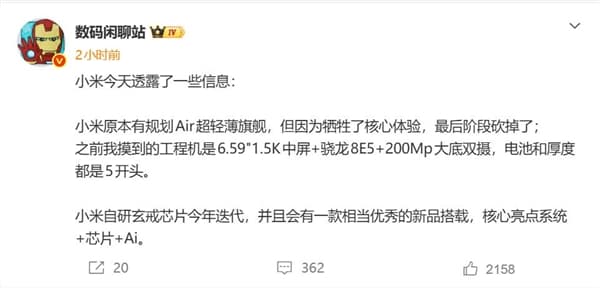
The blogger Digital chat Station also simultaneously disclosed the engineering model parameters of this unannounced model. The scrapped Xiaomi 17 Air engineering model was equipped with a 6.59-inch 1.5K screen, a Qualcomm Snapdragon 8E5 flagship platform, a rear dual-camera with a 200-megapixel large sensor, a battery capacity of over 5000mAh, and a body thickness controlled between 5mm and 6mm. It is a truly ultra-thin and perfect model.
Even though it had achieved a very good level in terms of parameter configuration, this engineering model was ultimately scrapped at the final stage before mass production because its core experience failed to meet the requirements of Xiaomi. It did not enter the public’s view.
Based on the currently available market data, the actual sales figures of all Air-type models that emphasize extreme ultra-thinness on the market have failed to meet the initial expectations of the manufacturers.

Take the iPhone Air as an example. After going through multiple rounds of significant price cuts and promotions upon its launch, the global cumulative activation volume of this product is still less than 1 million units. The sales performance gap with the iPhone 17 and iPhone 17 Pro Max released at the same time is extremely wide.
This dismal market feedback has made all major consumer electronics manufacturers clearly realize that the once booming market for ultra-thin mobile phones has completely lost its appeal. They have all abandoned their plans for the next generation of similar products and all related research and development projects have been halted.
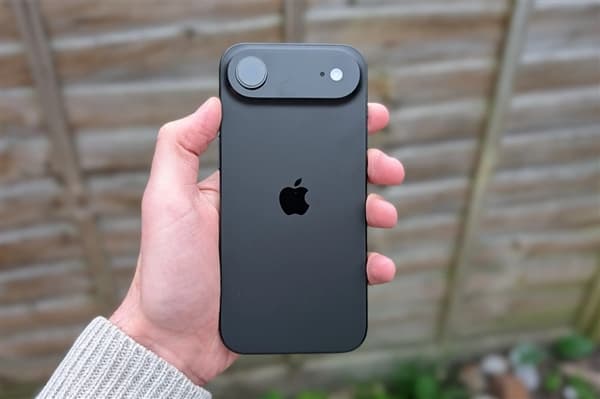
As a result of this, Samsung’s ultra-thin flagship project, the Galaxy S26 Edge, has also been cancelled. Apart from Apple which is still attempting it, most mainstream mobile phone manufacturers have collectively withdrawn from the ultra-thin phone market.
This collective retreat across the entire industry also confirms the unshakable core logic of the consumer electronics industry: ordinary users will ultimately only pay for the practical value of a product, rather than for the flashy parameters or gimmicks.