









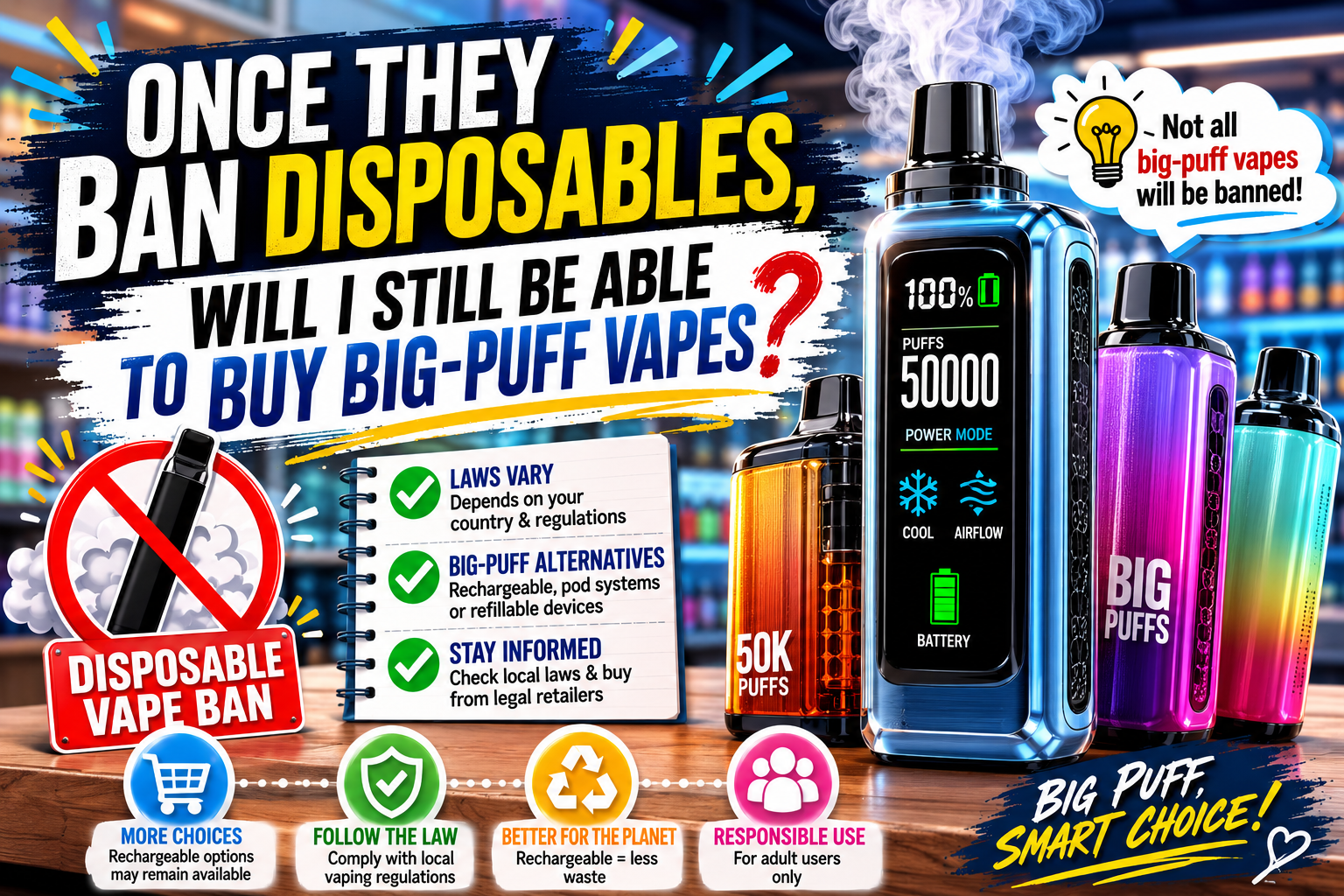
As more countries and regions introduce restrictions on disposable vapes, many adult nicotine users are asking the same question: Will big-puff vapes still be available after disposable vape bans take effect? The answer depends on where you live and how local laws define the products being regulated.
Understanding Disposable Vape Bans
Disposable vape bans are generally intended to reduce electronic waste, address concerns about youth access, and simplify enforcement of existing vaping regulations. However, the scope of these bans varies by jurisdiction. Some regulations prohibit only single-use, non-rechargeable devices, while others apply to a broader range of vaping products.
Because the legal definitions differ from one country or region to another, it is important to check the specific rules that apply where you live.
What Are Big-Puff Vapes?
Big-puff vapes are devices marketed as providing a large number of puffs before they require replacement. Depending on the design, they may fall into different categories, including:
- Non-rechargeable disposable devices
- Rechargeable devices with integrated e-liquid reservoirs
- Rechargeable devices with replaceable prefilled pods
- Refillable pod systems
Although these products are often grouped together in marketing, regulators may treat them differently based on how they are constructed.
Will Big-Puff Vapes Still Be Available?
There is no single answer. Availability depends on how local regulations classify the device.
For example:
- If a ban targets non-rechargeable disposable vapes, rechargeable pod systems or rechargeable devices with replaceable pods may continue to be sold if they comply with other applicable laws.
- If regulations prohibit a wider category of vaping products, additional products—including some high-capacity devices—may also be affected.
- Manufacturers may redesign products to comply with new legal requirements, such as introducing replaceable pods or rechargeable batteries where permitted.
As regulations evolve, the products available on the market may change accordingly.
Why Are Manufacturers Introducing Rechargeable Systems?
In markets where disposable vape restrictions are being introduced, some manufacturers are shifting toward rechargeable devices with replaceable pods. These designs may:
- Generate less electronic waste than single-use devices.
- Allow users to replace only the consumable component instead of discarding the entire device.
- Align more closely with regulatory requirements in certain jurisdictions.
Whether these products remain available depends on compliance with local laws and product standards.
What Should Consumers Do?
If you currently use vaping products, consider the following:
- Stay informed about changes to vaping regulations in your country or region.
- Purchase products only from reputable retailers that comply with local laws.
- Read manufacturer instructions carefully and use products as directed.
- Dispose of batteries and electronic devices through appropriate recycling programs where available.
Keeping up to date with regulatory changes can help you understand which products remain legally available.
Looking Ahead
The vaping market is likely to continue evolving as governments update regulations and manufacturers respond with new product designs. Rechargeable pod systems, refillable devices, and other alternatives may become more common in some markets, while the availability of certain high-capacity products will continue to depend on local legislation.
Conclusion
Disposable vape bans do not automatically mean that all big-puff vaping products will disappear. The outcome depends on how individual jurisdictions define and regulate different types of devices. In some areas, rechargeable products with replaceable pods or refillable systems may remain available if they meet applicable legal requirements, while in others, broader restrictions may limit additional categories of products. Because vaping regulations continue to change, checking current local laws and purchasing only compliant products is the most reliable way to understand what options are legally available.