









A garage can have plenty of ceiling lights and still be difficult to work in. Shadows around a car’s bodywork, uneven illumination across a workbench, and dark corners can make routine tasks less convenient. For people who detail cars, repair vehicles, maintain equipment or run a home workshop, the arrangement of the lighting can matter almost as much as the light itself.
The Elfeland 11-Cell Garage Lights bring a different approach to ceiling illumination. Instead of relying on a conventional central fixture, this system uses a geometric honeycomb layout made from hexagon-shaped LED sections. The listed color temperature is 6500K, giving the light a cool, daylight-style appearance.
Its distinctive design may attract car enthusiasts and workshop owners, but appearance alone is not enough to determine whether a lighting kit is worth buying. Room dimensions, actual light output, installation requirements and working conditions all deserve attention.
This guide looks at where the Elfeland honeycomb lighting system could be useful, what buyers should verify before ordering, and how to decide whether an 11-cell configuration fits their workspace.
Why Honeycomb Lighting Is More Than a Decorative Upgrade
Hexagonal ceiling lights have become a recognizable feature of detailing garages, automotive studios, barbershops and customized home workshops. Their appeal comes from the combination of a geometric ceiling pattern and distributed light sources.

A conventional ceiling fixture concentrates illumination in one area. A honeycomb arrangement spreads multiple light sections across a larger portion of the ceiling, potentially helping reduce the contrast between brighter and darker areas when the system is positioned correctly.
For vehicle detailing, this can be particularly useful. Inspecting paintwork involves looking at reflections, surface marks and changes in finish from different angles. A well-planned lighting arrangement can make certain imperfections easier to spot than lighting that leaves large sections of a vehicle in shadow.
The same principle applies to workbenches and repair spaces. Better-distributed illumination can make it easier to see tools, components and work surfaces without constantly moving a portable lamp.
However, a honeycomb pattern does not automatically guarantee shadow-free lighting. The result depends on the system’s measured light output, ceiling height, room size, surface reflectivity and the position of the objects being illuminated. The Elfeland kit’s actual performance should therefore be judged by its verified specifications and the layout of the intended space, not just by its appearance in promotional photographs.
What the Elfeland 11-Cell Kit Offers
The product listing presents the Elfeland system as an 11-cell hexagonal LED ceiling light designed for garages and other work-oriented spaces.
Its main selling points are its geometric appearance, LED lighting format and 6500K color temperature. Together, these features make it a potential option for people who want to give a workshop a more organized, studio-like appearance while improving overhead illumination.
An 11-cell layout for a more structured ceiling
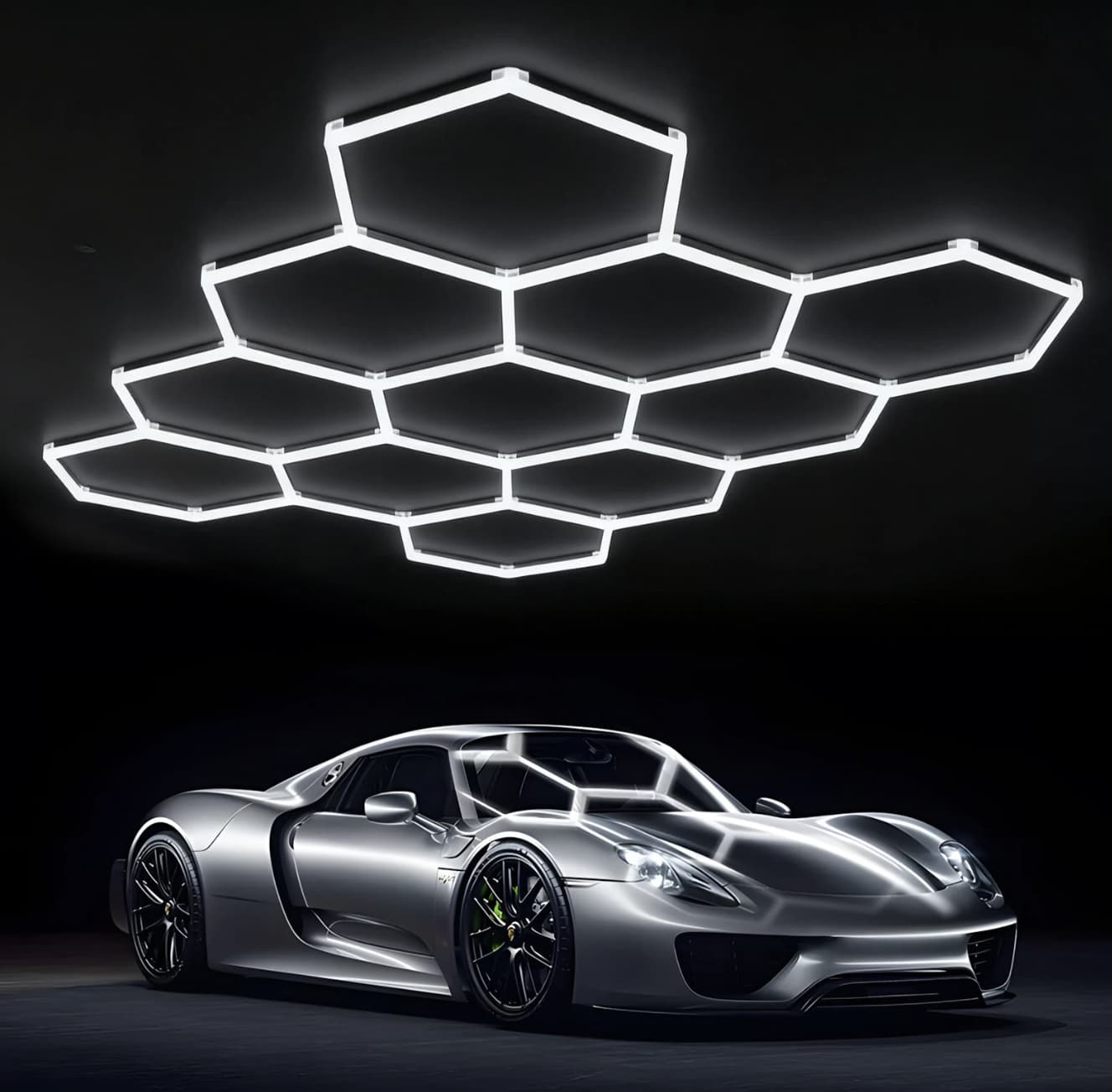
The size of a lighting kit should be considered in relation to the area that needs illumination. An 11-cell arrangement may suit a larger work zone better than a compact decorative fixture, but the cell count alone does not establish how much floor area the system can adequately illuminate.
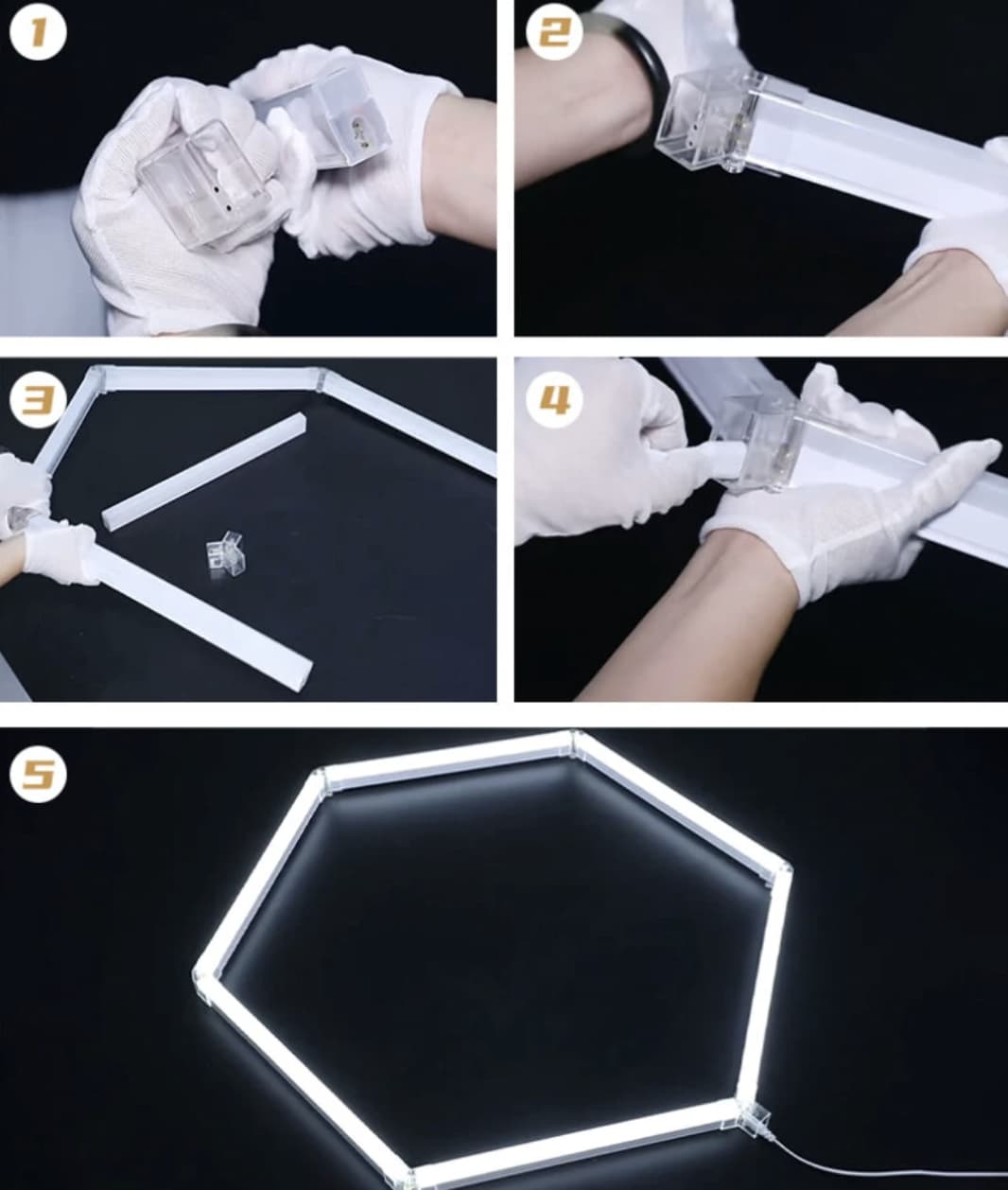
Before buying, compare the assembled kit dimensions with your ceiling. Think about where the vehicle, workbench or main working area will sit, and whether the light pattern will be centered over that area.
If you have a small single-car garage, measure the available ceiling space first. A large geometric pattern can become visually dominant in a compact room, especially if it competes with storage racks, garage doors or existing fixtures.
6500K cool daylight-style illumination
The advertised 6500K color temperature indicates a cool, daylight-style appearance rather than the warmer tone associated with many living-room lights.
This type of light may appeal to people who prefer a crisp-looking workshop environment. It can also help create the clean, bright visual style often seen in professional detailing studios and modern barbershops.
Color temperature and brightness are different measurements, though. A 6500K rating describes the light’s color appearance; it does not tell you how many lumens the system produces or how brightly it will illuminate a particular work surface.
If you need the lights for paint inspection, precision repair or detailed bench work, look for the product’s verified lumen output and color rendering index (CRI). Those specifications provide more useful information about illumination and color appearance than color temperature alone.
A visual upgrade for garages and commercial spaces
The hexagonal pattern is also part of the product’s appeal. It creates a distinctive ceiling feature that can make a garage, car display area or workshop look more deliberate and professionally arranged.
That may be valuable for small businesses that want their space to look presentable to customers, as well as hobbyists who spend a lot of time in their garages.
Still, appearance should be secondary to practical requirements. A visually impressive ceiling is less useful if the system leaves the workbench poorly lit, causes uncomfortable glare or requires more installation work than expected.
Where Could These Garage Lights Be Most Useful?
Rather than treating every room as the same lighting problem, consider how you use the space.
1. Car detailing and paint inspection
Car detailing requires attention to reflections, dust, polishing marks and paint defects. Multiple light sections across the ceiling can provide more viewing angles than a single central fixture, depending on their placement and output.
For this use, check both the overall brightness and the CRI specification if it is available. A 6500K color temperature alone cannot confirm how accurately the light renders paint colors.
If you are upgrading a home workshop, you may also find our guide to choosing practical workshop equipment useful when planning a more efficient workspace.
2. Home garages and DIY workshops
A workshop may be used for everything from assembling furniture to maintaining bicycles and sorting small components. Consistent overhead illumination can make these jobs more comfortable, particularly when the work area is positioned directly beneath the light system.
Before installation, identify the tasks you perform most often. A ceiling system can provide general illumination, while a separate adjustable task lamp may still be necessary for detailed work inside an engine bay or beneath a vehicle.
3. Barbershops and grooming studios
The product title also identifies barbershops as a potential application. Here, the geometric design may serve a decorative purpose while contributing to the room’s general lighting.
Operators should consider how the light interacts with mirrors, glossy surfaces and the positions of customers and staff. Bright ceiling lights can create unwanted reflections or glare if they are installed without considering viewing angles.
For readers setting up a dedicated DIY workspace, our guide to the TWO TREES TTC450 Pro CNC engraving machine offers another look at equipment designed for hands-on projects.
4. Gyms and display areas
A home gym can benefit from an evenly planned lighting arrangement, particularly when the room has several exercise stations. A hexagonal ceiling pattern can also create a contemporary visual style.
For commercial displays or photography, however, the light’s color rendering, brightness and glare characteristics should be checked against the intended use. The product title alone does not establish that it is suitable for professional photography or color-critical work.
How to Decide Whether an 11-Cell Configuration Is the Right Size
Choosing a lighting kit by counting its cells is a useful starting point, but it should not be the final decision.
Begin by measuring the ceiling area above the place where you actually work. A long garage with a vehicle parked in the middle has different lighting needs from a compact room containing a single workbench.
Next, check the dimensions of the fully assembled Elfeland system. Confirm how much ceiling space the pattern occupies and whether it can be positioned around existing fixtures, garage-door tracks, ventilation equipment or storage systems.
You should also verify the number and type of connectors included, the required power connection and the installation method. Do not assume that all honeycomb lighting kits use identical connectors or can be expanded by adding extra sections.
If the 11-cell system is too large for your space, compare it with smaller configurations. Banggood search results include Elfeland 5-cell and 7-cell garage-light listings, which provide useful alternatives to investigate. Confirm compatibility and specifications separately before choosing a different kit.
Installation: Plan the Layout Before Touching the Ceiling
The most attractive lighting pattern will not be much use if it is poorly positioned. Planning the installation in advance can help avoid unnecessary holes, awkward cable routes and an unbalanced layout.
Step 1: Measure the workspace. Record the ceiling dimensions and identify the area that needs the most illumination. Consider the position of vehicles, benches, mirrors and storage.
Step 2: Review the complete kit contents. Check the number of LED sections, connectors, mounting clips, power cables and instructions supplied with the exact listing. Do not assume that accessories shown in promotional images are included.
Step 3: Plan the arrangement on the ground. If the instructions permit it, lay out the components before mounting them. This gives you an opportunity to check the overall shape and connector placement.
Step 4: Confirm the electrical requirements. Verify the supported input voltage, connection type and installation instructions. If the kit requires fixed wiring or you are unsure about the electrical work, use a qualified electrician.
Step 5: Check the finished lighting. Once safely installed according to the manufacturer’s instructions, inspect the main work area from different positions. You may still need supplementary task lighting for deep recesses or close-up work.
For a garage, installation planning is especially important because the ceiling may contain metal tracks, automatic door mechanisms and other equipment that restrict where lights can be mounted.
What Buyers Should Verify Before Ordering
Several important specifications cannot be established from the product name alone. Check the live Banggood listing and included documentation before making a purchase.
- Total light output: Look for a stated lumen figure to understand the system’s claimed output.
- Power consumption: Confirm the total wattage rather than estimating energy use from the number of LED sections.
- Assembled dimensions: Make sure the completed pattern fits the available ceiling area.
- Electrical compatibility: Check the input voltage, plug type and whether any fixed wiring is required.
- Dimming support: Do not assume the light can be dimmed unless the listing explicitly confirms it.
- Color rendering: If accurate paint, fabric or product colors matter, look for a published CRI value.
- Included mounting hardware: Confirm whether the package contains all the clips and connectors required for the intended installation.
- Warranty and returns: Review the current seller terms, shipping costs and return conditions for your country.
These details have a direct effect on value. A lighting kit that looks suitable in a product photo may still be the wrong choice if its dimensions, power requirements or output do not match your workspace.
Elfeland Honeycomb Lights vs Conventional Garage Lighting
The two approaches solve slightly different problems.
Conventional LED ceiling fixtures can be practical when the priority is straightforward illumination, a familiar installation method or the ability to replace individual fixtures. Their performance varies by design, so a conventional fixture is not necessarily dimmer or less efficient than a honeycomb system.
Honeycomb lighting places more emphasis on the layout as well as illumination. It may be attractive to detailers and enthusiasts who want a distinctive ceiling pattern and multiple light sections distributed across a work area.
The sensible comparison is not simply which one looks brighter in a photograph. Compare the verified lumen output, total wattage, light distribution, installation costs and suitability for your ceiling.
If the main goal is to illuminate a storage garage at the lowest practical cost, conventional fixtures may be sufficient. If you want a purpose-designed visual feature for a detailing bay or custom workshop, the Elfeland 11-cell kit may deserve a closer look.
Final Verdict: A Distinctive Lighting Option for a Planned Workspace
Elfeland 11-Cell Hexagon Garage Lights target a specific need: combining a honeycomb ceiling design with cool, 6500K LED illumination for garages, workshops, barbershops and similar spaces.
The concept makes sense for people who want a more organized-looking work area and prefer distributed ceiling lighting to a single conventional fixture. Its potential value is strongest when the size and arrangement match the actual workspace.
The main caution is that the 11-cell count and 6500K rating do not establish the system’s total brightness, energy use or suitability for every task. Those questions need to be answered by the product’s detailed specifications.
If you are planning a garage makeover or setting up a vehicle-detailing area, compare the kit’s dimensions, output, installation requirements and final delivered price before ordering.
The best lighting upgrade is not necessarily the largest or most eye-catching one. It is the one that puts useful light where you need it, fits the room safely and delivers the performance your work requires.