









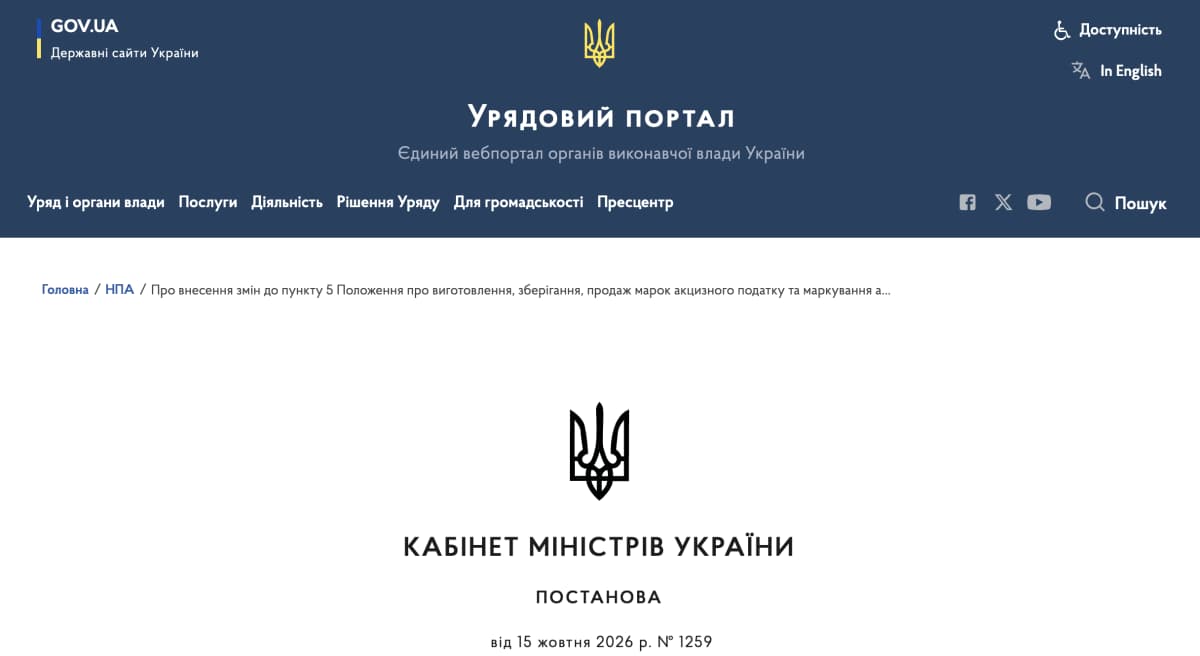
Ukraine is increasing the cost of paper excise tax stamps for tobacco products, heated tobacco products, and e-cigarette liquids by approximately 30.5%. At the same time, lawmakers have approved a proposal to postpone the full implementation of the country’s electronic excise and product traceability system until July 1, 2027.
The developments could affect manufacturers and importers that must manage product marking, tax compliance, and preparations for the transition to digital tracking.
According to a report published by 2Firsts on October 21, 2026, the Ukrainian Cabinet of Ministers adopted Resolution No. 1259 on October 15, while the Verkhovna Rada passed Bill No. 15532 on October 13. As of October 21, the bill on delaying the electronic system had been sent to the president for signature.
Ukraine Increases Paper Excise Stamp Fees by 30.5%
Under Resolution No. 1259, the production fee for paper excise stamps covering tobacco products and e-cigarette liquids rises from UAH 0.1643 to UAH 0.2144 per stamp. This represents an increase of approximately 30.5%.
The fee for alcohol excise stamps is also increasing, from UAH 0.3537 to UAH 0.46044 per stamp, a rise of approximately 30.2%.
The revised charges apply to businesses that need to purchase the relevant stamps for product marking. Although the additional cost per stamp is small, the impact can become significant for companies ordering large volumes.
Higher Compliance Costs for Tobacco Manufacturers and Importers
The increase adds UAH 0.0501 to the cost of each tobacco-related excise stamp.
Based on the figures reported by 2Firsts, a manufacturer purchasing 100 million stamps annually would incur approximately UAH 5.01 million in additional costs. A company purchasing 10 million stamps would face an estimated increase of UAH 501,000.
The final financial impact will depend on each company’s annual purchasing volume and product mix. Manufacturers and importers of e-cigarette liquids are also affected by the revised stamp fee.
The change highlights how product-marking requirements can influence operating expenses, particularly for businesses handling high volumes of regulated goods.
Ukraine Plans to Delay Electronic Excise and Traceability System Until July 2027
Alongside the higher paper stamp fees, Ukraine is moving toward a revised timetable for its electronic excise and product-tracking system.
The system was originally scheduled for full implementation on November 1, 2026. Under Bill No. 15532, the proposed new deadline is July 1, 2027, extending the preparation period by eight months.
The proposed delay covers alcoholic beverages, tobacco products, and liquids used in electronic cigarettes.
Ukrainian lawmakers said additional time is needed for system testing, configuration, and integration before the platform can be fully deployed. The extension is intended to give the relevant systems and participating businesses more time to prepare.
However, the status of the bill is important: as of October 21, 2026, it had been sent to the president for signature. The proposed July 2027 deadline should therefore be distinguished from a fully effective legal change unless subsequent official records confirm enactment.
What Ukraine’s Electronic Excise System Is Designed to Do
Ukraine’s electronic excise initiative, commonly referred to as eExcise, is intended to digitize product identification and improve the tracking of regulated goods throughout the supply chain.
The system is designed to support functions such as:
- Generating electronic excise stamps.
- Identifying and marking regulated products.
- Recording product movement and circulation information.
- Exchanging relevant data between market participants and regulatory authorities.
The transition is intended to modernize the way excise-marked products are monitored. However, implementation requires technical integration and coordination among government agencies, manufacturers, importers, and other businesses involved in distribution.
The proposed extension would provide more time to complete these preparations before the full system becomes operational.
What the Changes Mean for the Tobacco and Vaping Industry
The two developments create different compliance considerations for businesses operating in Ukraine.
First, the higher paper excise stamp fee increases the direct cost of product marking. Companies with large annual purchasing volumes may need to revise compliance budgets and account for the additional expense.
Second, the proposed extension of the electronic tracking deadline gives businesses more time to prepare for digital identification and reporting requirements. Companies should nevertheless continue monitoring implementation guidance and preparing for the transition rather than assuming that the delay removes their future obligations.
The final timing of the electronic system will depend on the bill’s legal status and any subsequent official implementation announcements.
For another example of how tax policy affects the international vaping supply chain, read our report on China’s planned end to more vape export tax rebates in 2027.
Ukraine’s tobacco and e-cigarette regulatory framework is undergoing two changes: paper excise stamp fees are rising by around 30.5%, while the planned rollout of the electronic excise and traceability system is proposed to move from November 2026 to July 2027.
For manufacturers and importers, the immediate issue is the higher cost of paper stamps. The longer-term priority is preparing for digital product marking and traceability while following the official legislative process.
Businesses should consult Ukraine’s government and parliamentary publications for the latest legal requirements and implementation dates.
For broader context on changing nicotine-product rules, see our coverage of the EU’s evolving TPD3 regulatory framework.