









The premium pod-system category has increasingly focused on more than battery capacity and maximum wattage. Manufacturers are adding smarter cartridge features, more detailed displays and improved power management to make compact devices more technically sophisticated.
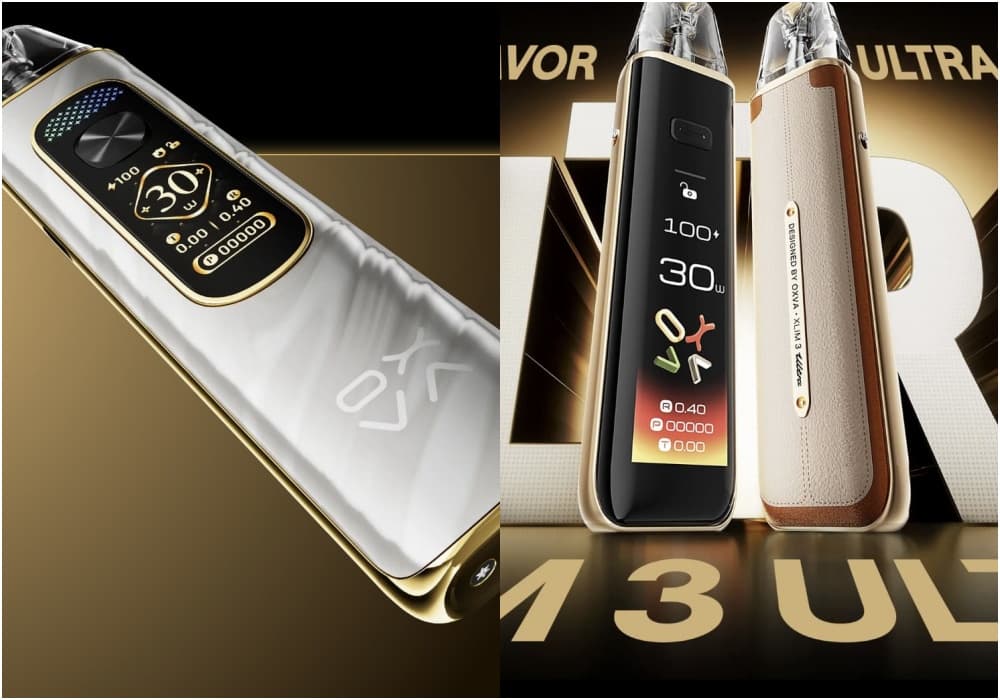
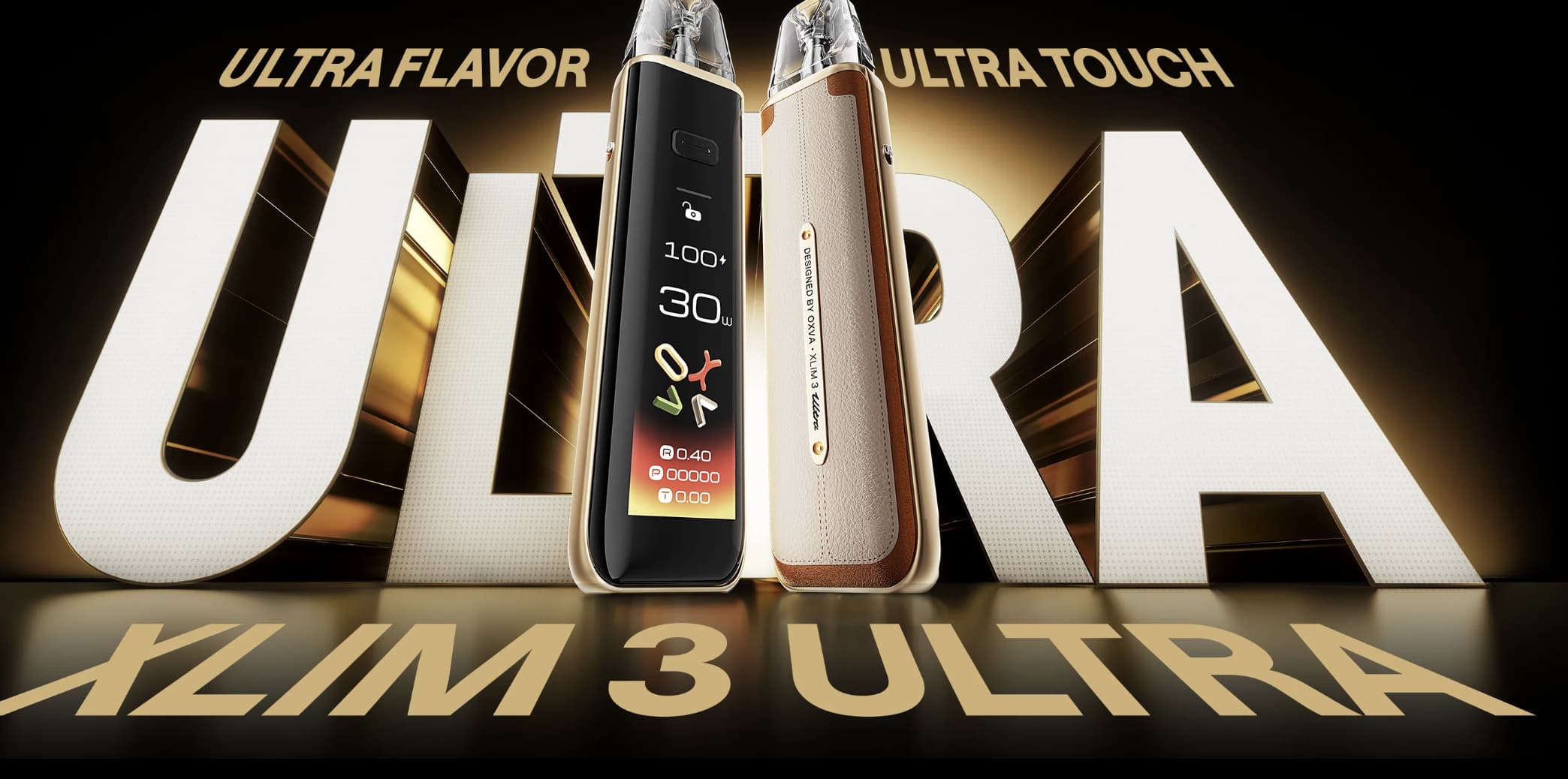
OXVA’s XLIM PRO 4 and XLIM 3 Ultra illustrate two different approaches to that development. The PRO 4 introduces Anti-Burn Tech (ABT), which monitors e-liquid levels and stops output when the cartridge is running low. The XLIM 3 Ultra takes a more interface-focused approach, combining a 2.2-inch HD touchscreen with OXVA’s Super Pulse System.
Both devices offer adjustable output up to 30W, USB-C charging, refillable top-fill cartridges and compatibility with XLIM pods. However, the details reveal meaningful differences in their battery systems, charging specifications, screen design and cartridge technology.
This comparison examines the manufacturers’ published specifications and feature descriptions. It is not a hands-on performance test, so claims about flavor, leakage prevention and cartridge longevity should be understood as manufacturer statements rather than independently verified results.
OXVA XLIM PRO 4 vs XLIM 3 Ultra: Specification Comparison
| Specification | XLIM PRO 4 | XLIM 3 Ultra |
|---|---|---|
| Main technology | Anti-Burn Tech (ABT) | Super Pulse System |
| Maximum output | 30W | 30W |
| Output range | 5–30W | 5–30W |
| Battery capacity | 1,800mAh | 1,500mAh |
| Charging | USB-C, 5V/3A | USB-C, 5V/2A |
| Display | HD color screen | 2.2-inch HD full-touch screen |
| Cartridge technology | ABT Cartridge, UNITECH 3.0 | XLIM Top Fill Cartridge |
| Included pod resistance | 0.6Ω and 0.8Ω | 0.6Ω and 0.8Ω |
| Cartridge capacity | 3ml / 2ml TPD | 3ml / 2ml TPD |
| Airflow | Side AFC, vertical adjustment | Side AFC |
| Activation | Auto-draw and button | Auto-draw and button |
| Dimensions | 124 × 27.4 × 17.6mm | 121.9 × 28.9 × 16.5mm |
| Weight | 89g | 90g |
Both models share the same 30W maximum output and support multiple XLIM cartridge resistances. The most important differences are the PRO 4’s ABT system and larger battery versus the XLIM 3 Ultra’s touchscreen and Super Pulse feature.
1. Anti-Burn Tech vs Super Pulse: The Main Difference
The most significant distinction is the technology each device puts at the center of its design.
XLIM PRO 4: Smart Liquid-Level Detection
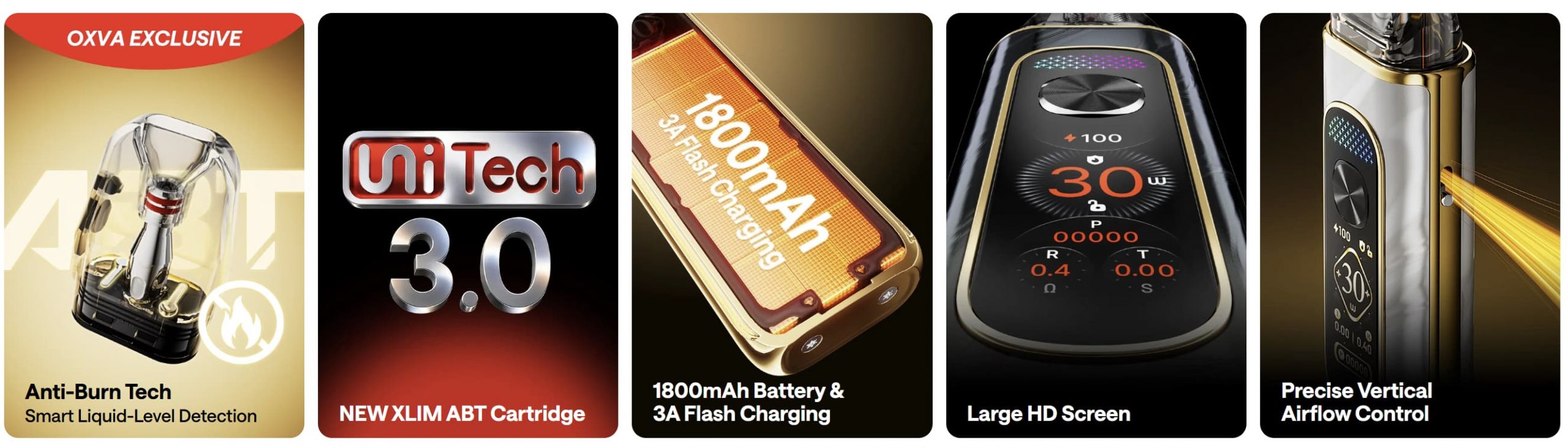
The XLIM PRO 4 introduces OXVA’s Anti-Burn Tech, or ABT. Its purpose is to address a familiar problem with refillable pod systems: a cartridge can run low on e-liquid without the user noticing immediately.
According to OXVA, the ABT cartridge uses smart liquid-level detection to identify when the liquid supply is too low or depleted. The device then stops firing and displays a refill alert. This is intended to reduce the chance of operating the coil when there is insufficient liquid available.
The technology is closely connected to the new XLIM ABT Cartridge, which uses UNITECH 3.0. It is important to understand that the protection is not simply a software setting available with every cartridge.
OXVA states that ABT protection requires both an ABT-enabled device and an ABT cartridge. The PRO 4 can also accept other XLIM cartridges, but standard cartridges do not activate the same liquid-detection protection.
This distinction matters when checking replacement-pod compatibility. A cartridge may physically fit the device without providing every feature associated with the ABT system.
For a closer explanation of how this protection system works, read our OXVA XLIM PRO 4 review, which examines its smart liquid-level detection and ABT cartridge compatibility.
XLIM 3 Ultra: Super Pulse Power Management
The XLIM 3 Ultra approaches consistency from the power-delivery side. Its Super Pulse System is designed to maintain more stable output as battery voltage decreases.
OXVA specifically promotes consistent performance even when the battery level becomes very low. The goal is to reduce the output fluctuations that can affect the device’s operating behavior over a charging cycle.
However, Super Pulse and ABT solve different problems. Super Pulse concerns power delivery, while ABT focuses on detecting insufficient e-liquid and stopping output before a dry hit occurs.
The two technologies should not be treated as interchangeable. One is a power-management feature; the other is a cartridge-related protection system.
2. Display Experience: Physical Controls or Full Touch Interaction?
The screen is another major point of separation.
The XLIM PRO 4 uses an HD color display with customizable visual options. OXVA lists four screen themes, three vaping animations and three lighting effects. Its familiar one-button control arrangement keeps the main operation relatively straightforward, while the screen presents settings, battery information and alerts.
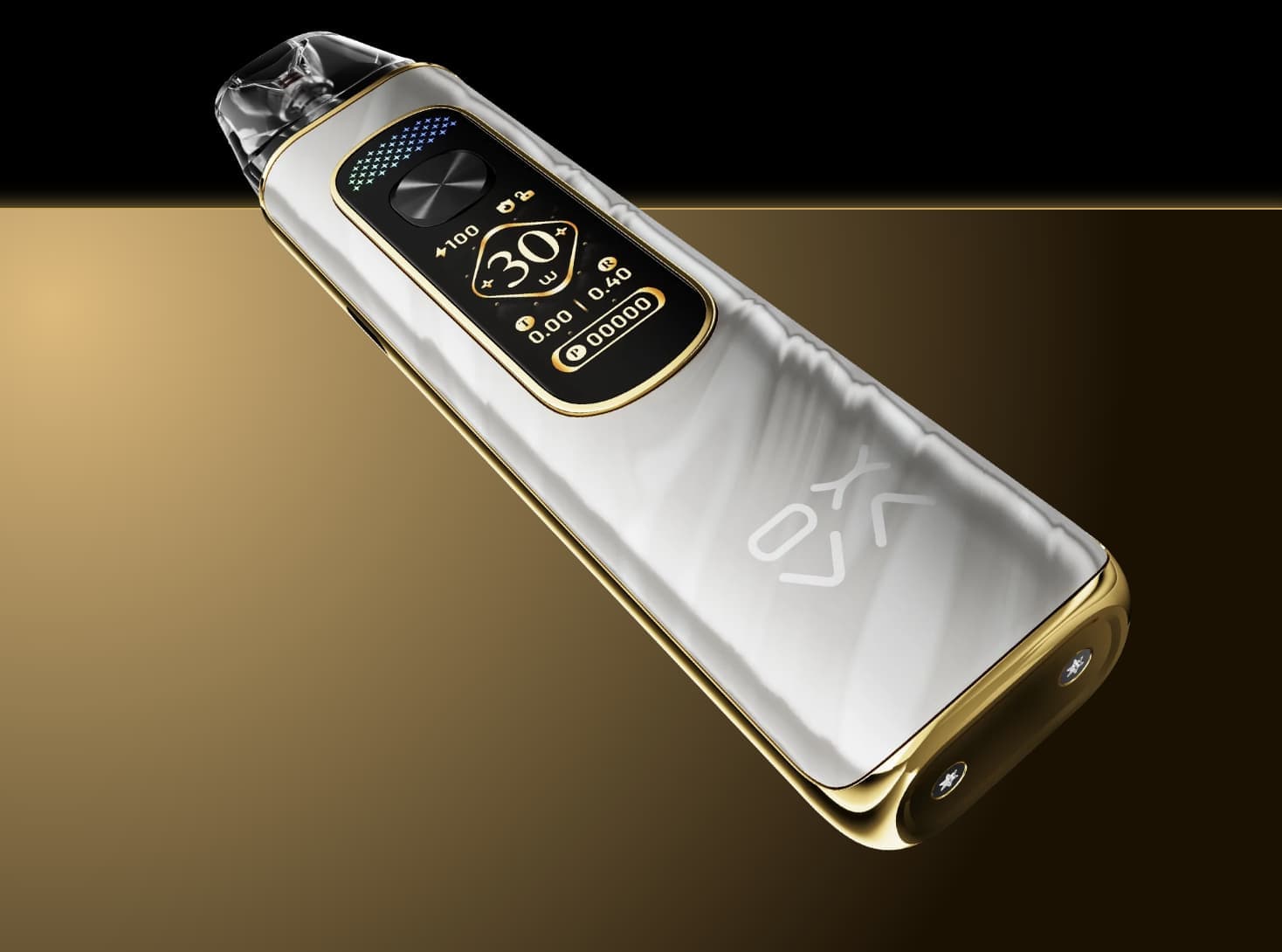
The XLIM 3 Ultra takes a more ambitious approach with a 2.2-inch HD full-touch display. The manufacturer lists a 220 × 700 resolution, 331PPI pixel density and 60Hz refresh rate.
This screen supports direct touch interaction rather than relying primarily on a small display and physical-button navigation. Users can access output adjustments, basic settings, screen themes and usage records through the interface.
Another feature is its built-in puff-record system. OXVA says the device can display daily, weekly and monthly usage summaries, with records stored locally and visible only to the user.
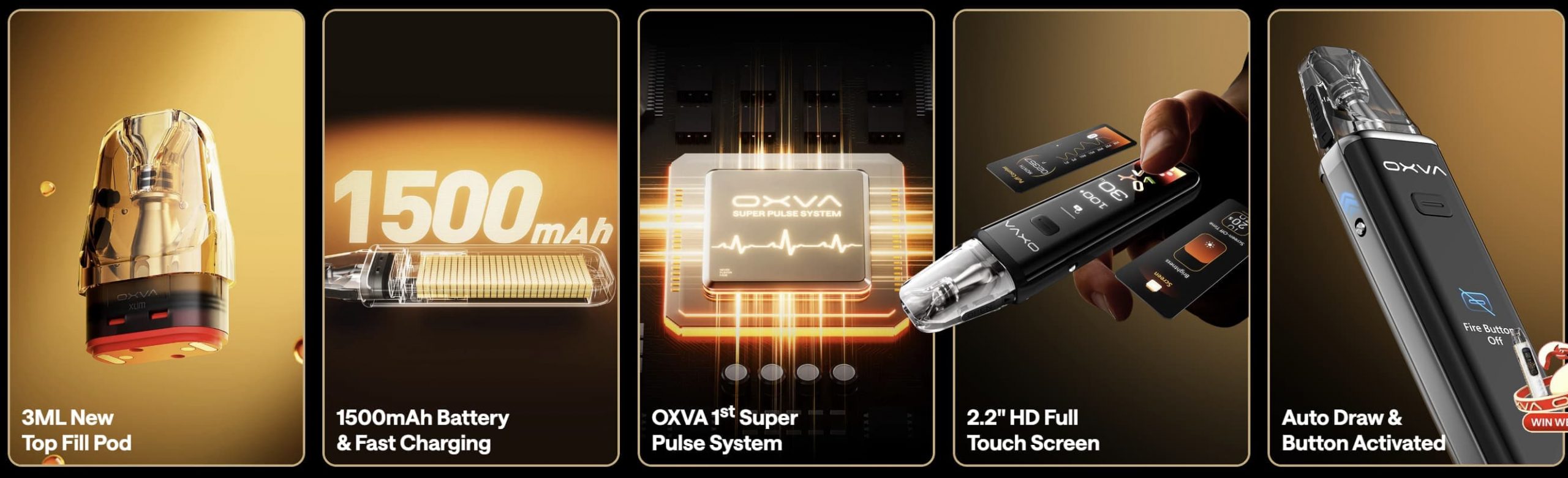
The difference is not simply screen size. The PRO 4 uses its display to support a more conventional button-controlled device, while the XLIM 3 Ultra makes the touchscreen a central part of its operating experience.
3. Battery Capacity and Charging: 1,800mAh vs 1,500mAh
Battery capacity gives the XLIM PRO 4 a clear numerical advantage.
It carries an 1,800mAh battery, compared with the XLIM 3 Ultra’s 1,500mAh unit. That is a 300mAh difference, or a 20% increase in nominal capacity.
The charging specifications also differ:
- XLIM PRO 4: USB Type-C with 5V/3A charging support.
- XLIM 3 Ultra: USB Type-C with 5V/2A charging support.
OXVA says the PRO 4 can reach a full charge in approximately 40 minutes when used with a compatible 5V/3A charger and cable. Its product page also advertises a short charging session as a way to restore useful battery capacity quickly.
For the XLIM 3 Ultra, OXVA advertises reaching 80% in approximately 30 minutes with a compatible 5V/2A setup.
These figures come from the manufacturer’s testing and claims. Actual charging times can vary with the charger, cable, temperature and battery condition.
A larger battery does not automatically mean proportionally longer operating time. Power settings, cartridge resistance, screen use and individual usage patterns all affect energy consumption.
Nevertheless, the PRO 4 has the larger battery and higher listed charging input, making battery hardware one of its clearest specification advantages.
4. Cartridge Technology: UNITECH 3.0 and the XLIM Pod Family
Both devices use refillable top-fill cartridges, with standard and TPD-capacity versions listed by OXVA.
The XLIM PRO 4 comes with the XLIM ABT Cartridge UNITECH 3.0. Its standard package includes 0.6Ω and 0.8Ω cartridges, each with a listed 3ml capacity. The TPD package uses 2ml versions.
UNITECH 3.0 is presented as an updated cartridge platform. OXVA highlights improved anti-leak construction, a shorter priming period and more consistent liquid delivery. The manufacturer also describes a 30-second priming process, although users should still follow the cartridge instructions before operating a newly filled pod.
The XLIM 3 Ultra uses the XLIM Top Fill Cartridge. Its standard package also includes 0.6Ω and 0.8Ω options, with 3ml capacity in the standard version and 2ml in the TPD version.
The Ultra supports additional XLIM cartridge resistance options, including 0.4Ω and 1.2Ω variants. This gives the wider cartridge family flexibility across different resistance configurations.
An Important Compatibility Detail
OXVA states that the PRO 4 supports the XLIM cartridge family, including ABT and standard cartridges. However, ABT protection only operates when an ABT cartridge is paired with an ABT-enabled device.
The XLIM 3 Ultra also supports multiple XLIM cartridge types, but its Super Pulse feature should not be confused with the PRO 4’s liquid-level detection.
For anyone checking replacement cartridges, the exact cartridge version matters more than the XLIM name printed on the packaging.
5. Airflow and Output Adjustment
Both devices offer a 5–30W output range and adjustable airflow, so their basic power specifications are closely matched.
The XLIM PRO 4 features a vertical airflow control slider. OXVA describes it as a way to adjust the draw from a tighter mouth-to-lung style toward a more open restricted-direct-lung configuration.
The XLIM 3 Ultra also includes side airflow control, with a sliding adjustment designed to accommodate different draw preferences.
Both models support automatic draw activation and button activation. This gives them two ways to operate without requiring users to rely on only one activation method.
The available cartridge resistance also affects how the devices behave. The PRO 4’s included 0.6Ω and 0.8Ω ABT cartridges are different from the full range of compatible resistances available separately.
Neither the maximum wattage nor the airflow slider alone establishes which device delivers better flavor. That would require testing with the same e-liquid, cartridge resistance, power setting and airflow position.
6. Size, Weight and Build
Despite their different interfaces, the two devices are close in physical size.
The XLIM PRO 4 measures 124 × 27.4 × 17.6mm and weighs 89g. The XLIM 3 Ultra measures 121.9 × 28.9 × 16.5mm and weighs 90g.
The PRO 4 is slightly taller, while the Ultra is marginally wider and thicker. Their listed weights differ by only one gram, so neither has a meaningful weight advantage based on the published figures.
Both use a metal-based construction with exterior finishing designed to give the devices a more premium appearance.
Their visual identities are different, however. The PRO 4 offers finishes such as Flowing Dark Blue, Flowing Moonlight, Stardust Purple and leather-style options. The Ultra 3 uses a different color range, including Metal Silver, Cherry Pink, Mint Green, Ultra Carbon and Mocha Brown.
The choice between them is therefore more about screen design and finish preference than portability.
7. Which Features Are More Relevant in Everyday Product Evaluation?
The two devices prioritize different areas of the pod-system experience.
The PRO 4’s ABT technology is its defining feature. Smart liquid-level detection could be useful as an additional safeguard against operating a cartridge when its liquid supply is too low. It does not eliminate the need to monitor liquid levels, maintain cartridges or replace worn components.
The XLIM 3 Ultra’s strongest differentiator is its touchscreen. The larger interface provides more room for settings and usage information, while the Super Pulse System focuses on output consistency.
There are also practical differences in charging. The PRO 4 has a larger battery and a higher listed charging input, while the Ultra has the more expansive touch interface.
Neither model is a straightforward winner across every category. Their design priorities are different, and the more relevant feature set depends on which technical aspects matter most to the person evaluating the hardware.
The previous generation also offered two different approaches to the XLIM experience; our OXVA XLIM PRO 3 vs XLIM 3 ULTRA hands-on review provides useful background on that product generation.
Final Verdict: Two Flagship Features, Two Different Priorities
OXVA XLIM PRO 4 and XLIM 3 Ultra share a strong foundation: adjustable output up to 30W, USB-C charging, top-fill cartridges, adjustable airflow and compatibility with the XLIM pod family.
Their main differences are more interesting than a simple specification upgrade.
The XLIM PRO 4 brings a larger 1,800mAh battery, 5V/3A charging and Anti-Burn Tech with smart liquid-level detection. Its key innovation is the combination of an ABT-enabled device and a compatible cartridge designed to stop output when liquid levels become too low.
The XLIM 3 Ultra offers a 2.2-inch full-touch display, 1,500mAh battery and Super Pulse System. Its main distinction is the more advanced touchscreen interface and focus on stable output as battery power decreases.
In short, the PRO 4 emphasizes cartridge protection and battery hardware, while the XLIM 3 Ultra emphasizes touch interaction and power management. Comparing them this way provides a more accurate picture than treating one as a direct replacement for the other.