











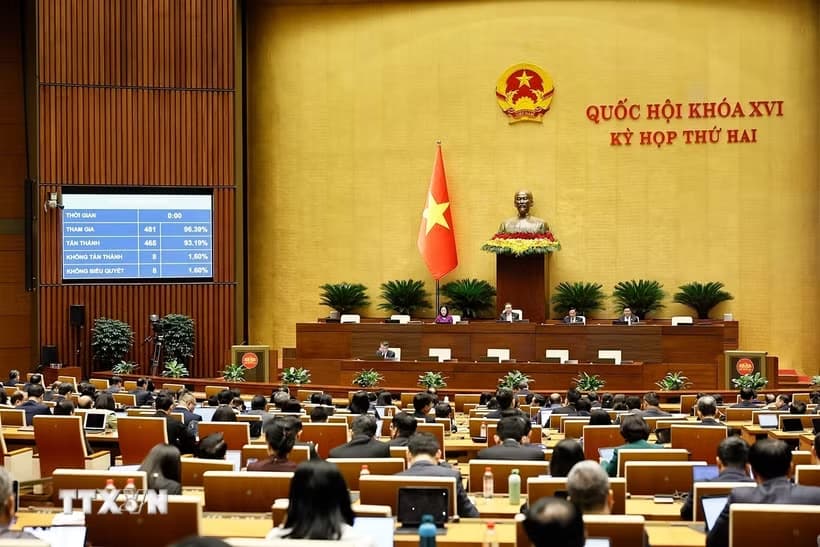
Vietnam is preparing to strengthen its restrictions on tobacco and nicotine products after the National Assembly approved amendments to its Law on Prevention and Control of Tobacco Harm. The revised legislation expands the existing prohibition on e-cigarettes and heated tobacco products to explicitly cover nicotine pouches, shisha, and other products with similar structures or functions.
According to information published by the Vietnamese Government Portal and Vietnam News Agency on November 21, the amendment was passed during the second session of the 16th National Assembly. A total of 465 lawmakers voted in favor, eight opposed it, and eight did not cast a vote, out of 481 participating members.
Most provisions of the amended law are scheduled to take effect on July 1, 2027, although several individual requirements have separate implementation dates.
The legislation represents a significant expansion of Vietnam’s tobacco-control framework. Beyond banning additional nicotine products, it introduces stricter rules for traditional cigarette sales, online distribution, retail displays, production quotas, and health warnings on packaging.
Vietnam is not the only country moving toward comprehensive restrictions on vaping products; Azerbaijan’s nationwide e-cigarette ban provides another recent example of a government adopting a prohibition-based approach to nicotine regulation.
Vietnam Expands Its Prohibited Products List to Include Nicotine Pouches and Shisha
One of the most important changes concerns Article 9 of Vietnam’s Law on Prevention and Control of Tobacco Harm, which defines prohibited activities.
The amended provision extends restrictions beyond conventional e-cigarettes and heated tobacco products. The prohibited categories now explicitly include:
-
Electronic cigarettes and vaping products
-
Heated tobacco products
-
Nicotine pouches
-
Shisha and waterpipe tobacco products
-
Counterfeit tobacco products
-
Products designed to imitate cigarettes or cigarette packaging
-
Products with structures, functions, or methods of use similar to e-cigarettes and heated tobacco devices
The expanded prohibition also covers related electronic devices, components used to contain product materials, and specialized raw materials, subject to exceptions permitted by law.
The amendment broadens the legal definitions of tobacco and related materials, including nicotine-containing substances and alternative materials used in tobacco products. This gives authorities a more comprehensive framework for identifying products that may otherwise fall outside existing regulatory definitions.
Nicotine pouches are specifically named in the amended law. Their inclusion does not mean that every nicotine pouch contains tobacco leaf. Rather, Vietnam is bringing this separate product category within the scope of its prohibited-product framework.
The restrictions cover a wide range of commercial and logistical activities, including:
-
Manufacturing and commercial trading
-
Buying, selling, and storing
-
Transportation and distribution
-
Importing and exporting
-
Transit and temporary import followed by re-export
-
Re-export and related cross-border trading activities
-
Concealing or harboring prohibited products
The law also prohibits the use of the specified products, extending the restrictions beyond businesses involved in their supply chains.
Advertising, promotional activities, and direct-to-consumer marketing of tobacco products remain subject to existing restrictions.
Other Asian markets are taking different approaches to oral nicotine products. For example, the Philippines has introduced mandatory safety certification for nicotine pouches, requiring businesses to meet product and licensing requirements rather than imposing the same blanket prohibition.
How Vietnam’s E-Cigarette Ban Developed: From 2025 Restrictions to the 2027 Law
The November 2026 amendment does not introduce Vietnam’s original e-cigarette and heated tobacco prohibition. Instead, it builds on restrictions that have already been implemented.
Vietnam’s regulatory timeline shows how the country has progressively tightened control over newer nicotine products.
November 30, 2024: National Assembly approves Resolution 173/2024/QH15
Vietnam’s 15th National Assembly adopted Resolution No. 173/2024/QH15, establishing a prohibition on the production, trading, importation, storage, transportation, and use of e-cigarettes and heated tobacco products from 2025.
January 1, 2025: Initial prohibition takes effect
The restrictions on e-cigarettes and heated tobacco products begin. This marks the start of Vietnam’s nationwide ban on the two product categories.
August 5, 2025: Government issues implementation plan
The government adopts Decision No. 1665/QĐ-TTg, setting out a plan to implement the National Assembly’s prohibition.
July 22, 2026: Import and export restrictions are reinforced
The government issues Decree No. 292/2026/NĐ-CP, implementing provisions of the Law on Foreign Trade Management. Its Appendix I lists e-cigarettes and heated tobacco products among prohibited import and export goods.
November 21, 2026: Tobacco law amendment is approved
The National Assembly approves amendments that incorporate and expand the existing restrictions within the Law on Prevention and Control of Tobacco Harm. Nicotine pouches, shisha, similar products, related equipment, and specialized materials are explicitly addressed.
July 1, 2027: Main provisions take effect
Most of the amended legislation is scheduled to become effective, establishing the expanded legal framework.
This sequence is important for manufacturers, importers, retailers, and international suppliers. Vietnam’s approach is moving beyond individual product prohibitions toward a broader system covering product definitions, commercial activities, equipment, and associated materials.
Online Cigarette Sales and Retail Displays Face Tighter Controls
The amendment also introduces significant changes for traditional tobacco businesses.
According to information released by Vietnam’s Ministry of Industry and Trade’s Industrial Agency on November 22, the revised rules prohibit the sale of tobacco products to consumers through e-commerce platforms and other electronic transaction methods.
Certain transactions between legally licensed tobacco businesses are excluded from this consumer-facing prohibition.
Physical retail stores will also face stricter display requirements. The amended law generally prohibits displaying tobacco products, packaging, images, and brand identifiers at points of sale and in electronic environments, except where the government permits specific exemptions.
Previously, retailers were allowed to display one pack, carton, or box of each cigarette brand. Under the revised rules, businesses will have a six-month transition period from the law’s effective date to adjust their display arrangements.
The legislation also reinforces age restrictions.
Selling tobacco products to anyone under 18 remains prohibited. In addition, when a customer cannot provide proof that they have reached the legal purchasing age, the seller must not complete the transaction.
Traditional tobacco wholesale and retail activities, along with businesses dealing in tobacco materials and specialized production machinery, will continue to operate under licensing requirements.
These changes could significantly affect how tobacco brands manage retail visibility, distribution agreements, and online sales channels in Vietnam.
Vietnam Introduces Greater Control Over Tobacco Production and Imports
The revised law also strengthens government oversight of traditional tobacco supply.
Vietnam plans to manage tobacco production and import volumes according to its domestic consumption-reduction targets. The Minister of Industry and Trade will determine the quantities that individual companies are permitted to produce or import.
This approach links supply management more directly to national tobacco-control objectives.
The regulatory framework also covers tobacco product tax stamps, barcodes, origin traceability, and distribution management.
For manufacturers and importers, this means compliance will involve more than obtaining the necessary business licenses. Companies will also need to account for authorized quantities, product identification, and supply-chain tracking requirements.
The amendment includes transitional arrangements for certain existing business activities. In particular, specific raw materials already transferred to businesses before the law takes effect may continue to be used until December 31, 2027.
This is a limited transitional provision for the relevant traditional tobacco operations. It should not be interpreted as a general exemption for e-cigarettes, heated tobacco products, or nicotine pouches.
Larger Health Warnings Planned for Traditional Cigarette Packaging
Another important part of the amendment concerns health warnings on tobacco packaging.
According to Vietnam’s People’s Newspaper on November 21, the revised framework will increase the proportion of the main display areas occupied by health warnings. This changes the existing standard of 50%.
The exact percentage, technical requirements, and implementation timetable will be established through additional government regulations.
Larger warnings are intended to make the health consequences of smoking more visible to consumers and strengthen the role of packaging as a tobacco-control measure.
For manufacturers, the changes may require adjustments to packaging layouts, printing processes, and product inventories ahead of the applicable compliance deadlines.
Vietnam Rejects Proposed Generational Tobacco Ban
During the legislative process, some lawmakers proposed introducing a generational tobacco purchasing prohibition.
The proposal would have permanently prohibited people born on or after January 1, 2010, from purchasing tobacco products, regardless of their age in the future.
The idea, commonly described as a generational tobacco ban, was not included in the final amendment.
Vietnamese Health Minister Dao Hong Lan explained that the government considered the policy to lack sufficient practical evidence at this stage. She also highlighted potential implementation difficulties involving age verification, retail distribution networks, and enforcement capacity.
Consequently, the National Assembly approved the broader tobacco-control amendment without adopting the proposed generational purchasing restriction.
The decision indicates that Vietnam is prioritizing product prohibitions, supply-chain controls, and retail regulation rather than introducing a permanent purchasing restriction based on birth year.
Vietnam Tobacco Law Amendment: Key Implementation Dates
The main provisions of the revised law will take effect on July 1, 2027, but several requirements have separate deadlines.
| Date | Regulatory development |
|---|---|
| January 1, 2025 | Existing ban on e-cigarettes and heated tobacco products begins |
| July 22, 2026 | Decree No. 292/2026/NĐ-CP reinforces import and export prohibitions |
| November 21, 2026 | National Assembly approves the tobacco law amendment |
| March 1, 2027 | Certain provisions concerning approval authority for tobacco industrial property licensing contracts take effect |
| July 1, 2027 | Main provisions of the amended tobacco law take effect |
| December 31, 2027 | Deadline for continued use of certain previously transferred raw materials under transitional arrangements |
| January 1, 2028 | Certain new standards for traditional tobacco products, including cigars and tobacco for smoking, take effect |
The separate deadlines matter because businesses may need to prepare for different compliance requirements at different stages.
The March 2027 provisions concern approval authority for certain industrial property licensing contracts, while the 2028 standards relate to specified traditional tobacco products. Existing industrial property contracts may continue until their agreed expiration dates.
What the Expanded Vietnam Tobacco Ban Means for the Nicotine Industry
Vietnam’s revised tobacco law represents a substantial development for the country’s nicotine market.
For e-cigarette and heated tobacco businesses, the 2025 prohibition had already created a restrictive operating environment. The 2026 amendment goes further by explicitly bringing nicotine pouches, shisha, similar products, and associated equipment and materials into the legal framework.
International manufacturers, distributors, and suppliers will need to pay particular attention to product classification, cross-border shipments, business relationships, and the handling of related materials.
Traditional tobacco companies will also face additional requirements involving online sales, retail displays, production and import quantities, packaging warnings, and traceability.
The practical impact will depend partly on implementing regulations and how Vietnamese authorities enforce the revised provisions.
For businesses operating in or supplying the Vietnamese market, July 1, 2027, is the central date to monitor, although preparation should begin earlier to account for the separate deadlines and transitional rules.