











High-capacity vape devices face a design challenge that goes beyond fitting more e-liquid into a compact body. When a device contains a large reservoir, how the liquid is managed between uses can become just as important as the tank’s capacity or heating system.
This is where NEXA introduces JUICY GUARD on the NEXA Ultra 3. The brand describes it as an AI-powered automatic sealing feature designed to help maintain e-liquid freshness. Unlike a conventional feature focused mainly on battery life or vapor production, JUICY GUARD is presented as part of the device’s liquid-management system.
But what does automatic sealing actually mean? Does it prevent leakage, reduce liquid exposure, or help maintain flavor over time? Looking at NEXA’s published product information and its descriptions of the technology helps separate the intended function from claims that still need independent verification.
What Is JUICY GUARD on the NEXA Ultra 3?
JUICY GUARD is NEXA’s automatic sealing technology featured on the Ultra 3. According to the official product page, its AI Auto-Seal function engages automatically after 15 minutes of use to help lock in e-liquid freshness.
The central idea is to manage the connection between the e-liquid reservoir and the device’s heating system. Rather than treating liquid delivery as a permanently open pathway, the system is intended to control when e-liquid is available to the atomization area.
This approach is particularly relevant to a device with a large visible reservoir. The NEXA Ultra 3 is listed with a 35mL Crystal Tank, so liquid management is an important part of its overall design.
However, NEXA’s product page does not provide a detailed engineering diagram or a complete explanation of the sealing mechanism’s operating sequence. The company also does not publish independent laboratory results demonstrating how much JUICY GUARD reduces leakage or changes in e-liquid quality.
For that reason, it is more accurate to describe JUICY GUARD as a manufacturer-designed automatic liquid-sealing feature rather than a proven guarantee of leak-free operation.
How Is the Automatic Sealing System Described to Work?
NEXA’s published explanations point to a controlled liquid-delivery approach.
In additional product-launch material, the company describes an internal dynamic pump positioned around the connection between the tank and device body. According to that description, the mechanism lifts to allow e-liquid to feed toward the atomization chamber when the device is activated, then returns to a sealed position after the draw.
The intended sequence can be understood in three stages:
1. Liquid remains separated from the heating area
The sealing concept is designed to keep the main supply of e-liquid isolated from the atomization chamber when continuous liquid delivery is not required.
2. The delivery pathway opens during activation
When the device is used, the described mechanism allows liquid to move toward the heating section. This provides the supply needed for the device’s atomization system.
3. The system returns to a sealed state
After the draw, the mechanism is intended to close the pathway again, limiting unnecessary contact between the remaining reservoir liquid and the heating area.
This is the operating concept described in NEXA’s launch material, not a verified teardown of the internal components. The official product page separately states that its AI Auto-Seal engages after 15 minutes of use, but does not fully explain how that timing relates to the individual draw-and-seal cycle.
That distinction matters. Readers should not assume that every technical detail of the internal mechanism has been independently confirmed.
Why Does E-Liquid Management Matter in a High-Capacity Device?
A larger reservoir creates more capacity, but capacity alone does not determine how well a device maintains its intended performance.
E-liquid interacts with several parts of an atomization system, including the wick or liquid-feed structure, heating element and surrounding chamber. The way these components are connected can influence how liquid reaches the heating surface and how the device behaves during periods of use and storage.
Three considerations help explain why manufacturers develop liquid-management systems.
1. Controlling Unnecessary Liquid Exposure
When e-liquid remains in contact with the heating area for extended periods, the condition of the liquid and the surrounding components may change.
A controlled sealing system is intended to reduce unnecessary exposure by separating the reservoir from the atomization area when liquid delivery is not needed.
This is the main design purpose suggested by JUICY GUARD’s automatic-sealing description. However, the product information does not quantify the reduction in exposure or establish how much it affects liquid stability.
2. Managing the Liquid Feed
A heating element needs an appropriate liquid supply to operate as designed. Liquid delivery that is inconsistent or poorly controlled can affect the way an atomization system performs.
NEXA’s description of a dynamic pump suggests that JUICY GUARD is intended to regulate the connection between the tank and the heating section.
It is important not to confuse this with a complete solution to every possible coil or liquid-feed issue. The manufacturer has not published enough technical data to establish how the mechanism performs under all operating conditions.
3. Supporting the Design of a Larger Tank
The Ultra 3’s 35mL Crystal Tank makes liquid visibility a prominent part of its design. Users can inspect the remaining liquid rather than relying entirely on an estimate.
JUICY GUARD addresses a different part of the same system: how the liquid is managed inside the device.
In other words, the transparent tank is about visibility, while automatic sealing is about liquid management. They serve different purposes and should not be treated as interchangeable technologies.
JUICY GUARD vs JUICY LOCK: What Is the Difference?
NEXA has used different liquid-management names across its product range. The original NEXA Ultra and other earlier models have been associated with JUICY LOCK, while the Ultra 3 introduces JUICY GUARD.
The distinction is worth understanding because the two names do not describe exactly the same advertised approach.
JUICY LOCK is presented as a system that keeps e-liquid isolated until the user activates the device. NEXA’s brand information describes it as a press-to-activate design intended to prevent leakage during transportation.
JUICY GUARD, meanwhile, is promoted as an automatic sealing feature on the Ultra 3. Its product page highlights an AI Auto-Seal function, while launch material describes a mechanism that opens the liquid pathway during use and closes it afterward.
The following comparison summarizes the difference in the manufacturer’s descriptions:
| Feature | JUICY LOCK | JUICY GUARD |
|---|---|---|
| Product association | Earlier NEXA devices | NEXA Ultra 3 |
| Main concept | User-activated liquid isolation | Automatic liquid sealing |
| Activation description | Press-to-activate | Automatic operation |
| Advertised purpose | Keep liquid sealed before activation | Help maintain e-liquid freshness |
| Technical evidence | Manufacturer description | Manufacturer description |
The table reflects NEXA’s published explanations, not an independent performance comparison. There is not enough publicly available test data to conclude that JUICY GUARD delivers a specific percentage improvement over JUICY LOCK.
Does JUICY GUARD Actually Prevent Leaks?
This is one of the most important questions surrounding the feature.
Automatic sealing may help manage the liquid pathway, but it should not automatically be interpreted as a guarantee that the device cannot leak.
Leakage can have multiple causes, including physical damage, seal deterioration, manufacturing tolerances, temperature changes and pressure differences. A liquid-management mechanism may address some aspects of the design without eliminating every possible source of leakage.
NEXA describes JUICY GUARD as a freshness-focused automatic sealing system. Its product page does not provide a quantified leak-prevention rate, independent transport test results or long-term reliability data.
Therefore, the safest interpretation is that JUICY GUARD is designed to control liquid exposure and support the device’s liquid-management architecture. Whether it provides a measurable improvement in leak resistance requires more testing.
Does Automatic Sealing Keep the Flavor Fresh?
NEXA markets JUICY GUARD around the idea of preserving e-liquid freshness. The reasoning is that controlling liquid contact with the atomization area may help limit unnecessary exposure during periods when the device is not being used.
Nevertheless, flavor consistency depends on more than the sealing mechanism.
Other factors include:
- E-liquid formulation and storage conditions.
- The condition and performance of the heating element.
- The liquid-feed design.
- Temperature and environmental conditions.
- How frequently and how intensively the device is used.
A sealing system cannot independently guarantee that flavor will remain identical throughout the product’s lifespan. NEXA has not published controlled test results showing how much JUICY GUARD changes flavor stability compared with a conventional liquid-feed design.
For readers evaluating the technology, it is useful to distinguish between the intended engineering benefit and a measurable result.
What Other NEXA Ultra 3 Specifications Work Alongside JUICY GUARD?
JUICY GUARD is only one part of the Ultra 3’s internal design. NEXA’s official specification page also lists several other components.
| Specification | NEXA Ultra 3 |
|---|---|
| E-liquid capacity | 35mL |
| Advertised puff count | 100,000 / 60,000 |
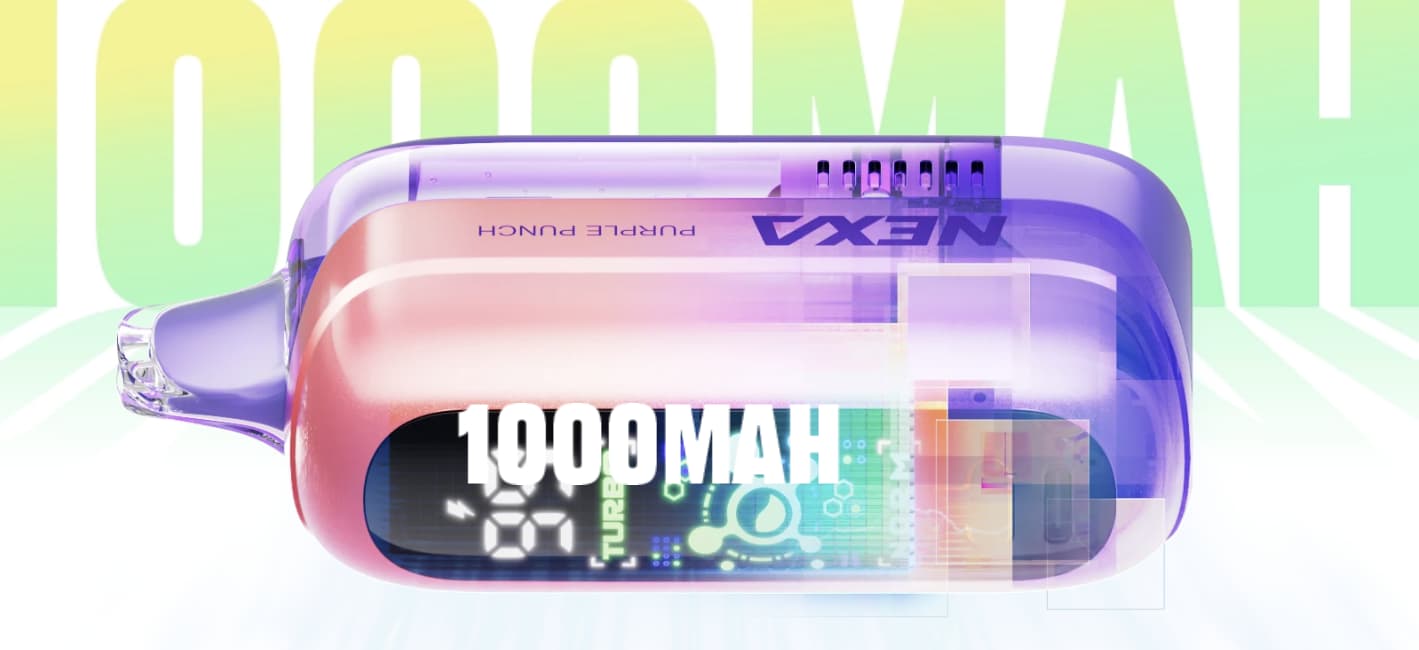
| Battery capacity | 1,000mAh |
| Coil configuration | Dual mesh |
| Coil resistance | 0.8Ω |
| Maximum stated output | 25W dual-coil system |
| Charging | USB Type-C |
| Airflow | Straight airflow design |
| Liquid-management feature | JUICY GUARD |
These figures are manufacturer-published specifications. Advertised puff counts are not guaranteed real-world totals, and actual performance can vary with operating conditions.
The relationship between the components is more interesting than any single number. The tank stores the liquid, the dual-mesh system handles atomization, and JUICY GUARD is intended to manage liquid access to the heating area.
Together, these features form the product’s broader liquid-delivery and heating architecture.
What Has NEXA Not Explained About JUICY GUARD?
Although the feature has a clear marketing purpose, several technical questions remain unanswered in the publicly available product information.
Is the sealing mechanism mechanical or electronically controlled?
NEXA uses the term AI Auto-Seal, but the product page does not provide enough detail about the sensors, control circuitry or exact mechanism involved.
What exactly does the 15-minute timing refer to?
The official page says the system engages automatically after 15 minutes of use. It does not clearly explain whether this refers to a specific inactivity period, an operating interval or another activation condition.
How much does it reduce leakage?
No independently verified leakage-rate comparison or standardized test result is provided on the product page.
Does it measurably extend flavor stability?
The freshness benefit is a manufacturer claim. A controlled comparison over time would be needed to establish the size of any improvement.
These unanswered questions do not mean the technology is ineffective. They simply show where the available product information ends and where further technical evidence would be useful.
Final Thoughts: JUICY GUARD Is About More Than a Marketing Name
NEXA Ultra 3‘s JUICY GUARD feature is designed around a straightforward engineering idea: control the movement of e-liquid between the reservoir and the atomization area instead of leaving that connection continuously open.
NEXA presents the system as an automatic sealing technology intended to help preserve liquid freshness. Its launch material describes a dynamic pump that opens the pathway during use and returns to a sealed position afterward, while the official product page highlights an AI Auto-Seal function that engages after 15 minutes of use.
The most important distinction is that automatic sealing is not the same as guaranteed leak prevention or proven long-term flavor preservation. Those outcomes would require independent testing and more detailed technical documentation.
For anyone researching the NEXA Ultra 3, JUICY GUARD is best understood as a liquid-management feature designed to complement the device’s 35mL visible tank and dual-mesh heating system. Its actual long-term benefits remain a subject for further verification.