









Buying an Android tablet sounds simple until you start comparing screen sizes, processors, RAM, storage, refresh rates, battery capacities and cellular options. Two tablets can look similar on a product page while offering very different experiences in everyday use.
If a larger display is your priority, our guide to large-screen Android tablets for browsing and entertainment compares screen sizes, refresh rates, battery life, speakers and everyday usability.
The right Android tablet depends less on having the highest specification and more on matching the hardware to what you actually plan to do.
A tablet used mainly for YouTube and web browsing has different requirements from one used for gaming, digital drawing, schoolwork or productivity. A compact 8-inch model may be ideal for reading on the go, while a 13-inch tablet can be much more comfortable for split-screen work and movies.
This Android tablet buying guide breaks down the specifications that matter, explains where you can save money, and shows which features deserve more attention before you buy.
Start With How You Will Use the Tablet
Before looking at individual models, define the main job you want the tablet to perform.
For Web Browsing and Streaming
If your tablet will mainly be used for websites, YouTube, streaming services and social media, you do not necessarily need flagship hardware.
Focus on:
- A comfortable display
- Good viewing angles
- Smooth scrolling
- Sufficient RAM
- Reliable Wi-Fi
- Good battery life
- Decent speakers
A 10- to 12-inch screen is generally a practical balance between viewing space and portability. Larger 12- to 14-inch models are more immersive for movies and better suited to desktop-style browsing, although they are less convenient to hold.
For Students
Students should look beyond processor performance.
A useful study tablet should have:
- A comfortable screen for reading
- Good battery endurance
- Enough storage for documents and applications
- Reliable Wi-Fi
- Optional keyboard support
- Stylus compatibility if handwritten notes are important
Weight also matters. A tablet that is comfortable to carry between classes can be more useful than a heavier model with specifications you rarely use.
For Gaming
Gaming changes the buying criteria considerably.
Prioritize:
- Processor and GPU performance
- Sustained performance
- Cooling
- Refresh rate
- Touch response
- Battery capacity
- Storage
Do not assume that a 120Hz display means a tablet will run demanding games at 120 frames per second. The processor and GPU still determine how well the device handles intensive graphics.
For Productivity
If you want to use an Android tablet as a lightweight work device, screen size becomes more important.
A larger display gives you more room for documents, browser tabs, spreadsheets and split-screen applications.
Keyboard and mouse support can also transform the experience.
For productivity, consider:
- 11- to 14-inch display
- Strong multitasking performance
- Sufficient RAM
- USB-C connectivity
- Keyboard support
- Stylus support where relevant
- Long battery life
- Reliable software updates
For Drawing and Note Taking
Artists and students should pay particular attention to stylus support.
Important factors include:
- Pressure sensitivity
- Pen latency
- Palm rejection
- Compatible drawing applications
- Screen size
- Display resolution
- Stylus availability and price
Do not buy a tablet simply because a generic stylus can interact with the screen. A dedicated active pen system can provide a much more natural writing and drawing experience.
Choosing the Right Android Tablet Screen Size
Screen size is one of the most visible differences between tablets, but bigger is not automatically better.
8–9 Inches: Compact and Portable
Small Android tablets are useful when portability is the priority.
They work well for:
- E-books
- Casual browsing
- Travel
- Reading
- Simple games
- One-handed use
The trade-off is limited workspace.
Websites designed for larger screens can also feel cramped, particularly when you use desktop-style interfaces.
10–11 Inches: The Everyday Sweet Spot
The 10- to 11-inch category remains a practical choice for general users.
It provides enough space for:
- Streaming
- Browsing
- Online classes
- Social media
- Casual gaming
- Documents
At the same time, many models remain easy enough to carry in a backpack.
For someone who wants one tablet to handle a little bit of everything, this size range is worth considering first.
12–14 Inches: Maximum Workspace
Large Android tablets are becoming increasingly interesting for entertainment and productivity.
A 12- to 14-inch display can make:
- Split-screen multitasking
- Video editing
- Spreadsheet work
- Reading PDFs
- Movie watching
- Desktop-style browsing
much more comfortable.
The disadvantage is portability. A large tablet is usually better used on a desk, stand or lap than held in one hand for hours.
For more information on large displays, see our Best Large-Screen Android Tablets for Browsing and Entertainment guide.
Resolution: Bigger Is Not Enough
Screen size and resolution should be considered together.
A large display with a relatively low pixel density can make small text appear less sharp than you might expect.
For everyday tablet use, look at:
- Resolution
- Pixel density
- Text sharpness
- Brightness
- Contrast
- Viewing angles
- Color reproduction
A higher resolution is particularly useful on larger screens because you are likely to view text, photos and video from relatively close distances.
LCD or OLED?
The panel technology can have a significant impact on the viewing experience.
LCD
LCD displays are common across affordable and mid-range tablets.
Advantages include:
- Lower manufacturing cost
- Good brightness on many models
- No OLED burn-in concerns
- Wide availability
OLED
OLED displays can offer:
- Deep blacks
- Very high contrast
- Strong colors
- Excellent movie-watching quality
For entertainment, OLED can be particularly attractive.
However, an OLED panel does not automatically make a tablet better in every category. Brightness, calibration, refresh rate and software still matter.
Is a 120Hz Tablet Worth Buying?
A 120Hz refresh rate means the display can refresh up to 120 times per second, compared with 60 times on a conventional 60Hz display.
For a closer look at the benefits and limitations of high-refresh-rate screens, see our 120Hz Android tablet guide.
The most noticeable benefit is smoother motion.
You may see the difference while:
- Scrolling websites
- Swiping through menus
- Browsing social media
- Playing compatible games
- Moving between applications
However, refresh rate should not be considered in isolation.
A tablet with a 120Hz panel but weak hardware may still provide a poor gaming experience. Similarly, users who mainly read static documents may gain less from 120Hz than users who frequently scroll.
If high refresh rates are important to you, our 120Hz Android tablet guide can help explain the differences in everyday use.
Choosing the Processor
The processor is one of the most important components inside an Android tablet.
It affects:
- Application loading
- Multitasking
- Gaming
- Image processing
- Video playback
- Overall responsiveness
- Long-term usability
But the fastest available chip is not always necessary.
Entry-Level Hardware
Suitable for:
- Web browsing
- Video streaming
- E-books
- Basic applications
- Online learning
Mid-Range Hardware
A better choice for:
- Frequent multitasking
- Casual gaming
- More demanding applications
- Productivity
- Longer-term everyday use
Flagship Hardware
Useful for:
- High-end gaming
- Advanced multitasking
- Video editing
- Professional creative applications
- Users who want maximum performance
The most important rule is to consider sustained performance, not just the processor’s headline clock speed.
RAM: How Much Do You Need?
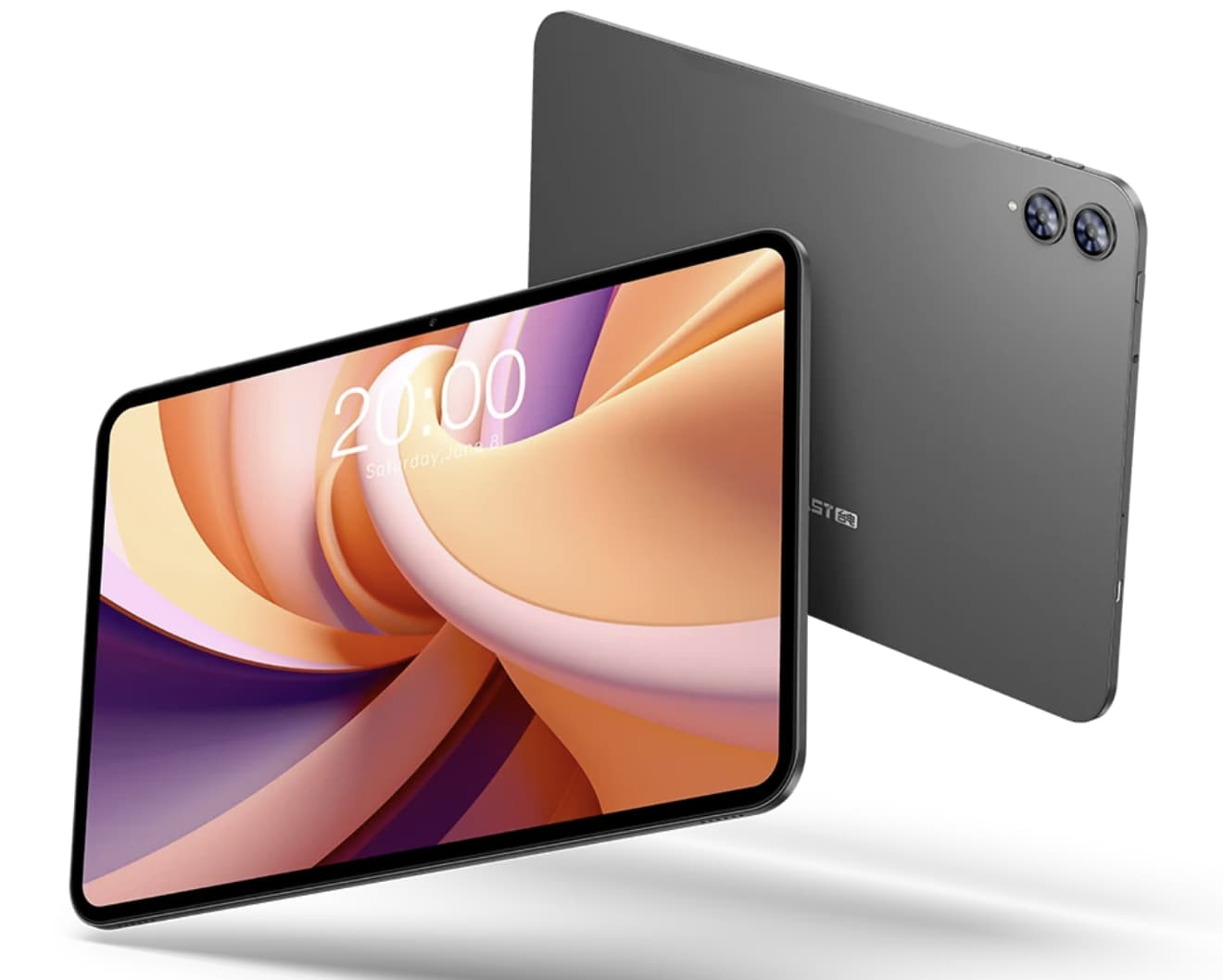
RAM affects how many applications the tablet can keep active and how smoothly it handles multitasking. Teclast T65 review is a useful example of how physical RAM, virtual RAM, processor performance and everyday tablet use can differ from the numbers shown on a product page.
A rough way to think about it:
4GB: Basic use
6GB: General everyday use
8GB: Better multitasking
12GB or more: Heavy multitasking and demanding applications
These are guidelines rather than hard requirements.
Android memory management also varies by manufacturer, and software optimization can influence how much free RAM is actually useful.
What About Virtual RAM?
Some Android tablets advertise features such as “6GB RAM + 20GB virtual RAM.”
Virtual RAM should not be interpreted as equivalent to having 26GB of physical memory.
Virtual memory uses part of the internal storage to support memory management. It can be useful in certain situations, but storage is significantly slower than physical RAM.
When comparing tablets, always pay attention to the actual physical RAM first.
How Much Storage Should You Get?
Storage requirements depend heavily on what you keep locally.
64GB
Can work for:
- Browsing
- Streaming
- E-books
- Basic applications
But available space may become limited relatively quickly.
128GB
A practical starting point for many users.
It provides more room for:
- Apps
- Photos
- Downloads
- Games
- Documents
256GB or More
Worth considering for:
- Large games
- Video editing
- Offline movies
- Large photo libraries
- Professional applications
If a tablet includes MicroSD expansion, that can reduce the need to buy a higher-capacity version.
However, not every application can be fully moved to external storage, so expandable storage should not always be treated as a complete replacement for internal storage.
Battery Capacity vs Real Battery Life
Tablet batteries are usually much larger than smartphone batteries, but capacity alone does not determine endurance.
Actual battery life depends on:
- Display brightness
- Screen refresh rate
- Processor efficiency
- Wi-Fi or cellular usage
- Video playback
- Gaming
- Background applications
An 8,000mAh tablet can therefore last longer or shorter than another tablet with a larger battery depending on how efficiently the hardware uses power.
For buyers, independent battery testing is more useful than comparing battery capacities alone.
Wi-Fi, 4G or 5G?
This is another decision that depends on where you use your tablet.
Wi-Fi Tablets
Best for:
- Home use
- Office use
- Streaming
- Online learning
- Users who normally have Wi-Fi available
They are usually cheaper and simpler.
4G LTE Tablets
Useful if you frequently use your tablet away from Wi-Fi.
Benefits include:
- Mobile internet
- Travel connectivity
- Navigation
- Outdoor browsing
- Backup connectivity
5G Tablets
5G can provide faster mobile connectivity where supported, but it can also increase the price.
If you rarely use cellular data, paying extra for 5G may not provide much practical benefit.
Cameras: Don’t Overpay for Megapixels
Tablet cameras are generally less important than smartphone cameras.
A rear camera can still be useful for:
- Scanning documents
- Taking notes from whiteboards
- Quick photos
- Video calls with certain applications
For most tablet buyers, camera specifications should come after the display, processor, battery and software experience.
Front-camera quality matters more if you regularly use the tablet for video meetings or online classes.
Speakers and Headphones
Entertainment users should pay attention to audio.
A tablet with multiple speakers can produce a wider and more immersive soundstage than a basic stereo configuration.
Look for:
- Speaker count
- Stereo separation
- Maximum volume
- Dialogue clarity
- Distortion
- Headphone connectivity
A 3.5mm headphone jack can be useful for people who already own wired headphones, while Bluetooth is convenient for wireless accessories.
USB-C and Connectivity
USB-C has become the standard charging and data port on modern Android tablets.
But not every USB-C port offers the same capabilities.
Depending on the model, USB-C may support:
- Charging
- Data transfer
- External displays
- USB accessories
- Storage devices
- Audio
If you plan to connect a monitor, keyboard, external drive or other accessories, check the actual USB standard and supported functions rather than assuming every USB-C port works identically.
Android Version and Software Support
Hardware specifications get most of the attention, but software can determine how long a tablet remains useful.
Before buying, check:
- Android version
- Manufacturer interface
- Security updates
- Major Android updates
- Pre-installed applications
- Multitasking features
- Tablet optimization
A newer Android version can bring better privacy controls, interface improvements and compatibility, but long-term update support can be even more important.
A tablet that receives regular security updates may remain a more practical device several years after purchase.
Keyboard and Stylus Support
Accessories can change what a tablet is capable of doing.
A keyboard is useful for:
- Documents
- Long-form writing
- Web research
- Productivity
A stylus is useful for:
- Handwritten notes
- Drawing
- PDF annotation
- Signatures
- Creative applications
Before buying a tablet for productivity, check whether the keyboard and stylus are included or sold separately.
A seemingly affordable tablet can become considerably more expensive after adding accessories.
What About Tablet Weight?
Weight becomes increasingly important as screen size increases.
A large tablet may look impressive on a specification sheet, but holding it for an hour while reading can be tiring.
Think about where you normally use the device.
Bed or sofa: Weight matters significantly.
Desk: Weight matters less.
Travel: Weight and dimensions become major considerations.
Drawing: Weight and balance affect comfort during long sessions.
This is one reason a 12-inch tablet may be more practical for some users than a 14-inch model, even if the larger display looks more impressive.
Don’t Ignore the Aspect Ratio
Two tablets with the same diagonal screen size can feel very different because of their aspect ratios.
A wider display can be excellent for movies and split-screen applications.
A more square-shaped screen can be better for:
- Web pages
- Documents
- E-books
- Drawing
- Productivity
If watching widescreen video is your priority, check how much black space appears around the content.
Tablet Buying Guide by Budget
Instead of setting an arbitrary budget based only on price, think about what features are essential at each level.
Affordable Android Tablets
Prioritize:
- Good display
- Reliable basic processor
- At least reasonable RAM
- Expandable storage
- Strong battery life
These tablets are suitable for browsing, streaming and basic education.
Mid-Range Android Tablets
This is where many buyers can find a good balance between price and performance.
Look for:
- 90Hz or 120Hz display
- Better processor
- 6GB–12GB RAM
- 128GB or more storage
- Better speakers
- Keyboard or stylus support
Premium Android Tablets
At the high end, expect:
- OLED or premium LCD displays
- High refresh rates
- Flagship processors
- Better speakers
- Advanced multitasking
- Premium build quality
- Strong accessory ecosystems
- Longer software support
The additional cost makes more sense for users who will actually use those capabilities.
Common Android Tablet Buying Mistakes
Buying the Largest Screen Without Considering Weight
A huge screen is attractive, but portability can suffer.
Choosing RAM Based Only on Virtual Memory
“20GB RAM” marketing can be misleading when much of that figure comes from virtual memory.
Check physical RAM first.
Assuming More Megapixels Means Better Cameras
Camera quality depends on much more than resolution.
Paying for 5G You Never Use
If the tablet stays connected to home Wi-Fi, cellular connectivity may provide little benefit.
Ignoring Software Updates
A tablet is a long-term purchase. Update support matters.
Choosing a Processor Only From Its Clock Speed
Architecture, cores, GPU, efficiency and sustained performance all matter.
Forgetting Accessory Costs
A keyboard, stylus, case and charger can significantly change the total cost.
A Simple Checklist Before You Buy
Before ordering an Android tablet, ask yourself:
1. What will I mainly use it for?
Browsing, streaming, gaming, studying, drawing or productivity?
2. What screen size do I actually need?
Do you value portability or workspace?
3. Do I need 120Hz?
It is useful for smooth scrolling and supported games, but not essential for every user.
4. How much physical RAM do I need?
Look at real RAM rather than virtual-memory marketing numbers.
5. How much storage will I use?
Consider games, downloads and offline media.
6. Do I need cellular connectivity?
Wi-Fi is sufficient for many home users.
7. Will I use a keyboard or stylus?
Check compatibility and additional cost before purchasing.
8. How long do I want to keep the tablet?
Software updates and processor performance become more important for long-term ownership.
9. Where will I use it?
Desk, sofa, classroom, office or travel?
10. What matters more: specifications or experience?
A balanced tablet is often more satisfying than one with a single impressive specification.
Final Verdict: How to Choose the Right Android Tablet
There is no single Android tablet that is perfect for every buyer.
If you mainly browse websites and watch videos, prioritize the display, speakers, battery and comfortable screen size.
If you study or work on the tablet, give more attention to multitasking, keyboard support, storage and software.
If gaming is the priority, focus on processor performance, GPU capability, cooling and refresh rate.
If you travel frequently, consider weight, battery life and cellular connectivity.
And if you want a tablet that can handle a little of everything, a well-balanced mid-range model can make more sense than paying a premium for specifications you may never use.
The most useful way to shop is therefore not to ask, “Which Android tablet has the best specifications?” Instead, ask “Which specifications will make the biggest difference to the way I use my tablet?”
That shift makes it much easier to find the right Android tablet without overspending on features that do not matter to you.
Android Tablet FAQ
What screen size is best for an Android tablet?
For general use, 10–11 inches offers a good balance of portability and workspace. Larger 12–14-inch tablets are better suited to entertainment, split-screen multitasking and productivity.
Is 8GB RAM enough for an Android tablet?
For many users, 8GB of physical RAM is sufficient for browsing, streaming, productivity and moderate multitasking. More demanding users may benefit from 12GB or more.
Is a 120Hz Android tablet better than a 60Hz tablet?
A 120Hz display can provide smoother scrolling and animations. However, it does not automatically mean better overall performance because processor speed, software and application support also matter.
Is 128GB enough tablet storage?
128GB is a reasonable starting point for many users. If you download many games, movies or large files, consider 256GB or expandable storage.
Do I need a 5G Android tablet?
Not necessarily. A 5G tablet makes more sense if you regularly use cellular data. For home and office users with reliable Wi-Fi, a Wi-Fi-only model may be sufficient.
Are large Android tablets good for entertainment?
Yes. Large displays can provide a more immersive experience for movies, websites and games. However, display quality, speakers, battery life and streaming compatibility are also important.
Is virtual RAM the same as physical RAM?
No. Virtual RAM generally uses part of the tablet’s internal storage to assist memory management. It should not be treated as a direct replacement for additional physical RAM.
How long should an Android tablet last?
The physical hardware can remain usable for several years, but software-update support, battery condition and performance requirements determine how practical it remains over time.