










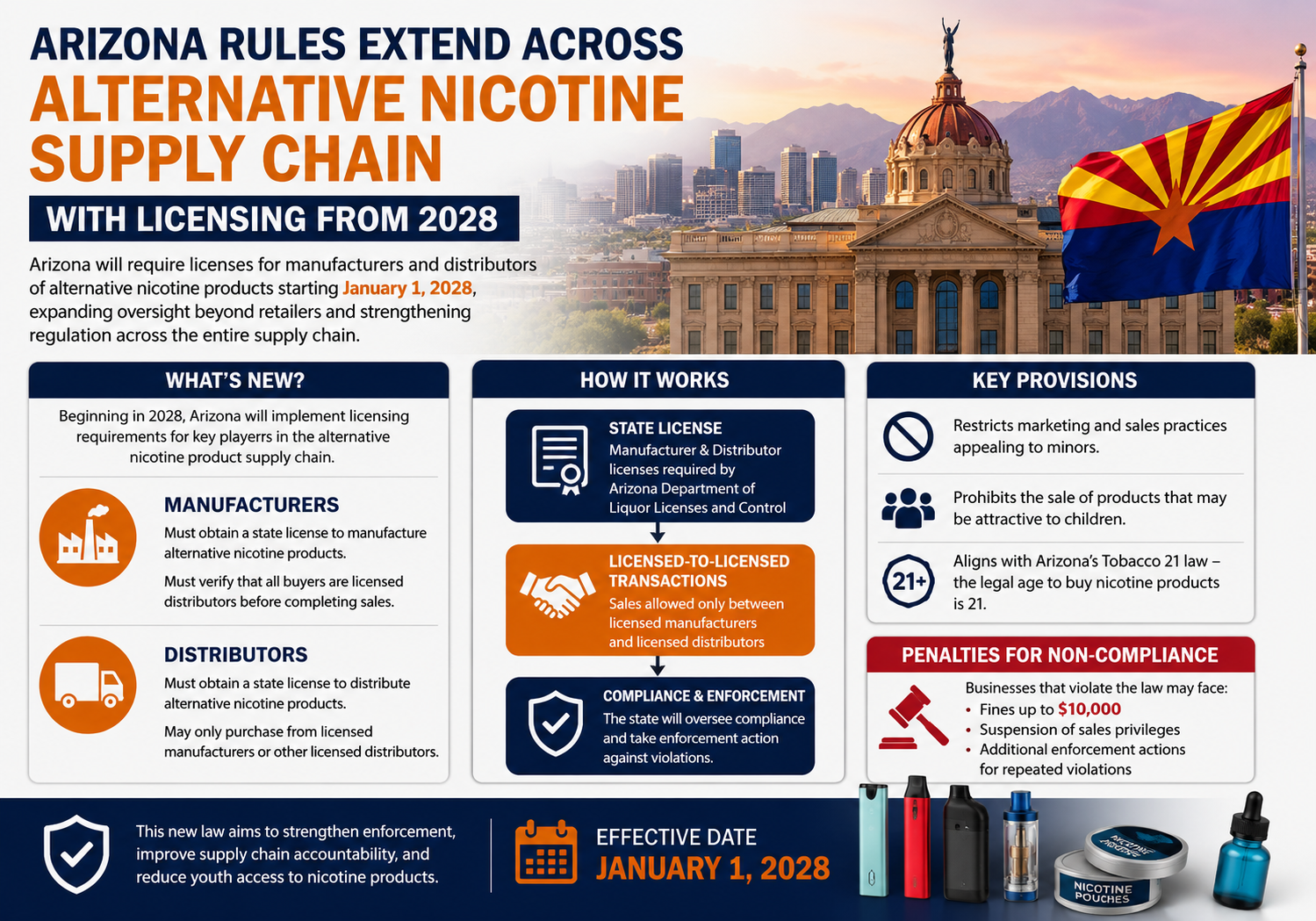
Arizona is set to introduce a new regulatory framework for alternative nicotine products, extending oversight beyond retailers and into the manufacturing and distribution sectors. Under legislation scheduled to take effect on January 1, 2028, businesses involved in producing or distributing alternative nicotine products will be required to obtain state licenses before operating in Arizona.
New Licensing System Targets the Supply Chain
The legislation establishes licensing requirements for both manufacturers and distributors of alternative nicotine products. State lawmakers say the measure is designed to strengthen enforcement, improve accountability throughout the supply chain, and reduce youth access to nicotine products.
Beginning in 2028, distributors will only be permitted to purchase products from licensed manufacturers or licensed distributors. Likewise, manufacturers will be required to verify that their buyers hold valid licenses before completing sales transactions.
The licensing program will be administered by the Arizona Department of Liquor Licenses and Control, which will oversee compliance, enforcement actions, and penalties for violations.
Broader Regulation of Alternative Nicotine Products
Arizona’s law focuses on products classified as “alternative nicotine products,” a category generally covering nicotine-containing products that are not traditional tobacco products. The legislation also includes restrictions on marketing and sales practices, particularly those that could appeal to underage consumers.
State officials have expressed concerns about the increasing availability of nicotine products designed to resemble toys, electronic gadgets, or other youth-oriented items. Recent provisions prohibit the sale of products that may be considered especially attractive to minors.
Tougher Penalties for Non-Compliance
Businesses that fail to comply with the new licensing requirements could face substantial penalties. The law authorizes significant fines, suspension of sales privileges, and additional enforcement actions for repeated violations. In some cases, penalties can reach $10,000 and include temporary prohibitions on selling alternative nicotine products.
Supporters argue that the stronger enforcement tools will help create a more transparent marketplace while ensuring businesses operate under consistent regulatory standards.
Alignment with Arizona’s Tobacco 21 Policy
The new licensing requirements follow Arizona’s recent efforts to align state nicotine regulations with federal standards. In 2025, Arizona raised the legal age for purchasing and possessing tobacco and nicotine products to 21, matching the federal Tobacco 21 law. The updated age restrictions apply to cigarettes, cigars, e-cigarettes, vaping products, and other nicotine-related items.
Lawmakers view the licensing framework as a complementary measure that addresses the supply side of the market while maintaining age-based sales restrictions.
Industry and Public Health Perspectives
The legislation has received support from some industry organizations that believe a licensing structure can improve market oversight and help distinguish compliant businesses from illegal operators. Advocates argue that a regulated supply chain may increase consumer confidence and encourage responsible business practices.
However, some public health groups have suggested that Arizona could eventually adopt broader retail licensing requirements similar to those already in place in many other states. These organizations argue that regulating manufacturers and distributors is only one part of a comprehensive nicotine-control strategy.
Looking Ahead to 2028
As the implementation date approaches, manufacturers, distributors, and other stakeholders in Arizona’s nicotine industry will need to prepare for the new licensing requirements and compliance obligations. Businesses operating in the state may need to review supply-chain relationships, record-keeping practices, and product distribution procedures to ensure they meet the forthcoming standards.
The new law represents one of Arizona’s most significant regulatory changes for alternative nicotine products in recent years, reflecting a broader national trend toward increased oversight of vaping and nicotine-related products.
Conclusion
Arizona’s upcoming licensing program marks a significant expansion of state oversight within the alternative nicotine industry. By requiring manufacturers and distributors to obtain licenses beginning in 2028, state officials aim to strengthen enforcement, improve supply-chain accountability, and support efforts to prevent underage access to nicotine products. As businesses prepare for the new rules, the legislation is expected to reshape how alternative nicotine products are manufactured, distributed, and sold throughout Arizona.