









Small RC vehicles have one obvious advantage: they can go places larger trucks cannot. But size alone doesn’t make a good crawler. Once an RC car leaves a flat driveway and encounters rocks, loose gravel, roots, steps, or uneven ground, the priorities change. Traction and control become more important than simply reaching a high top speed.
The AUSTAR AX30 takes this approach with a compact 4WD rock-crawler design. Rather than competing primarily on speed, it is built around the idea of navigating technical terrain in a smaller package.
That makes the AX30 interesting for a different reason. The key question isn’t whether it can drive quickly in a straight line. It’s whether its compact format actually makes it a better tool for crawling through tight and uneven environments.
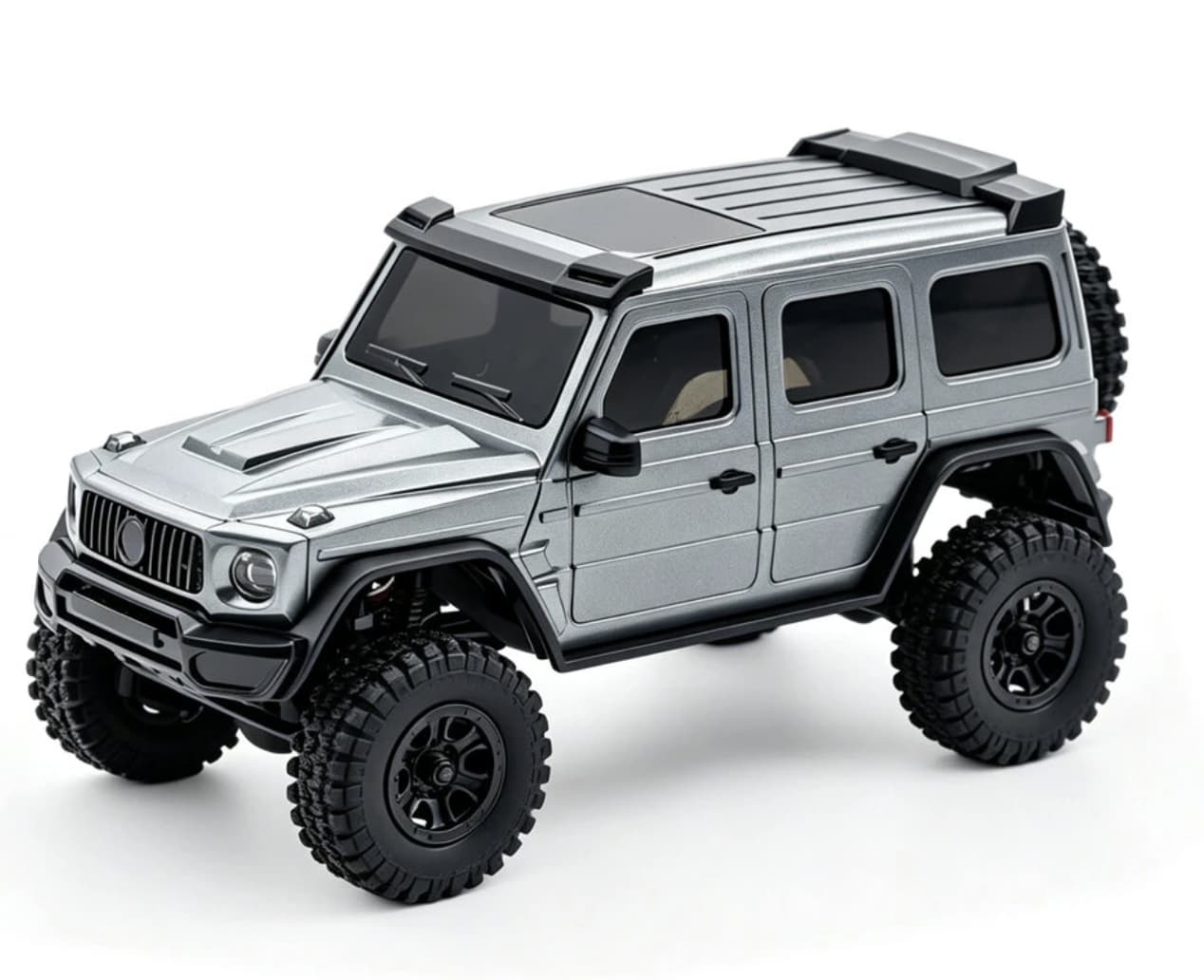
Small Doesn’t Necessarily Mean Less Capable
The first thing to understand about the AX30 is its intended role.
A small 4WD crawler isn’t supposed to behave like a large high-speed RC truck. Its strengths come from maneuverability and the ability to approach obstacles from different angles.
A compact chassis can be useful when driving around rocks, garden obstacles, narrow trails, and other spaces where a larger RC vehicle may struggle to find a clean line. If you’re comparing similar models, our RC rock crawler reviews cover other crawler-focused options.
This also changes how the vehicle should be evaluated.
Instead of asking only how fast it can go, a crawler deserves questions such as:
- How easily can it maintain traction?
- Can the suspension keep the tires in contact with uneven ground?
- How controllable is it at low speed?
- Can it climb an obstacle without immediately losing momentum?
- Does its size help or hurt when the terrain becomes more demanding?
Those questions are more relevant to the AX30 than a simple top-speed comparison.
Four-Wheel Drive Is Only the Beginning
The AX30’s 4WD configuration gives all four wheels the opportunity to contribute to forward movement.
That’s particularly useful on loose or irregular surfaces because traction isn’t concentrated at only one axle.
However, four-wheel drive shouldn’t automatically be interpreted as a guarantee of strong crawling performance. Our 4WD RC car guide explains why drivetrain configuration is only one part of off-road performance.
A crawler can still struggle if its tires lose contact with the surface, if the suspension cannot follow the terrain, or if the chassis becomes high-centered on an obstacle.
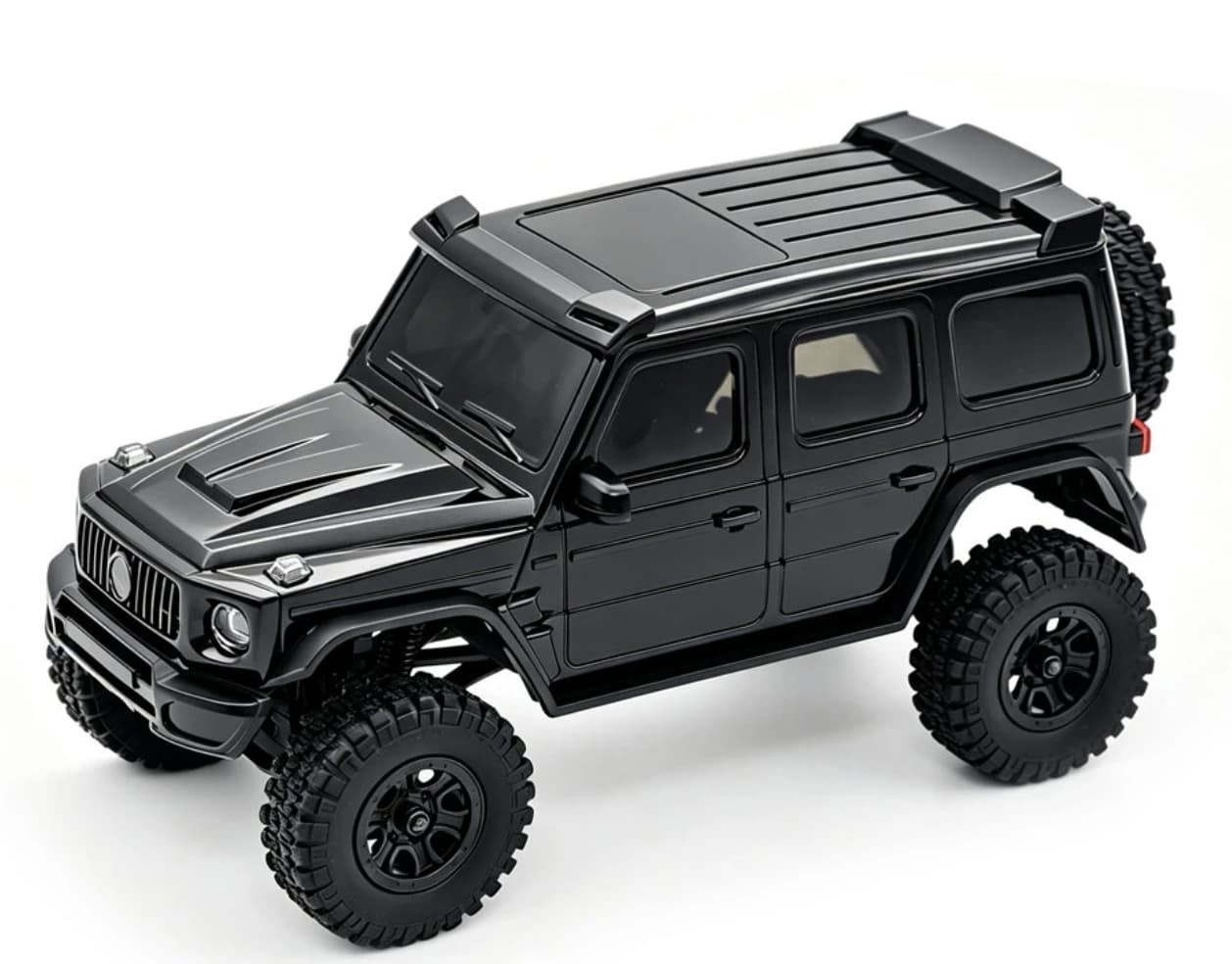
That’s why the rest of the vehicle matters just as much as the drivetrain.
The AX30’s appeal comes from the combination of its compact proportions and off-road-oriented design rather than from the 4WD label alone.
The Real Test Is Low-Speed Control
High-speed RC cars are exciting because their performance is immediately visible.
Rock crawlers are different.
The most impressive moments can happen at only a few kilometers per hour.
A good crawler needs to approach an obstacle gradually, maintain traction, and allow the driver to make small steering and throttle corrections.
That is where controllability becomes more important than raw power.
For the AX30, a technical trail should therefore be treated almost like a puzzle. Instead of simply pointing the vehicle toward the obstacle and applying maximum throttle, the driver needs to choose an appropriate line and work with the terrain.
That makes this type of RC car more interactive than a vehicle designed purely for speed.
Compact Dimensions Change the Driving Experience
The AX30’s smaller format can be an advantage in environments where there isn’t much room to maneuver.
A large crawler can be impressive outdoors, but it also requires a suitably sized area.
A compact vehicle can explore smaller sections of a garden, indoor obstacle course, patio, driveway, or narrow trail without needing a huge amount of space.
This is particularly appealing for casual hobbyists who don’t have access to dedicated RC tracks.
At the same time, compact size introduces compromises.
A smaller vehicle generally has less physical mass and a smaller footprint over an obstacle. Large rocks, deep gaps, and tall steps can therefore become disproportionately difficult.
The AX30’s size is best viewed as a trade-off rather than an unconditional advantage.
Suspension Matters When the Ground Stops Being Flat
Rock crawling is fundamentally a tire-contact game.
When one wheel climbs a rock while another drops into a depression, the suspension has to accommodate the difference in height while keeping as much tire contact as possible.
A rigid vehicle may lift a wheel too easily, reducing available traction.
A crawler-oriented suspension setup is intended to cope with those changes in terrain.
For the AX30, this means the suspension should be considered as part of the vehicle’s crawling personality rather than just another specification.
On relatively smooth ground, suspension design may barely be noticeable.
On rocks and uneven trails, it becomes one of the most important components of the driving experience.
Tire Contact Can Matter More Than Motor Power
It’s tempting to think that more motor power automatically means better climbing.
In reality, additional power is useful only when the tires can transfer it to the ground.
Too much throttle on a loose surface can simply cause wheelspin.
That is why crawling often rewards patience.
The AX30’s 4WD layout and off-road-oriented chassis are most useful when the driver works with available traction instead of trying to overpower every obstacle.
This is also what separates a crawler from a conventional fast RC truck.
A speed-focused model is usually judged by acceleration and top speed.
A crawler is judged by how effectively it turns limited traction into controlled movement.
Where the AX30 Should Be Most at Home
The compact design makes the AX30 particularly interesting for smaller technical environments.
Potentially suitable terrain includes:
Rocky surfaces:
Small rocks provide opportunities to test wheel placement, suspension movement, and traction.
Gravel:
Loose stones make smooth throttle control important because excessive acceleration can cause wheelspin.
Garden terrain:
Roots, soil, small slopes, and landscaping features can create a surprisingly effective informal crawler course.
Indoor obstacles:
Its compact dimensions can make it easier to use around small homemade obstacles when outdoor space isn’t available.
Narrow trails:
A smaller chassis can have an easier time finding a line through tight sections.
The important distinction is that these environments should be approached as technical terrain rather than racing surfaces.
Where Its Small Size Can Become a Weakness
The same dimensions that make the AX30 maneuverable can also limit it.
A large rock that represents a manageable obstacle for a larger crawler can become a major barrier for a compact vehicle.
Deep mud, tall steps, wide gaps, and very uneven terrain can expose the limitations of a smaller chassis.
Ground clearance is especially important.
If the center of the chassis contacts an obstacle before the tires can climb over it, additional motor power won’t necessarily solve the problem.
This is why expectations matter.
The AX30 should be approached as a compact crawler, not as a miniature replacement for every full-size rock-crawling platform.
It Isn’t Trying to Be a Speed Truck
One of the easiest ways to misunderstand the AX30 would be to compare it directly with a high-speed 4WD RC truck.
The two categories are built around different priorities.
A speed-oriented RC vehicle emphasizes:
- acceleration
- top speed
- straight-line stability
- jumping
- rapid direction changes
A crawler emphasizes:
- traction
- low-speed control
- obstacle clearance
- suspension movement
- precise steering
Neither approach is inherently better.
They simply produce different driving experiences.
If your idea of RC fun involves launching across an open field, the AX30 isn’t necessarily the logical choice. In that case, our fast RC car reviews are a better starting point.
If you enjoy carefully working a vehicle over rocks and uneven surfaces, its design becomes much more relevant.
The Driver Becomes Part of the Performance
This is one of the best things about crawler-style RC vehicles.
The vehicle isn’t doing everything for you.
Driving technique has a noticeable effect on what happens.
A skilled driver can approach an obstacle diagonally, reduce throttle, reposition the front wheels, and use the available traction more effectively.
A less experienced driver may simply apply too much throttle and turn a potentially climbable obstacle into a wheel-spinning session.
That creates a learning curve that can make the AX30 more interesting over time.
The vehicle becomes not just a remote-controlled toy, but a platform for learning how different surfaces, angles, and throttle inputs affect an RC car.
A Better Choice for Exploration Than Racing
The AX30’s strongest identity is probably exploration.
It can be used to create small courses almost anywhere there is suitable terrain.
A collection of rocks, wooden blocks, garden edges, and other obstacles can become a simple crawler course.
That flexibility can be more valuable than a headline speed figure.
It also means that the AX30 can provide a different type of RC experience from the typical high-speed truck.
Instead of asking, “How quickly can I finish this course?” the focus becomes, “Can I find a way over this obstacle?”
That’s a subtle difference, but it fundamentally changes how the vehicle is used.
Who Is the AUSTAR AX30 For?
The AX30 makes the most sense for several types of RC enthusiasts.
Beginners Interested in Crawling
Its compact format can provide an approachable introduction to technical off-road driving without requiring a large crawler.
Casual RC Hobbyists
People who want something they can use in a garden, driveway, or small outdoor space may benefit from the smaller footprint.
Experienced Drivers Looking for a Different Experience
Owners of fast RC cars may find crawling refreshing because it rewards precision rather than speed.
Hobbyists Who Enjoy Building Obstacle Courses
The AX30’s scale makes it practical to create small artificial trails using everyday objects.
Who Should Look Elsewhere?
The AX30 is less compelling for someone whose main priority is maximum speed.
It’s also worth considering a larger crawler if you regularly encounter substantial rocks, deep terrain, or large natural obstacles.
Similarly, competitive RC drivers who require track-focused handling should look at vehicles specifically designed for racing rather than a crawler-oriented platform.
Choosing the right RC vehicle starts with choosing the right type of driving.
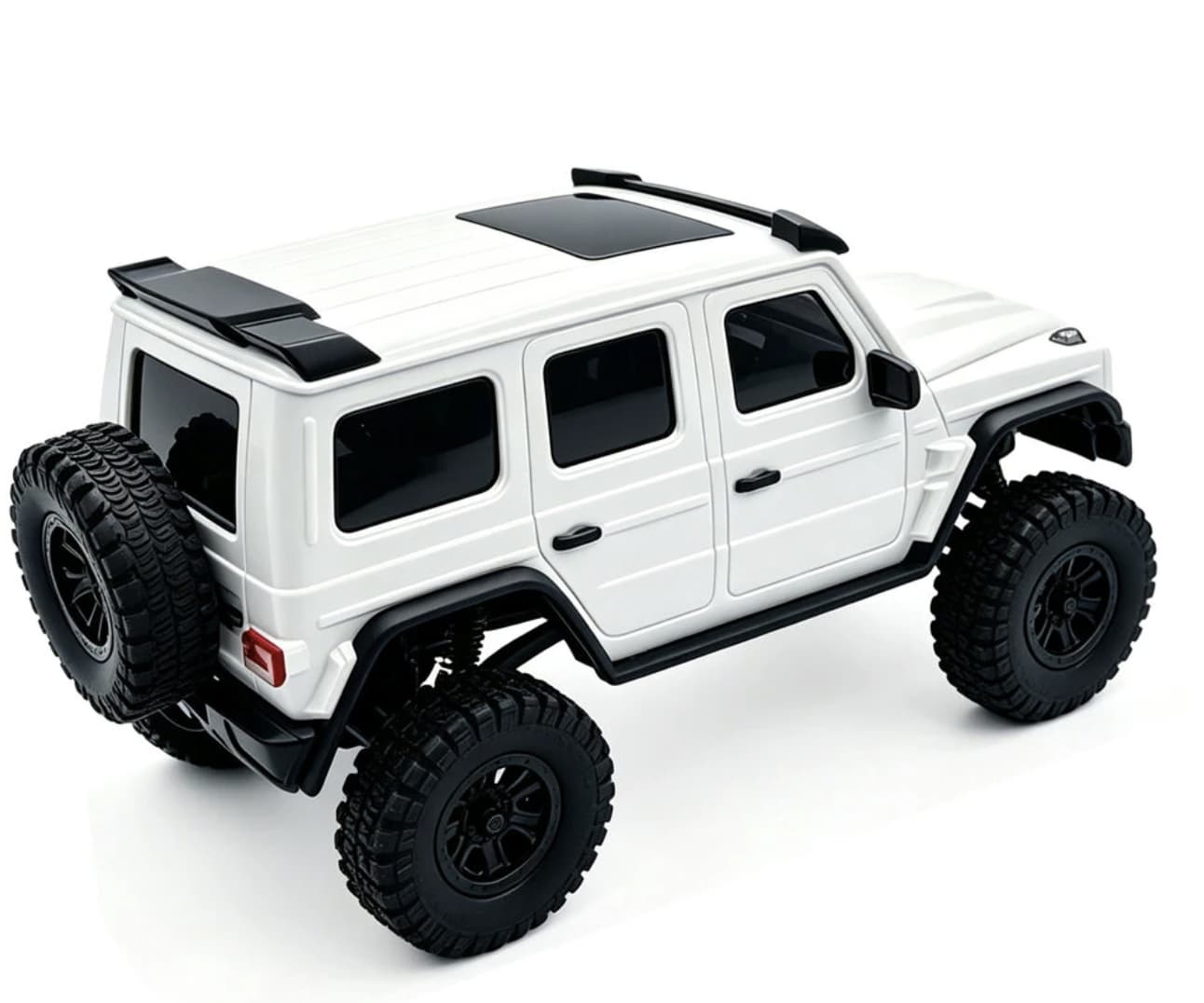
What Makes the AX30 Interesting?
The strongest argument for the AUSTAR AX30 isn’t a single specification.
It’s the combination of small size and crawler-oriented capability.
There are plenty of RC cars designed to be fast.
There are also larger crawlers designed to tackle serious terrain.
The AX30 occupies the space between those extremes.
It offers an opportunity to experience technical off-road driving without needing a large vehicle or a huge driving area.
That’s a more meaningful selling point than simply calling it an “off-road RC car.”
Final Verdict
The AUSTAR AX30 rc truck is best understood as a compact 4WD crawler designed around controlled off-road exploration rather than outright speed.
Its smaller dimensions can make it easier to use in tight spaces and on homemade obstacle courses, while the 4WD configuration and crawler-focused design give it the foundation needed for uneven terrain.
But its compact size also defines its limitations. Very large rocks, deep gaps, and demanding trails can challenge a smaller platform more quickly than they would a full-size crawler.
That isn’t necessarily a flaw.
It’s the trade-off that gives the AX30 its identity.
If you want an RC vehicle that turns a garden, driveway, or small trail into a technical driving course, the AUSTAR AX30 is a more interesting proposition than its compact dimensions might initially suggest. If your priority is speed, jumping, or tackling very large obstacles, a different class of RC vehicle will make more sense.
For the right driver, the appeal of the AX30 isn’t how quickly it crosses the terrain.
It’s how much terrain you can turn into a challenge.