









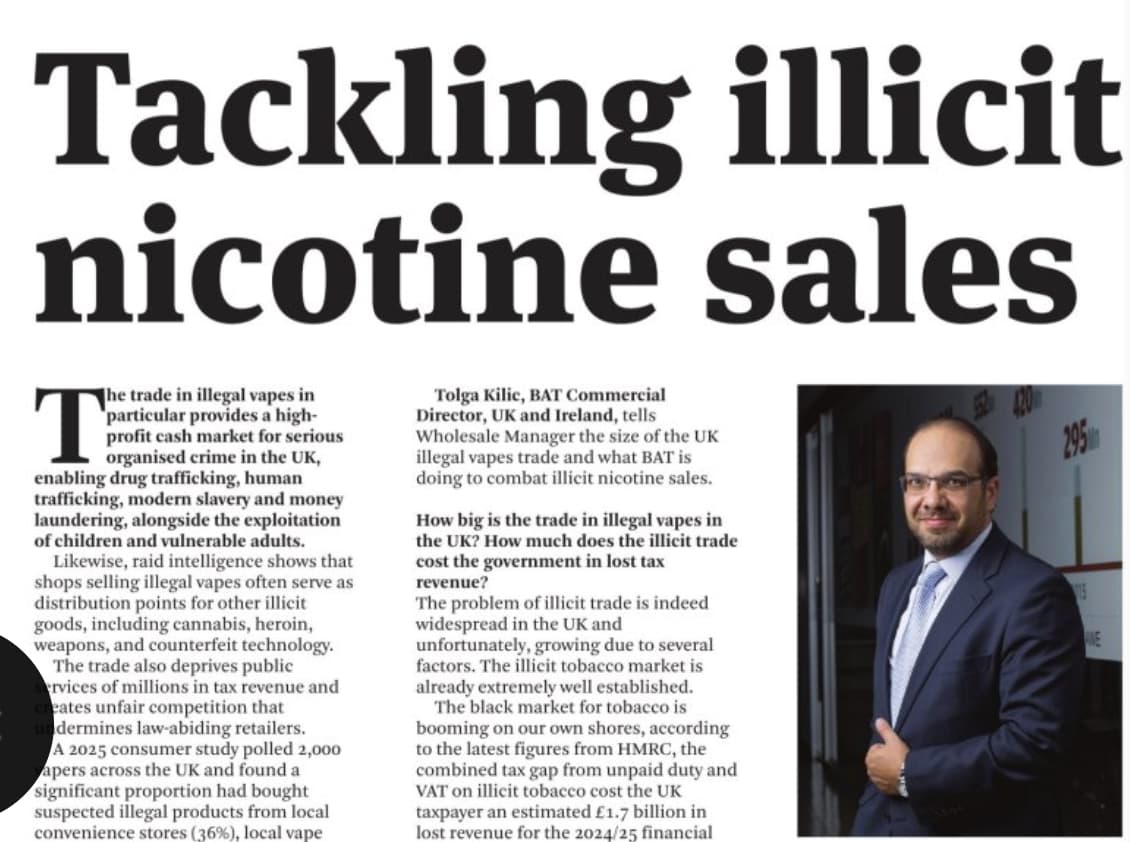
Igeekphone News, July 28 – The UK’s illicit nicotine market is placing increasing pressure on legitimate retailers, according to Tolga Kilic, Commercial Director for the UK and Ireland at British American Tobacco (BAT). In a recent opinion article published by British retail trade publication Grocery Trader, Kilic argued that illegal nicotine products are creating unfair competition for compliant businesses and called for stronger enforcement across the supply chain.
The views expressed represent BAT’s position as an industry participant and should not be interpreted as official findings or conclusions from the UK government or regulatory authorities.
Illegal Products Pose Challenges for Compliant Retailers
According to Kilic, the UK nicotine market is undergoing rapid transformation as retailers navigate evolving regulations while competing against products sold through unauthorized channels.
He argued that illegal nicotine products may circumvent regulatory requirements, allowing them to enter the market without meeting the same standards imposed on legally operating businesses. This, he said, places compliant retailers at a competitive disadvantage.
For legitimate retailers, maintaining product traceability, conducting supplier due diligence, and ensuring compliance with sales regulations have become increasingly important aspects of day-to-day operations.
UK Vape Industry Faces Regulatory and Cost Pressures
The UK vaping industry has experienced significant regulatory changes in recent years.
Among the most notable developments are:
- The planned ban on disposable e-cigarettes.
- The introduction of the Vaping Products Duty, a new tax framework for vaping products.
- Increased enforcement efforts targeting illegal vape products entering the market.
Against this backdrop, legitimate retailers face rising compliance costs while also competing with products that may bypass regulatory controls.
BAT argues that stronger action against illegal nicotine sales would help create a more level playing field for businesses operating within the law.
Supply Chain Transparency Seen as Key
Kilic emphasized that tackling illegal nicotine sales requires oversight across the entire supply chain rather than focusing solely on retailers.
He highlighted the importance of transparency among:
- Manufacturers
- Importers
- Wholesalers
- Retailers
According to BAT, clear product traceability and transparent distribution channels are essential for preventing illegal products from reaching consumers.
The company noted that the increasingly complex vape supply chain presents additional challenges for regulators, as unauthorized products can enter the market through informal distribution networks, affecting both pricing and market competition.
Industry Cooperation Needed
BAT also called for closer collaboration between manufacturers, retailers, and regulators to reduce the circulation of illegal nicotine products.
For retailers, the company recommends:
- Working with reputable suppliers
- Verifying product authenticity
- Maintaining transparent supply chains
- Ensuring compliance with applicable regulations
BAT believes that as the UK’s vaping regulations continue to evolve, long-term competitiveness will increasingly depend not only on product quality and brand recognition but also on companies’ ability to demonstrate regulatory compliance.
UK Regulatory Environment Continues to Tighten
The issue of illegal nicotine sales has become a growing focus within the UK’s broader regulatory framework.
Recent policy initiatives—including restrictions on disposable vapes, the introduction of a dedicated vaping tax, and increased efforts to combat illicit products—reflect a regulatory environment that now extends across product standards, taxation, and retail enforcement.
For businesses operating in the sector, compliance is becoming a central factor in maintaining consumer trust and sustaining long-term growth.
Outlook
While BAT’s comments reflect the perspective of one of the world’s largest tobacco and nicotine companies, they underscore broader discussions taking place across the UK vaping industry regarding illicit trade and market regulation.
As policymakers continue refining the country’s nicotine product framework, future competition is expected to place greater emphasis on compliant supply chains, transparent distribution networks, and responsible retail practices. Whether these measures significantly reduce the illegal market will ultimately depend on the effectiveness of regulatory enforcement and industry-wide cooperation.