










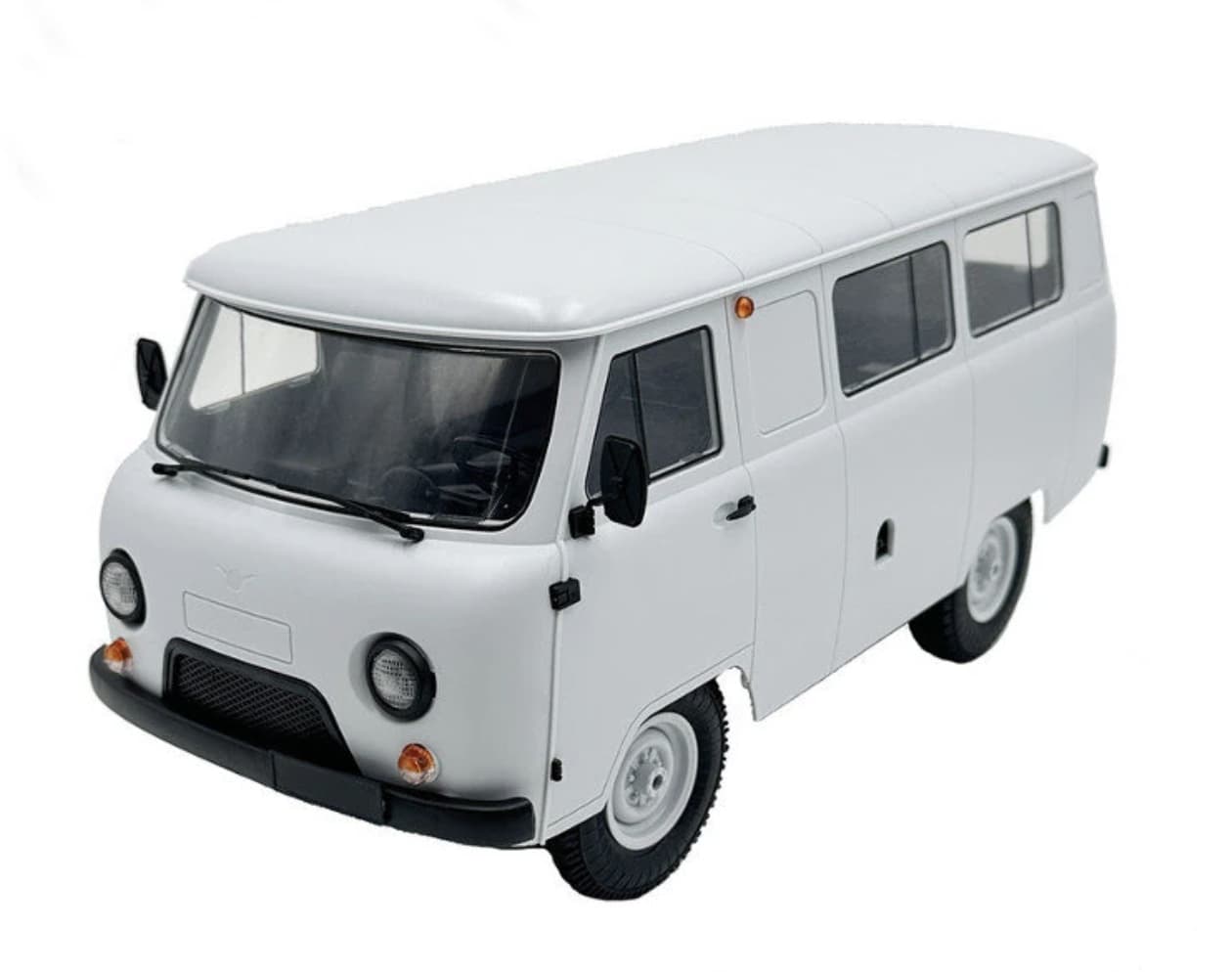
Scale trail driving is one of the most enjoyable ways to get into RC vehicles. Instead of focusing on maximum speed, jumping, or racing performance, it is about moving through realistic terrain at a controlled pace and making the vehicle look and behave like a miniature off-road machine.
That makes 1/12 RC trucks particularly interesting. They are large enough to show off body details and suspension movement, but still compact enough for backyard trails, small crawling courses, gravel paths, and indoor scale scenes.
However, not every 1/12 RC truck is designed for the same type of driving. Some are built around realistic scale appearance, while others prioritize climbing ability or customization. Before choosing one, it is worth looking beyond the motor and advertised top speed.
What Makes a Good 1/12 RC Truck for Trail Driving?
A good trail truck needs more than four-wheel drive.
For scale driving, several characteristics work together: low-speed control, predictable steering, useful ground clearance, suspension articulation, tire grip, body proportions, and overall durability.
A fast truck can be entertaining, but speed is often less important on a narrow trail. When driving between rocks, roots, small ramps, or other obstacles, being able to make a tiny throttle adjustment can be much more useful than having a powerful motor.
This is why proportional throttle and steering are worth considering when comparing 1/12 models.
1. WPL C-104 UAZ-452: A Different Kind of Scale Trail Truck
The WPL C-104 stands out because it does not look like a conventional pickup, Jeep, or competition crawler.
It is based on the distinctive UAZ-452 “Bread Loaf” and uses a 1/12-scale body. Its unusual van-shaped design gives it an authentic utility-vehicle character that immediately separates it from more common RC trucks.
The C-104 combines:
- 1/12 scale
- 4WD
- 370 brushed motor
- Proportional throttle and steering
- Leaf-spring suspension
- Functional lighting
- 7.4V 500mAh battery
- RTR configuration
The manufacturer’s listed speed is approximately 5–8 km/h, which tells you a lot about the intended driving style.
This is not a truck designed to win a speed contest. Its appeal is controlled scale driving.
The leaf-spring suspension also suits the UAZ-452 theme particularly well. On a trail, the truck can be driven slowly while the suspension responds to changes in the surface.
For enthusiasts who want an unusual body and a more realistic utility-vehicle experience, the C-104 is worth considering.
2. WPL C-24: Compact Scale Trail Character
The WPL C-24 is another model worth looking at if scale appearance is more important than outright speed.
Its pickup-style body gives it a classic small-truck appearance, while the compact chassis makes it suitable for smaller trails and backyard courses.
The C-24 platform is also interesting to hobbyists who enjoy modifications. A scale RC truck can become much more than an out-of-the-box vehicle once you start changing tires, adding accessories, improving lighting, or creating a custom body.
For beginners, this type of platform can also be a useful introduction to the wider WPL ecosystem.
3. WPL C-54: More Traditional Pickup Styling
If the UAZ-452’s unusual van body is not your style, the WPL C-54 offers a more familiar pickup-truck appearance.
This kind of body works particularly well for scale trail scenes because it provides plenty of visual space for accessories such as:
- Spare tires
- Roof equipment
- Tool boxes
- Recovery gear
- Camping accessories
- Scale cargo
A pickup-style RC truck can therefore become part of a miniature outdoor scene rather than simply functioning as a remote-controlled vehicle.
That distinction matters for scale enthusiasts. A slower trail truck can provide more opportunities for customization than a vehicle designed primarily around speed.
4. What About Faster 1/12 RC Trucks?
Some 1/12 RC vehicles are designed with considerably more power than a typical scale trail truck.
They can be fun, but more speed does not automatically mean better trail performance.
On a narrow course, excessive throttle can make it harder to maintain a realistic line. A powerful motor can also make a lightweight truck difficult to control when climbing over small obstacles.
For scale trail driving, ask a different question:
Can the truck move slowly and predictably when you need it to?
That is often more useful than asking how fast it can go.
5. 4WD Is Important, But It Is Not Everything
Four-wheel drive is one of the most useful features for trail driving because power can reach all four wheels. Before choosing a model, it’s also worth understanding how 4WD RC cars differ in traction, drivetrain layout, and off-road behavior.
It can help when the surface becomes loose or uneven, but 4WD alone does not guarantee excellent off-road performance.
Tire compound, tread design, weight distribution, suspension geometry, ground clearance, and throttle control all influence how the truck behaves.
For this reason, two 4WD trucks with similar motors can feel completely different on the same trail.
6. Suspension Matters on a Scale Trail
Suspension is easy to overlook when comparing specifications.
A trail truck needs enough suspension movement to keep the tires in contact with uneven ground. At the same time, overly soft suspension can make the body roll excessively, while an overly stiff setup can reduce traction over smaller obstacles.
Leaf springs are particularly interesting from a scale perspective because they reproduce the suspension arrangement used on many real utility vehicles.
Coil-spring setups, meanwhile, can provide a different balance between articulation and scale realism.
Neither approach is automatically right for every driver. The better choice depends on whether your priority is realistic appearance, obstacle performance, or a mixture of both.
7. Tire Choice Can Change the Truck
The tires are one of the first components to examine when selecting a trail truck.
Look for a tread pattern that matches the terrain you expect to drive on.
For example:
Gravel: A moderately open tread can help clear loose material.
Dirt: A versatile all-terrain pattern can provide a good balance.
Rocks: Softer rubber and an appropriate tread can be more important than simply having large tires.
Grass: Larger tread blocks can help maintain forward movement, particularly when the surface is damp.
If you already own a 1/12 RC truck, changing the tires can sometimes produce a more noticeable difference in trail behavior than upgrading the motor.
8. Proportional Control Is One of the Most Useful Features
For beginners, the term “proportional control” can sound like a minor specification.
It isn’t.
With proportional throttle control, the vehicle can respond to different levels of trigger input rather than behaving like a simple toy with only full power or no power.
That is particularly useful when approaching an obstacle.
Instead of hitting the throttle and hoping the truck climbs over it, you can gradually increase power and adjust the steering as the wheels encounter resistance.
For scale trail driving, this kind of control is one of the features I would prioritize before chasing a higher top-speed number.
9. Battery Capacity Isn’t the Whole Story
A larger battery does not automatically mean a better trail truck.
Runtime depends on many factors, including:
- Battery capacity
- Motor efficiency
- Vehicle weight
- Terrain
- Throttle use
- Tire size
- Driving style
A truck driven continuously at high throttle will consume considerably more energy than one moving slowly along a scale trail.
When comparing models, therefore, treat advertised runtime as a reference rather than a guaranteed result.
It is also worth checking how easy it is to obtain compatible replacement batteries. A model with an easily replaceable battery can be more convenient for longer outdoor sessions.
10. RTR vs Kit: Which Type Should You Choose?
A major decision is whether to buy an RTR (Ready-to-Run) model or an assembly kit.
RTR 1/12 RC Truck
An RTR model is generally the easiest way to start.
The electronics, motor, radio system, and other major components are already installed. You normally only need to charge the battery and prepare the transmitter before driving.
This is particularly useful for beginners who want to spend more time driving and less time assembling.
Kit-Based RC Truck
A kit takes more time but gives you greater involvement in the build.
It can be a better fit if you enjoy:
- Mechanical assembly
- Electronics
- Custom suspension setups
- Gear selection
- Painting
- Modifications
There is no universal answer. The important thing is to decide whether your main hobby is driving the model or building the model.
11. Scale Appearance Can Be Just as Important as Performance
A major difference between a scale trail truck and a conventional RC car is the visual experience.
A realistic body, working lights, accurate wheels, mirrors, bumpers, interior details, and accessories can make a relatively slow vehicle much more enjoyable.
This is also why unusual models can attract so much attention.
The WPL C-104, for example, is recognizable because of its UAZ-452-inspired body. Even when parked, it looks like a miniature utility vehicle rather than a generic RC platform.
For photographers and collectors, that can be just as important as how well it climbs.
12. Best Terrain for a 1/12 Trail Truck
A 1/12 RC truck is particularly convenient for smaller-scale environments.
Good locations include:
- Backyard dirt trails
- Gravel paths
- Short grass
- Packed soil
- Indoor crawling courses
- DIY obstacle courses
- Scale dioramas
You do not need a huge outdoor area.
In fact, one advantage of 1/12 scale is that you can create a surprisingly interesting trail with a few rocks, pieces of wood, dirt, and small ramps.
That makes this scale accessible to hobbyists who do not have access to a dedicated RC track.
13. How to Choose the Right 1/12 RC Truck
Instead of choosing based on one specification, consider your priorities.
| What you care about | What to look for |
|---|---|
| Realistic appearance | Detailed hard body and scale accessories |
| Trail driving | 4WD and suitable suspension |
| Precise control | Proportional throttle and steering |
| Beginner-friendly setup | RTR configuration |
| Customization | Easily accessible chassis and parts |
| Outdoor use | Durable drivetrain and suitable tires |
| Photography | Detailed body and functional lighting |
| Longer sessions | Replaceable batteries and spare packs |
| Tight backyard trails | Compact 1/12 dimensions |
| Serious obstacle driving | Good articulation and ground clearance |
This approach is more useful than simply picking the truck with the longest specification sheet.
What Is the Best 1/12 RC Truck for Scale Trail Driving?
There is no single specification that determines whether a 1/12 RC truck is right for scale trail driving.
If your priority is realistic appearance and unusual design, a model such as the WPL C-104 UAZ-452 is particularly interesting because of its distinctive body, 4WD system, leaf-spring suspension, proportional controls, and working lights.
For a closer look at this unusual UAZ-based model, see our WPL C-104 UAZ-452 review, including its specifications, suspension, battery, lighting, and driving characteristics.
If you prefer a more conventional pickup appearance, models from the WPL C-series offer different body styles and customization possibilities.
For someone who wants a more performance-focused crawler, the priorities should shift toward suspension articulation, tire grip, ground clearance, drivetrain durability, and low-speed torque.
The key is to match the truck to the type of trail you actually plan to drive.
Final Buying Checklist
Before ordering a 1/12 RC truck, check these points:
4WD: Useful for loose and uneven terrain.
Proportional control: Important for precise low-speed driving.
Suitable tires: Match them to your typical terrain.
Suspension: Look for enough movement without excessive body roll.
Battery system: Check runtime, charging, and replacement options.
Scale body: Decide how important realism is to you.
Parts availability: Useful if you plan to modify or repair the truck.
RTR or kit: Choose according to how much assembly you enjoy.
Most importantly, don’t judge a scale trail truck only by its top speed. The most enjoyable model may be the one that lets you crawl slowly, steer accurately, handle realistic obstacles, and look convincing while doing it.
That is where the 1/12 scale format becomes especially appealing: it sits in a useful middle ground between a small toy RC car and a much larger hobby-grade crawler, giving enthusiasts enough room for realistic details without requiring a huge driving area.