









Smoking cigarettes and using e-cigarettes (vaping) are habits that many people adopt for stress relief, social reasons, or nicotine dependence. While most people understand the potential health risks, fewer realize how much these habits can affect their finances over time.
Whether you smoke traditional cigarettes or use disposable or refillable vape devices, the yearly cost can add up to hundreds or even thousands of dollars. This article breaks down the typical expenses associated with smoking and vaping, compares the two, and explores what those costs could become if invested instead.
The Annual Cost of Smoking Cigarettes
The cost of smoking varies depending on where you live, local taxes, and the brand you buy. However, let’s use a common example.
Example: One Pack Per Day
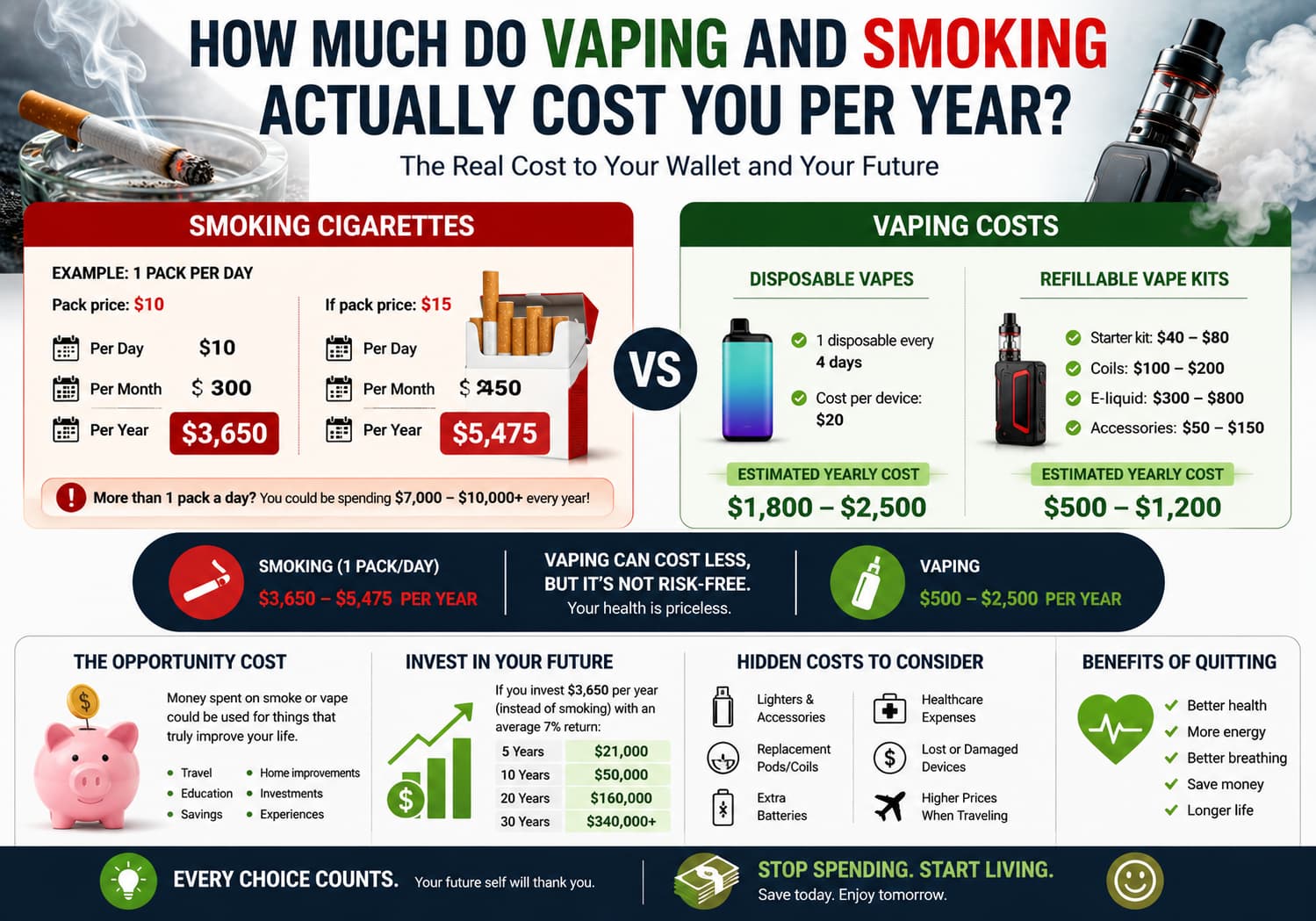
Suppose a pack of cigarettes costs $10.
- Cost per day: $10
- Cost per month: About $300
- Cost per year: Approximately $3,650
If cigarettes cost $15 per pack, the yearly expense rises to:
- Daily: $15
- Monthly: About $450
- Annual: Approximately $5,475
For smokers who consume more than one pack a day, the total can easily exceed $7,000–$10,000 annually.
The Annual Cost of Vaping
Vaping expenses depend on the type of device you use.
Disposable Vapes
Disposable devices are convenient but often more expensive over time.
Example:
- One disposable vape every four days
- Cost per device: $20
Annual cost:
- Around 91 devices per year
- Total yearly cost: About $1,820
Heavy users replacing devices more frequently may spend well over $2,500 annually.
Refillable Vape Kits
Refillable systems generally cost less after the initial purchase.
Typical yearly expenses may include:
- Starter kit: $40–$80
- Replacement coils: $100–$200
- E-liquid: $300–$800
- Replacement batteries or accessories: $50–$150
Estimated annual total:
Approximately $500–$1,200
Actual costs vary depending on nicotine strength, vaping frequency, and preferred e-liquid brands.
Smoking vs. Vaping: Cost Comparison
| Habit | Estimated Yearly Cost |
|---|---|
| One pack of cigarettes per day ($10/pack) | $3,650 |
| One pack of cigarettes per day ($15/pack) | $5,475 |
| Disposable vaping | $1,800–$2,500 |
| Refillable vape system | $500–$1,200 |
In many regions, refillable vaping systems are less expensive than smoking cigarettes. However, disposable vape products can narrow that gap depending on usage patterns.
It’s important to note that lower financial cost does not necessarily mean lower health risk. Both smoking and vaping expose users to potentially harmful substances, though the risks differ and continue to be studied.
The Hidden Costs Beyond Buying Products
The purchase price is only part of the financial picture.
Additional expenses may include:
- Lighters
- Chargers
- Replacement pods
- Extra batteries
- Protective cases
- Cleaning supplies
- Travel purchases at higher prices
- Lost or damaged devices
These smaller purchases often go unnoticed but can add several hundred dollars to annual spending.
Healthcare Costs
Smoking is a leading cause of preventable disease and has been linked to conditions affecting the lungs, heart, blood vessels, and many other organs. Over time, smokers may face increased healthcare expenses due to medications, doctor visits, and treatments.
While vaping generally exposes users to fewer toxic chemicals than combustible cigarettes, it is not risk-free. Researchers continue to study its long-term health effects, and vaping can still contribute to ongoing medical costs, particularly for people with underlying respiratory or cardiovascular conditions.
The Opportunity Cost
Money spent on nicotine products is money that cannot be used elsewhere.
For example, saving $3,650 per year instead of spending it on cigarettes could help pay for:
- An international vacation
- A new laptop
- Home improvements
- Emergency savings
- Student loan payments
- Fitness memberships
- Family activities
Over several years, these savings become even more significant.
What If You Invested the Money Instead?
Suppose you currently spend $3,650 every year on cigarettes.
If you invested that amount annually and earned an average 7% annual return, your savings could grow to approximately:
| Years | Approximate Value |
|---|---|
| 5 | $21,000 |
| 10 | $50,000 |
| 20 | $160,000 |
| 30 | Over $340,000 |
These figures are estimates and depend on investment performance, but they demonstrate how recurring spending can become substantial over time.
Other Benefits of Quitting
Financial savings are only one advantage.
Many people who stop smoking or vaping also report:
- Improved breathing
- Better physical fitness
- Enhanced sense of taste and smell
- Fresher breath
- Reduced exposure of family members to secondhand smoke
- More disposable income
- Greater overall well-being
The specific health improvements vary depending on individual circumstances and how long someone has used nicotine products.
Tips for Reducing Nicotine Expenses
If you’re trying to cut costs or quit altogether, consider these strategies:
- Set a weekly spending limit.
- Track every purchase related to smoking or vaping.
- Avoid impulse purchases at convenience stores.
- Consider evidence-based smoking cessation methods if you’re ready to quit.
- Redirect the money you would have spent into a dedicated savings account.
- Reward yourself periodically using part of your accumulated savings.
Frequently Asked Questions
Is vaping always cheaper than smoking?
Not necessarily. Refillable vape systems are often less expensive than smoking cigarettes, but heavy use of disposable vapes can approach or even exceed the cost of smoking in some cases.
Does quitting save money immediately?
Yes. Even after just one month without buying cigarettes or vaping products, many people notice meaningful savings that can be used for other financial goals.
Are there additional costs besides buying cigarettes or vape products?
Yes. Accessories, replacement parts, batteries, chargers, and potential healthcare expenses all contribute to the overall cost.
Is vaping safe because it costs less?
No. Financial cost and health risk are separate issues. While some public health organizations consider vaping likely less harmful than smoking combustible cigarettes, it is not harmless and is not recommended for non-smokers or young people.
Final Thoughts
Whether you smoke cigarettes or vape, nicotine products can represent a significant recurring expense. A pack-a-day smoker may spend several thousand dollars every year, while regular vaping can also cost hundreds or even thousands of dollars depending on the device and usage habits.
Understanding the true annual cost can help you make informed decisions about both your finances and your health. If you’re considering cutting back or quitting, even small reductions in daily spending can add up to substantial savings over time. Combined with the potential health benefits, reducing or eliminating nicotine use can be a positive investment in your future.