









iPhone 17 Pro Max, as an Apple flagship model, has achieved a comprehensive upgrade in biometric recognition technology while still retaining the traditional password verification method. Users can flexibly choose to unlock the device via Face ID, fingerprint recognition, or digital password based on the usage scenario and security requirements. The following will explain the setup process, technical details, and usage suggestions for these three unlocking methods.
1. Facial ID: Dynamic Learning and Multi-Scenario Adaptation
Face ID achieves 3D structured light scanning through the original depth sensor module. Its core advantages lie in its dynamic learning capability and multi-scenario coverage. During the initial setup, it is necessary to place the face in the center of the elliptical scanning frame on the screen in a well-lit indoor environment and slowly rotate the head to complete 360° data collection. The system will project 30,000 infrared light points to construct a facial depth map. The entire process takes approximately 8 seconds. If the user is wearing glasses or has makeup, the “Use Face ID with Mask” option can be enabled. The system will be able to unlock by recognizing the features around the eyes under partial occlusion.

From a technical perspective, Face ID employs neural network algorithms and live detection technology, with an error recognition rate lower than one in a million. Its encrypted storage mechanism converts facial feature data into mathematical models and stores them in a Secure Enclave chip, which is completely isolated from the cloud. For business professionals, the “gaze perception function” can be enabled. When it detects that someone other than the device owner is gazing, it automatically hides the notification details to prevent information leakage.
II. Fingerprint Recognition: Hardware Iteration and Multi-Angle Input
The fingerprint recognition module of the iPhone 17 Pro Max is integrated within the side power button. It uses a capacitive sensor and a sapphire glass coating, and supports 360° full-round recognition. When setting it up, gently touch your dominant finger to the power button, slowly rotate the finger according to the screen prompts, covering the fingertip, the palm of the finger, and the side area. The system will capture fingerprint details in stages. You need to lift and lower the finger 10-15 times repeatedly until the fingerprint is fully registered.
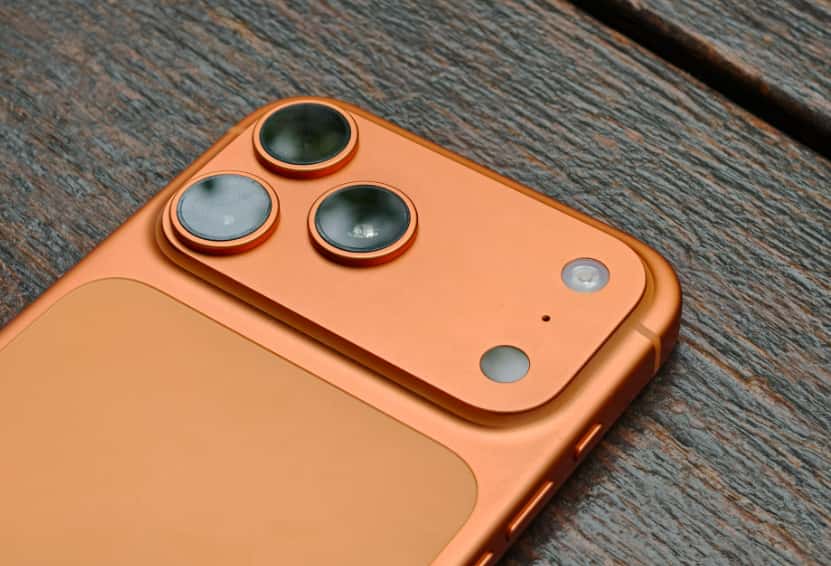
This technology is designed with anti-interference features, ensuring an identification success rate of over 98% even in extreme conditions such as low temperatures and dryness. Users can assign functions to different fingers: for example, the left thumb can be used for daily unlocking, and the right index finger can be dedicated to Apple Pay payments. If a finger peels or gets injured, the old fingerprint can be renamed and deleted before re-entering it, or different areas of the same finger can be added as supplements.
III. Digital Passwords: Basic Security and Backup for Extreme Scenarios
Digital passwords serve as an alternative biometric solution, supporting 4-digit, 6-digit numbers or custom complex passwords. The setup path is “Settings” → “Face ID and Password” → “Enable Password”. After entering and confirming the new password, it is recommended to enable the “Use Password Immediately” option to ensure immediate verification each time the screen is locked. For devices storing sensitive files, the “Erase Data” function can be enabled. When the incorrect password is entered for 10 consecutive times, all data will be automatically erased.
IV. Collaborative Strategies for Multi-modal Unlocking
In actual use, the three unlocking methods can complement each other: Face ID is suitable for quick daily unlocking, fingerprint recognition is more efficient when wearing a mask or in strong light conditions, and the digital password serves as the ultimate guarantee in extreme scenarios. For example, business people can set “8-digit mixed password + Face ID”, inputting the password when the device restarts or when multiple attempts fail, while using the Dynamic Island Calendar widget to manage their schedules, achieving a balance between security and efficiency. In the family sharing scenario, a “screen usage time” lock screen can be set for children’s devices, limiting the usage duration and preventing accidental operations.
V. Fault Diagnosis and Security Optimization
If the Face ID recognition fails, you can clean the original depth sensor module or reset the facial data; for fingerprint recognition issues, check whether the power button area is blocked by the protective case, or re-enter your fingerprint. At the system level, it is recommended to update to the latest iOS version regularly to fix potential software vulnerabilities. From a security perspective, avoid using fingerprint unlocking in public places to prevent being spied on by others. Develop the habit of regularly checking the fingerprint list and deleting the records that are no longer in use.