








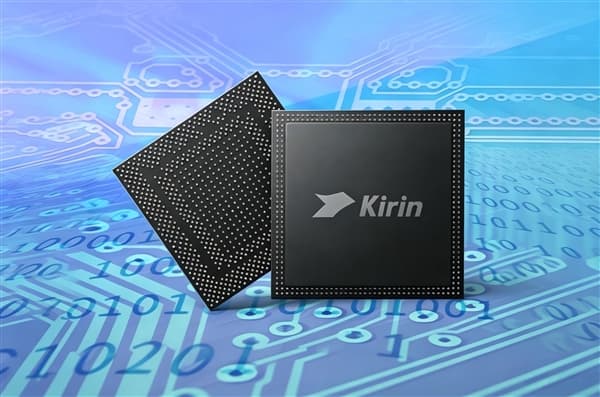
Huawei’s next-generation tri-fold smartphone, the Mate XT2, is expected to receive a significant performance upgrade with a new Kirin chipset built on the company’s recently unveiled Taotie Law semiconductor architecture, according to a new leak.
Chinese tipster Smart Pikachu claims the upcoming flagship will debut Huawei’s latest Kirin platform, delivering notable gains in both computing performance and power efficiency while introducing further refinements to the company’s innovative tri-fold design.
Huawei’s “Taotie Law” Challenges Traditional Chip Scaling
Earlier this year, Huawei introduced its proprietary Taotie Law (also referred to in some translations as the “Law of Evolution”), a semiconductor design philosophy that takes a different approach from the long-established Moore’s Law.
Instead of relying primarily on shrinking transistor sizes through increasingly advanced manufacturing processes, Taotie Law focuses on what Huawei describes as “time miniaturization.”
The concept employs Huawei’s self-developed logic folding technology, transforming conventional single-layer chip layouts into a dual-layer vertically stacked structure. By shortening signal transmission paths within the chip, Huawei aims to increase transistor density and improve performance without depending exclusively on leading-edge fabrication nodes.
Higher Transistor Density and Improved Efficiency
According to Huawei’s earlier technical disclosures, its 2026-generation Kirin processor based on Taotie Law delivers significant architectural improvements.
The company claims the chip achieves:
- 53.5% higher transistor density
- Up to 238 million transistors per square millimeter
- 41% improvement in high-performance CPU core efficiency
- 12.7% increase in maximum clock frequency
Huawei says these advances allow the chip to approach the transistor density associated with Intel’s 18A manufacturing technology while nearing the density expected from the first generation of TSMC’s 3nm process.
Although these figures have not been independently verified, they highlight Huawei’s ambition to improve chip performance through architectural innovation rather than relying solely on process node advancements.
HarmonyOS 7’s Ark Engine to Further Boost Performance
The new Kirin chipset is also expected to work alongside HarmonyOS 7, which introduces an upgraded version of Huawei’s Ark Engine.
According to Huawei, the latest Ark Engine incorporates a new performance optimization model capable of delivering an additional 15% performance improvement across supported workloads.
Combined with the next-generation Kirin processor, the software optimizations are expected to provide smoother multitasking, faster application launches, and improved responsiveness on the Mate XT2.
Refined Tri-Fold Design
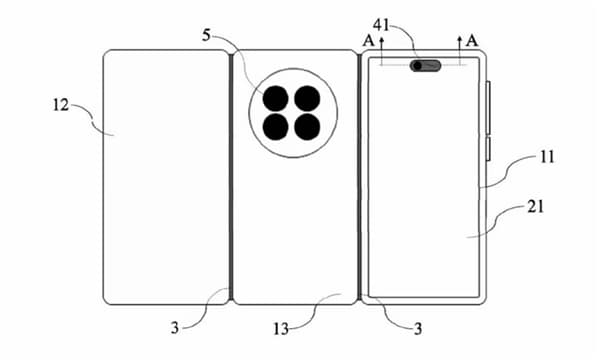
Beyond internal hardware upgrades, the Mate XT2 is also rumored to feature an updated folding mechanism.
Leaks suggest Huawei will adopt a new U-shaped folding design, differing from Samsung’s inward-folding “G-shaped” concept by reversing the folding sequence.
The device is said to:
- Fold the left panel first, followed by the right panel
- Fully enclose the flexible display inside the chassis when folded
- Provide additional protection for the main folding screen during everyday use
This design could help improve durability while reducing the risk of accidental damage to the flexible display.
Dedicated Outer Display Improves Everyday Usability
The Mate XT2 is also expected to retain a dedicated external display, allowing users to perform common tasks without unfolding the larger internal screen.
The cover display is expected to support everyday functions such as:
- Making and receiving phone calls
- Replying to messages
- Mobile payments
- Viewing notifications
- Quick access to apps
This approach enables users to reserve the expansive tri-fold display for productivity, multitasking, and immersive media consumption while maintaining the convenience of a traditional smartphone.
Expected to Push Huawei’s Foldable Leadership Further
Huawei has already established itself as one of the pioneers in the emerging tri-fold smartphone category, and the Mate XT2 is shaping up to be a meaningful evolution rather than a simple iterative upgrade.
With a next-generation Kirin processor based on the company’s Taotie Law architecture, enhanced software optimization through HarmonyOS 7, and a redesigned folding mechanism, the Mate XT2 is expected to deliver improvements in performance, efficiency, and durability.
Huawei has yet to officially confirm the device or its specifications, but with leaks continuing to surface, the Mate XT2 is widely anticipated to be one of the company’s most significant flagship launches in the foldable smartphone market.