









-
August 3, 2026 — An international panel of tobacco harm reduction experts has published a position paper in the Journal of the American Medical Association (JAMA) recommending that healthcare professionals discuss nicotine-containing e-cigarettes as one of several smoking cessation options for adults who smoke cigarettes. The paper argues that vaping should be considered earlier in the quitting process rather than only after conventional therapies have failed.
The publication is an expert consensus document rather than a new clinical trial or an official U.S. clinical practice guideline. It was developed by a harm reduction working group within the International Nicotine and Tobacco Research Society (SRNT) Treatment Research Network and reviewed by the organization’s advisory committee and board of directors.
Earlier Discussion of Vaping in Smoking Cessation
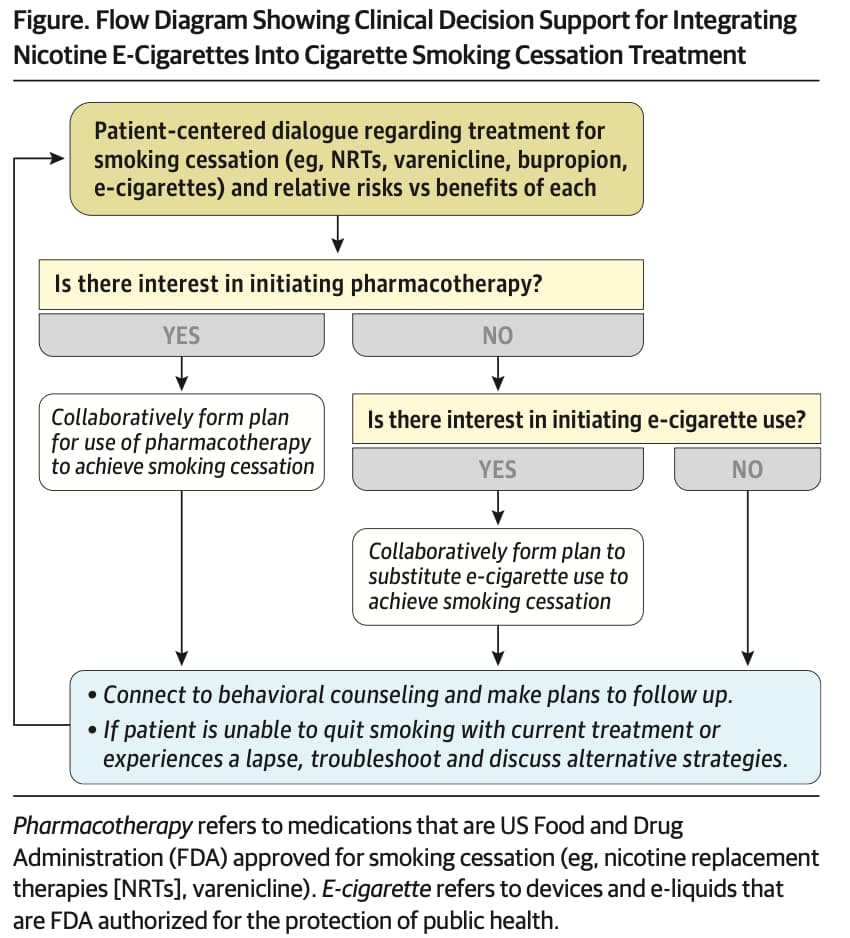
The expert panel suggests that clinicians should not reserve e-cigarettes as a last-resort option after FDA-approved smoking cessation therapies have failed. Instead, they recommend discussing nicotine-containing e-cigarettes alongside established evidence-based interventions, including nicotine replacement therapy (NRT), varenicline, and bupropion, when developing personalized cessation plans for adult smokers.
However, the authors also stress that if a patient has no strong preference, healthcare providers should continue to prioritize FDA-approved smoking cessation medications as the first-line treatment.
Evidence Suggests Higher Quit Rates Than Nicotine Replacement Therapy
The paper draws on multiple existing evidence reviews, including analyses from the independent international research organization Cochrane.
According to the cited evidence, nicotine-containing e-cigarettes demonstrate higher smoking cessation rates than traditional nicotine replacement therapies such as nicotine patches, gum, lozenges, and nasal sprays. The paper also notes that vaping appears to achieve quit rates broadly comparable to some of the most effective smoking cessation medications currently available.
The authors emphasize that these conclusions are based on existing evidence reviews rather than newly generated clinical trial data.
Complete Switching Is Key
A central theme of the position paper is that smokers should aim for complete substitution rather than long-term dual use of cigarettes and e-cigarettes.
According to the expert panel, the health benefits associated with vaping largely depend on replacing combustible cigarettes entirely. Continuing to smoke while vaping may reduce the potential reduction in exposure to harmful substances and prolong health risks associated with cigarette smoking.
Behavioral counseling and ongoing follow-up are also recommended as important components of successful smoking cessation programs.
Lower Exposure to Certain Harmful Substances
The paper states that completely replacing cigarettes with e-cigarettes can substantially reduce exposure to many combustion-related toxicants.
It cites evidence indicating that the concentrations of some harmful substances found in e-cigarette aerosol may be up to approximately 90% lower than those measured in conventional cigarette smoke.
The authors caution, however, that this figure applies only to certain measured chemicals and should not be interpreted as meaning that overall health risks are reduced by 90%.
Product Performance Matters
The expert panel argues that successful smoking cessation depends not only on nicotine concentration but also on how effectively a vaping product can replace cigarettes.
Factors highlighted include:
- Adequate nicotine delivery
- User satisfaction
- Effective relief of withdrawal symptoms
- Reduction of cigarette cravings
- Consistent product performance
If nicotine delivery is insufficient, users may compensate by vaping more frequently or inhaling more deeply, which could reduce cessation success while increasing exposure to aerosol components.
Long-Term Evidence Still Limited
Despite encouraging evidence supporting vaping as a smoking cessation aid for some adults, the authors acknowledge several important knowledge gaps.
The paper notes that researchers have not yet identified which device types, nicotine strengths, flavors, or product designs produce the best long-term cessation outcomes. Evidence beyond two years of use also remains limited, particularly for pregnant women and individuals with certain chronic medical conditions.
No FDA Approval as a Smoking Cessation Medicine
The authors make clear that no electronic cigarette has received approval from the U.S. Food and Drug Administration (FDA) as a smoking cessation medication.
Some vaping products have obtained marketing authorization through the FDA’s tobacco product pathway, but this should not be interpreted as approval for smoking cessation treatment or confirmation of smoking cessation efficacy.
Implications for Healthcare Providers and Policymakers
The paper suggests that clinicians should evaluate vaping within the broader context of tobacco harm reduction, considering both the risks of e-cigarette use and the substantially greater risks associated with continued cigarette smoking.
For regulators, the authors argue that policies should carefully balance youth prevention with maintaining products that are sufficiently satisfying to help adult smokers transition away from combustible cigarettes. Excessively restrictive limits on nicotine delivery or product characteristics, they suggest, could unintentionally reduce the effectiveness of vaping products as cigarette substitutes.
The paper also encourages manufacturers to focus product development on measurable smoking cessation outcomes, including reducing cigarette consumption, increasing complete switching rates, minimizing relapse, and ensuring consistent nicotine delivery across products.
Conclusion
The new JAMA position paper represents an expert consensus advocating for a broader discussion of nicotine-containing e-cigarettes within adult smoking cessation strategies. While it does not establish new clinical guidelines or change the regulatory status of vaping products in the United States, it highlights growing evidence that vaping may offer a practical harm reduction option for some adult smokers when integrated into individualized cessation plans alongside established therapies.
At the same time, the authors emphasize that e-cigarettes are not risk-free, complete replacement of combustible cigarettes remains the primary objective, and further long-term research is needed to better understand their health effects and optimize their role in smoking cessation.