









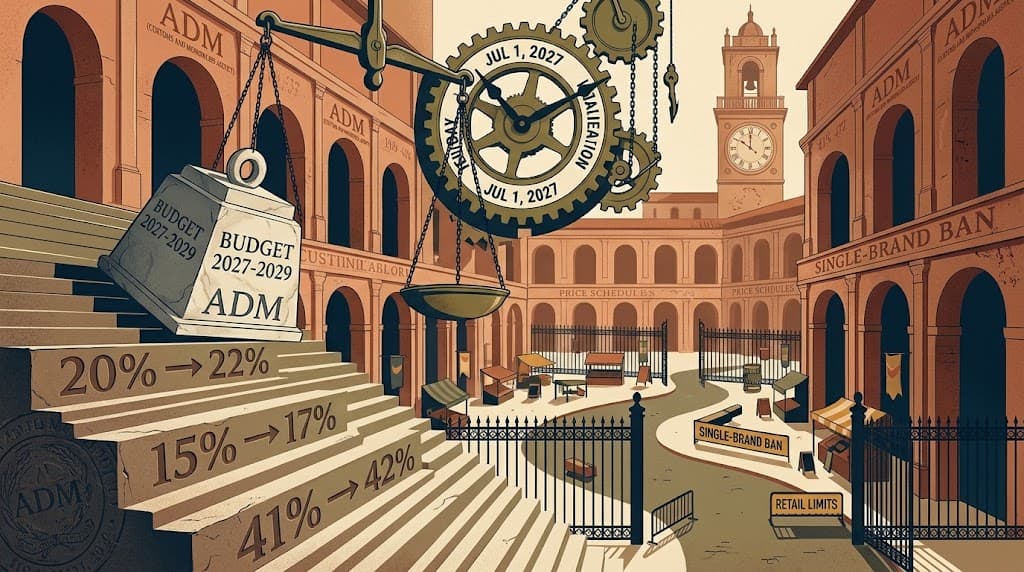
Italy is considering a major update to its regulation of e-cigarette liquids and heated tobacco products (HTPs). Under the government’s proposed 2027–2029 budget plan, the next scheduled excise tax increases could take effect six months earlier than originally planned, moving from January 2028 to July 1, 2027.
The draft legislation also proposes bringing e-liquid retail prices under an official government price-list system, restricting exclusive agreements between retailers and suppliers, and changing how products move through authorized import, warehousing, and distribution channels.
If approved in its current form, the package could significantly affect how vape manufacturers, importers, distributors, and retailers operate in Italy.
However, these measures are still proposals under parliamentary review. Their final wording, implementation dates, and practical requirements may change before becoming law.
Italy Proposes Bringing Forward Vape and HTP Tax Increases to July 2027
The proposed tax changes are included in Italy’s 2027–2029 budget bill. The plan would accelerate the next scheduled increases in excise tax calculation coefficients for nicotine-containing e-liquids, nicotine-free liquids and applicable flavorings, and heated tobacco products.
Under the existing tax schedule, the relevant coefficients are set to increase again in January 2027, with another adjustment originally planned for 2028. The new proposal would bring the latter increase forward to July 1, 2027.
Italy has previously taken action to strengthen oversight of e-cigarette products, as discussed in our report on Italian authorities testing popular e-cigarettes and identifying regulatory violations.
The proposed figures are:
| Product category | 2026 coefficient | January 2027 scheduled coefficient | Proposed from July 1, 2027 |
|---|---|---|---|
| Nicotine-containing e-liquids | 18% | 20% | 22% |
| Nicotine-free e-liquids and applicable flavorings | 13% | 15% | 17% |
| Heated tobacco products | 40.5% | 41% | 42% |
These percentages represent statutory coefficients used to calculate excise duties based on the equivalent cigarette tax. They should not be interpreted as direct percentage increases in the retail prices of the products.
If the proposal passes without major changes, nicotine-containing and nicotine-free e-liquid coefficients would each rise by another two percentage points in July 2027, while the heated tobacco coefficient would increase by one percentage point.
Industry reporting cited in the original coverage estimates that the accelerated tax measures could generate approximately €9.45 million in additional government revenue during 2027. The estimated annual revenue impact after full implementation is around €18.9 million.
These are projections rather than confirmed tax receipts.
E-Liquid Retail Prices Could Enter an Official Government Price List
Taxation is not the only area targeted by the proposed legislation. Article 34 of the draft budget bill would introduce a formal price-list procedure for e-cigarette liquids through Italy’s Customs and Monopolies Agency, known as ADM.
Under the proposed system, eligible e-liquid products and their retail prices would be included in an official administrative price list.
Manufacturers would generally submit applications to establish or change the retail prices of their products. For products manufactured outside the European Union, an eligible exclusive importer or authorized representative could submit the application.
The draft outlines two administrative timeframes:
- Up to 90 days for the procedure to include a product in the official price list.
- Up to 40 working days for determining or adjusting retail prices.
The proposal does not mean that the government would independently set every product price without manufacturer involvement. Instead, price establishment and changes would be handled through a formal application and administrative approval process.
Retailers and distributors would still be able to negotiate certain commercial price components outside applicable excise duties and VAT.
If adopted, this approach would extend Italy’s existing official pricing framework for tobacco products to e-cigarette liquids.
Exclusive Brand Agreements and Single-Brand Retail Displays Could Face Restrictions
Another important part of the proposal concerns the commercial relationship between vape brands, suppliers, and retailers.
Article 34 would require Italy’s Ministry of Economy and Finance to establish detailed retail rules within 180 days after the legislation enters into force.
The proposed framework would encourage retailers to offer a product selection that reflects local consumer demand, rather than allowing one manufacturer or brand to dominate the store’s product presentation.
Italy has also introduced changes affecting how e-cigarettes can be purchased and delivered, as explained in our coverage of Italy’s rules for online e-cigarette purchases.
Several commercial practices could be restricted or prohibited, including:
- Exclusive agreements between retailers and manufacturers or distributors.
- Arrangements that link the purchase of one product to another product, including free products.
- Bonuses, rewards, or additional services tied directly to sales volumes or market-share targets.
- Retail promotional practices that go beyond presenting factual product characteristics to adult consumers.
Retailers would also remain responsible for complying with age restrictions and applicable age-verification requirements.
These changes could affect how brands negotiate dedicated display areas, exclusive supply arrangements, and sales incentives with stores.
However, the draft does not explicitly order the closure of every existing single-brand vape shop. How specialist stores, brand-focused retail areas, and existing commercial contracts will be treated depends on the final legislation and subsequent implementing regulations.
Import and Distribution Rules Could Become More Centralized
The proposed legislation also addresses the supply chain connecting overseas manufacturers with Italian retailers.
Manufacturers and suppliers bringing e-liquid products into Italy from other EU countries or third countries could be required to operate through eligible businesses with authorized warehousing facilities in Italy.
Retailers would also be expected to purchase covered products from ADM-authorized warehouse operators.
The proposed framework would introduce additional requirements involving tax records, commercial documentation, and warehouse authorization. Businesses that fail to comply could face administrative penalties or the suspension of relevant permits.
For international manufacturers and brands, these changes could affect more than the tax cost of selling products in Italy. They may also need to review their importer relationships, warehousing arrangements, distribution agreements, and retailer supply contracts.
The draft additionally proposes restrictions on the sale of components and accessories that could allow e-cigarette tanks or disposable devices to exceed applicable EU capacity limits.
This provision concerns specific device components and reservoir capacity. It should not be confused with a blanket restriction limiting every e-liquid refill bottle to 2ml.
Transitional Arrangements Proposed for Existing Businesses
The government recognizes that changes to warehousing and distribution requirements could affect businesses already operating under existing authorizations.
According to industry reporting on the draft, certain authorized warehouse operators and businesses holding both warehousing and sales permits could receive a one-year period to adjust their operations.
The proposal also includes transitional arrangements for certain existing products and inventory affected by the proposed capacity restrictions.
Under the reported draft provisions, qualifying inventory could be transferred from distribution warehouses to retail outlets by June 1, 2027, with sales permitted through December 31, 2027.
These dates and conditions remain subject to the final legislative text.
The draft also provides for administrative fines and possible permit suspension or revocation. Industry reporting indicates that some violations not involving permit suspension or revocation could attract fines ranging from €5 to €258.
The precise consequences will depend on the type of violation and the final implementing rules.
Italy’s 2027 Budget Proposal Still Requires Parliamentary Approval
Italy’s government approved the draft 2027–2029 budget plan on October 28, 2026. The relevant legislative documents were recorded by the Presidency of the Republic on October 30.
The proposals have not yet completed the parliamentary process. This means that the proposed July 1, 2027 tax adjustment and the planned changes to pricing, retail agreements, and distribution should not yet be treated as fully implemented requirements.
The different measures also have separate implementation schedules.
The proposed excise tax changes are scheduled for July 1, 2027. Retail rules covering brand displays, exclusive agreements, and other commercial practices would require additional implementing regulations within 180 days after the law takes effect.
Businesses should therefore distinguish between the proposed tax timetable and the later administrative rules governing retail operations.
What the Proposed Changes Mean for Italy’s Vape Market
Italy’s budget proposal goes beyond increasing the tax burden on e-cigarette liquids and heated tobacco products. It could also reshape the commercial structure of the market by introducing formal retail price procedures, limiting certain exclusive brand arrangements, and tightening the requirements governing imports and authorized distribution.
For international manufacturers, the potential impact includes higher excise costs, additional administrative procedures, and a possible need to reorganize local supply chains.
Retailers could face greater restrictions on promotional arrangements and product displays, while distributors may need to review their warehouse authorizations and purchasing relationships.
The next important step is the parliamentary review of the 2027–2029 budget bill. Until the legislation is finalized and the relevant implementing rules are published, companies should treat the proposed measures as a regulatory outlook rather than settled law.