










Most window security cameras are designed to look outward. The K90 takes a different approach by using two camera lenses in one device, giving users the ability to monitor two directions from a single window position.
That makes the K90 Dual View Security Camera more interesting than a conventional indoor Wi-Fi camera. Instead of choosing between watching a room and checking the area outside a window, the dual-lens design is intended to provide both views at the same time.
The camera combines 2304 × 1296 video, F1.0 lenses, color night vision, human detection, dual-band Wi-Fi, two-way audio, and microSD recording. More importantly, its window-oriented design can solve a practical installation problem: adding surveillance to a location where mounting a separate outdoor camera is inconvenient.
What Makes the K90 Different?
The main reason to consider the K90 is not simply its resolution.
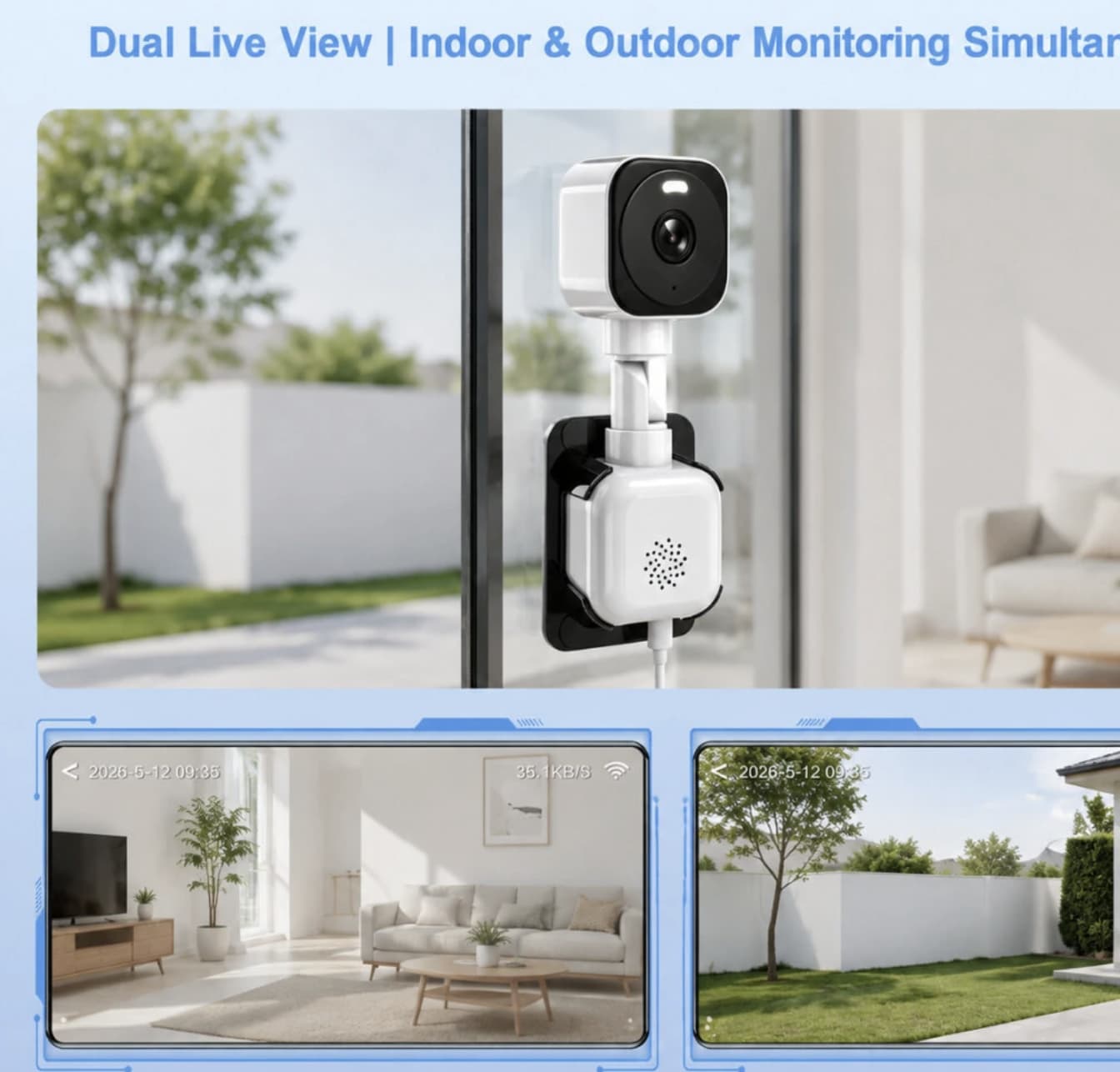
The K90 takes a different approach from a conventional window security camera, using two lenses to provide two viewing directions from a single installation point.
Its defining feature is the dual-view camera arrangement.
A conventional indoor security camera normally gives you one viewing direction. If you want to watch another area, you usually need another camera or a different mounting position. The K90 puts two lenses into the same camera body, allowing a suitable window location to become a single monitoring point for two views.
This can be useful near an entrance, balcony, driveway, garden, or apartment window.
For example, a window facing an entrance could potentially provide one view toward the indoor area and another toward the space outside. The exact coverage will depend on the mounting position and the orientation of the two lenses, so users should not assume that every window will provide identical results.
That distinction is important: the K90 is valuable because of how its two cameras can be positioned, not because two lenses automatically mean twice the coverage.
2K-Class Video Is Enough for Everyday Monitoring
The K90 uses a 1/3-inch CMOS sensor and supports a main-stream resolution of 2304 × 1296 pixels at up to 15fps.
That is a useful step above conventional 1080p surveillance cameras, providing additional image detail for everyday monitoring. The resolution can be helpful when watching entrances, people approaching a property, vehicles, or activity around a window.
However, this is not a 4K security camera, and the 15fps frame rate is another specification worth considering.
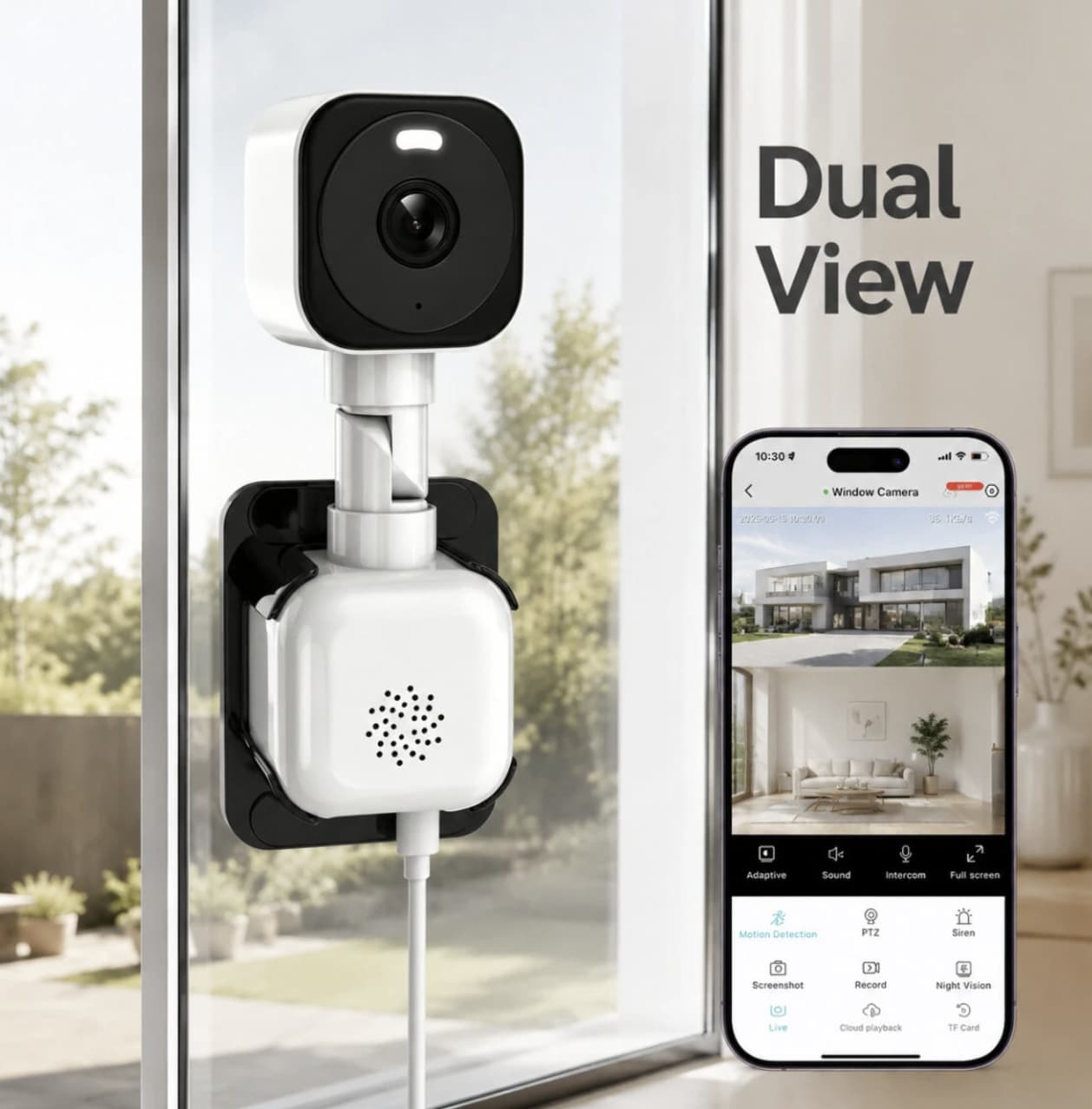
For normal home surveillance, 15fps can be adequate. If your priority is very smooth movement capture or detailed analysis of fast-moving subjects, a higher-frame-rate camera would be a better fit.
The K90 therefore makes more sense as an everyday monitoring camera than as a professional surveillance system.
F1.0 Lenses Could Help in Low Light
Both lenses use a 3.6mm focal length and an F1.0 aperture.
The aperture is particularly relevant because security cameras often have to operate in changing lighting conditions. A larger aperture can allow more light to reach the sensor, which can help maintain usable image quality as the environment becomes darker.
The K90 also supports automatic white balance, automatic gain control, and backlight compensation.
These features are less exciting than a headline such as “2K video,” but they can have a bigger impact on everyday footage because lighting conditions rarely remain constant throughout the day.
For a camera positioned beside a window, changing sunlight can be especially important. A scene that looks balanced in the morning may have strong backlighting later in the day.
Color Night Vision Adds Useful Detail
The K90 supports full-color night vision and a warm-light human-induction mode.
This gives it an advantage over basic cameras that switch entirely to monochrome infrared footage after dark. When enough ambient or supplemental light is available, color footage can provide additional visual information, such as clothing or vehicle colors.
The camera is also specified with an illumination range of around 10 to 20 meters for its human-induction lighting.
Still, buyers should keep expectations realistic. Night vision performance depends on the actual environment, including surrounding light, distance, reflections, and objects in the camera’s field of view.
A larger aperture and color night vision can help, but they cannot compensate for a completely unsuitable viewing position.
Human Detection Is More Useful Than Basic Motion Alerts
Another important K90 feature is human detection.
Basic motion detection can be triggered by almost anything that moves. A tree branch, changing shadows, a pet, or another moving object may generate an alert even when nothing important is happening.
Human detection attempts to make those alerts more useful by identifying human-shaped subjects.
The K90 also supports human target framing and area detection. These features can be particularly helpful when the camera is pointed toward a busy outdoor scene where constant movement would otherwise create too many notifications.
For example, if a window overlooks a road or garden, users may want to concentrate detection on the entrance rather than the entire visible area.
This type of configuration is one of the features worth spending time on after installation because a security camera is only useful if its alerts are manageable.
Dual-Band Wi-Fi Makes Placement Easier
The K90 supports both 2.4GHz and 5GHz Wi-Fi.
That gives users more flexibility when deciding where to install it.
The 2.4GHz band generally travels farther and handles obstacles better, while 5GHz can provide higher throughput at shorter distances. Which one works better will depend on the distance between the camera and router and the construction of the home.
The camera also supports Bluetooth, AP hotspot, and QR-code network configuration.
Its companion application is O-KAM Pro, so buyers should check current app compatibility before installation.
Two-Way Audio Adds a Practical Communication Layer
A security camera does not always need to be a passive observer.
The K90 has a built-in microphone and speaker, allowing two-way communication through the camera.
This can be useful when someone approaches an entrance or when users want to communicate with someone near the monitored area without opening a door or physically walking over.
The feature can also be useful for checking on family members or responding to an unexpected visitor.
It is not a replacement for a dedicated intercom, but two-way audio makes the K90 more versatile than a camera that only records video.
MicroSD Storage Without Depending Entirely on the Cloud
The K90 supports T-Flash/microSD storage up to 256GB.
That gives users a local recording option without requiring every recording to be stored in the cloud.
Local storage can be attractive for people who prefer to keep recordings directly on the camera. At the same time, cloud storage can offer advantages when users need remote access to recordings or want footage to remain available if the physical memory card is damaged or removed.
The important point is that users should understand which recording mode they are using before relying on the camera for security events.
Cloud features and pricing can also change, so buyers should check the current service terms before purchasing a subscription.
The No-Drill Design Could Be the Biggest Practical Advantage
The K90 is supplied with a right-angle bracket, cable clips, adhesive stickers, and a 2.5-meter Type-C cable.
This makes it particularly interesting for renters and apartment users who may not want to drill holes into walls.
A window can provide an existing mounting position without requiring a permanent outdoor installation.
That is also useful for temporary surveillance. If the camera needs to be moved later, an adhesive-based installation can be less restrictive than a permanently mounted security camera.
However, adhesive mounting is not completely maintenance-free. The surface should be clean, dry, smooth, and suitable for the supplied adhesive. Users should also think about cable routing before attaching the camera.
The K90 Still Needs Continuous Power
One limitation is easy to overlook.
Despite its relatively simple installation, the K90 is not a battery-powered camera.
It uses a 5V/2A power supply and comes with a 2.5-meter Type-C cable and charger. This means the camera needs continuous access to power.
For a window near a wall outlet, this should be relatively straightforward. For a window far from an outlet, cable routing can become the most inconvenient part of the installation.
The camera weighs approximately 0.29kg and measures 187 × 130 × 50mm, so it is reasonably compact, but its physical dimensions and cable still need to be considered when choosing the mounting position.
Where the K90 Makes the Most Sense
The dual-view design gives the K90 some specific advantages over ordinary single-lens cameras.
Apartment Windows
For apartment residents, a window can provide a convenient surveillance position without installing an exterior camera.
Entry Areas
A properly positioned K90 could monitor an area around an entrance while also maintaining another viewing direction.
Balconies
The camera can be useful when a balcony window needs monitoring from inside the home.
Driveways and Gardens
A window facing a driveway or garden may provide a suitable location for watching an outdoor area without drilling into an exterior wall.
Temporary Monitoring
The adhesive mounting approach makes the K90 worth considering for temporary or semi-permanent setups.
What the K90 Does Not Solve
The K90 is not a universal replacement for every type of security camera.
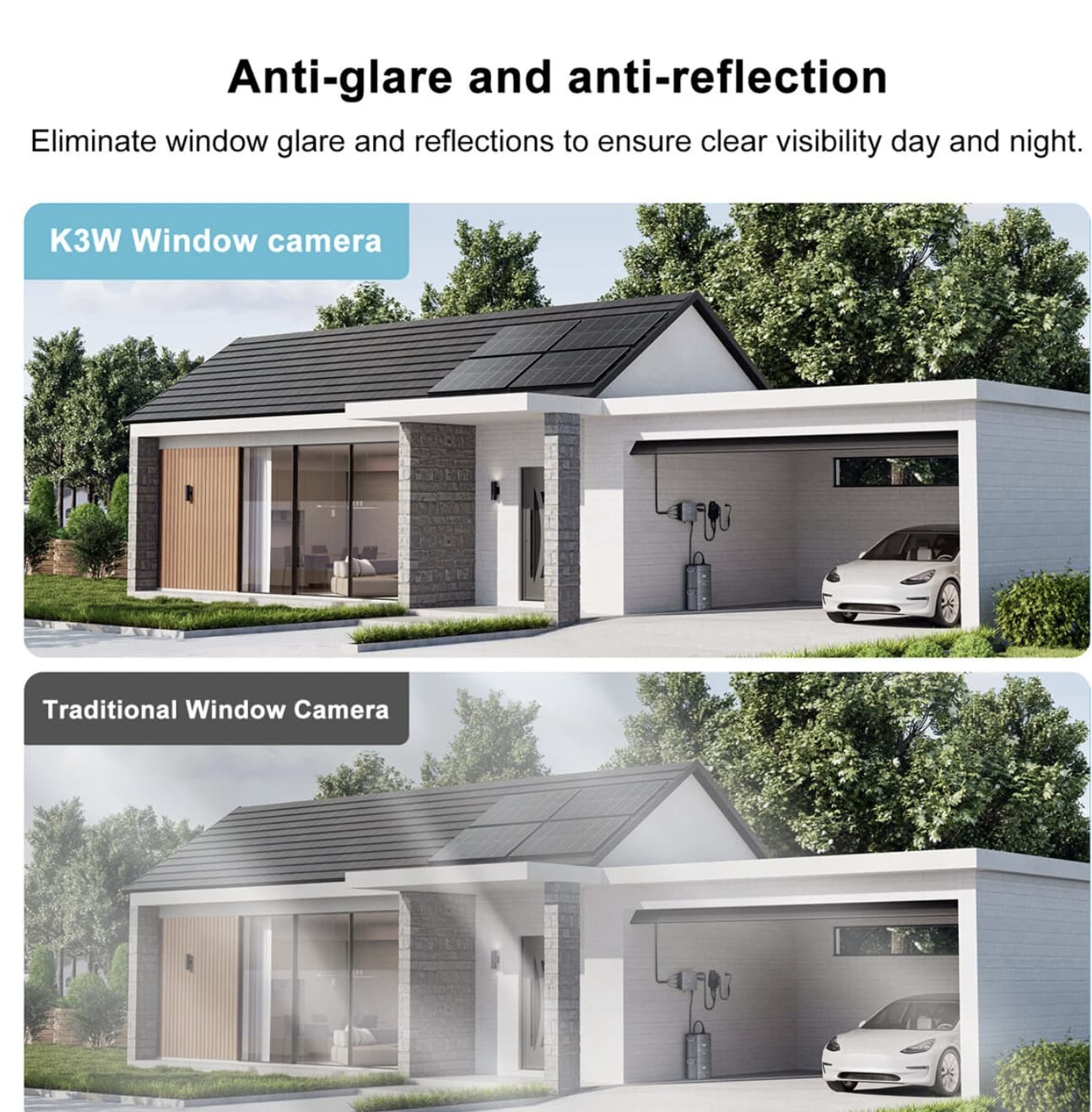
Its window-based concept means the mounting position matters considerably. Reflections, glare, window tint, curtains, the angle of the glass, and the distance to the monitored area can all affect the final image.
It also requires continuous power.
The 2304 × 1296 resolution and 15fps main stream are suitable for many everyday situations, but users looking for 4K recording, very high frame rates, advanced optical zoom, or professional surveillance functions should look elsewhere.
Another consideration is privacy. If the camera can see a shared hallway, neighboring property, public area, or other people’s private space, users should make sure their installation complies with applicable local rules.
K90 vs. a Conventional Window Camera
The biggest difference is simple.
A conventional window camera generally concentrates on one direction. The K90 is designed around two simultaneous views.
If you need broader outdoor coverage rather than a window-focused installation, a dual-lens security camera can provide another approach to monitoring multiple areas.
That does not automatically make it better.
If you only need to monitor one area, a simpler single-lens camera may be cheaper and easier to position. The K90 becomes more compelling when its second viewing direction can solve a genuine coverage problem.
This is why buyers should think about the physical location first and the specification sheet second.
Ask yourself:
- Do I need to monitor two directions from one window?
- Is there a suitable power outlet nearby?
- Can both lenses obtain useful viewing angles?
- Will reflections affect the image?
- Do I need local storage?
- Is 15fps sufficient for my use?
- Am I allowed to record the areas visible from the window?
If the answers line up with the K90’s design, its dual-view architecture becomes much more useful.
K90 Dual View Security Camera Review: Final Verdict
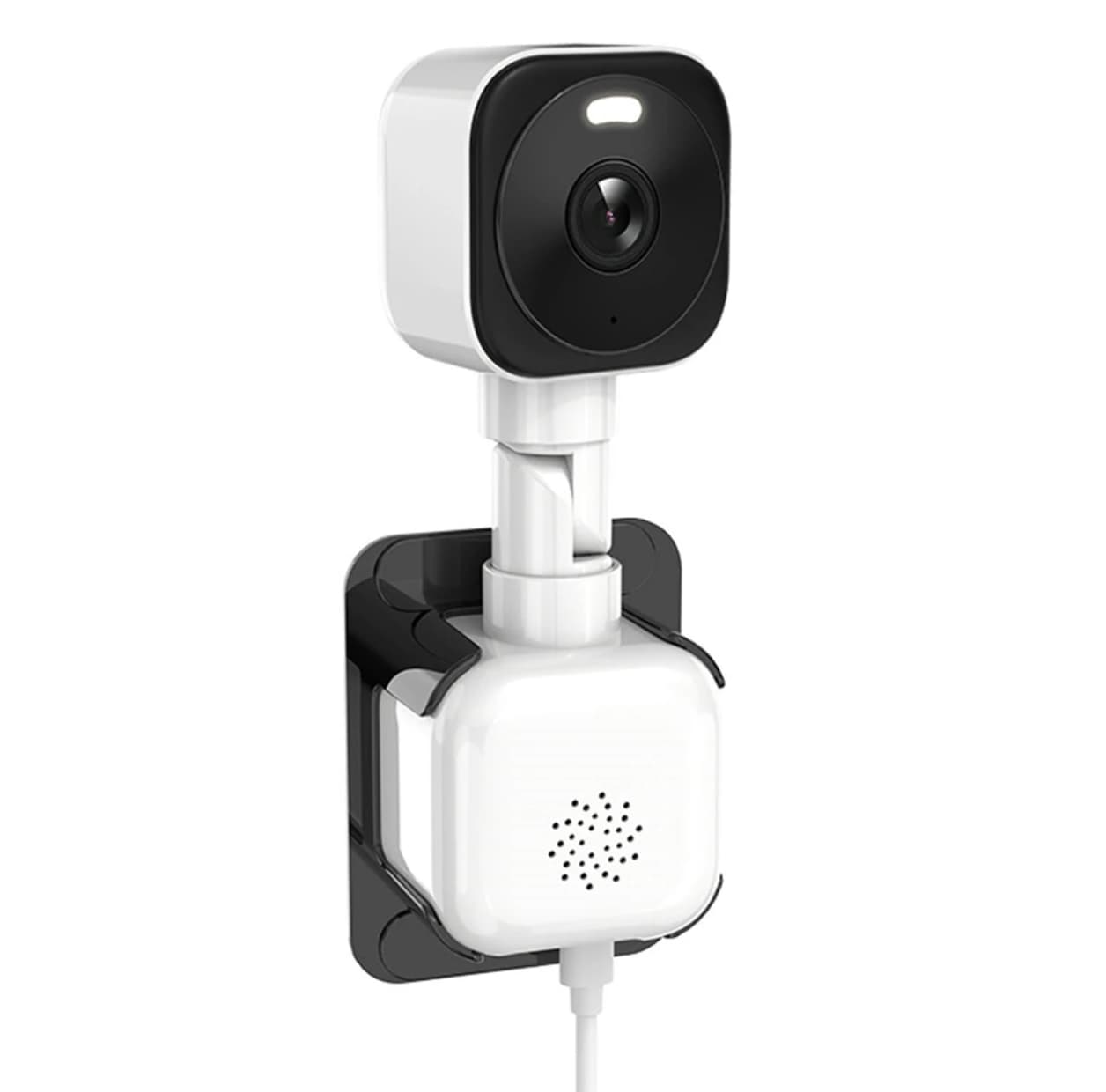
The K90 Dual View Security Camera is interesting because it solves a specific surveillance problem rather than simply adding another long list of smart-camera features.
Its two-lens configuration is the main reason to buy it. For a suitable window position, the K90 can provide two viewing directions from one compact installation point, potentially reducing the need for separate cameras.
The supporting hardware is also practical: 2304 × 1296 video, F1.0 lenses, color night vision, human detection, dual-band Wi-Fi, two-way audio, and microSD storage give it a useful set of everyday surveillance features.
There are limitations. It needs continuous power, its main stream is limited to 15fps, and its performance depends heavily on the window, viewing angles, lighting, and mounting position.
For users who simply want a basic indoor security camera, there are simpler alternatives. But for apartment windows, entrances, balconies, driveways, and other locations where two viewing directions are useful, the K90 offers a more distinctive approach.
The key question is therefore not whether the K90 has the biggest specification sheet. It is whether its dual-view window design matches your actual monitoring needs. If it does, that is the feature that makes this camera worth considering.