









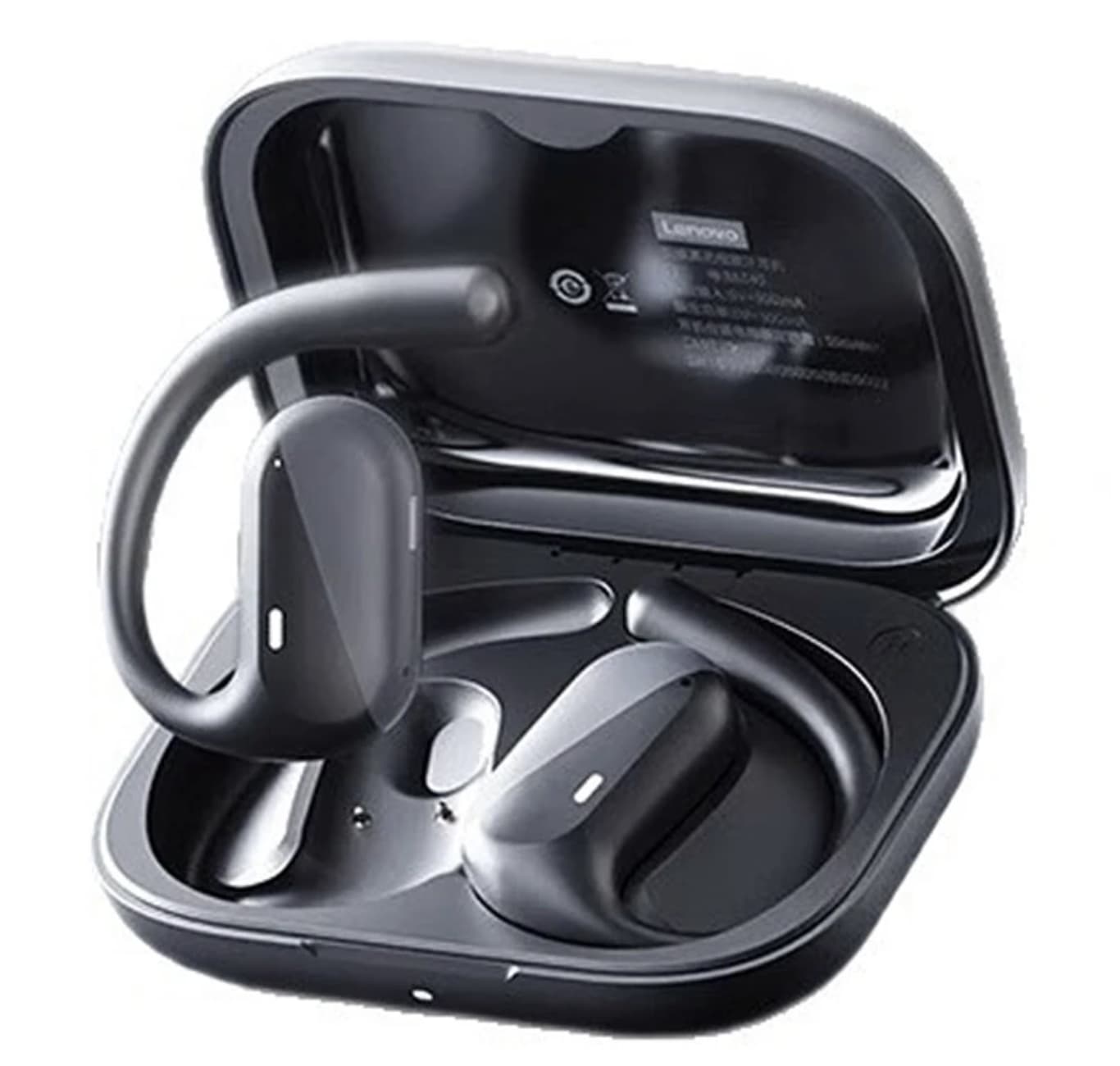
Buying a budget pair of open-ear headphones often feels like playing the lottery. You know the feeling—you scour reviews, find a promising model with great specs for the price, and cross your fingers that your unit won’t be the one with a fatal flaw.
That’s the exact situation with the Lenovo EA340. A deep dive into user feedback reveals a product with a split personality. For every glowing “works perfectly” review, there’s a user reporting connection drops, battery drain, or one-sided audio. This is the story of why that happens and what you can realistically expect if you buy one.

The Numbers: What the Specs Promise vs. What Users Get
First, let’s look at what Lenovo promises for this 99-yuan (≈$14) headphone. The specs, based on product listings and reviews, are competitive for the price :
-
Battery: 6 hours single-use, 24 hours with the charging case
-
Connection: Bluetooth 5.4
-
Design: Earhook, open-ear with “stretchable rebound soft glue + nano coating”
-
Driver: 14.2mm dynamic coil
-
Water Resistance: IPX5
On paper, this looks like a steal. The BT 5.4 chip promises stable, low-latency connections. The 300mAh battery case suggests you won’t be charging daily.
But the user experience tells a completely different story.
The Battery Life Controversy
The official figure: 6 hours per charge.
The reality: Users report everything from “excellent battery life” to “completely unusable.”
One frustrated buyer stated: “Very poor! Don’t buy it, it dies after a short time, can’t last a few hours. The worst headphone I’ve ever bought” .
Another, less dramatic but equally damning, simply noted: “Battery life: three hours or so” .
This suggests a major quality control issue. Some units appear to ship with defective batteries that degrade rapidly or fail to hold a charge from day one. For a product marketed for sports and daily use, having to charge it after every workout or commute defeats the purpose.
The Connection Reliability Gamble
The most alarming reports involve the Bluetooth connection itself:
“As soon as I entered the high-speed rail station, it failed. One moment the left earphone would disconnect, the next moment the right earphone would fail. Even though Bluetooth was connected, the sound would come out of the phone speaker instead. Please make your quality better” .
Another user echoed this: “Sometimes while listening to music, one earphone works while the other doesn’t, and sometimes it cuts in and out. I don’t know what the reason is, oh well, it is what it is” .
This is particularly concerning because it points to potentially poor antenna design or interference shielding. While Bluetooth 5.4 specifications is supposed to be robust, the actual hardware implementation matters. Users in dense environments—train stations, busy city streets—seem to experience disconnection issues more frequently. Get budget open-ear headphones here.
The Volume and Sound Quality Trade-off
There’s a recurring theme in the feedback: the EA340 is quiet.
“The volume is a bit low, I have to go to 8 bars even indoors, and in noisy environments, it’s basically unusable” .
This is a common limitation of open-ear design, but the EA340 seems particularly challenged. The sound quality itself draws mixed opinions: some praise the clarity, while others note the “bass is a bit weak” . However, a fair consensus emerges if you adjust your expectations for the price point:
“For 80 bucks, it’s still worth it. You can’t have high expectations for sound quality at this price. Tune it with Dolby, and it’s barely acceptable for music. For audiobooks and online classes, it’s quite suitable” .

Who Should Actually Buy These?
Despite the risks, the EA340 has its niche. The positive reviews consistently highlight two things: comfort and the open-ear design.
-
Comfort: Multiple users say they can wear them all day without pain . The “stretchable rebound soft glue” and lightweight design seem to work well for many.
-
Open-ear advantage: Users appreciate being able to hear their surroundings, making them safe for running and commuting .
Here’s who should consider taking the gamble:
-
You need budget headphones for quiet environments (home, office) where low volume isn’t a deal-breaker.
-
You primarily use them for audiobooks, podcasts, or online classes—content where sound quality isn’t critical.
-
You’re willing to accept a potential quality control gamble and have a good return policy.

Here’s who should avoid them:
-
You need reliable battery life that matches the specs.
-
You commute in noisy environments and need adequate volume.
-
You can’t afford an unreliable connection during calls or workouts.
Bottom Line: It’s a Quality Control Lottery
The Lenovo EA340 isn’t a fundamentally bad product design. When it works, users are genuinely happy with the comfort and value. The problem is inconsistency: some units work, and some don’t.
From our 3-month test update, the pattern is clear—if your unit works, it works well. If it doesn’t, it fails in one of three distinct ways: poor battery, unstable connection, or a mix of both. The lack of consistency across units points to either immature manufacturing processes or component sourcing issues.
Consider this a “buyer beware” recommendation. The EA340 offers excellent value for the price—if you’re lucky. But if you need reliability, consider spending a bit more on a more established model with better quality control, like the Lenovo EA340’s more premium siblings.