









Smart glasses don’t all try to be augmented-reality computers. Some are much simpler: they look like ordinary eyewear but add wireless audio, hands-free calls, and a few connected features.
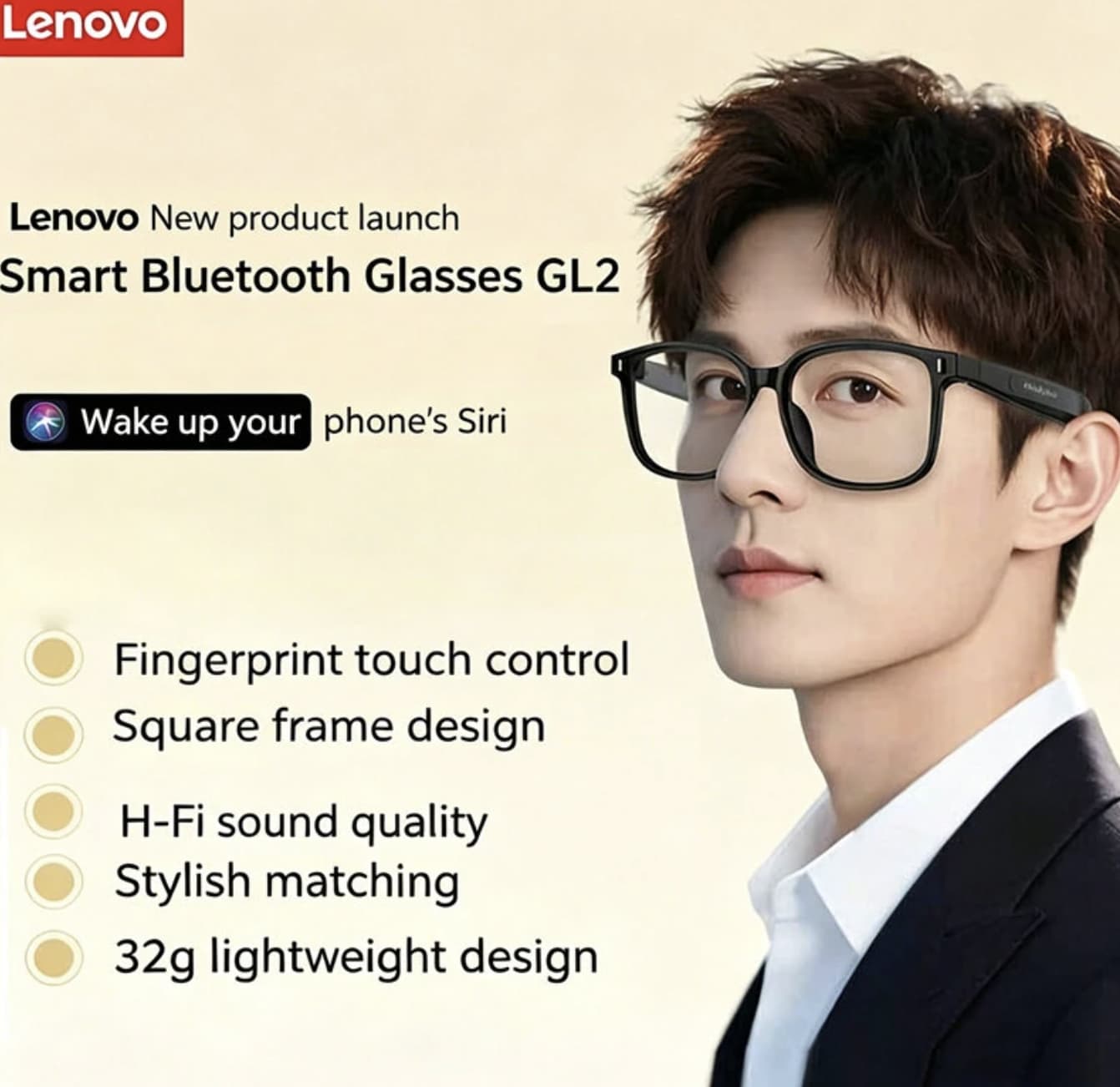
The Lenovo GL2 Smart Bluetooth Glasses take this approach. Instead of adding a display or camera, they combine open-ear audio with photochromic lenses, Bluetooth connectivity, touch controls, and a built-in microphone.
That makes the GL2 less of an AR device and more of a wearable audio accessory that happens to look like a pair of glasses.
The interesting question, therefore, isn’t how many features Lenovo can put into the frame. It’s whether those features make sense together for everyday use.
The GL2’s Main Idea: Audio Without Earbuds
The biggest difference between the GL2 and conventional wireless earphones is where the audio comes from.
Instead of placing an earbud inside the ear canal, the glasses use speakers positioned around the temples to deliver sound toward the ears, similar to the listening approach used by open-ear earbuds.
That means your ears remain uncovered.
For someone who dislikes the pressure of in-ear earbuds, this can be a meaningful advantage. You can listen to music, podcasts, navigation instructions, or calls while still hearing sounds around you.
However, open-ear audio also involves a compromise.
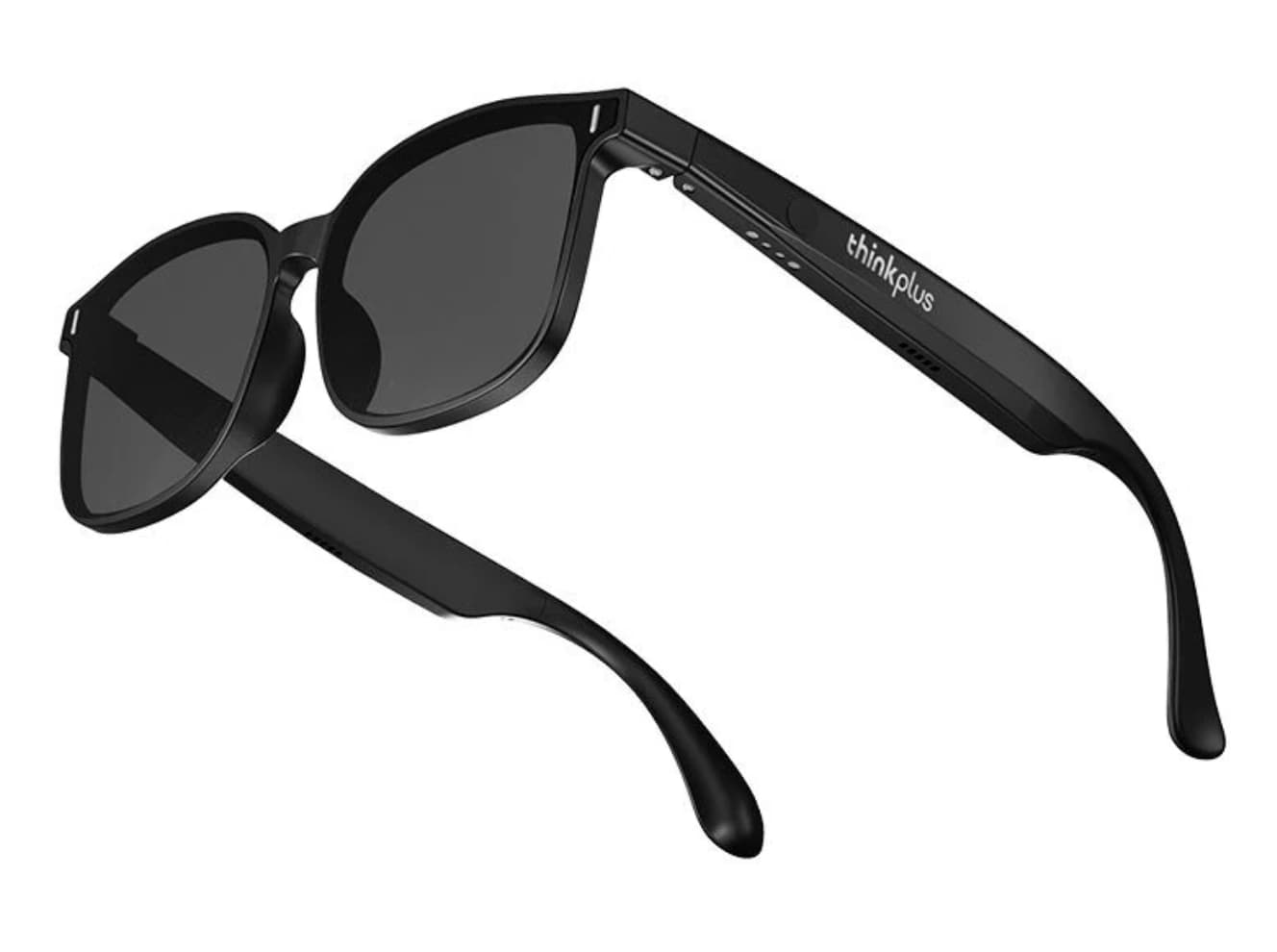
The sound isn’t isolated from your surroundings, and people nearby may hear some audio when the volume is raised. Bass performance can also be less pronounced than with a well-sealed pair of in-ear headphones.
So the GL2 shouldn’t be viewed as an automatic replacement for premium earbuds.
It’s a different listening approach.
Photochromic Lenses May Be More Useful Than the Smart Features
The GL2’s lenses are another reason the glasses can work as an everyday accessory.
The photochromic lenses are designed to change their tint according to surrounding light conditions. In bright outdoor environments, they can become darker, while indoor conditions allow them to remain clearer.
That is useful because you don’t necessarily need to switch between ordinary glasses and sunglasses every time you move between environments.
The lenses are also listed with UV400 protection, adding another practical function to the frame.
This is arguably one of the GL2’s biggest advantages over simply attaching Bluetooth speakers to ordinary glasses: the product remains useful even when you’re not listening to anything.
Open-Ear Audio Doesn’t Mean Complete Environmental Awareness
The open design allows ambient sounds to remain audible.
That can be helpful when walking through busy environments because you don’t have the same physical ear blockage associated with traditional in-ear earbuds.
But it is important not to confuse hearing ambient sound with guaranteed safety.
When listening at high volume, audio can still compete with surrounding sounds. Users should remain attentive to traffic, cyclists, pedestrians, and other hazards.
For that reason, the GL2’s open-ear design should be treated as a convenience feature rather than a safety feature.
Bluetooth Calling Is One of the More Practical Features
The GL2 isn’t limited to music playback.
Its built-in microphone system allows the glasses to be used for hands-free calls after connecting to a compatible device.
This can be convenient when your smartphone is in a pocket, backpack, or somewhere that is difficult to reach quickly.
Typical situations include:
- walking
- commuting
- working around the house
- traveling
- checking notifications
- taking short calls
The advantage isn’t that the glasses replace a phone.
It’s that they reduce the number of times you need to physically pick up the phone.

What Can the Touch Controls Actually Do?
The controls are integrated into the glasses rather than requiring users to constantly interact with their smartphone.
Depending on the supported functions, users can control common actions such as:
- playing or pausing audio
- changing tracks
- answering calls
- rejecting calls
- interacting with voice assistants
This is particularly useful when the phone isn’t immediately accessible.
The controls also allow the GL2 to maintain a more conventional sunglasses appearance instead of covering the frame with obvious physical buttons.
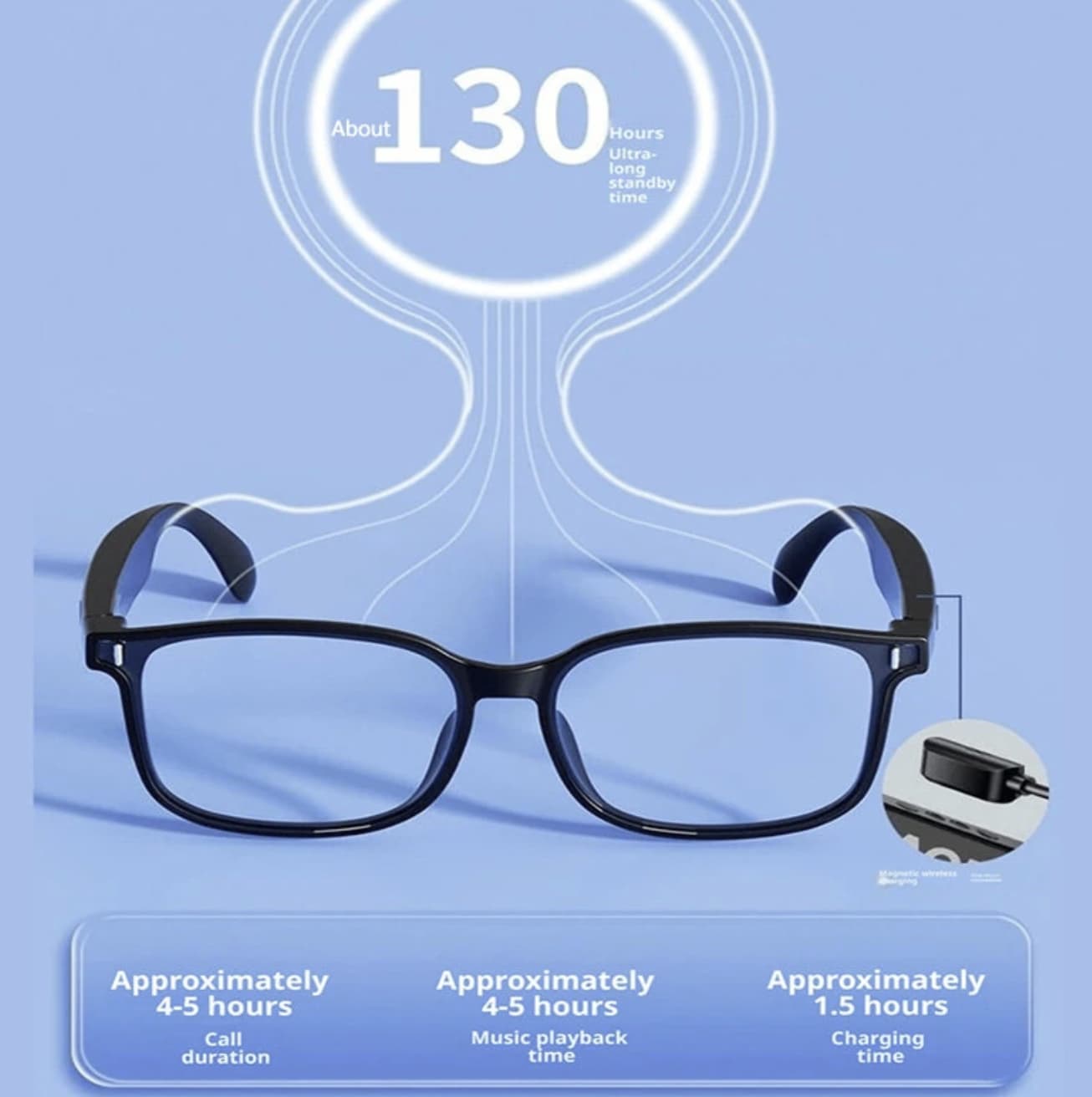
Don’t Confuse 130-Hour Standby With 130 Hours of Listening
The 130-hour standby claim sounds impressive, but this figure needs to be interpreted correctly.
Standby time and active playback time are not the same thing.
Continuous music playback, phone calls, Bluetooth activity, volume level, and other usage patterns place a much greater load on the battery than simply leaving the glasses connected or inactive.
Therefore, the 130-hour figure should not be interpreted as:
“The GL2 can play music continuously for 130 hours.”
A more accurate interpretation is that the glasses are designed to spend a long period in standby before requiring another charge.
For frequent travelers, this can still be useful because the glasses don’t necessarily need to be charged after every short listening session.
The GL2 Is Better for Convenience Than Advanced AR
This distinction is important.
The GL2 doesn’t try to compete with more advanced smart glasses that provide AR displays, cameras, navigation overlays, and spatial computing.
- AR displays
- cameras
- navigation overlays
- visual notifications
- spatial computing
- advanced AI interfaces
Instead, it concentrates on a smaller group of functions.
Eyewear + audio + calls + connectivity.
That simplicity can actually be an advantage.
Someone who simply wants audio without wearing earbuds may have little reason to pay for an AR system packed with functions they don’t need.
How the GL2 Fits Into Everyday Use
The GL2 makes the most sense when the glasses are treated as an accessory that happens to contain electronics.
During commuting
You can listen to podcasts or navigation instructions without physically inserting earbuds.
While walking
Open-ear audio allows environmental sounds to remain audible, although users should still stay alert to their surroundings.
At work
The glasses can provide audio and call functionality without covering your ears with headphones.
While traveling
Photochromic lenses reduce the need to switch between ordinary glasses and sunglasses as lighting conditions change.
During outdoor activities
The combination of eyewear and open-ear audio can be convenient, provided the activity and local rules allow the use of such devices.
What the GL2 Doesn’t Do
The GL2’s limitations become clearer when compared with more advanced smart glasses.
There is no built-in AR display.
There is also no reason to buy the GL2 if your main goal is:
- immersive AR
- camera-based recording
- heads-up navigation
- advanced AI interaction
- professional audio monitoring
The product is much simpler.
Its value comes from doing a few everyday tasks without requiring users to wear conventional earbuds.
Open-Ear Audio vs Traditional Earbuds
The choice ultimately depends on what you value more.
| Feature | Lenovo GL2 | Traditional In-Ear Earbuds |
|---|---|---|
| Ear canal blocked | No | Usually |
| Ambient sound | More audible | Depends on design/ANC |
| Bass isolation | More limited | Usually stronger |
| Wearing glasses | Yes | Yes |
| Hands-free calls | Yes | Yes |
| Photochromic lenses | Yes | No |
| AR display | No | No |
| Audio leakage | Possible | Usually lower |
The GL2 therefore isn’t necessarily better than Bluetooth earbuds; it solves a different problem.
It solves a different problem.
If you dislike having something inside your ears, the glasses become considerably more interesting.
Who Should Consider the Lenovo GL2?
The GL2 is a sensible option for users who prioritize:
- open-ear listening
- sunglasses functionality
- photochromic lenses
- hands-free calling
- simple Bluetooth connectivity
- a conventional-looking frame
- avoiding in-ear earbuds
It is less compelling for people who prioritize maximum audio quality, powerful bass, strong isolation, or advanced AR functionality.
Final Verdict
The Lenovo GL2 Smart Bluetooth Glasses don’t need to be an AR computer to be useful.
Their appeal comes from combining several relatively simple functions into something people can wear naturally throughout the day.
The photochromic lenses give the glasses a purpose even when the electronics aren’t being used, while open-ear audio provides an alternative to conventional earbuds. Bluetooth calling and touch controls add another layer of convenience.
The main compromises are equally straightforward: open-ear speakers cannot provide the same isolation and bass response as sealed earbuds, some sound leakage can occur, and the 130-hour figure represents standby rather than continuous playback.
For someone looking for smart eyewear without the complexity of AR glasses, the GL2 is a more focused proposition. It is essentially a pair of photochromic glasses with built-in wireless audio and hands-free communication—and that simplicity may be exactly what makes it appealing.