









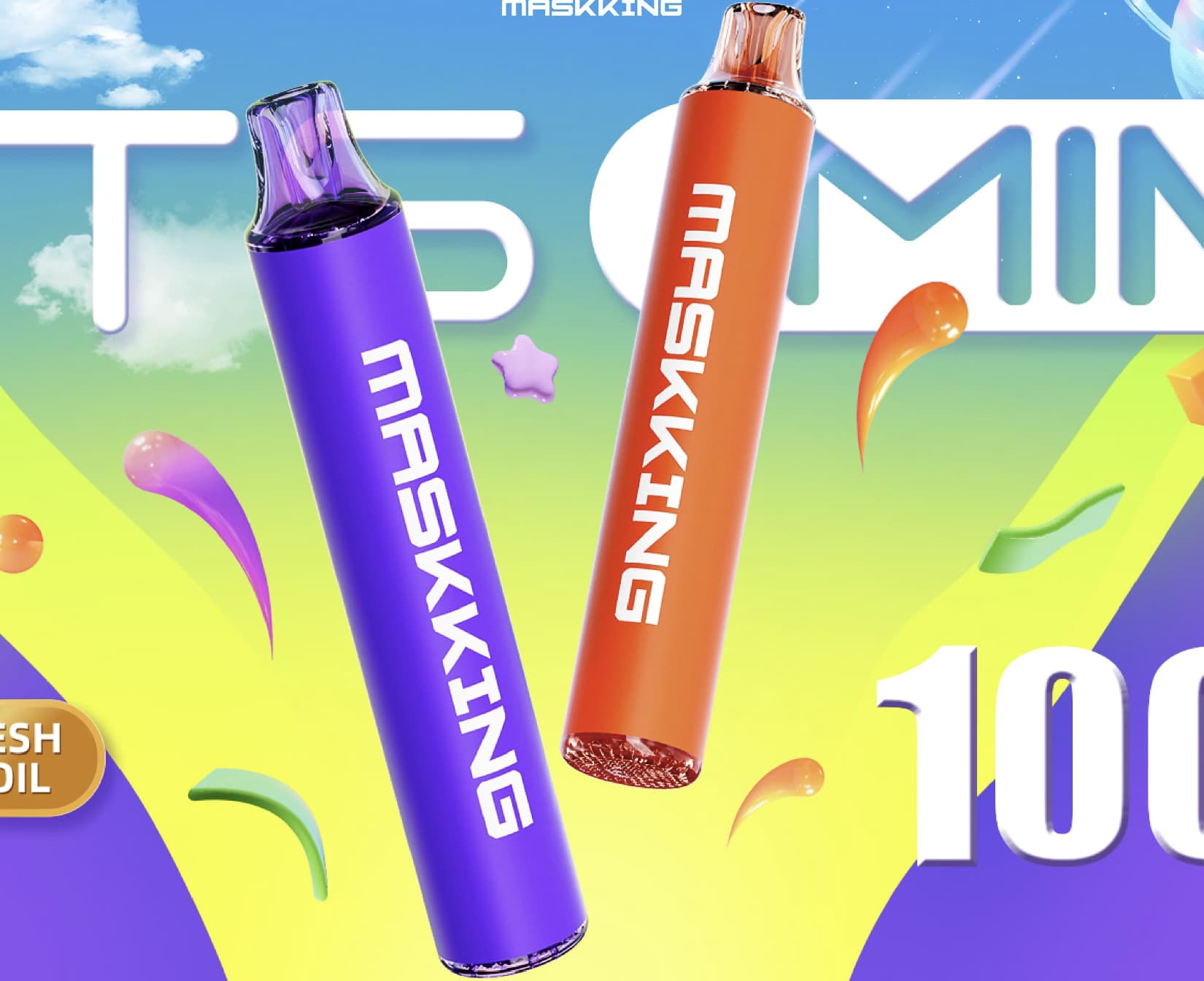
The Maskking GTS Mini is advertised as a compact device capable of delivering up to 1,000 puffs from just 2ml of e-liquid. At first glance, that combination may seem difficult to reconcile, especially when many users associate higher puff counts with larger e-liquid capacities.
The key is that a puff count is not determined by e-liquid capacity alone. Draw duration, vapor production, coil resistance, airflow and individual vaping habits can all affect how quickly e-liquid is consumed. In other words, “up to 1,000 puffs” should be understood as an estimated maximum rather than a fixed number that every user will achieve.
This article takes a closer look at how the Maskking GTS Mini reaches its advertised puff figure, what the 2ml capacity actually means in everyday use, and which factors can cause real-world results to differ. The GTS Mini therefore provides a useful example of how advertised puff counts should be interpreted in the best budget disposable vape category.
2ml for 1,000 Puffs: The Math Behind the Claim
The most interesting specification on the Maskking GTS Mini isn’t its 450mAh battery or even its 1.0Ω mesh coil. It’s the relationship between the 2ml e-liquid capacity and the advertised maximum of 1,000 puffs.
On paper, 2ml divided across 1,000 puffs works out to approximately 0.002ml of e-liquid per puff. That is an extremely small amount of liquid per draw, which helps explain why a compact device can advertise a surprisingly high puff count from a relatively small reservoir.
But this calculation should not be interpreted as a guarantee that every user will get exactly 1,000 puffs.
A puff counter is highly dependent on how the device is used. Short, gentle draws consume less liquid than long, deep inhalations. Airflow, coil temperature and the duration of each draw can also change how quickly the liquid is vaporized.
That means the 1,000-puff figure is best understood as a manufacturer’s maximum or standardized estimate rather than a personal-use prediction.
The more useful takeaway is that the GTS Mini has been designed around efficiency. Its 1.0Ω mesh coil and 2ml reservoir are relatively closely matched to the device’s compact 450mAh battery, allowing Maskking to target a high number of short draws without needing a physically large disposable body.
In other words, the interesting engineering question isn’t simply “Can 2ml produce 1,000 puffs?” It is whether the coil, airflow and battery are balanced well enough to make those puffs reasonably consistent from the beginning of the device’s life to the end.
The 2ml Capacity Is Only One Part of the Equation
E-liquid capacity tells you how much liquid the device can hold. It does not directly determine how many times the user can inhale from it.
Two people using the same device can consume different amounts of e-liquid because their draw habits are different.
A short, gentle puff requires less vapor production than a long, deep draw. Someone who takes longer puffs will therefore consume the available liquid more quickly than someone who takes shorter draws.
This is why 2ml does not automatically equal a predetermined number of puffs.
The manufacturer’s figure should instead be understood as an estimated maximum under particular testing conditions.
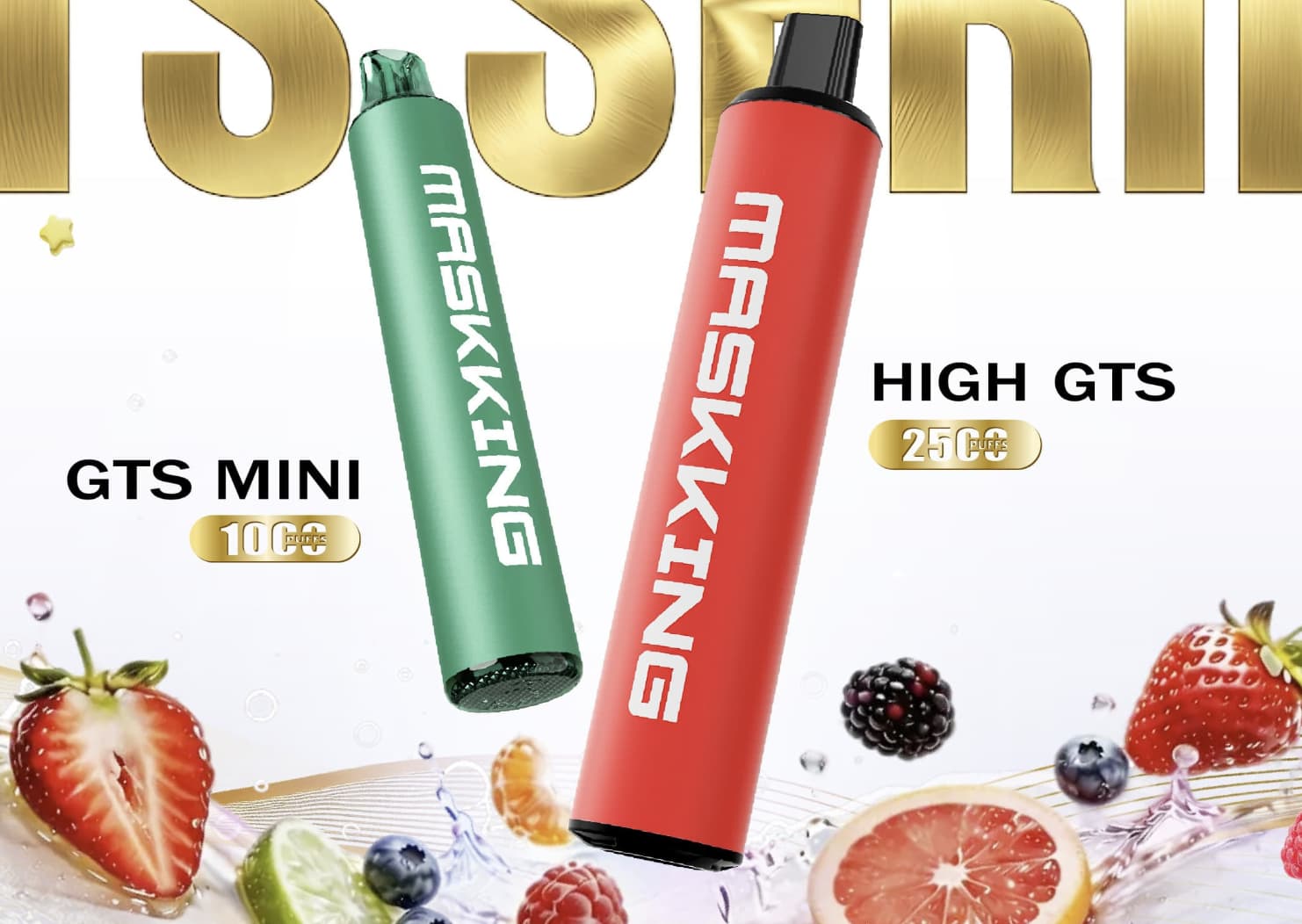
Why Puff Duration Matters
Why Your Puffing Style Matters
Puff duration is one of the easiest variables to overlook when comparing advertised and real-world puff counts.
A one-second draw and a four-second draw do not consume the same amount of e-liquid. Longer draws generally heat the coil for a greater period and produce more vapor, which can increase liquid consumption.
This means the advertised 1,000 puffs should not be used as a simple countdown. A user who takes short, occasional draws may get much closer to the advertised figure, while someone who takes longer and more frequent draws may reach the end of the e-liquid considerably sooner.
The same principle applies to other disposable and compact pod devices. Puff counts are useful for comparing products, but they are not a substitute for actual usage patterns.
The 1.0Ω Mesh Coil Is an Important Part of the Design
The Maskking GTS Mini uses a 1.0Ω mesh coil.
Coil resistance influences how the heating element behaves, but resistance alone doesn’t determine the total number of puffs.
The coil works together with the battery, airflow system and e-liquid delivery system.
A higher-resistance configuration can be appropriate for a lower-power vaping experience, while the mesh construction helps provide a relatively consistent heating surface.
The important point is that the coil needs to vaporize the liquid efficiently without consuming it unnecessarily quickly.
That balance is particularly relevant in a compact device with a limited 2ml reservoir.
Why Mesh Heating Can Help With Consistency
Mesh coils differ from traditional wire-style heating elements in their physical construction.
Instead of relying on a single narrow wire, a mesh element provides a larger heating surface.
That can help distribute heat more evenly across the area receiving e-liquid.
For a small device such as the GTS Mini, consistent heating is important because the available liquid is limited. If the heating system performs inconsistently, users may notice changes in flavor or vapor production as the device continues to be used.
Mesh technology therefore contributes more to the overall experience than simply increasing vapor output.
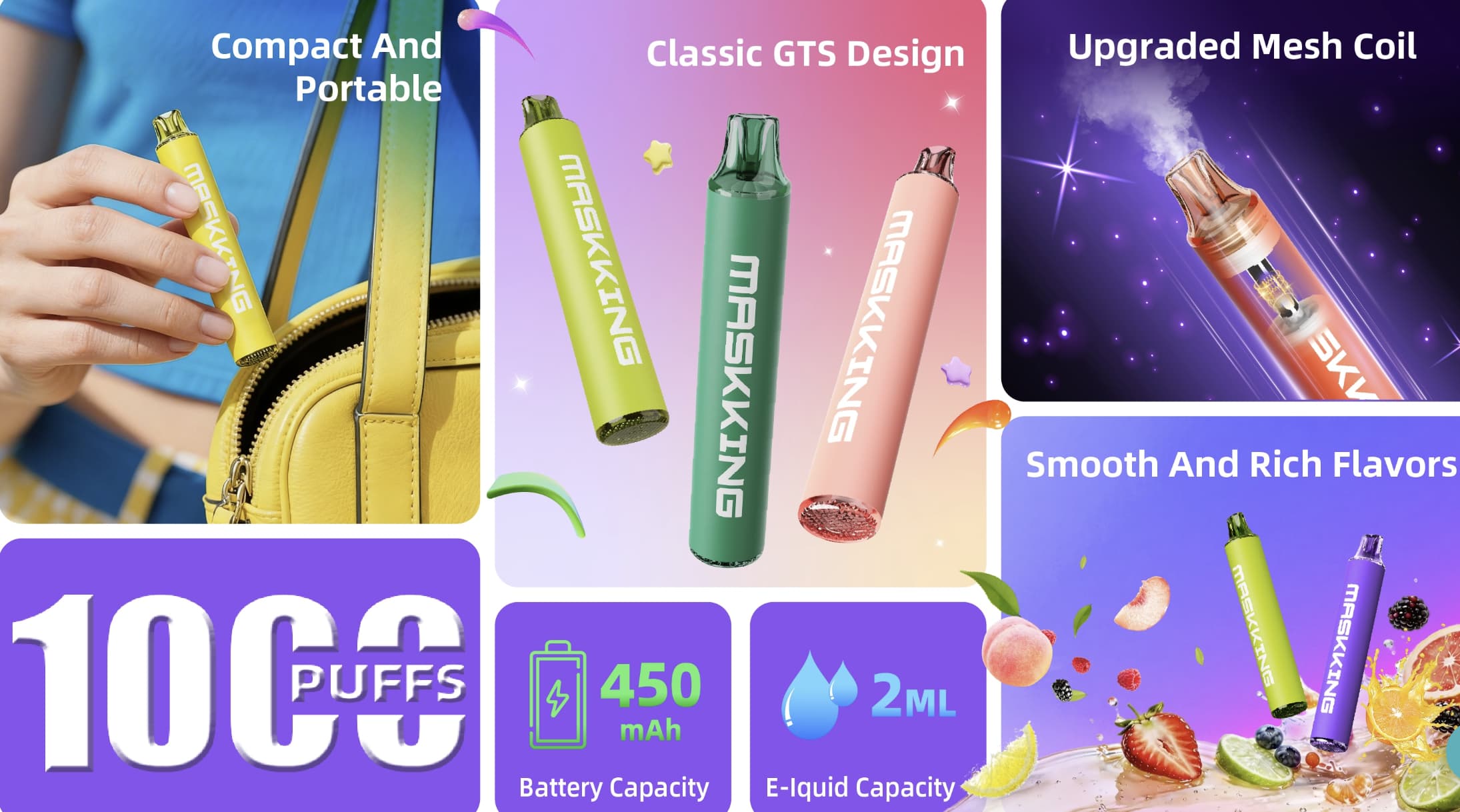
The 450mAh Battery Has to Match the Liquid Capacity
The other number worth considering is the 450mAh battery.
Battery capacity and e-liquid capacity are closely connected in a device designed for extended use.
The battery provides the energy required to heat the coil, while the e-liquid provides the material that becomes vapor.
If the battery runs out too early, the remaining liquid cannot be used normally. If the e-liquid is depleted first, additional battery capacity does not create more usable puffs.
The GTS Mini’s hardware therefore needs to maintain a reasonable balance between the two.
This is one reason why looking at the advertised puff number by itself can be misleading.
Why 1,000 Puffs Should Not Be Treated as a Guarantee
The phrase “up to 1,000 puffs” is important which can calculate vape puff counts.
“Up to” indicates that the figure represents a maximum or test-based estimate rather than a guaranteed number that every user will achieve.
Real-world results can vary according to:
- puff duration
- puff frequency
- airflow
- coil condition
- battery level
- individual usage habits
Someone who takes short draws may get substantially more activations from the same amount of liquid than someone who takes long draws.
Therefore, the 1,000-puff figure is most useful as a comparison reference between products, rather than as a promise of exactly 1,000 real-world draws.
What the GTS Mini’s Compact Design Changes
The GTS Mini is designed as a relatively compact device rather than a large-capacity system.
That creates a different set of priorities.
A 2ml reservoir keeps the device relatively compact, while the 450mAh battery provides enough energy for its intended operating range.
The result is a product aimed more at portability and straightforward use than at maximizing capacity.
This also means the GTS Mini should not be compared directly with large high-capacity devices simply by looking at puff counts.
They are solving different problems.
A high-capacity device prioritizes longer operating life, while a smaller device can emphasize portability and a simpler form factor.
Does 2ml Really Deliver 1,000 Puffs?
The short answer is: it can be possible under specific testing conditions, but users should not assume that every device will produce exactly 1,000 real-world puffs.
The relationship can be understood through a simple principle:
More liquid consumed per puff = fewer total puffs.
Less liquid consumed per puff = more total puffs.
Because draw length varies from person to person, the same 2ml reservoir can produce different results.
That is why advertised puff counts should always be treated as estimates.
What Does 2ml for Up to 1,000 Puffs Actually Mean?
The simplest way to understand the claim is to divide the advertised e-liquid capacity by the maximum puff count.
With 2ml of e-liquid and a claimed maximum of 1,000 puffs, the theoretical average consumption would be approximately 0.002ml per puff. However, this should not be interpreted as a precise measurement of every individual draw.
A short, gentle draw consumes less e-liquid than a long, deeper draw. Likewise, producing more vapor generally requires more liquid. This is why two users can use the same GTS Mini for the same number of days but achieve noticeably different total puff counts.
The 1,000-puff figure is therefore better viewed as a manufacturer’s reference point under controlled conditions rather than a guaranteed real-world result.
Maskking GTS Mini at a Glance
| Specification | Details |
|---|---|
| E-liquid capacity | 2ml |
| Advertised puff count | Up to 1,000 puffs |
| Battery capacity | 450mAh |
| Coil | 1.0Ω mesh |
| Activation | Draw-activated |
| Form factor | Compact and portable |
| Intended use | Convenience-focused vaping |
These specifications help explain why the GTS Mini can target a relatively high puff count without relying on a large e-liquid reservoir. Its 2ml capacity, 1.0Ω mesh coil and compact battery are designed around moderate liquid consumption rather than maximum vapor production.
Is the 1,000-Puff Claim Realistic?
The 1,000-puff figure is technically plausible as a maximum estimate, but it should not be treated as a guaranteed result.
The 2ml capacity means the device has a relatively limited amount of e-liquid available. Reaching a high puff count therefore depends heavily on keeping average e-liquid consumption per draw relatively low.
This also explains why comparing devices solely by their advertised puff numbers can be misleading. A device rated for 1,000 puffs may last longer for one user than another device with a higher advertised rating if the two products are used differently.
For the GTS Mini, the more useful takeaway is how its 2ml capacity, 1.0Ω mesh coil and 450mAh battery are balanced within a small form factor.
What Makes the Specification Interesting
The more interesting question isn’t whether the GTS Mini can guarantee 1,000 puffs.
It can’t guarantee that result for every user.
The more useful question is how Maskking has balanced the device’s limited physical size with its 2ml e-liquid capacity, 1.0Ω mesh coil and 450mAh battery.
Those three specifications work together to determine the overall experience.
The battery needs to provide enough energy, the coil needs to vaporize liquid consistently, and the reservoir needs to contain enough e-liquid for the intended usage period.
None of these specifications can be evaluated properly in isolation. Just check Maskking GTS Mini product review here.
Who Is the GTS Mini Designed For?
The GTS Mini makes the most sense for users who value compactness and straightforward operation rather than maximum e-liquid capacity.
Its relatively small reservoir also means it is fundamentally different from today’s ultra-high-capacity products.
Someone looking for a small device for convenient everyday use may appreciate that approach.
By contrast, users primarily interested in the longest possible operating life may prefer a larger-capacity device.
The choice therefore comes down to priorities rather than simply asking which device has the larger puff number.
Final Verdict
The Maskking GTS Mini’s “up to 1,000 puffs” specification becomes easier to understand once e-liquid consumption is considered rather than puff count alone. Its 2ml capacity does not mean every user will receive exactly 1,000 draws; the final number depends on draw duration, vapor production and individual usage habits.
The important point is that the GTS Mini is designed around relatively modest e-liquid consumption in a compact format. Its 2ml capacity, 1.0Ω mesh coil and 450mAh battery work together to provide a balance between portability and usable lifespan.
So, can 2ml deliver up to 1,000 puffs? It can serve as a reasonable maximum estimate under suitable conditions, but real-world results will vary from user to user. That distinction is more useful than treating the advertised number as a guaranteed puff count.