









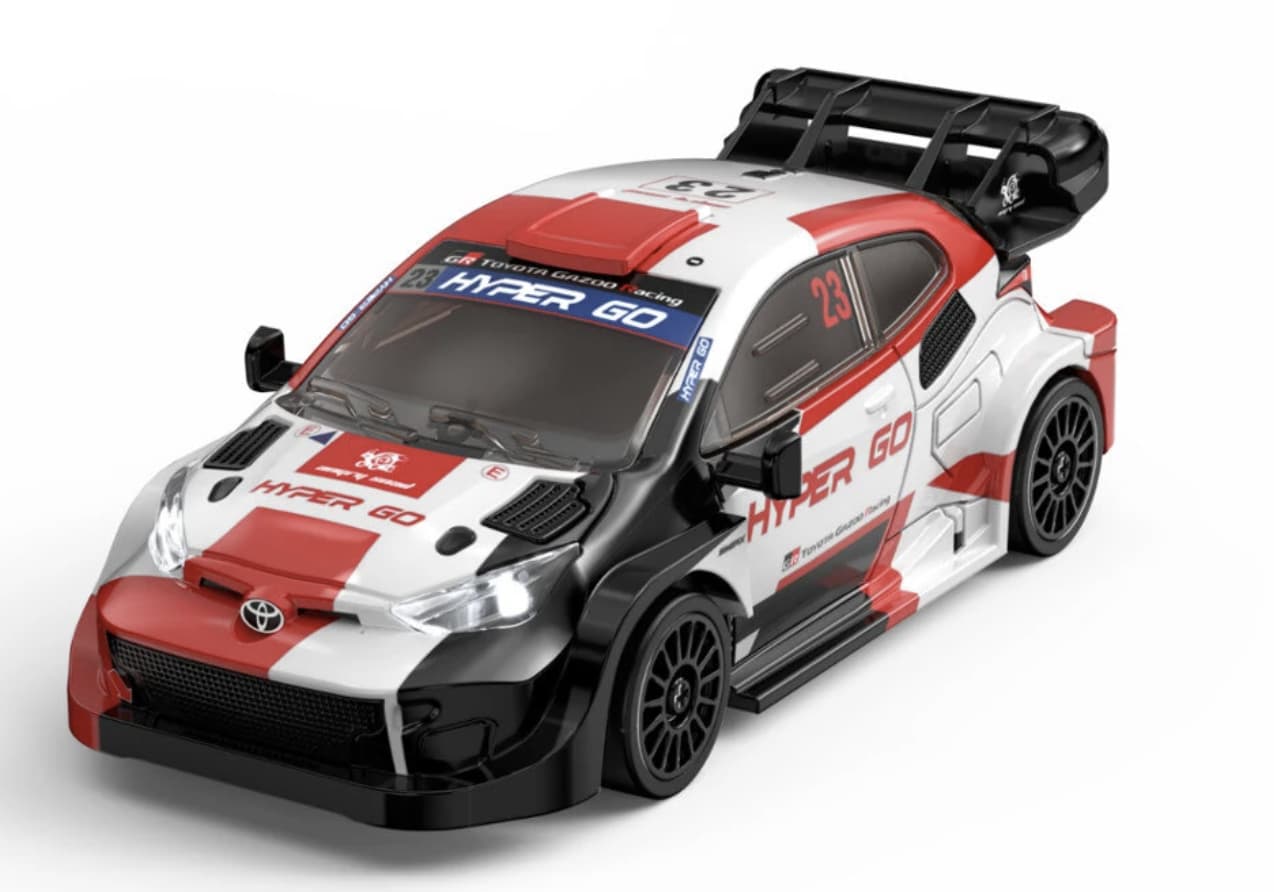
Most RC cars need open space before they become interesting. MJX Hyper Go 43308 takes the opposite approach. This is a tiny 1:43-scale 4WD drift car built around the 2023 Toyota GR Yaris Rally1, designed to turn a smooth floor, desk or tabletop into a miniature driving surface.
Its appeal is not simply the claimed 20 km/h top speed. The more interesting combination is the compact chassis, four-wheel drive, electronic gyro assistance, proportional controls and interchangeable tire setup. Those features give the 43308 a purpose beyond being a small remote-control toy: it is designed specifically around controlled indoor sliding and short-course driving.
The Banggood listing identifies the model as an officially licensed GR Yaris Rally1 replica and lists a 2.4GHz proportional controller, built-in electronic gyro, 3.7V battery and 4WD drivetrain.
Small enough for a desk, built for more than straight-line driving
The first thing that changes the experience with the MJX 43308 is its scale.
At 1:43, this is dramatically smaller than the RC trucks and off-road cars that typically dominate the hobby. Instead of needing a driveway, parking lot or outdoor track, the car is intended for smooth indoor surfaces such as hardwood, tile and a sufficiently clear desktop.
That changes what “fun” means.
You can create a short course around furniture, cones or other obstacles and practice keeping the car within a narrow line. A small chassis also makes quick direction changes possible without requiring a large amount of room.
For apartment living or office use, that is a meaningful advantage. Storage is easier, setup is faster and a short driving session does not require preparing an outdoor area.
The trade-off is equally obvious: this is not an RC car for grass, gravel, carpets or rough outdoor terrain. Its compact drift-oriented setup makes much more sense on hard, relatively smooth surfaces.
The GR Yaris Rally1 body gives the car a second identity
There is a difference between a generic miniature RC car and one based on a recognizable rally machine.
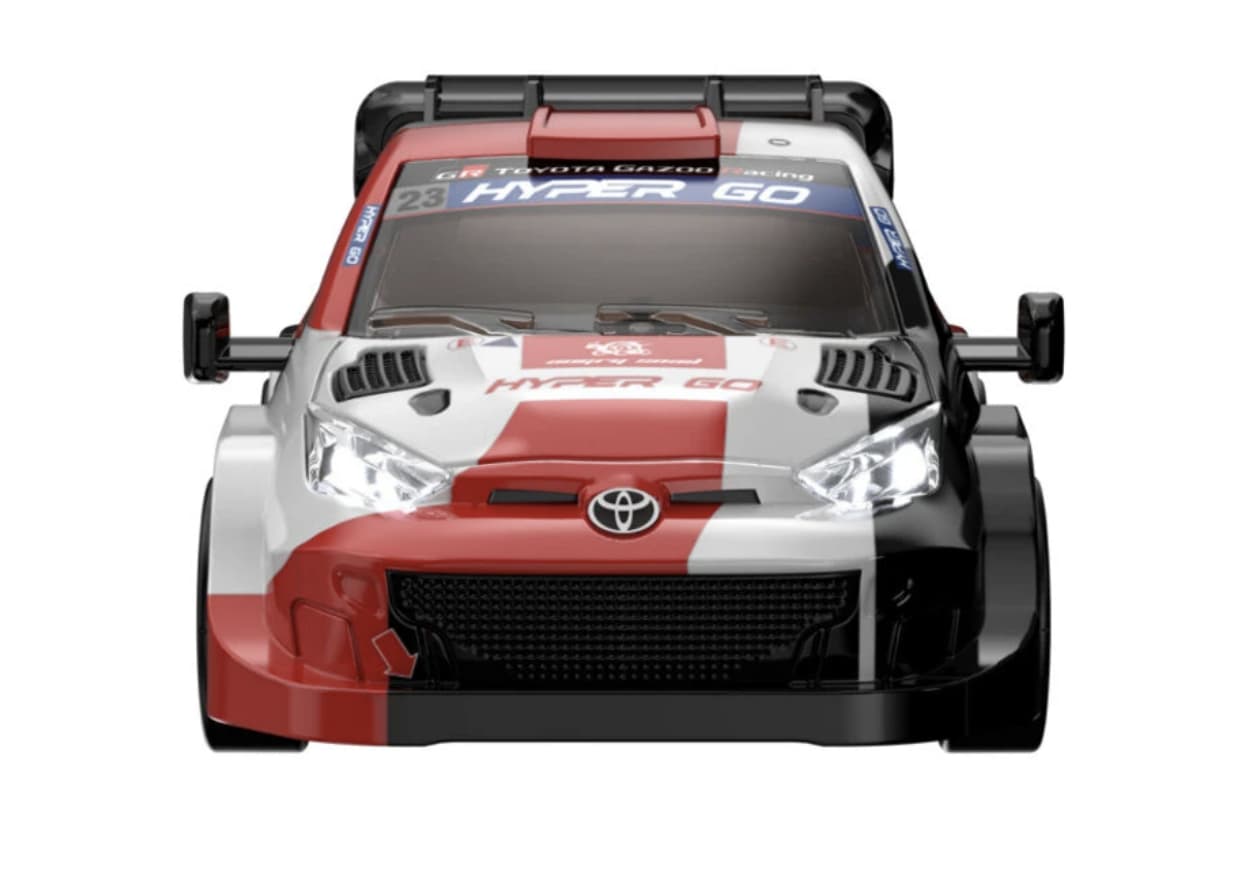
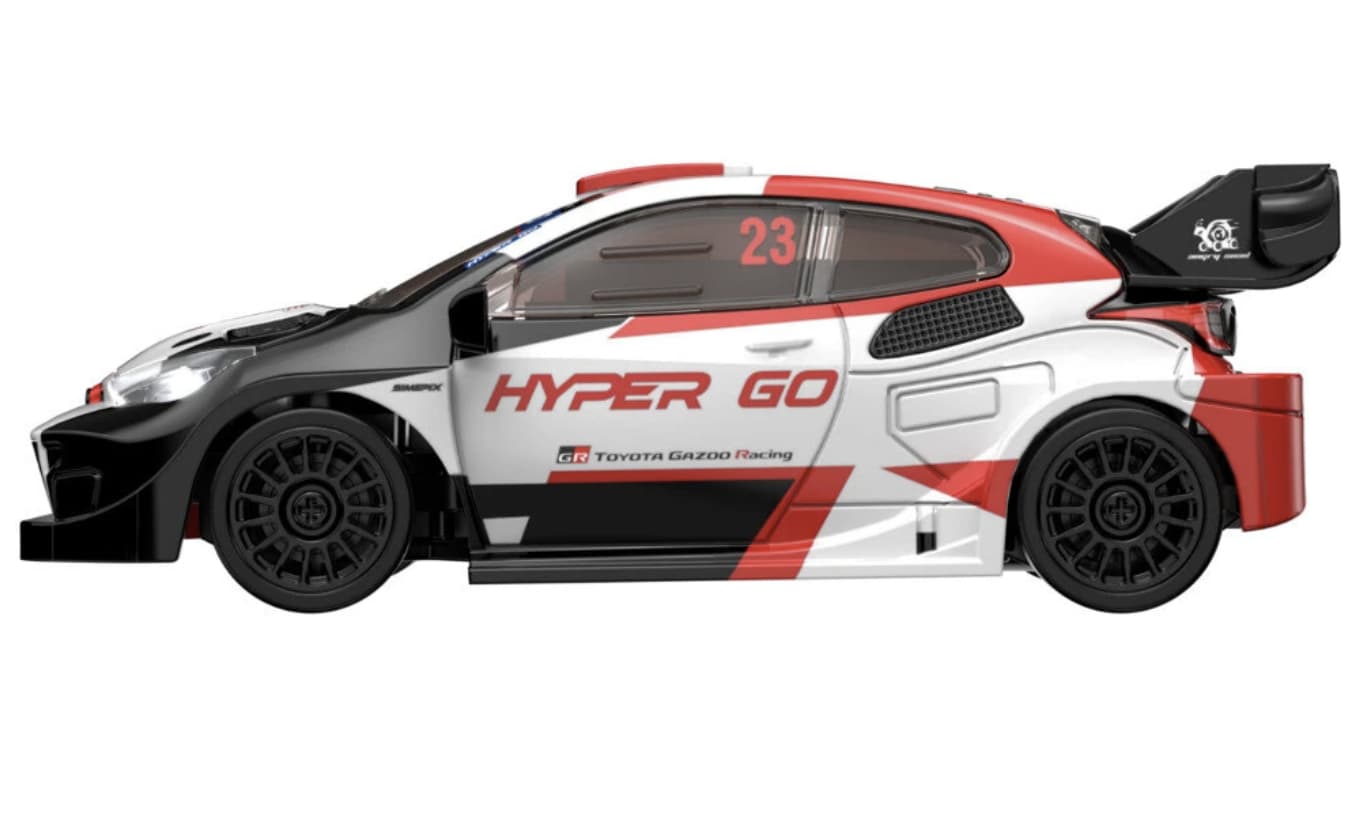
The 43308 carries the shape and graphics of the Toyota GR Yaris Rally1, giving it appeal even when the transmitter is switched off. The official listing describes the body as an authorized 1:43-scale replica and positions the vehicle as both a controllable drift car and a display model.
That makes the car interesting to two groups at once.
RC enthusiasts get a small drift platform, while motorsport and Toyota fans get a compact model that can sit on a desk between driving sessions.
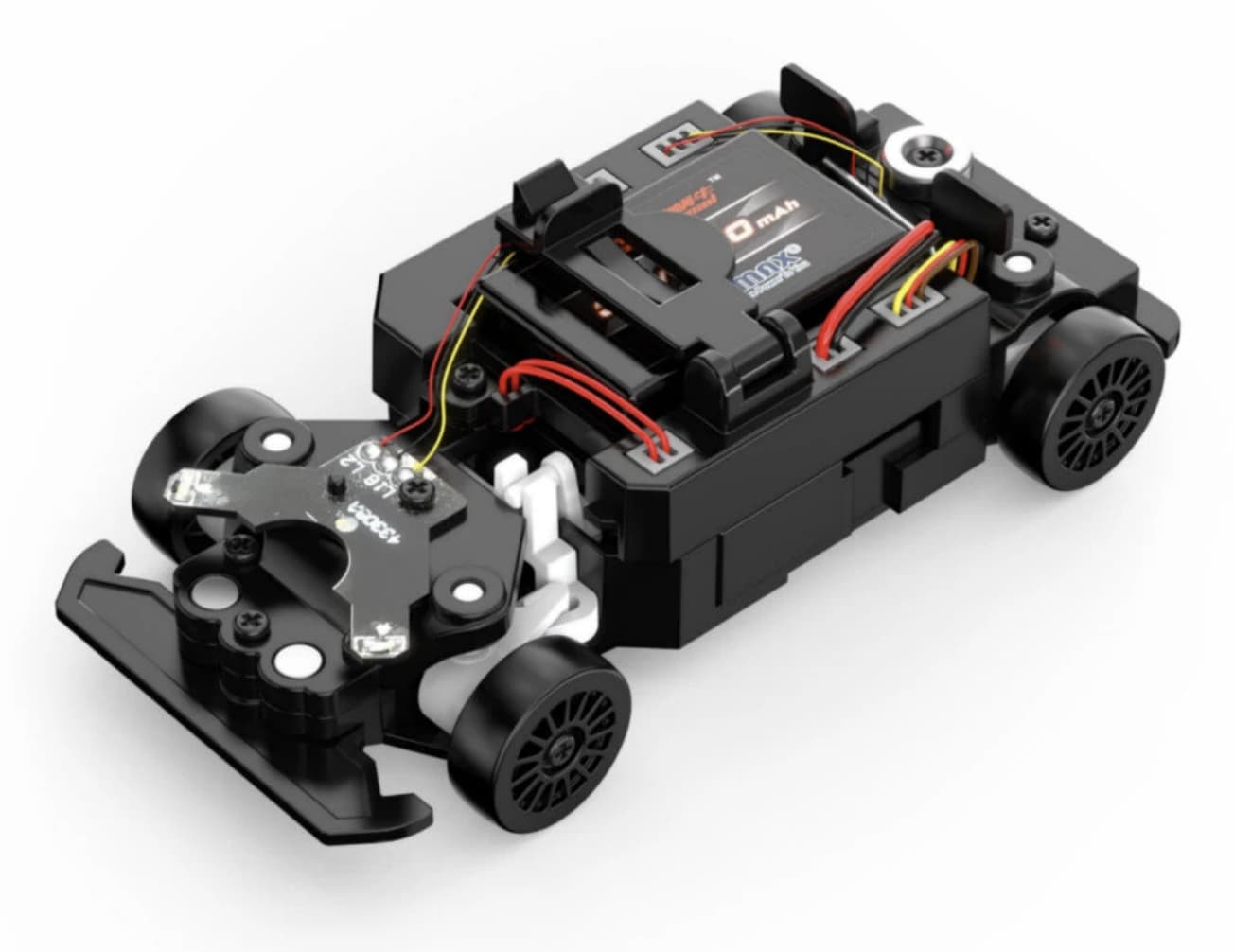
The magnetic quick-release body is another practical touch. Removing the shell does not have to become a lengthy process when you want to access the chassis or battery area.
For a vehicle this small, convenient access matters because the tighter the packaging becomes, the more frustrating maintenance can otherwise be.
Why the built-in gyro matters more than the 20 km/h number
The headline speed is easy to understand. The gyro is more important to the actual driving experience.
A drift car is constantly dealing with changes in traction. Once the rear tires begin sliding, the driver has to manage steering and throttle together rather than simply pointing the car toward the next corner.
The 43308’s integrated electronic gyroscope is designed to assist with that process by helping correct the car’s angle and support counter-steering. That does not mean the system drives the car for you. Instead, it provides a layer of stability that can make controlled sliding easier to maintain.
This is particularly useful on a small indoor car.
At this scale, a minor steering correction can have a noticeable effect on the car’s direction. Gyro assistance can help reduce some of the instability that beginners encounter when learning how to hold a drift.
Experienced drivers can also benefit because the system can make repeated transitions more predictable.
The key point is that the gyro is not just another specification on the box. It directly relates to what the 43308 is supposed to do.
4WD changes how the car exits a corner
The 43308 uses a four-wheel-drive layout rather than sending power to only one axle.
For an RC drift car, that provides a different balance between traction and controllability. Power is available across all four wheels, helping the small chassis maintain forward movement while the tires are being used for sliding.
That matters particularly when transitioning from a straight section into a corner and then back toward acceleration.
The goal is not maximum grip at all times. A drift setup needs enough traction to remain controllable while still allowing the tires to break loose when appropriate.
The 43308 therefore makes more sense when judged as a small 4WD drift platform than as a conventional high-speed RC car.
Two tire types let you change the character of the car
One of the more useful inclusions is the combination of drift tires and racing tires.
That gives the owner a straightforward way to change the car’s behavior without replacing the entire vehicle. The lower-grip drift tires are naturally suited to sliding, while the racing tires provide a different traction balance for more conventional driving. The listing says the package includes two sets of drift tires and one set of racing tires.
This is important because tire choice can dramatically change how an RC car feels.
A beginner can experiment with different setups and discover how traction affects steering response, corner entry and acceleration. More experienced users can treat the tires as part of the tuning process rather than a fixed component.
It also gives the 43308 more replay value than a micro RC car locked into one driving style.
Proportional control is a better match for drifting
The 43308 comes with a 2.4GHz T3G radio system and proportional throttle and steering control.
That distinction is important.
Basic toy-grade RC vehicles often behave like switches: press the trigger and the car accelerates; release it and the power disappears. Drifting benefits from much finer input because throttle changes can alter the car’s attitude while it is sliding.
With proportional control, the driver can make smaller steering and throttle adjustments rather than relying entirely on full-left, full-right or full-speed inputs.
For a car designed around controlled slides, that makes the controller part of the experience rather than merely an accessory.
20 km/h feels different at 1:43 scale
MJX lists a top speed of around 20 km/h for the 43308.
That number sounds modest next to much larger RC vehicles, but scale changes the perception of speed.
A 1:43 car covering a short indoor course at that speed can reach corners quickly. On a desk or small floor area, the driver has less time to react than the raw specification might suggest.
This is another reason why the gyro and proportional controls matter. The car’s value is not simply in reaching its maximum speed; it is in being able to manage that speed within a confined space.
For indoor use, controlled acceleration and cornering can actually be more entertaining than having an even higher top speed.
A rechargeable setup designed for short driving sessions
The 43308 uses a 3.7V 300mAh battery, and the package includes a USB charging cable. The listing gives an estimated driving time in the 15–20 minute range, although exact runtime will vary with driving style and conditions.
That is a sensible format for a micro RC car.
Instead of treating it as a vehicle for long continuous sessions, the 43308 works better as something you pick up for a quick drift session, practice a few laps and put back on the desk.
The removable battery arrangement also makes routine charging and battery access more convenient than an entirely sealed toy-style design.
The chassis is where the hobby appeal becomes clearer
The 43308 is small, but the specification list shows that MJX has treated it as more than a basic novelty.
The chassis uses an N20 carbon-brush motor, integrated ESC/receiver electronics and a small digital servo. The listing also mentions a metal/alloy body structure, independent suspension and metal bearings.
Those details matter because small RC vehicles experience rapid changes in direction and repeated impacts during close-quarters driving.
The car is still a micro-scale machine, so it should not be mistaken for a competition-grade drift platform. But the hardware choices suggest that the intended experience is closer to hobby-style driving than a disposable novelty toy.
What kind of surface works best?
Surface selection will have a bigger effect on the 43308 than many buyers may expect.
The product is specifically described for smooth indoor environments such as tile, hardwood and smooth desktops.
A clean hard surface allows the tires to behave more predictably. Dust, carpet fibers and rough flooring can interfere with traction and make a small car harder to control.
For the best experience, a simple approach is to create a dedicated mini track.
A few cones can mark corners, while books or small objects can define boundaries. Because the vehicle is so compact, even a relatively small area can provide enough space for repeated laps and drift practice.
This is one of the strongest reasons to choose a 1:43 drift car over a much larger RC model: you can start driving almost anywhere there is a suitable floor.
Who is the MJX Hyper Go 43308 really for?
The 43308 is particularly appealing to several types of users:
- RC beginners who want to learn controlled drifting without buying a large vehicle
- Experienced RC hobbyists looking for a compact indoor drift platform
- Toyota and rally fans who appreciate the licensed GR Yaris Rally1 body
- Apartment or office users who have limited driving space
- Collectors who want a functional 1:43 model rather than a static display car
- Gift buyers looking for a small RC vehicle with more driving functionality than a basic toy
It is less suitable for anyone expecting an off-road RC car, a large-scale racer or a vehicle that can be driven effectively across carpet and uneven ground.
The 43308 has a narrower purpose, but that specialization is part of its appeal.
MJX Hyper Go 43308 specifications
| Specification | Details |
|---|---|
| Model | MJX Hyper Go 43308 |
| Vehicle type | RC drift car |
| Scale | 1:43 |
| Drive system | 4WD |
| Vehicle body | Toyota GR Yaris Rally1 replica |
| Licensing | Officially licensed |
| Gyro | Built-in electronic drift-assist gyro |
| Motor | N20 carbon-brush motor |
| Control system | 2.4GHz T3G proportional radio |
| Claimed top speed | Up to 20 km/h |
| Battery | 3.7V 300mAh |
| Charging | USB |
| Tires | Drift tires + racing tires |
| Lighting | LED lighting effects |
| Main environment | Smooth indoor surfaces |
| Main purpose | Indoor drifting, racing and display |
The Banggood listing contains multiple specification blocks with some differences in dimensions, weight, control range and charging time, so those figures should be confirmed against the selected package before purchase.
Final verdict: a micro RC car with an actual reason to exist
MJX Hyper Go 43308 is interesting because it does not try to solve every RC driving problem.
Instead, it concentrates on one specific experience: compact indoor drifting.
The 1:43 scale makes it easy to store and drive in limited spaces. Four-wheel drive provides the mechanical foundation, the gyro helps manage the car during slides, proportional controls give the driver more precise input, and the two tire types let users experiment with different levels of traction.
Then there is the GR Yaris Rally1 body, which gives the car an identity beyond its electronics.
The result is a small RC vehicle that makes sense for a desk, apartment or indoor hobby space. It will not replace a full-size RC drift car for serious outdoor driving, but that is not really the point.
For someone who wants a small 4WD RC drift car that can turn a smooth indoor floor into a miniature rally-inspired playground, the MJX Hyper Go 43308 has a much clearer purpose than its size might suggest.