












NEXA has expanded its Ultra series with the arrival of the NEXA Ultra 3, a newer device built around a larger visible e-liquid tank, an updated dual-coil system and a higher advertised puff count. It follows the original NEXA Ultra, which introduced the brand’s Crystal Tank concept, Clarilock structure and curved display.
At first glance, the two devices share a similar design philosophy. Both emphasize visible e-liquid storage, rechargeable batteries, dual-mode operation and high-capacity configurations. The more important differences are found in their internal specifications and the way NEXA describes their liquid-management and airflow systems.
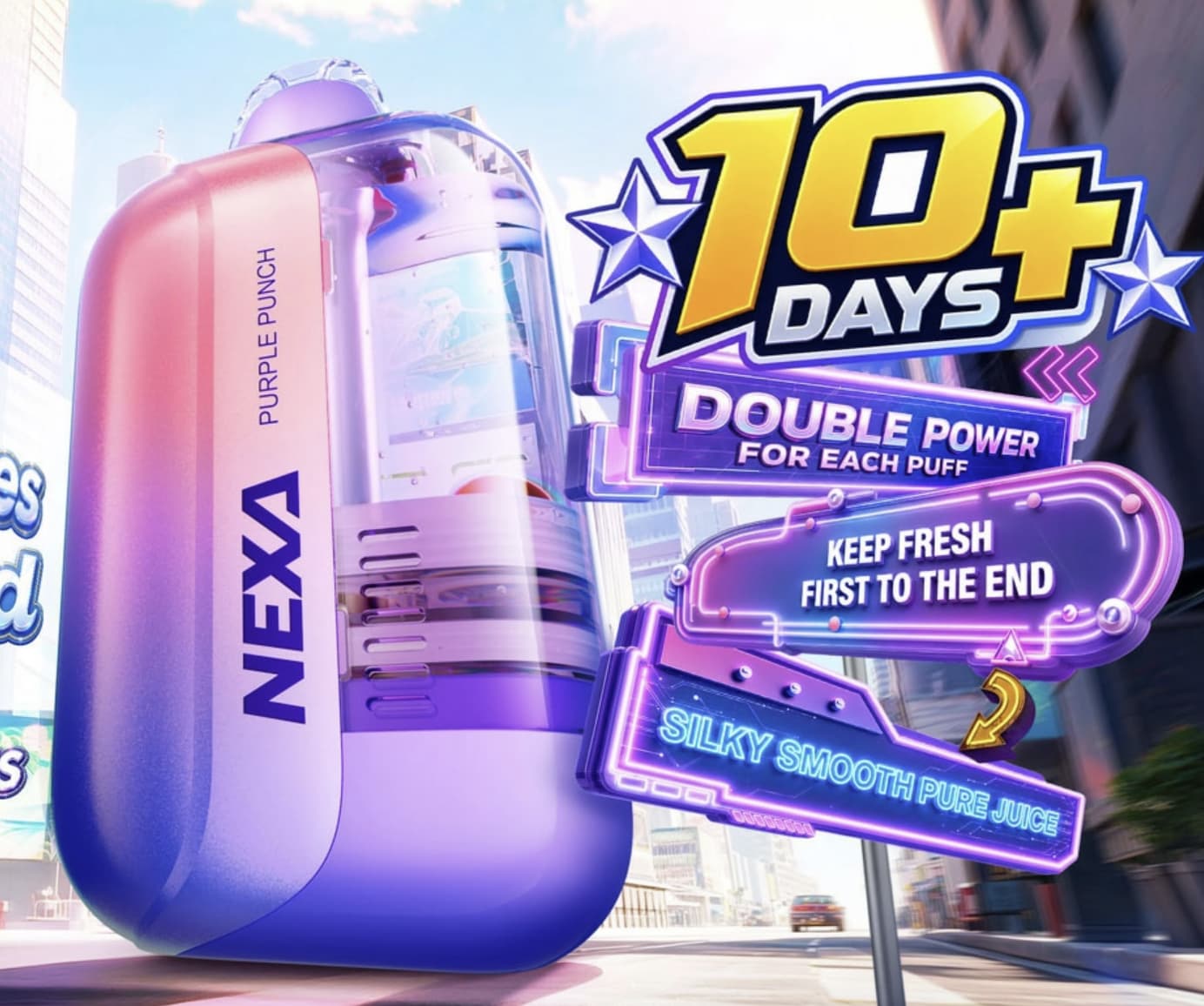
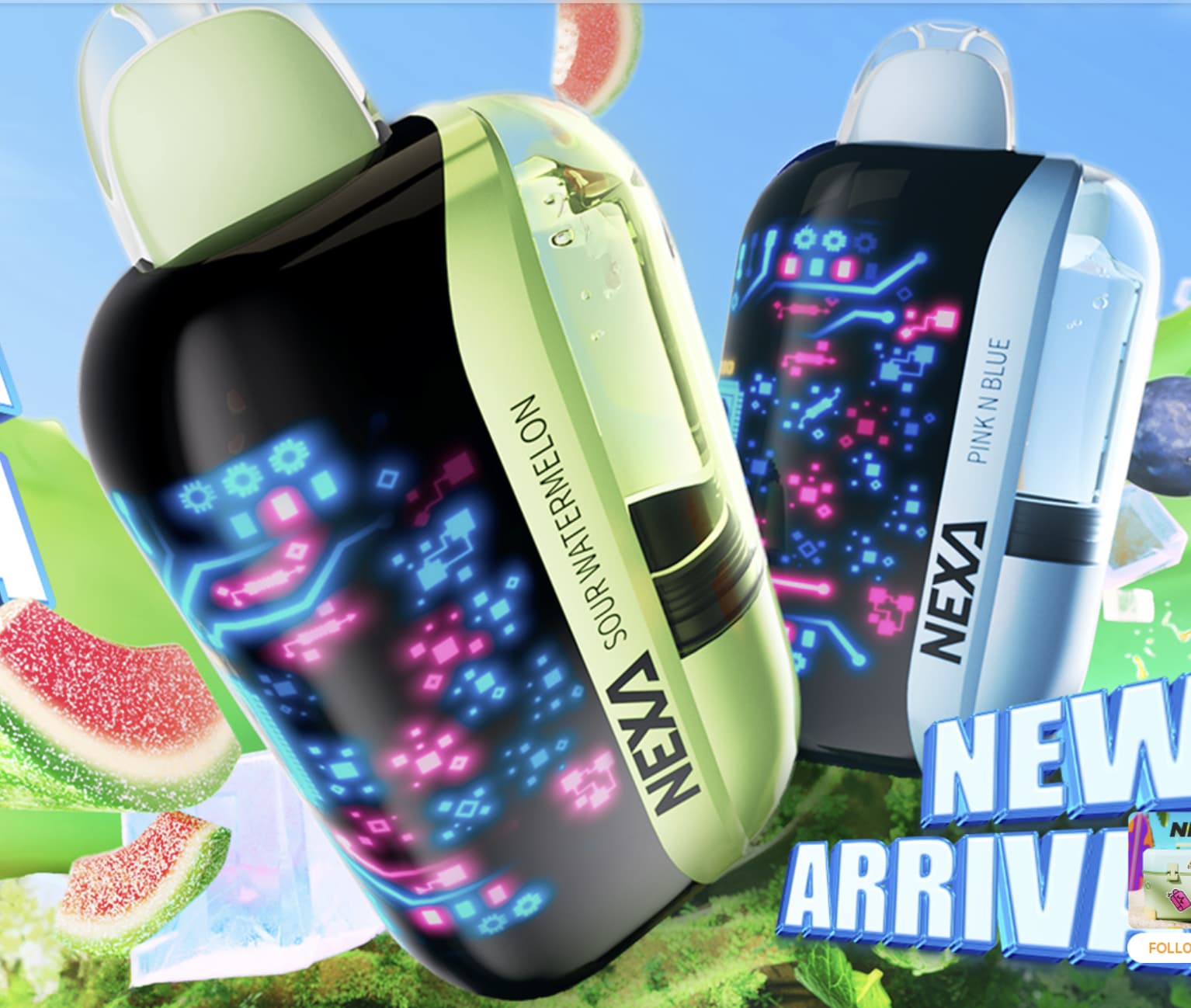
This comparison looks at the original NEXA Ultra and the NEXA Ultra 3 using information from the manufacturer’s product pages. It focuses on the documented hardware changes rather than treating advertised puff figures as guaranteed real-world performance.
NEXA Ultra 3 vs NEXA Ultra: Main Specifications
| Specification | NEXA Ultra | NEXA Ultra 3 |
|---|---|---|
| Advertised puff count | Up to 50,000 | 100,000 / 60,000 |
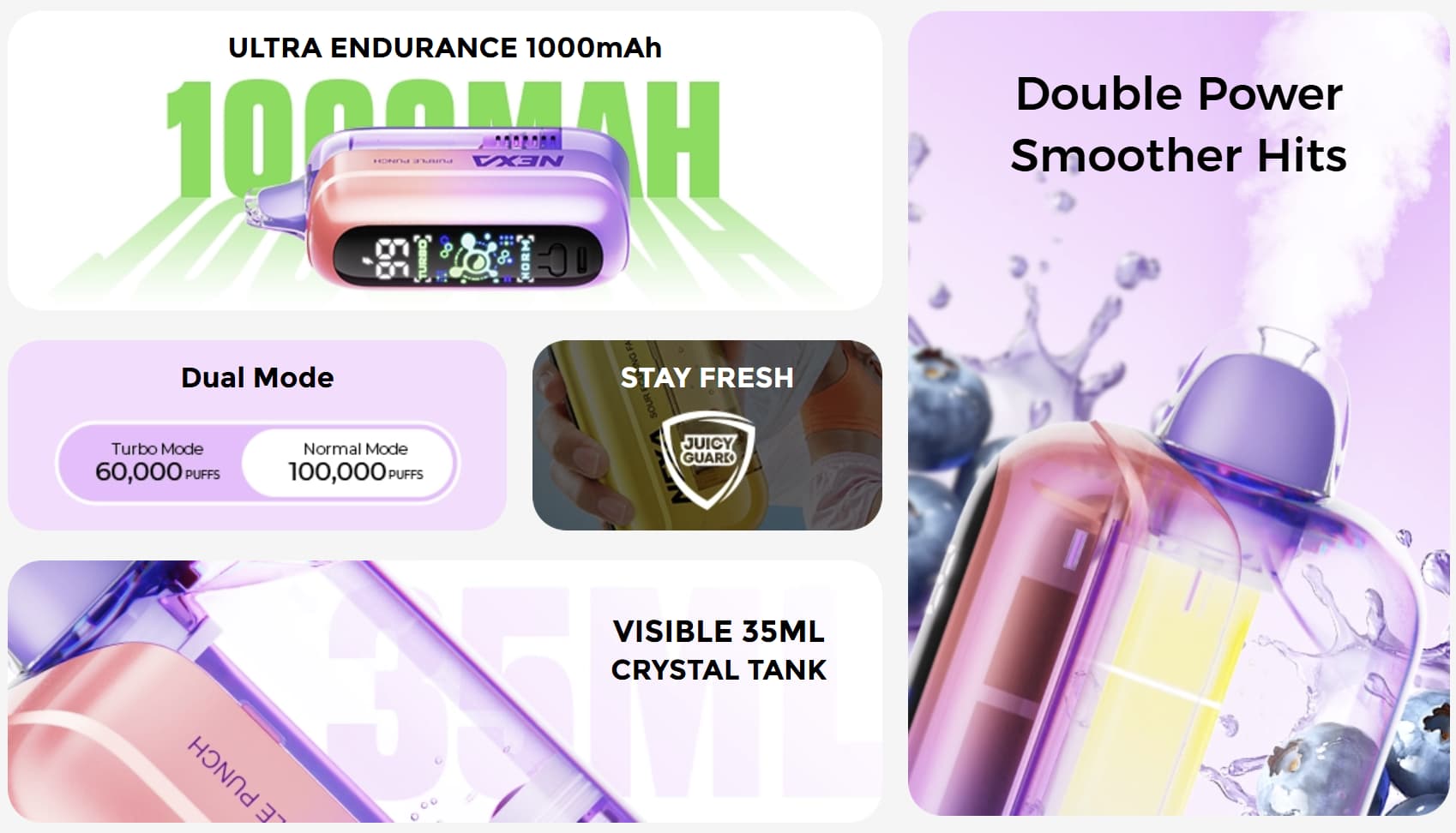
| E-liquid capacity | 20mL package total: 5mL integrated pod + 15mL container | 35mL |
| Battery | 800mAh | 1,000mAh |
| Coil configuration | Dual coil, 0.9Ω × 2 | Dual mesh, 0.8Ω |
| Published output | Not specified on product page | 25W dual-coil system |
| Nicotine concentration | 50mg/mL | 50mg/mL |
| Charging | USB Type-C | USB Type-C |
| Display | 3D curved screen | Display details not fully specified on product page |
| Liquid-management feature | Clarilock / Crystal Tank | JUICY GUARD automatic sealing |
| Airflow description | Not fully specified on product page | Straight airflow |
| Design emphasis | Slim body and curved display | Larger visible tank and updated dual-coil system |
Specifications are taken from NEXA’s official product information. The original Ultra’s package contains a 5mL integrated prefilled pod and a separate 15mL e-liquid container. This is a package total, not necessarily the same reservoir configuration as the Ultra 3’s 35mL Crystal Tank.
1. The Biggest Change Is the E-Liquid Capacity
The most obvious difference between these generations is the liquid-storage system.
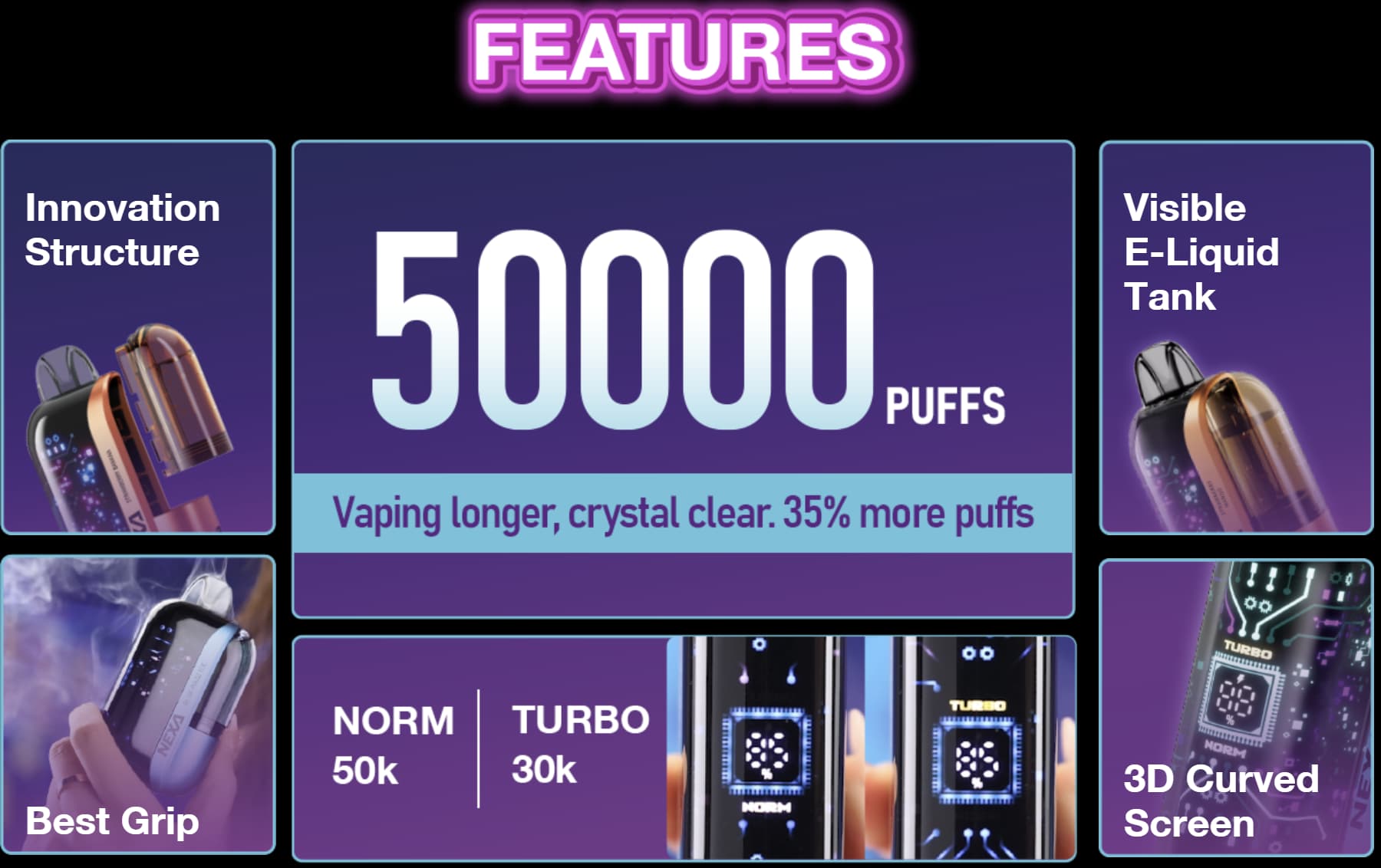
The original NEXA Ultra comes with a 5mL integrated prefilled pod and a separate 15mL e-liquid container. Its Crystal Tank design makes the remaining liquid easier to monitor, while the Clarilock structure is presented as a way to reduce unused liquid in the system.
Readers interested in the earlier evolution of this product line can also check our NEXA Ultra II vs original NEXA Ultra 50K comparison, which examines the differences between the first two generations.”
The Ultra 3 takes a different approach to capacity. NEXA lists a 35mL transparent Crystal Tank, giving the newer model a larger stated e-liquid capacity than the original package’s combined 20mL.
That represents a 15mL increase, or 75% more stated liquid capacity when comparing the package totals. However, the two figures describe different configurations: the original combines an integrated pod and a separate container, whereas the Ultra 3 lists a 35mL tank.
This distinction matters because total liquid volume alone does not explain how efficiently a device uses its contents. Coil condition, liquid delivery and operating settings can all affect how much of the available liquid is usable.
The Ultra 3’s larger visible tank makes liquid-level inspection straightforward, but it does not guarantee a particular service life.
2. Puff Ratings: From 50,000 to 100,000
NEXA advertises the original Ultra for up to 50,000 puffs. The Ultra 3 carries two figures: up to 100,000 and 60,000 puffs.
On paper, the highest advertised figure has doubled. That is a substantial change in the product’s stated capacity, but it should be interpreted carefully.
Puff-count ratings are manufacturer estimates, not standardized guarantees. Actual results can vary with draw duration, operating mode, battery condition and other usage factors. A higher headline number does not establish that every unit will deliver twice as many usable draws.
There is also a difference in the way the two product pages present their modes. The original Ultra explicitly identifies Normal Mode at up to 50,000 puffs and Turbo Mode at up to 30,000. The Ultra 3 lists 100K/60K alongside its Dual Mode feature, but its product page does not provide the same detailed explanation of the mode-to-rating relationship.
For an accurate comparison, the supplied manual and regional packaging should be checked rather than assuming that every market uses identical settings.
3. Battery Capacity Gets a Measurable Upgrade
Battery capacity is another area where the Ultra 3 moves ahead on paper.
The original NEXA Ultra uses an 800mAh rechargeable battery, while the Ultra 3 lists a 1,000mAh unit. That is an increase of 200mAh, equivalent to 25%.
Both models use USB Type-C charging, so the charging connection remains familiar across the two generations.
A larger battery can provide more stored energy, but capacity alone cannot establish how long a device will operate between charges. Power output, coil configuration, display activity and operating mode also influence energy consumption.
NEXA describes the Ultra 3 as offering more endurance and less frequent recharging. The published battery ratings support the hardware-capacity increase, but the official pages do not provide comparable standardized runtime tests.
4. Dual-Coil Technology: 0.9Ω vs 0.8Ω Dual Mesh
The heating system is another important difference.
The original Ultra’s official specification graphic identifies a dual-coil resistance of 0.9Ω × 2. The Ultra 3 lists a dual-mesh configuration rated at 0.8Ω and highlights a 25W dual-coil system.
The newer product page also describes the heating arrangement as a way to provide fuller vapor and a smoother experience. These are manufacturer claims rather than independently verified test results.
Resistance and wattage are useful technical details, but neither figure alone determines overall performance. The heating surface, airflow, liquid formulation and power management all contribute to how a device operates.
It is therefore more accurate to describe the Ultra 3 as having a more specifically documented 25W dual-mesh configuration than to claim that it automatically delivers better performance than the original Ultra.
NEXA’s transparent tank concept has appeared in several devices, and our NEXA Ultra vs NEXA PIX comparison provides another look at how the brand approaches visible e-liquid storage.
5. Clarilock and Crystal Tank vs JUICY GUARD
NEXA’s liquid-management approach has also evolved.
The original Ultra promotes its Clarilock structure and Crystal Tank technology. The manufacturer says this design makes liquid levels easier to monitor and helps minimize residual liquid associated with conventional storage-cotton designs. It also highlights Flavor Booster technology as part of its flavor-generation system.
The Ultra 3 introduces JUICY GUARD, which NEXA describes as an automatic sealing function. According to the official product page, the AI Auto-Seal feature engages after 15 minutes of use to help preserve e-liquid freshness.
These systems have different advertised roles. Clarilock and Crystal Tank are central to the original model’s liquid-storage design, while JUICY GUARD is a named automatic-sealing feature on the newer device.
It would be inaccurate to claim that JUICY GUARD eliminates leakage or prevents all changes in liquid quality. The manufacturer describes its intended function, but independent long-term testing would be needed to establish how effectively it performs under different storage and usage conditions.
6. Display and Exterior Design
The original NEXA Ultra places considerable emphasis on its 3D curved screen. The manufacturer presents it as a distinctive part of the device’s appearance, alongside its slim body and ergonomic Best Grip design.
The Ultra 3’s product page focuses more heavily on its transparent 35mL tank, 25W dual-coil system, straight airflow and JUICY GUARD feature.
This creates a different design emphasis between the generations. The original Ultra gives more attention to its curved-screen styling, while the Ultra 3’s published feature list highlights capacity and liquid management.
One important qualification: the Ultra 3 product page does not provide an equally detailed description of its display functions. That does not prove that the newer model lacks a display; it means the manufacturer has not documented the feature in the same way on the page reviewed here.
Readers comparing the devices should check the exact regional version and package contents before assuming that screen functions are identical.
7. Airflow and Operating Modes
The Ultra 3’s official product page specifically describes a straight airflow design intended to create a smoother draw. It also highlights its dual-mode configuration.
The original Ultra is advertised with Normal and Turbo modes, with maximum puff ratings of 50,000 and 30,000 respectively. Its official page places more emphasis on the Crystal Tank, Clarilock structure and 3D curved screen.
Because the original product page does not provide a directly comparable airflow specification, it is not possible to make a reliable technical judgment about which model has the better airflow design.
The useful distinction is that the Ultra 3 provides a clearly stated straight-airflow feature, while the original Ultra’s published information places more emphasis on its liquid system and screen.
8. Flavor Options and Regional Availability
Both generations are offered with multiple flavor options, but the available selections can change by market and over time.
The original Ultra product page lists a broad selection that includes fruit, mint, ice and dessert-inspired names. The Ultra 3 page highlights options such as Strawberry Kiwi, Sour Apple Ice, Blue Razz Ice, Miami Mint, Peach Ice, Purple Punch and Winter Mint.
A flavor name does not establish its precise ingredients or sensory profile. Availability on a manufacturer’s website also does not guarantee that a particular version is legally sold in every country.
For accurate information, check the product packaging and the official regional product listing rather than relying on an older flavor list.
9. What the Upgrade Means in Practical Terms
The comparison reveals several measurable changes:
- Liquid capacity: The Ultra 3 lists 35mL, compared with the original Ultra’s 20mL package total.
- Advertised puff count: The Ultra 3 reaches a listed maximum of 100,000, compared with 50,000 for the original.
- Battery: The newer model increases the stated capacity from 800mAh to 1,000mAh.
- Heating system: The Ultra 3 specifies 0.8Ω dual mesh and a 25W dual-coil system, while the original lists 0.9Ω × 2.
- Liquid management: The original highlights Clarilock and Crystal Tank technology; the Ultra 3 introduces JUICY GUARD automatic sealing.
- Exterior design: The original emphasizes its 3D curved screen, while the Ultra 3’s product page puts greater emphasis on the larger visible tank and updated internal system.
The most substantial changes are therefore capacity, battery size and the documented heating configuration. Other differences concern how NEXA presents its liquid-management and exterior-design features.
Final Comparison: NEXA Ultra 3 vs NEXA Ultra
NEXA Ultra 3 represents a capacity-focused update to the original NEXA Ultra. Its 35mL tank, 1,000mAh battery and published 25W dual-mesh system give it a different specification profile from the original model’s 20mL package, 800mAh battery and 0.9Ω × 2 dual-coil configuration.
The original Ultra remains notable for its Clarilock structure, Crystal Tank concept and 3D curved screen. The Ultra 3 shifts the emphasis toward a larger visible reservoir, straight airflow and JUICY GUARD automatic sealing.
The advertised puff-count increase is significant, but it should not be treated as a guaranteed real-world lifespan comparison. Neither manufacturer’s specification page provides enough independent performance data to establish coil longevity, liquid efficiency or battery endurance under identical conditions.
Ultimately, the clearest generational difference is not simply the jump from 50K to 100K on the product label. It is the combination of a larger stated liquid capacity, a higher battery rating and a revised dual-mesh configuration. Those are the most useful specifications to examine when researching how the two NEXA Ultra generations differ.