









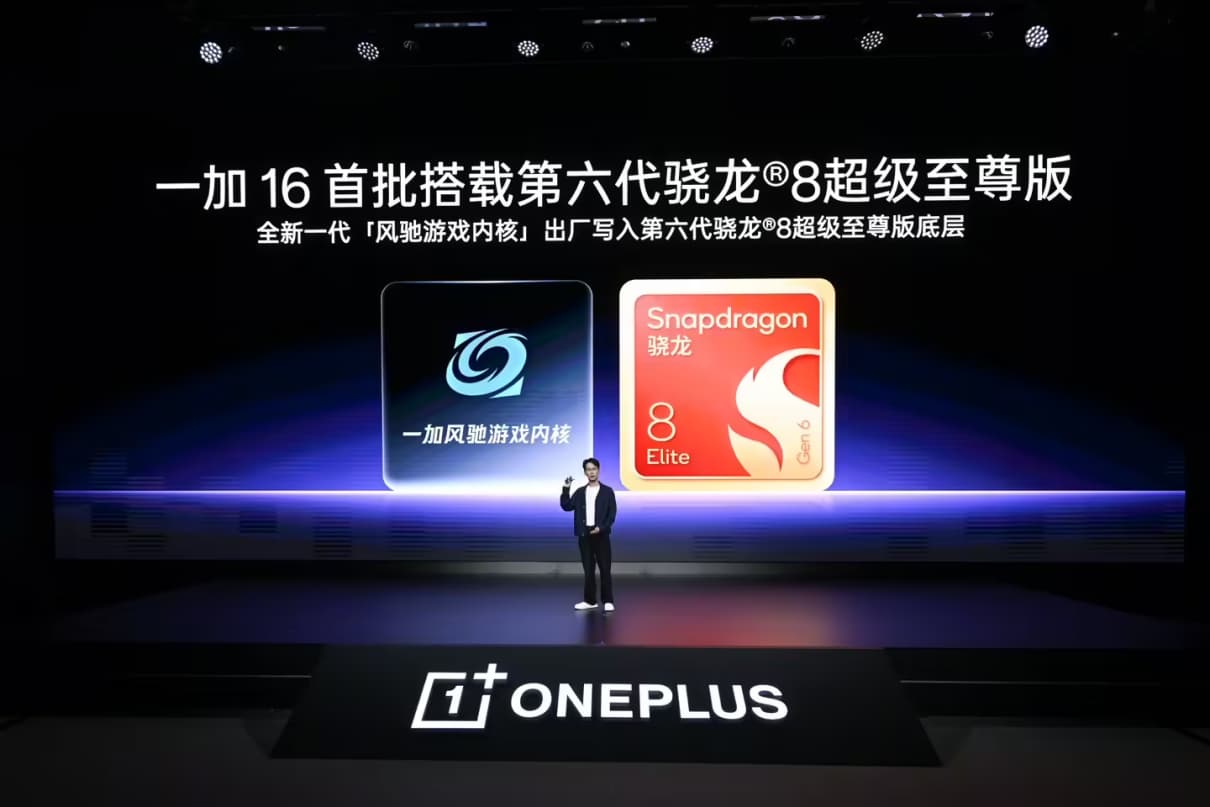
OnePlus 16 has officially launched in China, bringing a major focus on high-frame-rate mobile gaming. Announced on October 12, 2026, the new flagship is one of the first smartphones powered by Qualcomm’s Snapdragon 8 Elite Extreme Gen 6 platform. It combines the new processor with an upgraded gaming kernel and three dedicated gaming chips designed to improve network stability, touch response and display performance.
The biggest highlight is support for native gaming at up to 185 frames per second (FPS) in selected titles. OnePlus is also introducing enhanced frame-generation technology, aiming to deliver smoother visuals while maintaining responsive controls.
Rather than relying on chipset performance alone, the OnePlus 16 uses a combination of hardware, software and game-specific optimization to push mobile gaming forward.
OnePlus 16 Targets Native 185FPS Mobile Gaming
High frame rates can make fast-moving scenes appear smoother, particularly in competitive shooting games where quick reactions matter. However, a powerful processor alone cannot guarantee a consistent high-FPS experience. The display, graphics processing, game optimization and system resource management must work together.
To address these demands, OnePlus has equipped the OnePlus 16 with its next-generation Fengchi Gaming Kernel. According to the company, the software supports native 185FPS gameplay in compatible games and introduces a 185FPS frame-generation feature designed to increase visual smoothness without adding extra latency through its implementation.
The phone also supports native 165FPS gameplay in Honor of Kings with the game’s highest graphics-quality mode, according to OnePlus.
For shooting-game fans, the company lists native 185FPS support for several popular titles, including Peacekeeper Elite, Delta Force, Arena Breakout, CrossFire: Legends, Nizhan: Future and Lost Light. More games are expected to join the supported lineup through future compatibility updates.
It is important to distinguish native frame rates from generated frames. Native FPS refers to frames rendered by the game itself, while frame-generation technology creates additional frames to improve perceived smoothness. The two approaches can produce different results in responsiveness and image consistency.
Actual frame rates will also depend on the game, graphics settings, operating temperature and software version. The advertised 185FPS capability therefore applies to supported gaming scenarios rather than every mobile game.
For another look at OnePlus’ gaming-focused hardware, read our OnePlus Ace 6 Ultra review and 165FPS gaming analysis.
Three Dedicated Gaming Chips Handle Network, Touch and Display
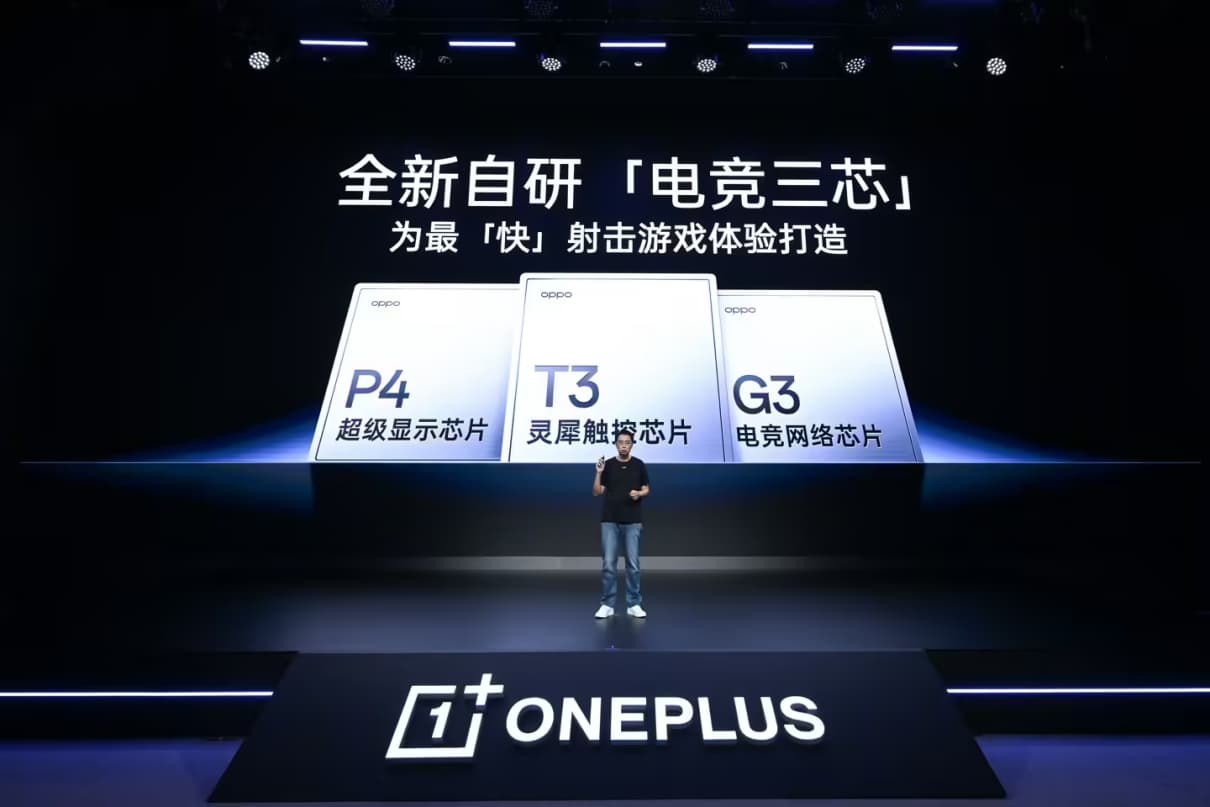
OnePlus has developed a three-chip gaming system to complement the Snapdragon processor. The setup includes the G3 gaming network chip, T3 Lingxi touch chip and P4 super display chip. Each component targets a different part of the gaming experience.
G3 Gaming Network Chip Focuses on Lower Latency
Network delays can affect competitive games even when a phone produces high frame rates. The G3 gaming network chip is designed to improve connectivity during latency-sensitive gameplay.
OnePlus reports that the chip reduces average cellular gaming latency by 13.39%. The company also claims an 18.5% improvement in Wi-Fi transmission stability and an 11.5% improvement in Wi-Fi network-grabbing capability.
These figures are based on manufacturer-reported results. Real-world performance will vary with signal strength, router conditions, network congestion and the server hosting a game.
T3 Lingxi Touch Chip Improves Control Response
The T3 Lingxi touch chip is designed to optimize touch input and control precision. OnePlus says it has worked with game developers, including teams behind shooting games, to fine-tune touch handling and introduce more customizable control settings.
For games that depend on rapid aiming, movement and repeated on-screen actions, touch responsiveness can be an important part of the overall experience. The effectiveness of these improvements will depend on individual games and how players configure their controls.
P4 Super Display Chip Supports High-Refresh-Rate Gaming
The P4 super display chip focuses on display processing for high-refresh-rate scenarios. According to OnePlus, it features a 20% increase in transistor count and a 25% improvement in data-handling performance compared with its predecessor.
These hardware changes are intended to help the display system manage demanding visual workloads. However, transistor count and data-handling figures alone do not establish the phone’s sustained gaming performance or power efficiency.
Together, the three chips show how OnePlus is approaching mobile gaming as a complete system. Network reliability, touch response and display processing can all influence gameplay, alongside the raw power of the main processor.
Snapdragon 8 Elite Extreme Gen 6 Powers the New Flagship
The Snapdragon 8 Elite Extreme Gen 6 provides the processing foundation for the OnePlus 16. Qualcomm announced the new flagship mobile platform at Snapdragon Summit on September 22, 2026.
The chipset uses a 2nm manufacturing process and Qualcomm’s custom Oryon CPU architecture. Its prime CPU cores can reach clock speeds of up to 5GHz, while its performance cores can reach up to 4GHz, according to the supplied launch specifications.
Qualcomm has also introduced FlexCache, an expandable cache technology designed to allocate cache resources dynamically according to workload demands. This approach is intended to help the system respond to different processing requirements, including gaming and other intensive applications.
For the OnePlus 16, the platform provides the hardware foundation needed to process demanding game logic and graphics workloads. The phone’s actual sustained performance will still depend on cooling, power management and software optimization.
The new chipset is also part of a broader flagship rollout. Qualcomm has named Xiaomi, vivo, RedMagic, REDMI, OPPO, OnePlus, Motorola, iQOO and HONOR among the brands adopting its sixth-generation flagship platforms.
As more devices enter the market, buyers will have additional options for comparing processor performance, gaming features and overall flagship value.
For background on how an earlier Snapdragon flagship platform performed in demanding mobile games, see our Snapdragon 8 Gen 3 gaming performance review.
OnePlus 16 Selected as an Official Peacekeeper Elite Competition Phone
OnePlus says the OnePlus 16 has become an official competition phone for the new season of the Peacekeeper Elite Professional League.
The partnership complements the phone’s focus on high-frame-rate gameplay, network optimization and touch response. In competitive gaming, these areas can influence how consistently a device handles fast movement, aiming and real-time interactions.
An official tournament role provides context for the phone’s gaming ambitions, but it does not automatically establish that every player will perform better. Results depend on individual skill, game settings, network conditions and the competition’s equipment requirements.
What the OnePlus 16’s Gaming Features Mean for Buyers
The OnePlus 16’s key selling point is the way its hardware and software work together. Native 185FPS support in selected games, an updated gaming kernel and three dedicated gaming chips give the phone a clear focus on competitive mobile gaming.
For players, the most important questions are whether their favorite games support the advertised frame rates, how consistently those frame rates can be maintained during long sessions and whether the phone balances performance with heat and battery consumption.
The Snapdragon 8 Elite Extreme Gen 6 provides a high-performance foundation, but clock speeds and manufacturing-process specifications cannot fully predict real-world results. Independent testing would be needed to assess sustained frame rates, thermal behavior and power consumption under comparable conditions.
Game compatibility also deserves attention. Not every title supports the same frame-rate limits, and some features may require software updates or may be available only in particular regional versions.
Buyers considering the OnePlus 16 should therefore look beyond the 185FPS headline and check the games they play most often, the supported settings and the availability of the phone in their market.
Readers comparing OnePlus’ flagship gaming evolution can also explore our OnePlus 13 review, covering performance, display and gaming.
Final Verdict
The OnePlus 16 arrives as a gaming-focused flagship built around Qualcomm’s Snapdragon 8 Elite Extreme Gen 6 platform. Its native 185FPS support in selected games, Fengchi Gaming Kernel and G3, T3 and P4 gaming chips are designed to address performance, connectivity, touch controls and display processing together.
The launch also expands Qualcomm’s sixth-generation flagship ecosystem, which should give consumers more high-performance smartphone options as additional models arrive.
The next step is real-world validation. Consistent frame rates, responsive controls and effective heat management will determine how much of the OnePlus 16’s advertised gaming potential translates into everyday use.