









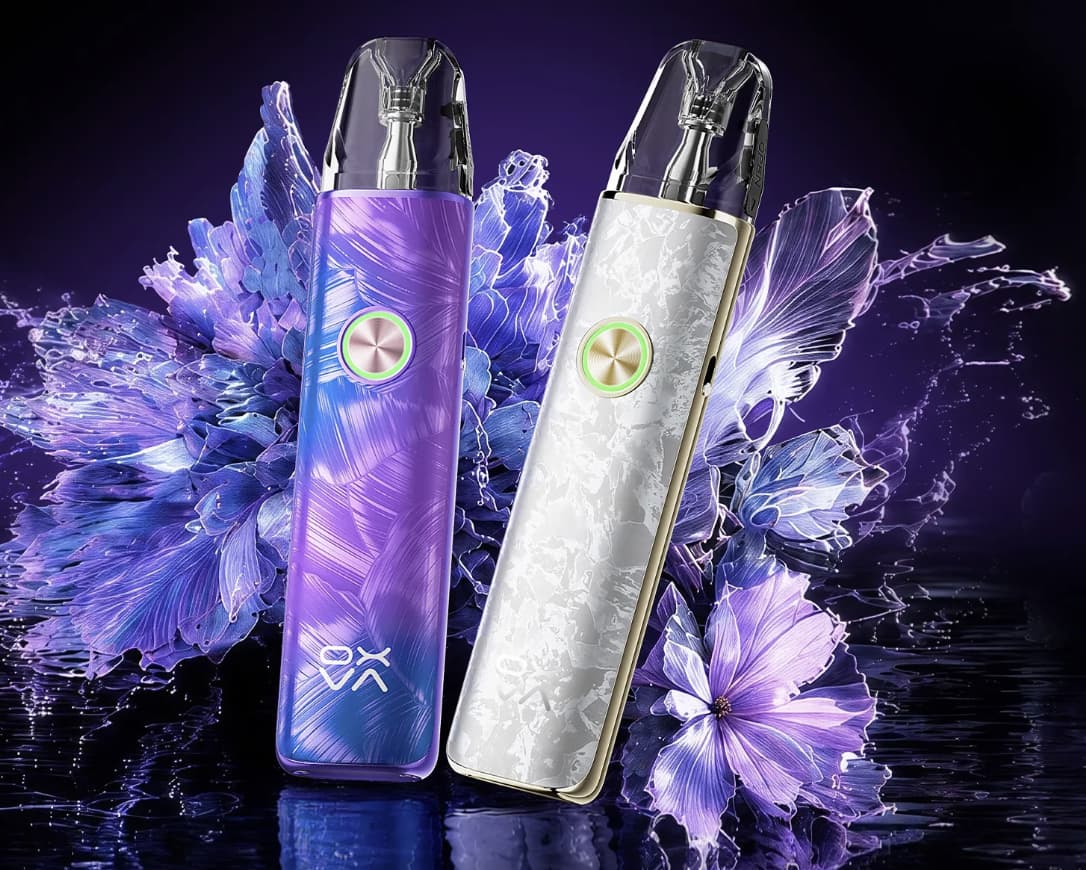
Choosing an OXVA XLIM 4 pod is not simply a matter of picking whichever resistance number looks familiar. The four available options—0.4Ω, 0.6Ω, 0.8Ω and 1.2Ω—are designed around different power ranges and draw styles, so the cartridge can change how the XLIM 4 behaves just as much as the device’s three-level power adjustment.
OXVA’s current XLIM 4 specifications list compatibility with all four resistance options, while the company’s UNITECH 3.0 cartridge information gives each version its own recommended wattage range and intended MTL or RDL style.
That makes the choice easier once the numbers are put into context.
The short version is:
- 0.4Ω: highest-power option, designed for a more open RDL style
- 0.6Ω: middle ground between RDL and MTL
- 0.8Ω: lower-power MTL option
- 1.2Ω: lowest-power, tighter MTL-focused option
The right cartridge therefore depends less on which resistance is “best” and more on how you want the XLIM 4 to operate.
OXVA XLIM 4 Pod Resistance at a Glance
| Cartridge | Recommended Power | Draw Style | OXVA’s Listed E-Liquid Compatibility |
|---|---|---|---|
| 0.4Ω | 26–30W | RDL | Freebase & Nic Salt |
| 0.6Ω | 20–25W | RDL / MTL | Freebase & Nic Salt |
| 0.8Ω | 12–16W | MTL | Nic Salt |
| 1.2Ω | 10–12W | MTL | Nic Salt |
These are OXVA’s published recommendations for the XLIM Top Fill Cartridge UNITECH 3.0. Actual performance can vary with e-liquid formulation, airflow, draw duration, and other usage conditions.
Why Resistance Matters on the XLIM 4
The Ω number printed on a pod describes the electrical resistance of its coil.
Before choosing a resistance, it is worth understanding how the XLIM 4’s three power levels and side airflow control work together; our OXVA XLIM 4 review covers the device itself in more detail.
For the XLIM 4, that number is useful because it gives you a rough indication of the power range the cartridge is designed to handle. The lower-resistance 0.4Ω cartridge operates at 26–30W, while the 1.2Ω version is specified for only 10–12W.
That difference changes the role of each cartridge.
A lower-resistance pod generally pairs with higher power and a more open draw. A higher-resistance pod operates at lower power and is associated with a tighter MTL style.
So when comparing 0.4Ω vs 0.6Ω vs 0.8Ω vs 1.2Ω, the useful question is not simply “Which one produces the most vapor?”
A better question is:
What type of draw do you actually want from the XLIM 4?
0.4Ω: The High-Power XLIM 4 Option
The 0.4Ω XLIM Top Fill Cartridge UNITECH 3.0 sits at the high-power end of the XLIM 4 cartridge range.
OXVA specifies a recommended power range of 26–30W and classifies it for RDL, or restricted direct-to-lung, use. The company lists both Freebase and Nic Salt compatibility for this resistance.
The XLIM platform covers several OXVA pod devices, so readers comparing different formats can also see how the brand approaches pod performance in our OXVA Vprime 2 review.
Because it is intended to operate at the highest wattage range among the four options, the 0.4Ω cartridge is the natural choice for users who want a more open style of draw from the XLIM 4.
It also makes the XLIM 4’s three-level power adjustment more relevant. The device itself is rated at up to 30W, which matches the upper end of OXVA’s recommended range for the 0.4Ω cartridge.
Who is the 0.4Ω pod for?
The 0.4Ω option makes the most sense if you prefer:
- A more open RDL draw
- Higher operating power
- More vapor than the higher-resistance options
- A cartridge designed around the upper end of the XLIM 4’s output
- Freebase or compatible Nic Salt e-liquid
It is less relevant if your priority is a tight, low-power MTL experience.
0.6Ω: The Middle Ground
The 0.6Ω cartridge is arguably the most flexible point in the lineup.
OXVA recommends 20–25W and describes this resistance as suitable for both RDL and MTL. Like the 0.4Ω version, it is listed as compatible with Freebase and Nic Salt e-liquid.
That makes the 0.6Ω option different from the other three.
The 0.4Ω cartridge is clearly positioned toward RDL, while the 0.8Ω and 1.2Ω cartridges are both positioned toward MTL. The 0.6Ω version sits between those categories.
This can be useful for someone who does not want an especially airy draw but also does not want to move all the way toward a low-power MTL cartridge.
Who is the 0.6Ω pod for?
Consider the 0.6Ω option if you want:
- A compromise between MTL and RDL
- Moderate power consumption
- 20–25W operation
- More flexibility in draw style
- Compatibility with both Freebase and Nic Salt according to OXVA
For someone who is unsure whether to move toward a lower or higher resistance, the 0.6Ω cartridge provides a natural middle position.
0.8Ω: A Lower-Power MTL Choice
The 0.8Ω cartridge is the resistance supplied with the standard XLIM 4 kit according to OXVA’s product specifications. It is rated at 12–16W and designed for MTL, or mouth-to-lung, use.
This makes the 0.8Ω pod considerably different from the 0.4Ω version.
Instead of pushing the XLIM 4 toward its 30W maximum, it operates comfortably in the lower portion of the device’s 5–30W output range.
The 0.8Ω cartridge is also a useful reference point for understanding the XLIM 4. The device is not simply a 30W pod that expects users to operate at maximum output. Its cartridge ecosystem is designed to cover several lower-power operating ranges as well.
Who is the 0.8Ω pod for?
The 0.8Ω version is worth considering if you prefer:
- A tighter MTL draw
- Lower operating power
- A more restrained output
- The resistance included with the standard XLIM 4 kit
- Nic Salt e-liquid according to OXVA’s compatibility listing
If you are buying the XLIM 4 for the first time and do not specifically want an RDL setup, the included 0.8Ω cartridge gives you a straightforward starting point.
1.2Ω: The Lowest-Power Option
At the other end of the lineup is the 1.2Ω XLIM cartridge.
OXVA specifies 10–12W for this resistance and classifies it as an MTL cartridge. Its published e-liquid recommendation is Nic Salt.
The 1.2Ω cartridge therefore emphasizes the low-power side of the XLIM 4’s capabilities.
Compared with 0.4Ω and 0.6Ω, it requires substantially less power. That makes it a fundamentally different setup rather than simply a weaker version of the same cartridge.
For users who prefer a tighter MTL draw and want the device operating around 10–12W, the 1.2Ω option is the cartridge specifically designed around that use case.
Who is the 1.2Ω pod for?
The 1.2Ω cartridge is aimed at users who prefer:
- A tighter MTL draw
- Low-power operation
- 10–12W output
- Nic Salt e-liquid according to OXVA’s published specifications
It is not the cartridge to choose if your priority is an open RDL draw or high vapor output.
0.4Ω vs 0.6Ω: What’s the Difference?
The 0.4Ω and 0.6Ω cartridges are the two lower-resistance choices in the lineup, but they are not identical.
The 0.4Ω version is rated at 26–30W and classified as RDL, while the 0.6Ω version operates at 20–25W and can be used for either RDL or MTL.
That gives the 0.6Ω cartridge a broader positioning.
If you specifically want the higher-power RDL side of the XLIM 4, the 0.4Ω cartridge is the more direct match. If you want some flexibility to move between a more restricted and more open draw, the 0.6Ω cartridge is positioned closer to the middle.
0.6Ω vs 0.8Ω: Where the Draw Changes
The difference between 0.6Ω and 0.8Ω is more than the small change in the resistance number suggests.
The 0.6Ω cartridge is recommended at 20–25W and is listed for RDL/MTL use. The 0.8Ω cartridge drops to 12–16W and is classified as MTL.
In other words, moving from 0.6Ω to 0.8Ω moves the setup toward the lower-power, tighter-draw side of the XLIM 4 range.
This is a useful pair to compare if you are trying to decide between a flexible middle-ground setup and a more clearly MTL-oriented configuration.
0.8Ω vs 1.2Ω: Both MTL, But Not Identical
At first glance, the 0.8Ω and 1.2Ω cartridges look like very similar choices because both are classified by OXVA for MTL use.
The difference is their recommended power.
The 0.8Ω cartridge is specified at 12–16W, while the 1.2Ω version is specified at 10–12W.
So if you prefer MTL but want to remain slightly higher in the XLIM 4’s power range, 0.8Ω is the more appropriate specification match. If you specifically want the lower-power end of the XLIM ecosystem, 1.2Ω moves further in that direction.
Which XLIM 4 Pod Uses the Most Power?
Based on OXVA’s recommended wattage ranges, the order is straightforward:
0.4Ω → 0.6Ω → 0.8Ω → 1.2Ω
The 0.4Ω cartridge is rated at 26–30W, followed by 0.6Ω at 20–25W, 0.8Ω at 12–16W, and 1.2Ω at 10–12W.
This does not mean the lower-resistance cartridge will always drain the battery at exactly a particular rate. Actual battery consumption depends on how often and how long the device is used, along with its operating conditions.
However, the recommended wattage ranges provide a useful indication of how the four cartridges are intended to be used.
Does Lower Resistance Mean Better Flavor?
Not automatically.
This is one of the most important points to understand when choosing an XLIM 4 pod.
A lower resistance does not inherently mean better flavor. It changes the operating range and, together with the cartridge construction, airflow and power setting, affects the overall vaping characteristics.
OXVA promotes UNITECH 3.0 as an upgraded cartridge platform with changes to airflow, vaporization and e-liquid delivery. The company also says its testing supports consistent flavor output at lower battery levels. Those statements are manufacturer claims and should not be treated as independent test results.
So the best resistance is ultimately the one that matches your preferred draw and power range.
How the XLIM 4’s Airflow Changes the Choice
Resistance is only half of the equation.
The XLIM 4 also has side airflow control, which OXVA describes as allowing adjustment from a tighter, cigarette-like draw toward a looser, airier feel.
This means two people using the same 0.6Ω cartridge can potentially prefer different airflow positions.
A more restricted airflow can change the perceived tightness of the draw, while opening the airflow allows more air through the system.
That is why it makes little sense to choose an XLIM 4 cartridge based solely on resistance. The cartridge, power level and airflow work together.
How the Three Power Levels Fit the Four Pods
The XLIM 4 provides three selectable power levels, changed through a double-click operation. OXVA describes these modes as Smooth & Chill, Balanced & Bold, and Rich & Punchy.
The important point is that the device does not offer the same practical range with every cartridge.
A 0.4Ω pod is designed around 26–30W, while a 1.2Ω pod is designed around 10–12W.
Therefore, the cartridge you install determines which part of the XLIM 4’s overall output range is relevant.
The three-level system is essentially a simplified control method layered on top of the cartridge’s recommended operating range.
Does the XLIM 4 Support All Four Resistances?
Yes. OXVA’s official XLIM 4 page lists 0.4Ω, 0.6Ω, 0.8Ω and 1.2Ω as compatible resistances. The company also lists both 3mL and 2mL TPD versions of the XLIM Top Fill Cartridge UNITECH 3.0.
OXVA’s cartridge store page additionally states that the UNITECH 3.0 cartridge is designed to be compatible with XLIM-series devices, although users should check compatibility with their specific device model before purchasing replacement cartridges.
That compatibility is useful because choosing a different cartridge does not require changing the entire device.
What About the 3mL and 2mL Versions?
OXVA lists the UNITECH 3.0 cartridge in both 3mL and 2mL TPD versions. The XLIM 4 standard kit includes a 0.8Ω 3mL cartridge, while the TPD kit includes a 0.8Ω 2mL version.
The resistance options remain the important part of the performance comparison, while capacity is mainly a regional and usage consideration.
Users should therefore check the specific cartridge packaging and local regulations rather than assuming every XLIM 4 market receives the same capacity.
Which XLIM 4 Pod Should You Choose?
There is no single resistance that makes sense for everyone.
Use the following as a simple starting point:
Choose 0.4Ω if you prefer:
Higher power + RDL
The 0.4Ω cartridge is designed for 26–30W and is the most power-oriented option in the range.
Choose 0.6Ω if you prefer:
A middle ground + RDL/MTL flexibility
At 20–25W, the 0.6Ω cartridge sits between the higher-power 0.4Ω and lower-power 0.8Ω options. OXVA specifically lists it for both RDL and MTL.
Choose 0.8Ω if you prefer:
Lower power + MTL
The 0.8Ω option operates at 12–16W and is the cartridge included with the standard XLIM 4 kit.
Choose 1.2Ω if you prefer:
The lowest power + tighter MTL
The 1.2Ω cartridge is specified at 10–12W and is intended for MTL use.
A Simple Way to Pick Your First XLIM 4 Cartridge
If you are still unsure, start with the draw style rather than the resistance number.
Want a more open RDL experience?
Look at 0.4Ω.
Want something between RDL and MTL?
Look at 0.6Ω.
Prefer a conventional MTL-style draw at moderate power?
Look at 0.8Ω.
Want the lowest-power MTL setup?
Look at 1.2Ω.
This approach is more useful than simply assuming that a lower resistance is automatically an upgrade.
Final Thoughts
OXVA XLIM 4 pod system is unusually flexible for a compact device because its cartridge range covers four distinct resistance points: 0.4Ω, 0.6Ω, 0.8Ω and 1.2Ω. OXVA pairs those options with recommended power ranges from 10W to 30W and positions them across different MTL and RDL use cases.
The most important distinction is straightforward:
0.4Ω and 0.6Ω sit toward the higher-power side, while 0.8Ω and 1.2Ω are aimed more clearly at lower-power MTL use.
The 0.6Ω option is the unusual one because OXVA lists it for both RDL and MTL, making it the middle point of the four-resistance lineup.
Meanwhile, the XLIM 4 itself adds three-level power adjustment and side airflow control, so cartridge resistance is only one part of the final setup.
If you are choosing replacement cartridges, the best starting point is therefore not “Which resistance is the best?” but “Which power range and draw style fit how I want to use the device?”
As with other nicotine-containing products, these devices are intended for adults of legal age where permitted by law. Nicotine is addictive.