








OXVA’s XLIM family has built its reputation around compact pod systems, refillable cartridges and adjustable airflow. With the arrival of the XLIM Pro 4 and XLIM 4, the range offers two devices that share a familiar design philosophy but take different approaches to everyday operation.
At first glance, the two models have plenty in common. Both support up to 30W output, use the XLIM cartridge platform and offer adjustable airflow for different draw preferences. The differences become more noticeable when looking at battery capacity, charging speed, display features, power adjustment and cartridge technology.
The XLIM Pro 4 is positioned as the more feature-rich option, with a larger battery, faster charging, an HD color screen and OXVA’s Anti-Burn Technology. The XLIM 4 takes a simpler route, combining a 1600mAh battery, three-level power adjustment and a visible ring-light indicator.
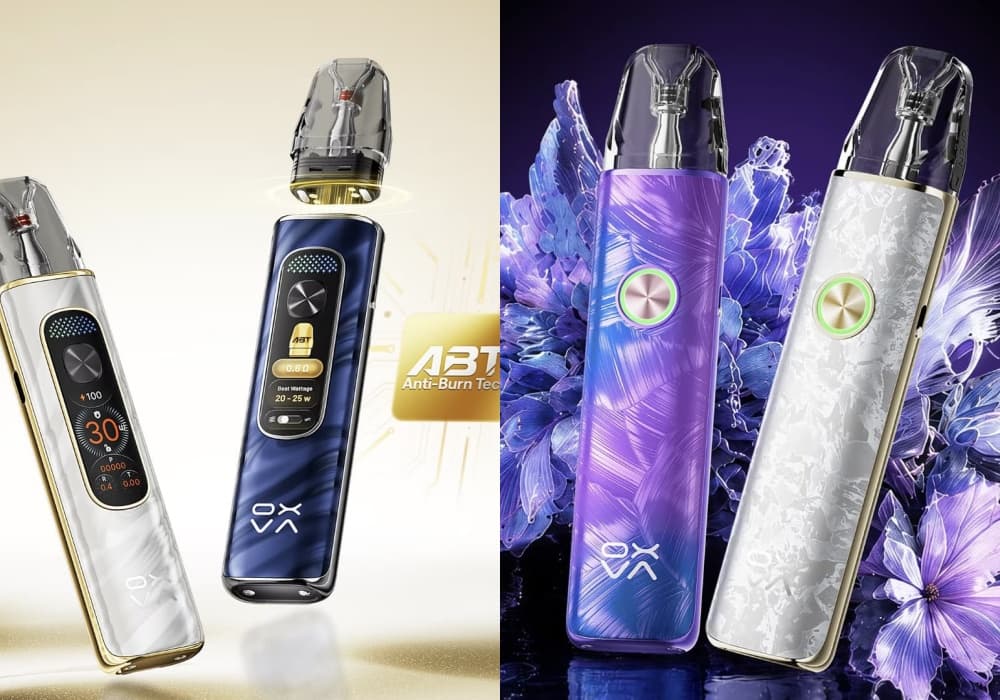
So, what separates the OXVA XLIM Pro 4 from the XLIM 4, and which model has the more suitable feature set? Let’s compare their specifications and design choices in detail.
For a closer look at the standard model’s battery, power settings and cartridge system, read our detailed OXVA XLIM 4 review.
OXVA XLIM Pro 4 vs XLIM 4: Specification Comparison
The most important differences are not the maximum wattage or basic compatibility. Both devices reach 30W and support multiple XLIM cartridge resistance options. Instead, the Pro 4 focuses on more detailed control and upgraded hardware, while the standard XLIM 4 emphasizes straightforward operation.
| Feature | OXVA XLIM Pro 4 | OXVA XLIM 4 |
|---|---|---|
| Maximum output | 30W | 30W |
| Output adjustment | Adjustable wattage | 3-level power adjustment |
| Battery capacity | 1800mAh | 1600mAh |
| Charging | USB Type-C, 5V/3A | USB Type-C, 5V/2A |
| Display | 0.98-inch HD color screen | No traditional screen |
| Lighting | RGB lighting | Visible ring light |
| Vaping activation | Auto-draw and button | Auto-draw |
| Airflow | Adjustable airflow | Adjustable airflow |
| Cartridge technology | XLIM ABT / UNITECH 3.0 | XLIM UNITECH 3.0 |
| Cartridge resistance | 0.4Ω / 0.6Ω / 0.8Ω / 1.2Ω | 0.4Ω / 0.6Ω / 0.8Ω / 1.2Ω |
| Maximum power | 30W | 30W |
Specifications are based on OXVA’s published product information. Cartridge capacity and included accessories may vary by regional version.
1. Design and User Interface: Color Screen vs Ring Light
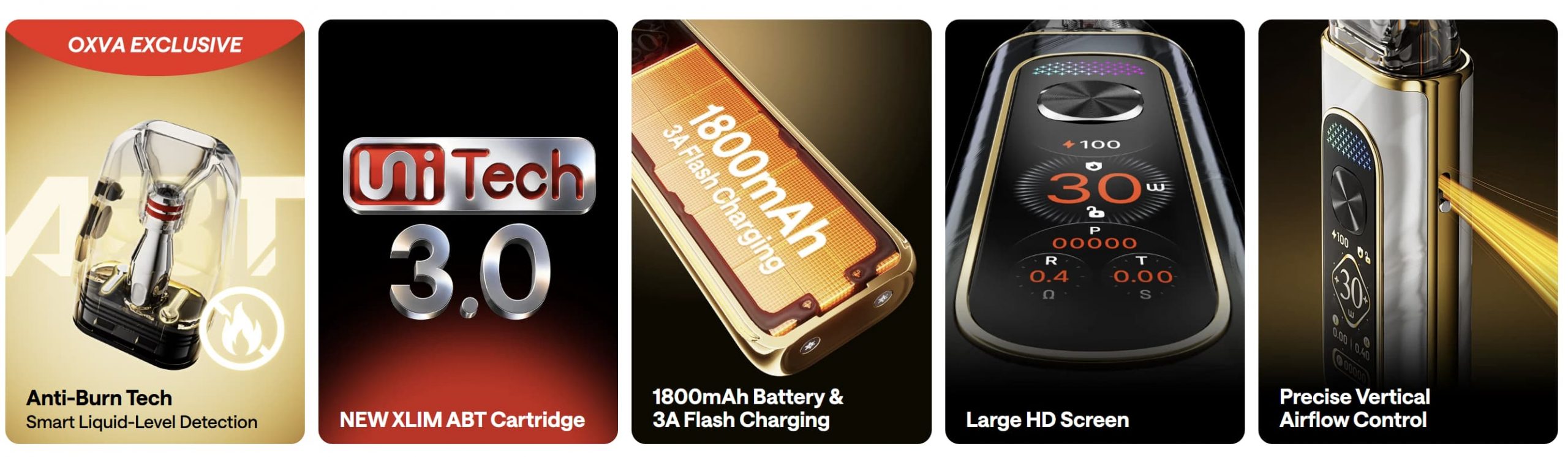
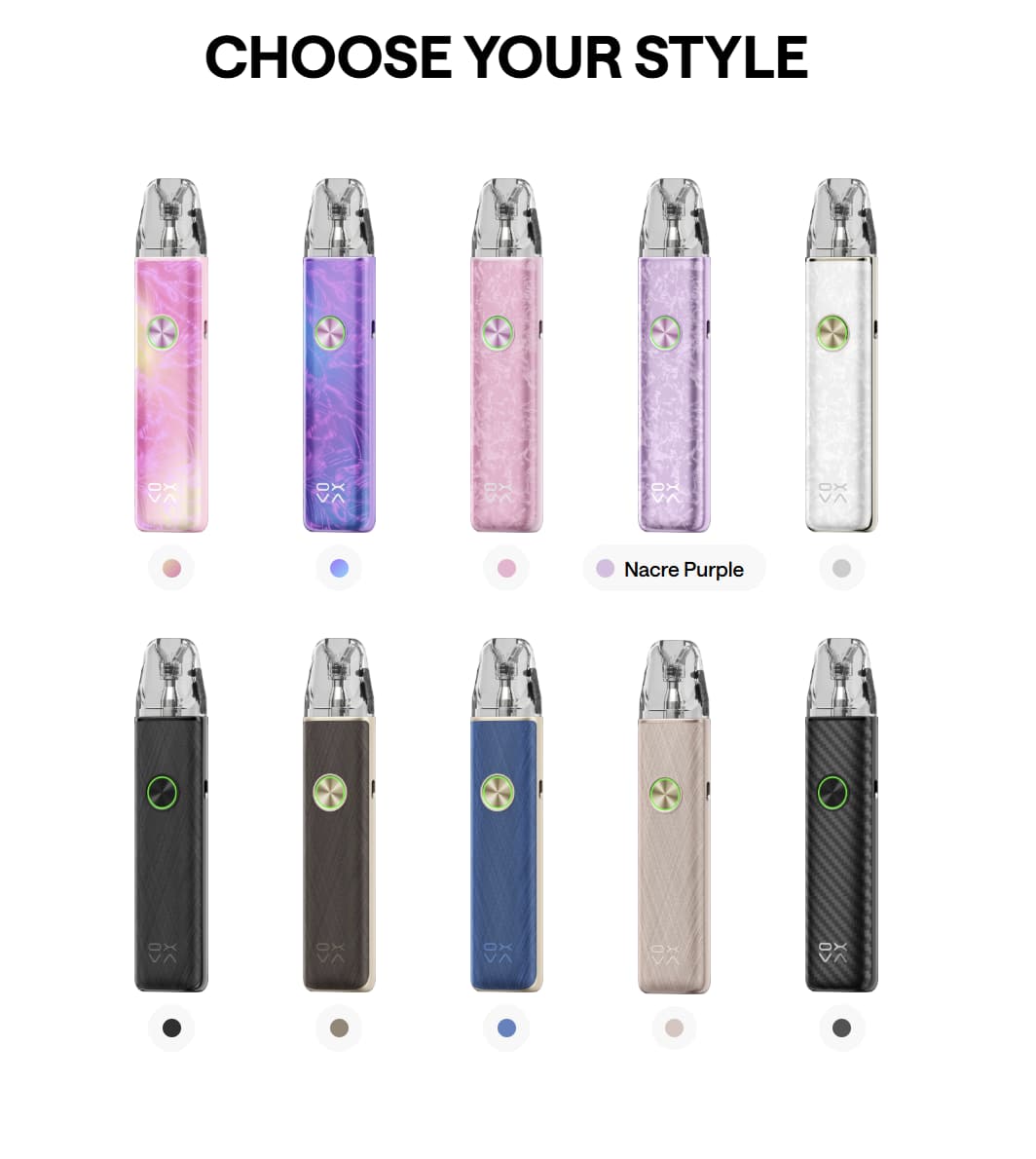
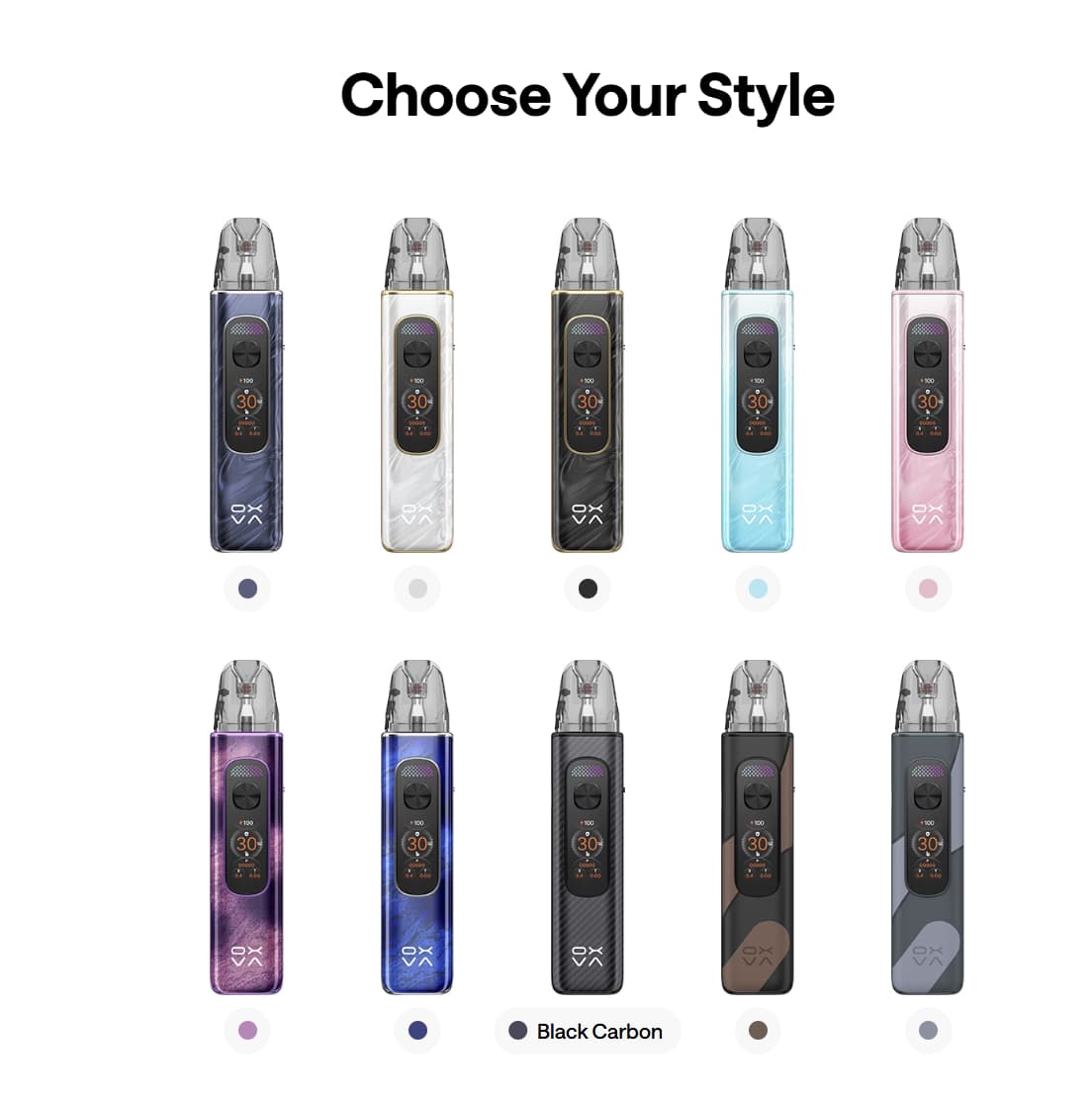
The XLIM Pro 4 takes a more information-focused approach to its exterior. Its 0.98-inch HD color screen provides a dedicated display for device information, while RGB lighting and multiple interface themes give users additional visual customization.
The screen is a meaningful difference for people who prefer seeing device information directly rather than relying on indicator lights. It also gives the Pro 4 a more advanced appearance within the XLIM lineup.
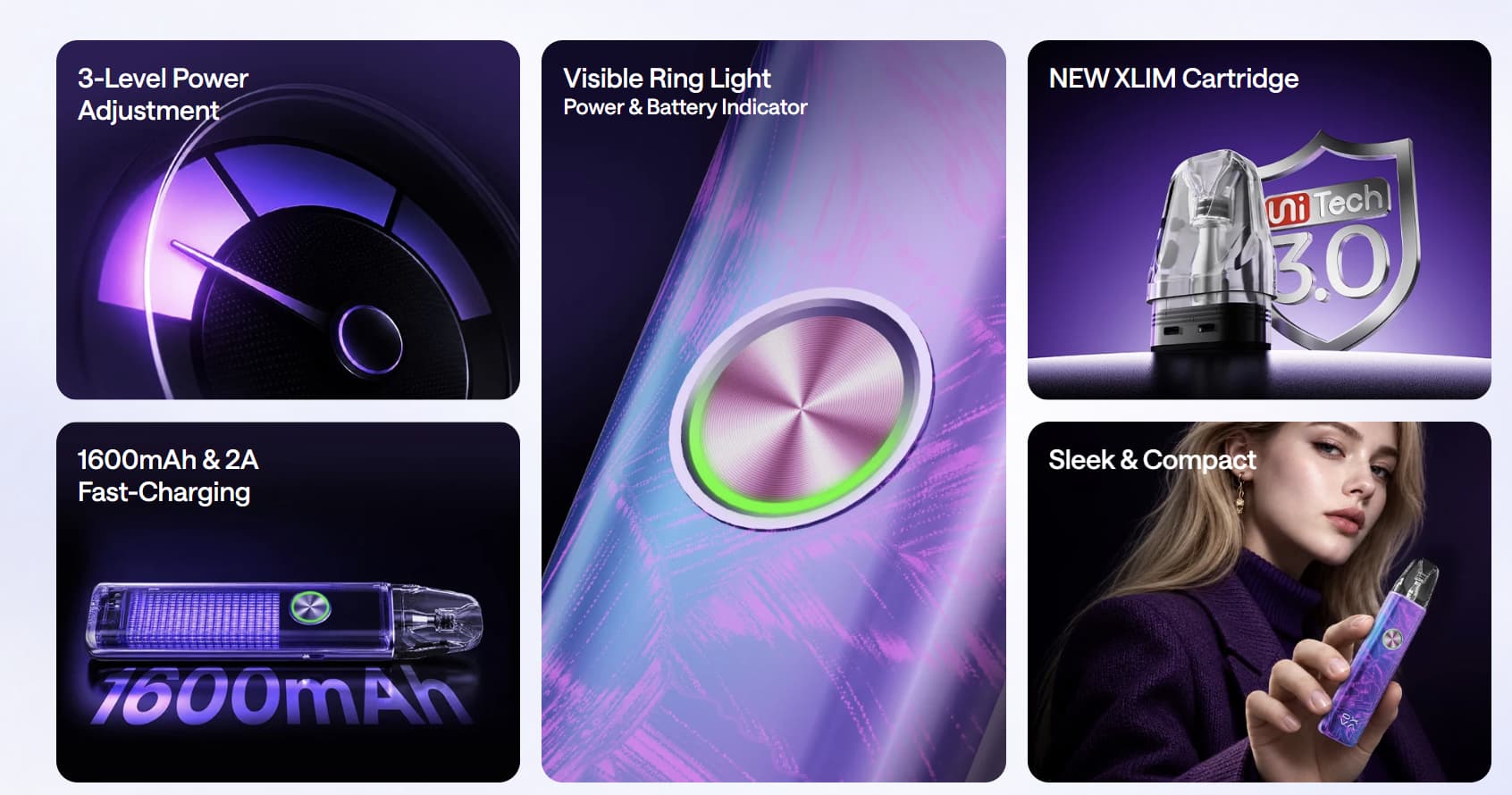
The XLIM 4 adopts a cleaner interface. Instead of a traditional display, it uses a visible ring light to communicate power and battery status. The indicator also supports different lighting effects.
This simpler layout reduces the amount of information shown on the device, but it makes basic status checks relatively straightforward.
The practical difference: The XLIM Pro 4 is better equipped for users who want a screen and more detailed visual feedback. The XLIM 4 is designed around a simpler indicator system.
2. Battery Capacity and Charging: Pro 4 Has the Advantage
Battery capacity is one of the clearest specification differences between these two models.
The XLIM Pro 4 includes an 1800mAh built-in battery, compared with the XLIM 4’s 1600mAh capacity. That gives the Pro 4 a 200mAh advantage on paper.
The charging specifications also differ:
-
XLIM Pro 4: 5V/3A USB Type-C charging
-
XLIM 4: 5V/2A USB Type-C charging
The Pro 4’s higher charging input rating provides more charging headroom with a compatible power source. Actual charging time will still depend on charging conditions and the device’s charging management.
Battery capacity alone does not determine how long a device lasts between charges. Output settings, cartridge resistance and individual usage patterns also affect power consumption.
For people who prioritize a larger battery and a higher specified charging rate, the XLIM Pro 4 has the stronger specification sheet.
3. Power Adjustment: Flexible Wattage or Three Preset Levels?
Although both devices offer a maximum output of 30W, their power adjustment systems are different.
The XLIM Pro 4 supports adjustable output from 5W to 30W, giving users more direct control over the selected wattage. This approach may appeal to experienced users who prefer to fine-tune their device settings.
The XLIM 4 uses a three-level power adjustment system. Users can double-click to switch between the available power levels, which OXVA describes as options for different flavor intensity and vapor output.
This creates two different operating experiences:
-
XLIM Pro 4: More direct wattage adjustment for users who want greater control.
-
XLIM 4: Three straightforward power choices for people who prefer fewer settings.
Neither approach is automatically better for everyone. The difference is whether a user values detailed adjustment or a simpler interface.
Readers comparing OXVA’s different screen and wattage-control systems can also check our OXVA XLIM Pro 3 vs Pro 2 comparison for an earlier look at the Pro series.
4. Cartridge Technology: Anti-Burn Tech Meets UNITECH 3.0
Cartridge technology is another important part of the comparison.
The XLIM Pro 4 is promoted with Anti-Burn Technology (ABT) and the XLIM UNITECH 3.0 cartridge platform. OXVA positions this technology around reducing the likelihood of burnt-taste experiences during use.
The device is also compatible with several resistance options, including 0.4Ω, 0.6Ω, 0.8Ω and 1.2Ω. This provides different cartridge configurations for users with different airflow and output preferences.
The XLIM 4 also uses the upgraded UNITECH 3.0 top-fill cartridge. OXVA highlights improvements to airflow, vaporization and e-liquid delivery, alongside a 30-second quick-priming feature and enhanced leak protection.
Both devices therefore benefit from OXVA’s newer cartridge development, but the Pro 4 receives additional emphasis on ABT.
It is worth remembering that cartridge performance depends on correct filling, suitable e-liquid, coil condition and usage. Technology claims from the manufacturer should not be interpreted as a guarantee that burnt taste or leakage can never occur.
5. Airflow and Draw Activation
Both models offer adjustable airflow, allowing users to change the draw from tighter to more open settings.
The XLIM Pro 4 supports both auto-draw and button activation, giving users two ways to activate the device.
The XLIM 4 is listed with auto-draw operation. Its simpler control arrangement is consistent with the product’s focus on easy operation.
Both models are designed to support MTL and RDL-style use with compatible cartridges. The actual draw depends on the selected cartridge resistance, airflow position and other operating conditions.
For users who prefer having a physical activation button as an alternative to auto-draw, the Pro 4 has an additional control option.
6. Which Model Offers Better Everyday Convenience?
The two devices target slightly different priorities.
The XLIM Pro 4 combines a larger battery, faster specified charging, a color display and more detailed wattage adjustment. These features make it the more fully equipped model in this comparison.
The XLIM 4 removes some of that complexity. Its ring-light indicator and three-level power adjustment make the interface easier to understand without navigating a traditional display.
The cartridge platform is also an important consideration. Before choosing either model, check which replacement cartridges are available in your market, whether the desired resistance is sold separately and whether the regional kit includes the cartridge capacity you expect.
OXVA XLIM Pro 4 vs XLIM 4: Which One Should You Choose?
The choice comes down to how much control and device information you want.
Final Verdict
OXVA XLIM Pro 4 and XLIM 4 share the same broad XLIM design philosophy, but they are not simply two versions of the same device with different styling.
The Pro 4 puts more emphasis on hardware and interface features. Its larger battery, faster specified charging, color screen, adjustable wattage and ABT cartridge technology give it a more comprehensive feature set.
The XLIM 4 takes a more straightforward approach. It retains 30W maximum output, adjustable airflow and UNITECH 3.0 cartridge technology while replacing the screen and detailed wattage control with a ring-light indicator and three power levels.
For an adult who already uses nicotine products and is comparing these devices, the most useful deciding factors are the interface, battery specifications, cartridge availability and local product requirements. Nicotine is addictive, and these products are not intended for non-smokers or minors.