










Igeekphone News July 23, 2026 — Philip Morris International (PMI) delivered a strong second quarter in 2026, reporting record quarterly revenue of more than US$11 billion, driven by continued expansion of its smoke-free portfolio. Growth in IQOS heated tobacco products and VEEV e-cigarettes remained robust across international markets, although the company’s flagship U.S. nicotine pouch brand ZYN showed signs of slowing momentum.
The results highlight both the progress and the complexity of PMI’s long-term transition toward a smoke-free business. While reduced-risk products continue to gain traction globally, regional differences in consumer adoption, regulation, and competitive dynamics are creating an increasingly uneven growth landscape.
Record Revenue Driven by Smoke-Free Products
PMI reported second-quarter net revenue of US$11.19 billion, up 10.4% year over year, marking the first time the company has surpassed the US$11 billion threshold in a single quarter.
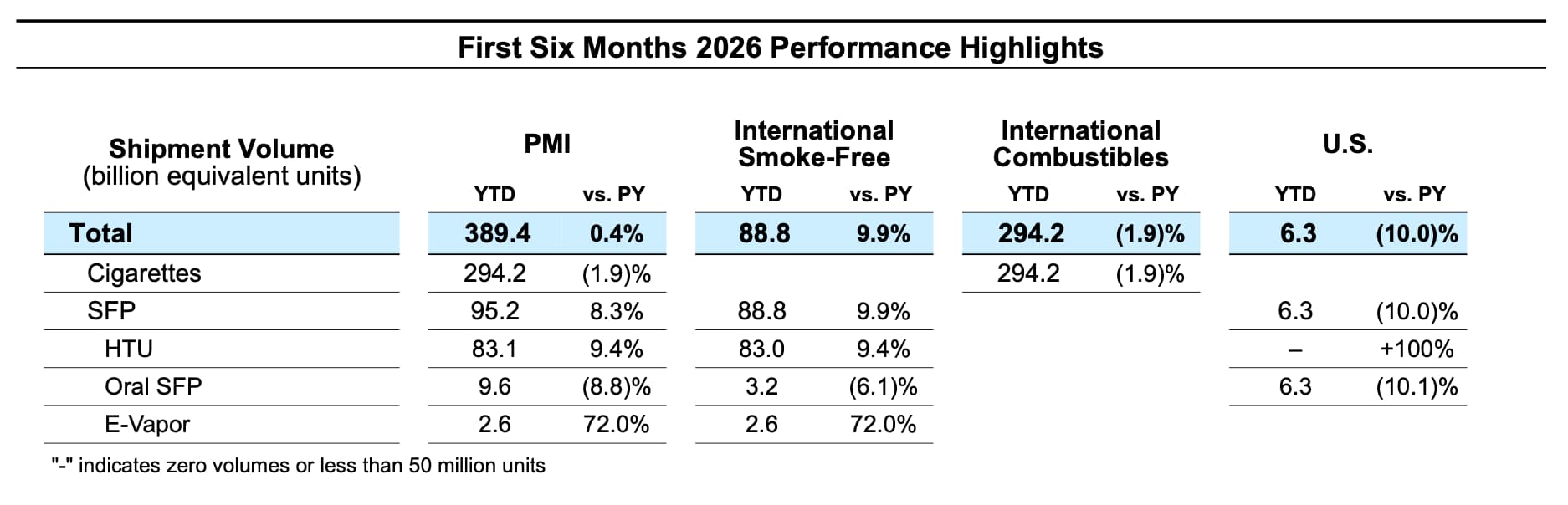
Total shipment volume increased 2.5% to 205.2 billion equivalent units, supported by steady gains in smoke-free products. Shipments of smoke-free products rose 7.5% to 48.2 billion equivalent units, while conventional cigarette shipments also increased 1.1%, reaching 156.9 billion cigarettes.
Smoke-free products now contribute approximately 42% of PMI’s total net revenue, reflecting the company’s continued strategic shift away from combustible tobacco. By the end of June, PMI’s smoke-free portfolio was available in 109 markets worldwide.
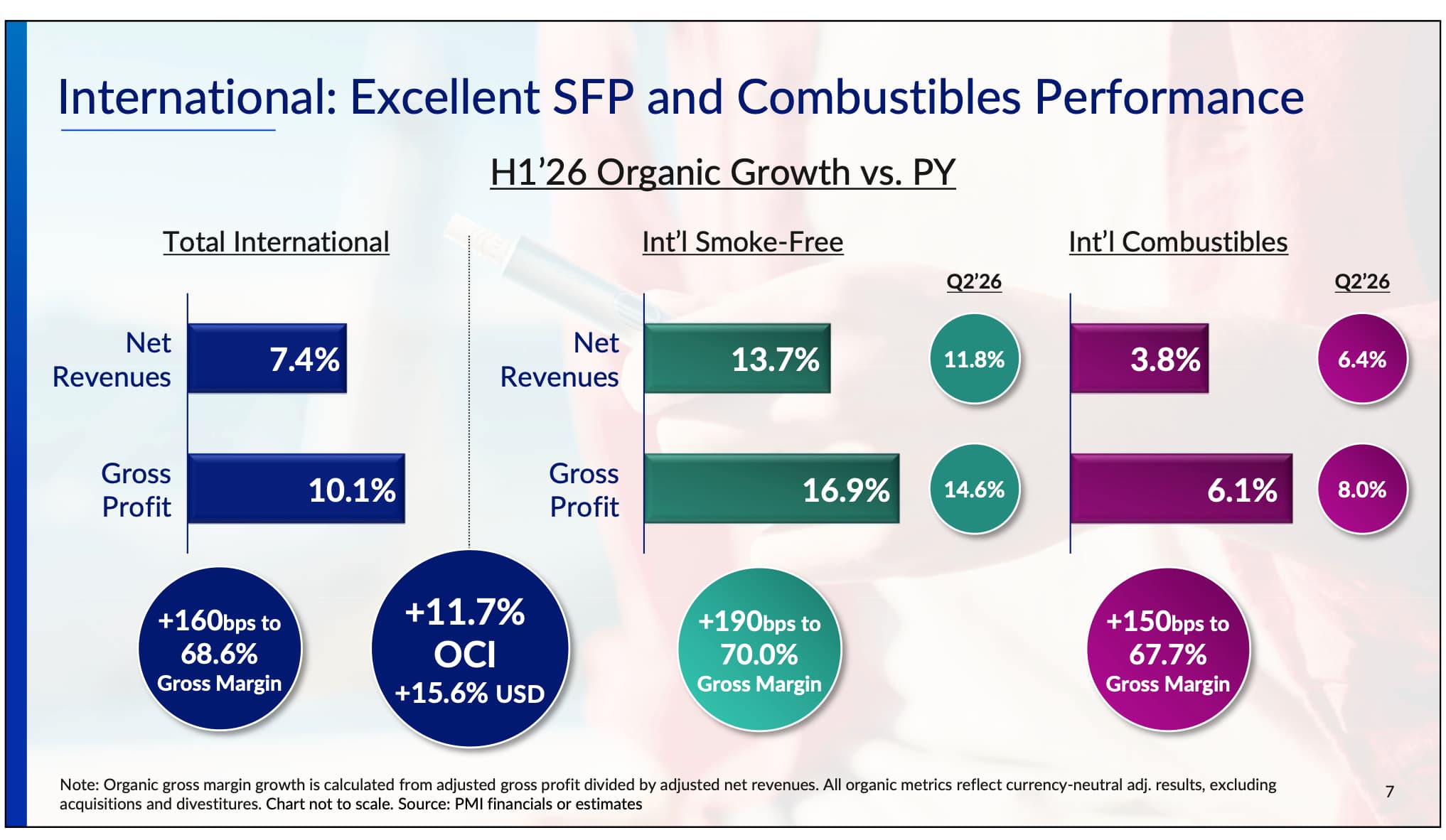
Operational performance also remained strong. Gross profit increased 11.5%, while operating income rose 22% on a reported basis. Adjusted diluted earnings per share climbed 15.2% to US$2.20, despite a reported decline in GAAP EPS caused by a non-cash impairment charge related to PMI’s Canadian affiliate.
IQOS Continues to Lead Smoke-Free Growth
IQOS remains the cornerstone of PMI’s smoke-free strategy.
During the quarter, heated tobacco shipments increased 7.6% to 41.8 billion units, while adjusted in-market sales grew 5.1%. PMI estimates that IQOS now accounts for roughly three-quarters of global heated tobacco sales, reinforcing its leadership position in the category.
Regional performance, however, varied considerably.
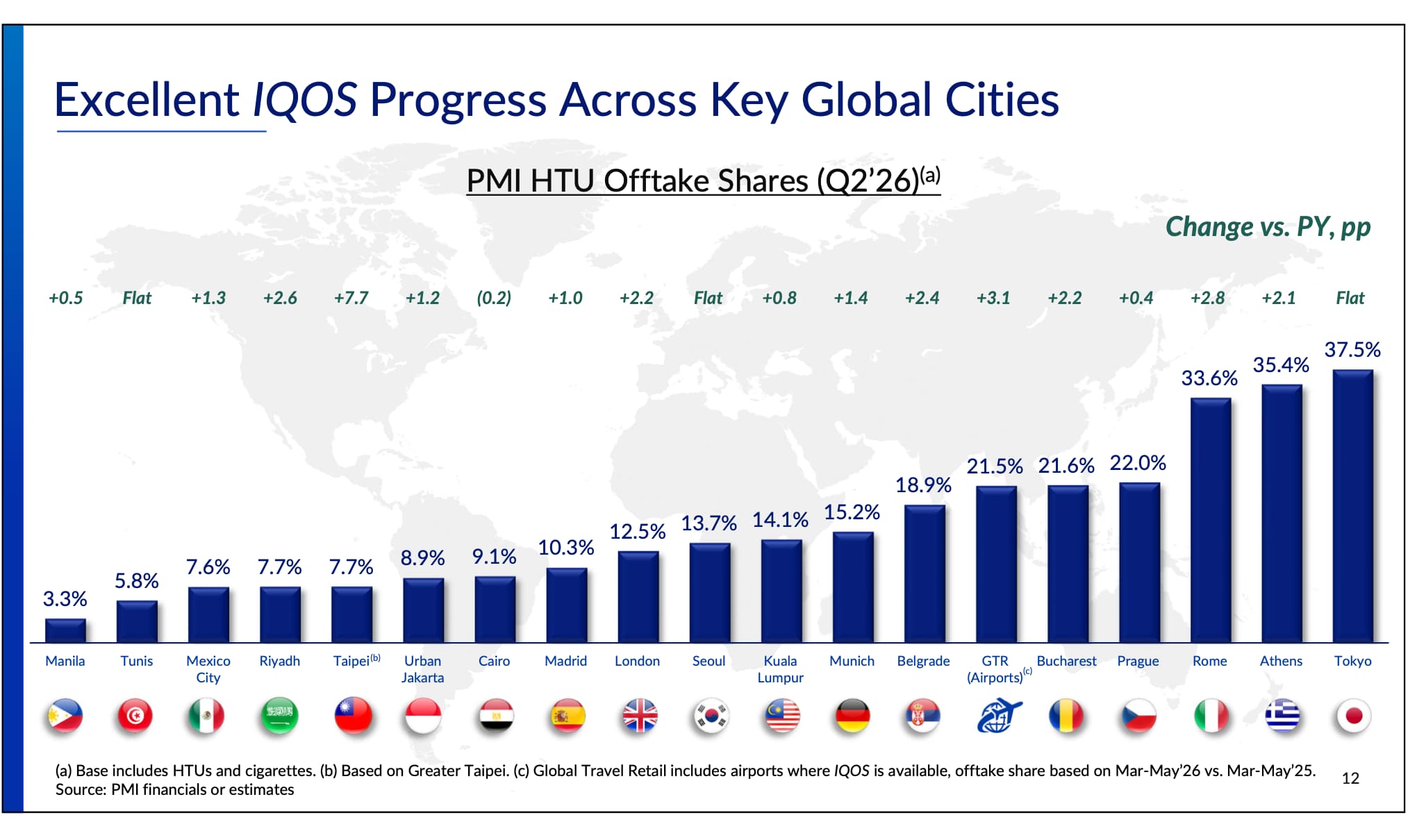
In Japan, one of IQOS’ most mature markets, adjusted sales declined 3.4%, largely due to temporary inventory reductions following an April price increase linked to higher tobacco taxes. Excluding these inventory effects, underlying demand remained positive. IQOS continues to dominate Japan’s heated tobacco segment with a 68% category share, supported by the complementary positioning of the lower-priced SENTIA consumables.
Across Europe, IQOS delivered healthy growth. Adjusted sales increased 5.1%, while market share reached 11.8%. Strong performances in Germany, Romania, Greece, Spain, and Italy helped offset weaker conditions in Ukraine and regulatory challenges in Poland, where flavored heated tobacco restrictions affected demand. Excluding recently regulated markets, European IQOS sales grew approximately 8%.
Outside Europe and Japan, IQOS expanded even faster, with adjusted sales rising 14.4%. PMI highlighted improving market shares in major cities including Mexico City, Jakarta, Riyadh, Kuala Lumpur, and Taipei, underscoring growing consumer adoption across emerging markets.
VEEV Emerges as PMI’s Fastest-Growing Category
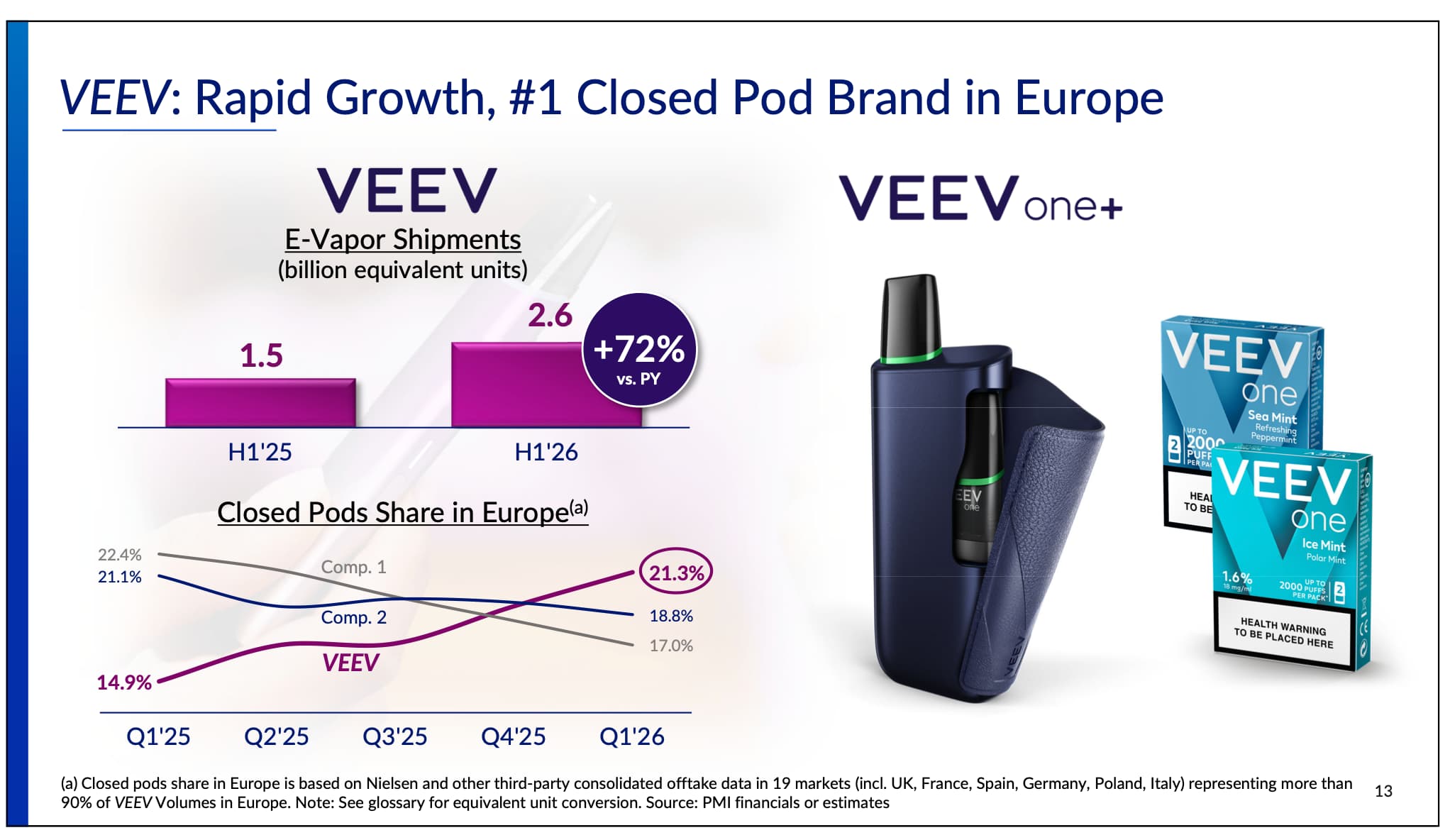
While IQOS remains PMI’s largest smoke-free platform, VEEV has become its fastest-growing product category.
Second-quarter e-cigarette shipments surged 55.1% year over year to 1.3 billion equivalent units. PMI said VEEV has established a leading position in Europe’s closed-system vaping market, with particularly strong growth in Germany, Romania, and Greece.
Although PMI does not disclose VEEV’s standalone revenue, management noted that the brand continues to improve profitability while expanding its presence.
The rapid development of VEEV strengthens PMI’s broader multi-category strategy, allowing the company to compete simultaneously in heated tobacco, vaping, and oral nicotine rather than relying on a single reduced-risk platform.
International Nicotine Pouches Continue to Expand
PMI’s modern oral nicotine business also continued to grow internationally.
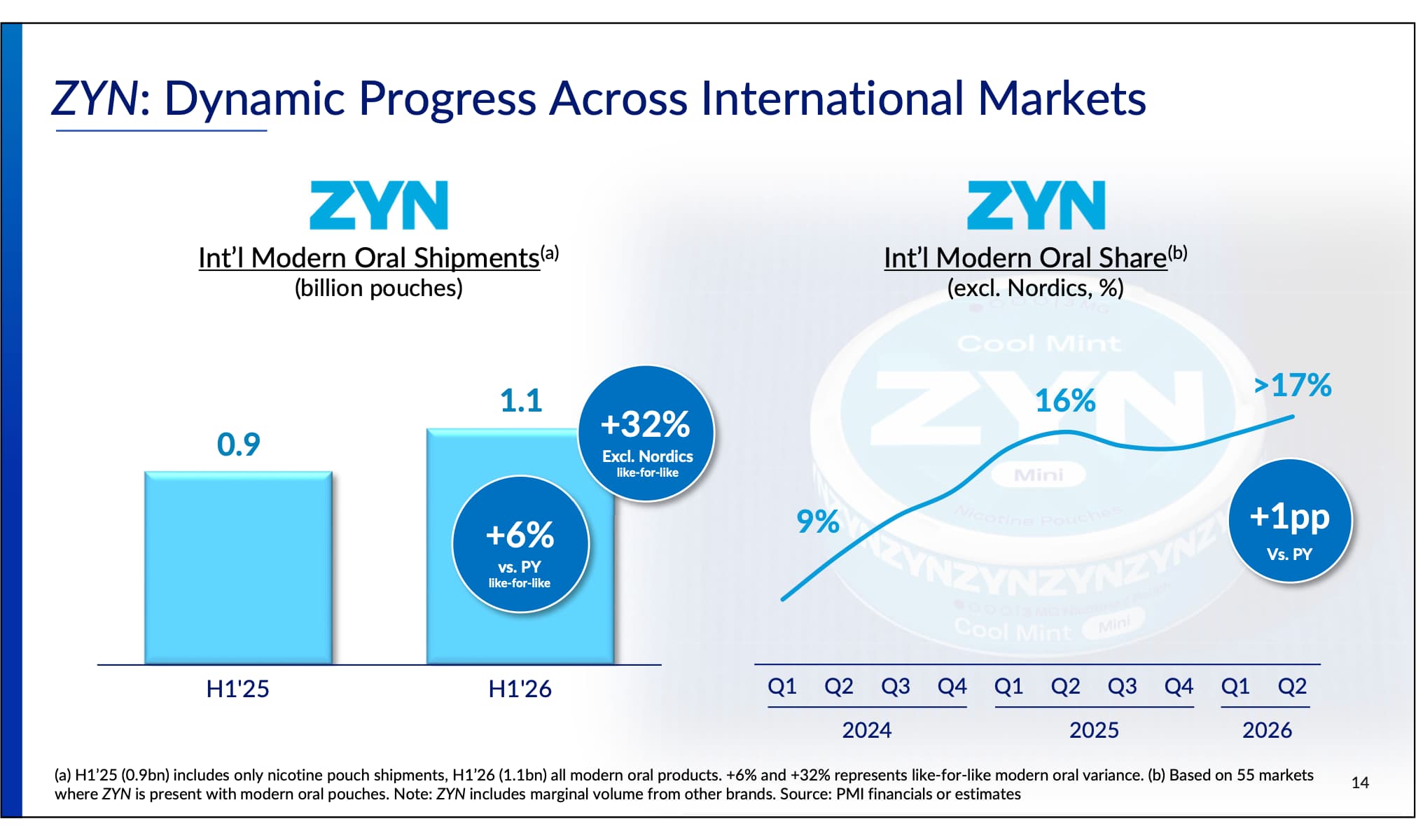
Sales of modern nicotine pouches outside the Nordic region increased 26.3%, while global international pouch volumes rose 14.7% to 600 million cans. ZYN has now expanded into 60 international markets, with particularly strong growth reported in Pakistan, Poland, and the United Kingdom.
However, declining sales of traditional snus products in Northern Europe offset some of these gains, resulting in an overall decline in international oral tobacco volumes. This reflects an ongoing shift in consumer preferences from conventional oral tobacco toward modern nicotine pouch products.
ZYN Faces Slower Growth in the U.S.
The most notable weakness in PMI’s quarter came from the United States.
Although ZYN shipments increased 1.8% to 2.9 billion cans, retail sales were essentially flat compared with the same period last year, indicating that demand growth has moderated significantly. PMI attributed part of the slowdown to an increasingly competitive U.S. nicotine pouch market.
To strengthen its competitive position, the company introduced ZYN ULTRA in June, featuring higher nicotine strengths and a moist pouch format. Additional nicotine strengths are scheduled to launch during the third quarter, broadening the brand’s product portfolio.
PMI also plans to accelerate investment in the U.S. during the second half of the year, supporting both ZYN’s expansion and the anticipated launch of IQOS ILUMA. Meanwhile, ZYN received an important regulatory milestone on June 30, when the U.S. Food and Drug Administration granted Modified Risk Tobacco Product (MRTP) authorization to 20 ZYN products, making it the first nicotine pouch brand to receive this designation.
Despite these developments, PMI’s U.S. business remained under pressure. Quarterly revenue declined 0.7%, while operating income fell due to increased manufacturing costs and continued investment in production capacity, marketing, research, and future smoke-free product launches.
Combustible Cigarettes Still Provide Significant Earnings
Although PMI continues to prioritize smoke-free products, traditional cigarettes remain a major contributor to the company’s financial performance.
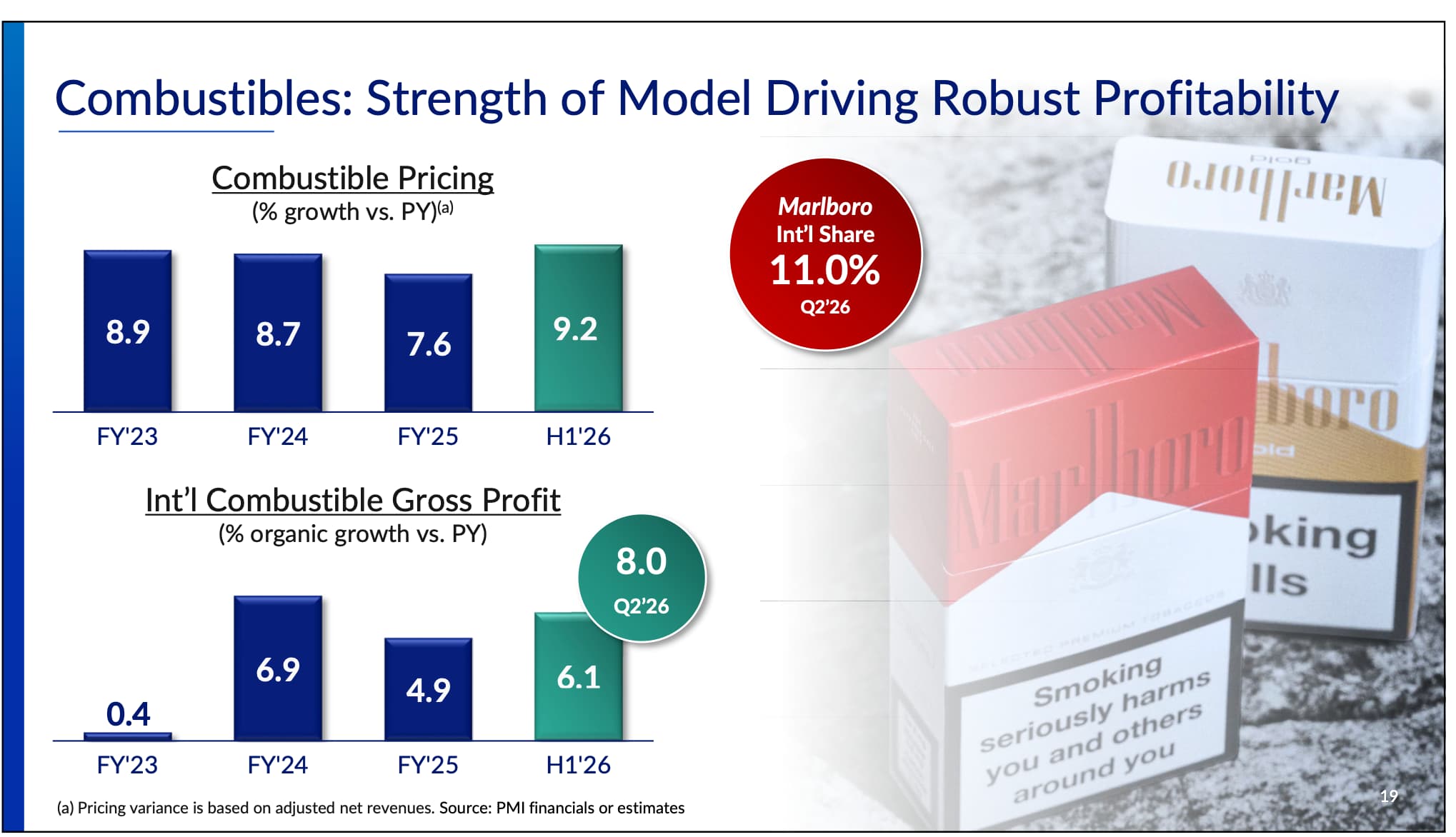
International cigarette shipments increased 1.1%, supported by stronger demand in Turkey, Indonesia, and Egypt. Revenue from combustible products rose 9.8% to US$6.46 billion, largely driven by pricing actions rather than volume expansion. Marlboro’s global market share also reached a record 11%, underscoring the continued resilience of the company’s flagship combustible brand.
The results demonstrate that cigarettes continue to generate substantial cash flow, providing financial support for PMI’s ongoing investment in smoke-free technologies.
Outlook Remains Positive
Reflecting confidence in its business outlook, PMI raised its full-year shipment forecast from “broadly stable” to stable to modest growth.
The company continues to expect high single-digit shipment growth for smoke-free products while forecasting cigarette shipments to decline by 2–3%, a slight improvement over previous guidance. Organic revenue growth is projected at 5–7%, with organic operating profit expected to increase 7–9% during 2026. Planned capital expenditure remains between US$1.4 billion and US$1.6 billion, with most investment directed toward smoke-free products.
Conclusion
Philip Morris International’s second-quarter performance reinforces the company’s position as a global leader in the transition toward smoke-free alternatives. IQOS continues to drive growth in heated tobacco, VEEV is rapidly expanding in the vaping segment, and modern nicotine pouches are gaining international traction.
At the same time, the quarter illustrates the challenges of managing a diversified portfolio across different regulatory environments and competitive markets. Slowing U.S. growth for ZYN, continued reliance on combustible tobacco for profitability, and varying regional adoption rates suggest that PMI’s transformation will not follow a uniform global path.
Nevertheless, with smoke-free products accounting for more than two-fifths of total revenue and significant investment continuing across next-generation nicotine platforms, PMI appears well positioned to pursue its long-term objective of becoming a predominantly smoke-free business.