









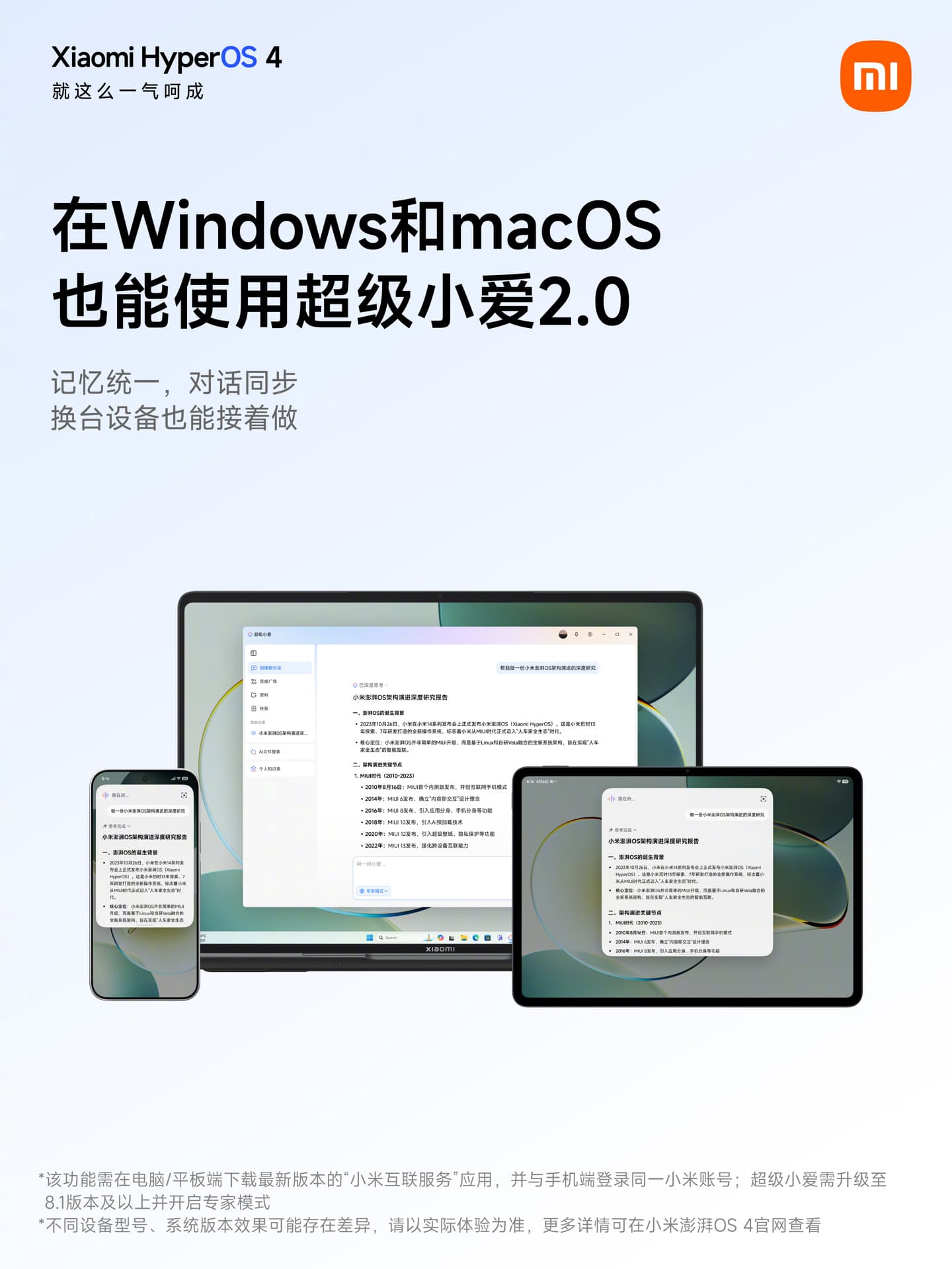
Xiaomi is expanding HyperOS 4 with new AI features designed to make Super XiaoAI more useful across multiple devices. One of the most notable additions is cross-device conversation syncing, which allows the AI assistant to maintain the same chat context when users move between a Xiaomi smartphone and a computer.
With this update, Super XiaoAI can carry a conversation from one device to another, so users do not need to repeat their questions or restart a task after switching screens. The feature is part of Xiaomi’s broader effort to connect its phones and PCs through a more seamless AI experience.
The cross-device functionality goes beyond simply syncing chat history. If a computer is not nearby, users can reportedly ask their smartphone to find a file with a voice command. Tasks started on one device can also be continued from another device, making the assistant more useful across Xiaomi’s broader hardware ecosystem.
Super XiaoAI Becomes More Connected Across Devices
The biggest change in this HyperOS 4 update is the way Super XiaoAI handles tasks across multiple devices.
For example, a user could begin interacting with the assistant on a phone and later switch to a computer while continuing the same conversation. Instead of treating each device as a separate AI terminal, Xiaomi is moving toward a more connected experience in which tasks and conversations can follow the user.
The ability to search for files remotely through a phone could also be useful when a computer is unavailable. Rather than manually opening different applications or searching through folders, users can simply issue a command through Super XiaoAI.
Xiaomi also says that tasks initiated on a smartphone can be continued after switching devices, suggesting that cross-device task continuity is becoming a major part of the HyperOS ecosystem.
HyperOS 4 Super XiaoAI vs Traditional AI Assistants
| Feature | Super XiaoAI | Traditional phone AI |
|---|---|---|
| Phone-PC conversation sync | Yes | Usually limited |
| Continue tasks across devices | Yes | Limited |
| Remote file search | Supported | Depends on ecosystem |
| Xiaomi ecosystem integration | Strong | Varies |
| Expert Mode | Supported | Depends on assistant |

Super XiaoAI Has Been Expanding Since HyperOS 2
This is not the first time Xiaomi has positioned Super XiaoAI as a system-level AI assistant.
At the launch of HyperOS 2 in October 2024, Xiaomi introduced Super XiaoAI as an AI assistant designed for its broader ecosystem. At the time, the assistant could help users remember important information such as identification documents and schedules.
It also introduced intelligent screen extraction, allowing information displayed on the screen to be recognized and stored locally, with users able to delete the stored information when needed.
Xiaomi promoted the assistant as a way to simplify complicated workflows and provide access to AI functions across multiple devices.
Expert Mode Brings More Autonomous Task Handling
The latest cross-device announcement follows another Super XiaoAI update revealed by Xiaomi yesterday.
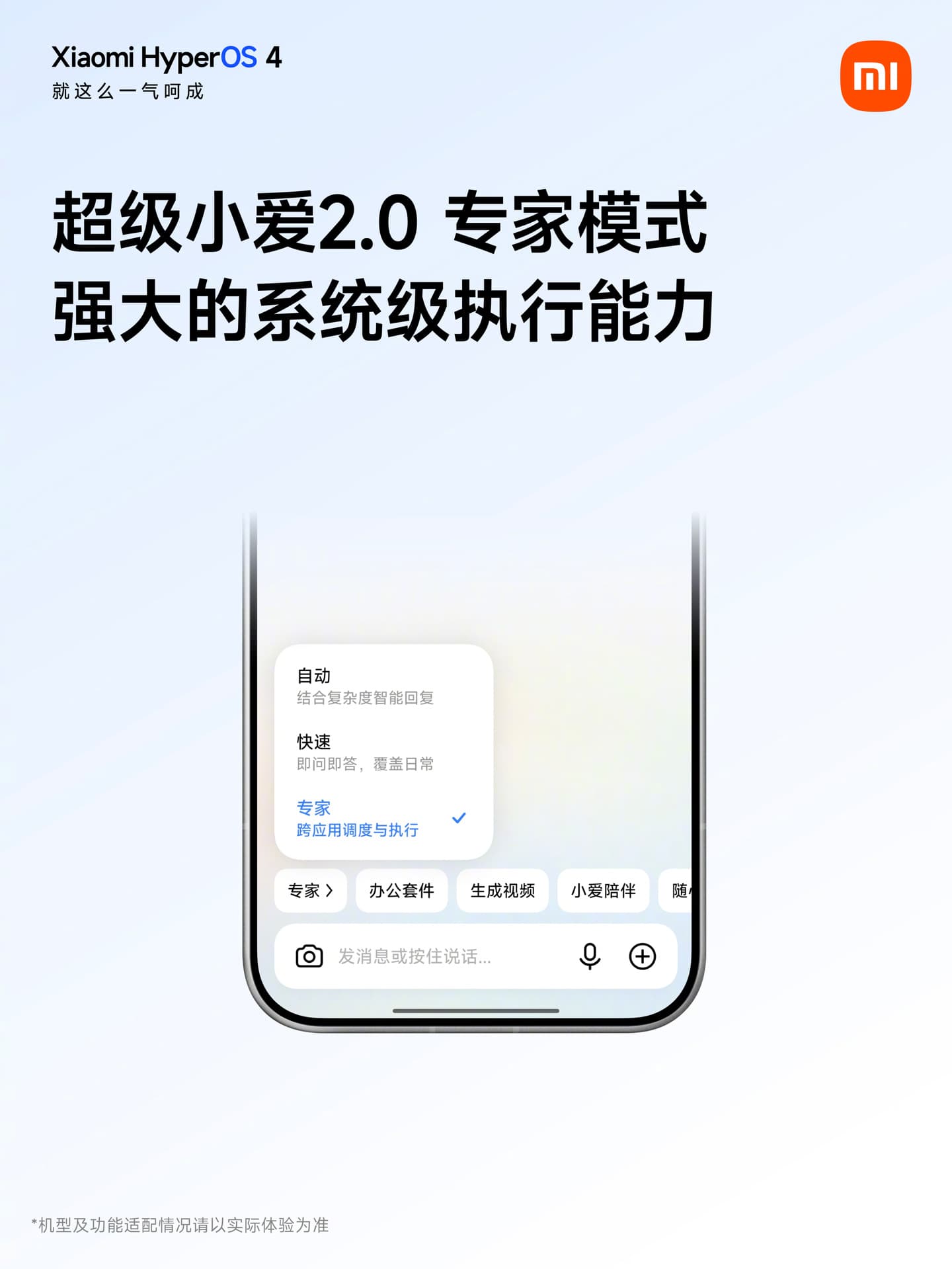
The company announced that Super XiaoAI Expert Mode is now available. The mode is designed to handle more complicated requests by planning tasks automatically and completing operations across different applications in a single workflow.
Instead of requiring users to manually open one application after another, the assistant can reportedly organize the steps needed to complete a complex task and carry them out together.
Xiaomi is also expanding Super XiaoAI’s role across its broader human-car-home ecosystem. With a single voice command, users can coordinate supported functions across connected devices and services.
Another feature allows the assistant to remember recurring tasks and provide reminders when they are due, potentially making it more useful for routine activities.
HyperOS 4 Is Moving Toward a More Unified AI Experience
With HyperOS 4, Xiaomi appears to be placing greater emphasis on making AI a common layer connecting its phones, computers and other smart devices.
Conversation synchronization, cross-device task continuation, remote file searches and Expert Mode all point toward the same goal: reducing the amount of manual switching users need to do between devices and applications.
The real value of these HyperOS 4 features will depend on how reliably Super XiaoAI Xiaomi AI features handles cross-device tasks in everyday use and how widely the functions are supported across Xiaomi devices and connected services. If Xiaomi can deliver smooth conversation continuity, file access, and task handoff between phones and PCs, Super XiaoAI could become a more practical part of the Xiaomi ecosystem. For now, the latest HyperOS 4 updates suggest that Xiaomi is making cross-device AI a key focus of its software strategy.