








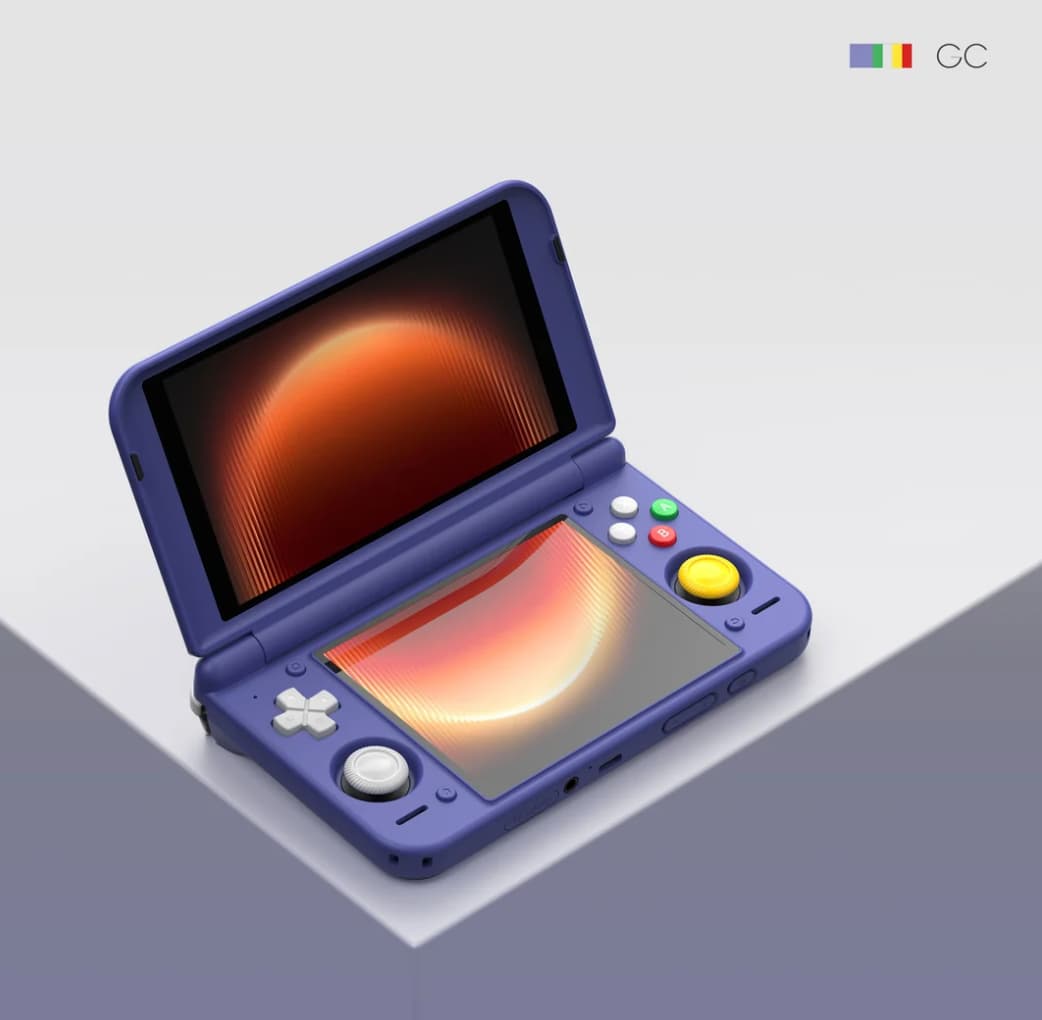
Retroid has officially launched its new Pocket Duo Android gaming handheld, bringing a dual-screen design, high-refresh-rate OLED displays, and active cooling to its portable gaming lineup. The device is priced at $269, positioning it as an interesting option for gamers who want a handheld that combines modern Android gaming with a distinctive two-screen experience.
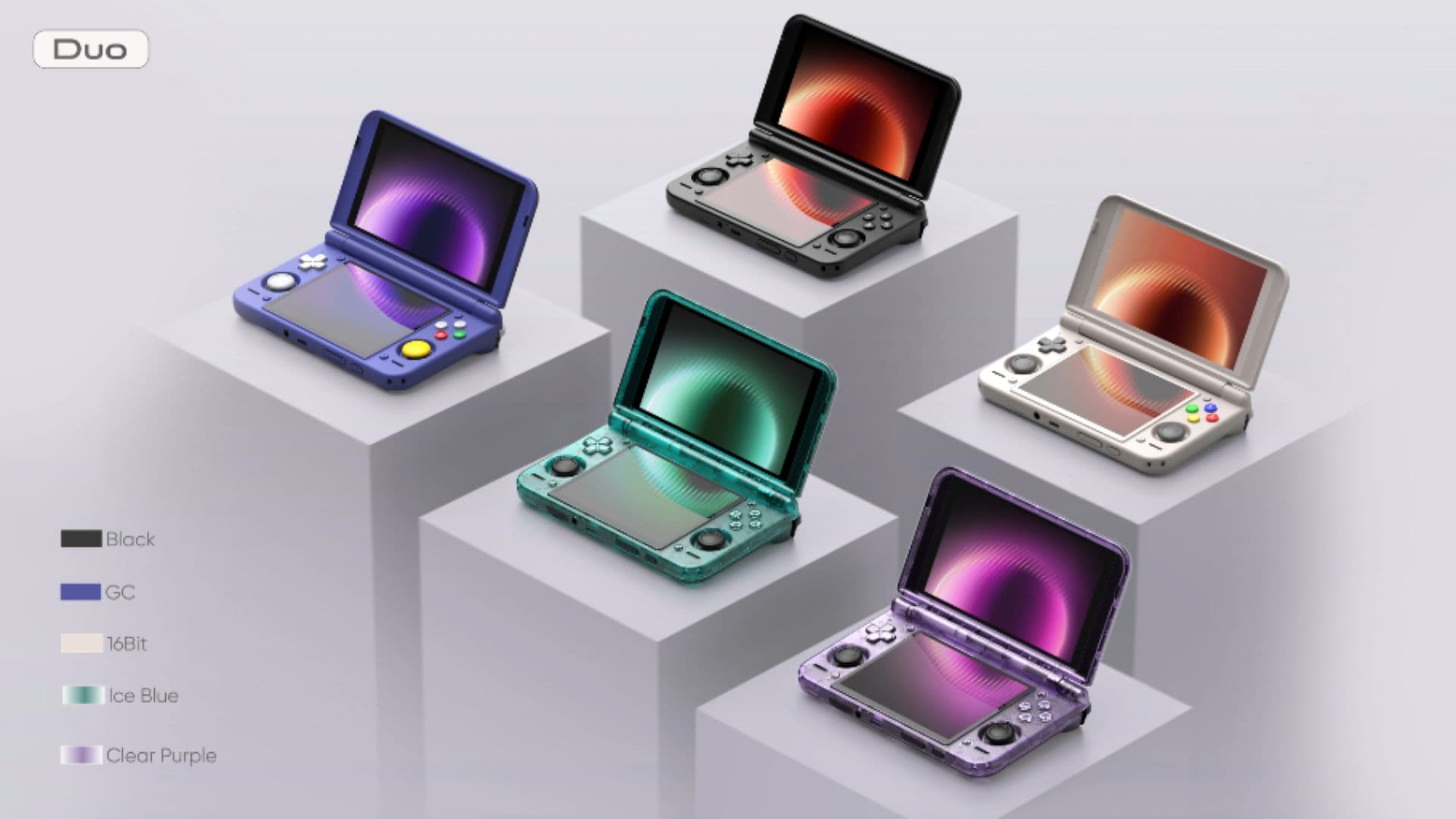
The company has also begun shipping pre-orders in stages, with different color versions following separate delivery schedules. The transparent purple edition was the first to ship, while the remaining finishes have gradually entered the shipping process.
Beyond its unusual display arrangement, the Pocket Duo stands out with a Qualcomm Dragonwing Q-7790 processor, Android 16, and a 6,000mAh battery. Here’s a closer look at its design, screen configuration, hardware, and availability.
Retroid Pocket Duo Price and Shipping Schedule
Retroid has set the Pocket Duo’s retail price at $269. According to the company’s announcement on November 12, shipments for pre-ordered devices have been arranged according to color.
The shipping schedule is as follows:
| Color option | Shipping start date |
|---|---|
| Transparent Purple | November 2 |
| Ice Blue | November 5 |
| 16-Bit | November 9 |
| GC | November 10 |
| Black | November 12 |
Transparent Purple customers received the earliest shipments, while Black orders began shipping on November 12. These dates refer to the start of shipping rather than guaranteed delivery dates, so actual arrival times may vary depending on the destination and logistics provider.
At $269, the Pocket Duo enters a competitive Android handheld market. Its main selling point is not simply processing power, but the combination of two OLED displays and a flexible hinge design.
Two OLED Screens Bring a Different Handheld Gaming Experience
The most distinctive feature of the Retroid Pocket Duo is its dual-screen layout. Instead of relying on one large display, the handheld uses two OLED panels with different aspect ratios.
The upper screen measures 5.5 inches and features a 16:9 aspect ratio with a 120Hz refresh rate. This format is suitable for widescreen Android games, video playback, and applications designed around conventional landscape displays.
Below it sits a 4.5-inch OLED screen with a 4:3 aspect ratio, also supporting a 120Hz refresh rate. Its squarer format offers another display area for compatible games and applications.
Both panels support high refresh rates, which can make animations and supported games appear smoother than on conventional 60Hz handheld displays. Actual frame rates will still depend on the game, software optimization, and hardware performance.
Another important detail is the upper screen’s 180-degree free-stop hinge. This allows users to adjust the screen angle instead of being restricted to a single fixed position. It also makes the device more flexible when switching between different viewing and playing arrangements.
Ergonomic Body Designed for Longer Gaming Sessions
A dual-screen layout can create challenges for handheld ergonomics, particularly when the device needs to accommodate two displays without becoming uncomfortable to hold.
Retroid has incorporated an ergonomic body with protruding shoulder triggers to provide a more secure grip. These physical design elements are important because handheld gaming often involves extended sessions, where button placement and grip comfort can make a noticeable difference.
The upper display’s adjustable hinge also gives users more freedom to find a comfortable viewing angle.
However, the real-world comfort of the Pocket Duo will depend on its overall weight, button layout, hinge resistance, and how the device feels during longer gaming sessions. These aspects are worth considering alongside the display specifications when evaluating the handheld.
Qualcomm Dragonwing Q-7790 Powers the Pocket Duo
Under the hood, the Retroid Pocket Duo is built around the Qualcomm Dragonwing Q-7790 processor.
This chipset provides the computing foundation for the device’s Android gaming experience. It is paired with Android 16, giving the handheld access to the broader Android software ecosystem.
The combination should make the Pocket Duo suitable for compatible Android games, emulators, and entertainment applications. However, actual gaming performance will depend on the software being used, system optimization, graphics settings, and thermal conditions.
Retroid has also integrated an active cooling system. This is an important addition for a handheld designed to run demanding games, as sustained workloads can generate heat and potentially affect performance.
Active cooling is intended to help manage internal temperatures during extended use. Its effectiveness, however, will need to be assessed through real-world testing rather than inferred from the presence of a cooling system alone.
For another example of a portable Android gaming device with dedicated controls and active cooling, check out our Android retro gaming handheld review.
6,000mAh Battery for Portable Gaming
Powering the Pocket Duo is a 6,000mAh battery.
A battery of this capacity gives the device a substantial power reserve for portable gaming, although battery life will vary considerably depending on how the handheld is used.
For example, running games at higher frame rates, increasing screen brightness, and using demanding applications can increase power consumption. The dual OLED displays and active cooling system also contribute to the overall energy requirements.
The actual time between charges will therefore depend on the game, screen settings, performance profile, and cooling behavior.
For buyers who plan to use the Pocket Duo as a daily gaming device, independent battery testing will be more useful than relying on capacity alone.
Why the Retroid Pocket Duo’s Dual-Screen Design Matters
The Pocket Duo’s biggest distinction is its ability to provide two separate display areas in one handheld.
This arrangement could be particularly useful for games originally designed around dual-screen interfaces, as well as applications that benefit from having gameplay and additional information displayed separately.
The 16:9 upper screen and 4:3 lower screen also give the device more flexibility than a conventional single-display handheld.
However, dual-screen hardware does not automatically guarantee that every Android game will make effective use of both panels. Software compatibility and individual game layouts will determine how useful the second screen actually is.
Buyers should therefore consider the Pocket Duo not only as a gaming device, but also as a platform whose strongest features may depend on software support.
If you prefer a conventional single-screen design, our ANBERNIC RG 55G1 Android handheld review covers another option for portable Android gaming and retro emulation.
Retroid Pocket Duo: Is the $269 Price Competitive?
At $269, the Pocket Duo offers a combination of features that makes it stand apart from traditional single-screen Android handhelds.
Its main hardware highlights include:
- Two OLED displays with 120Hz refresh rates.
- A 180-degree adjustable upper-screen hinge.
- Qualcomm Dragonwing Q-7790 processor.
- Android 16 operating system.
- 6,000mAh battery.
- Integrated active cooling.
- Ergonomic body with protruding shoulder triggers.
The value proposition depends heavily on whether buyers want a dual-screen handheld. Someone looking for a conventional Android gaming device may place more importance on raw performance, controls, battery endurance, or screen size.
By contrast, gamers interested in dual-screen applications and a more flexible display arrangement may find the Pocket Duo’s design more appealing.
Final Thoughts
Retroid Pocket Duo brings a distinctive approach to Android handheld gaming. Its combination of a 5.5-inch 120Hz OLED upper display, a 4.5-inch 120Hz OLED lower display, and a 180-degree adjustable hinge gives it a different identity from conventional portable gaming devices.
The Qualcomm Dragonwing Q-7790 processor, Android 16, active cooling, and 6,000mAh battery complete a hardware package aimed at users who want more than a standard single-screen handheld.
With a retail price of $269 and shipments now beginning across its different color options, the Pocket Duo is an interesting new release for the Android gaming handheld market. Its long-term appeal will ultimately depend on gaming compatibility, real-world performance, battery endurance, and how effectively developers make use of its dual-screen design.