










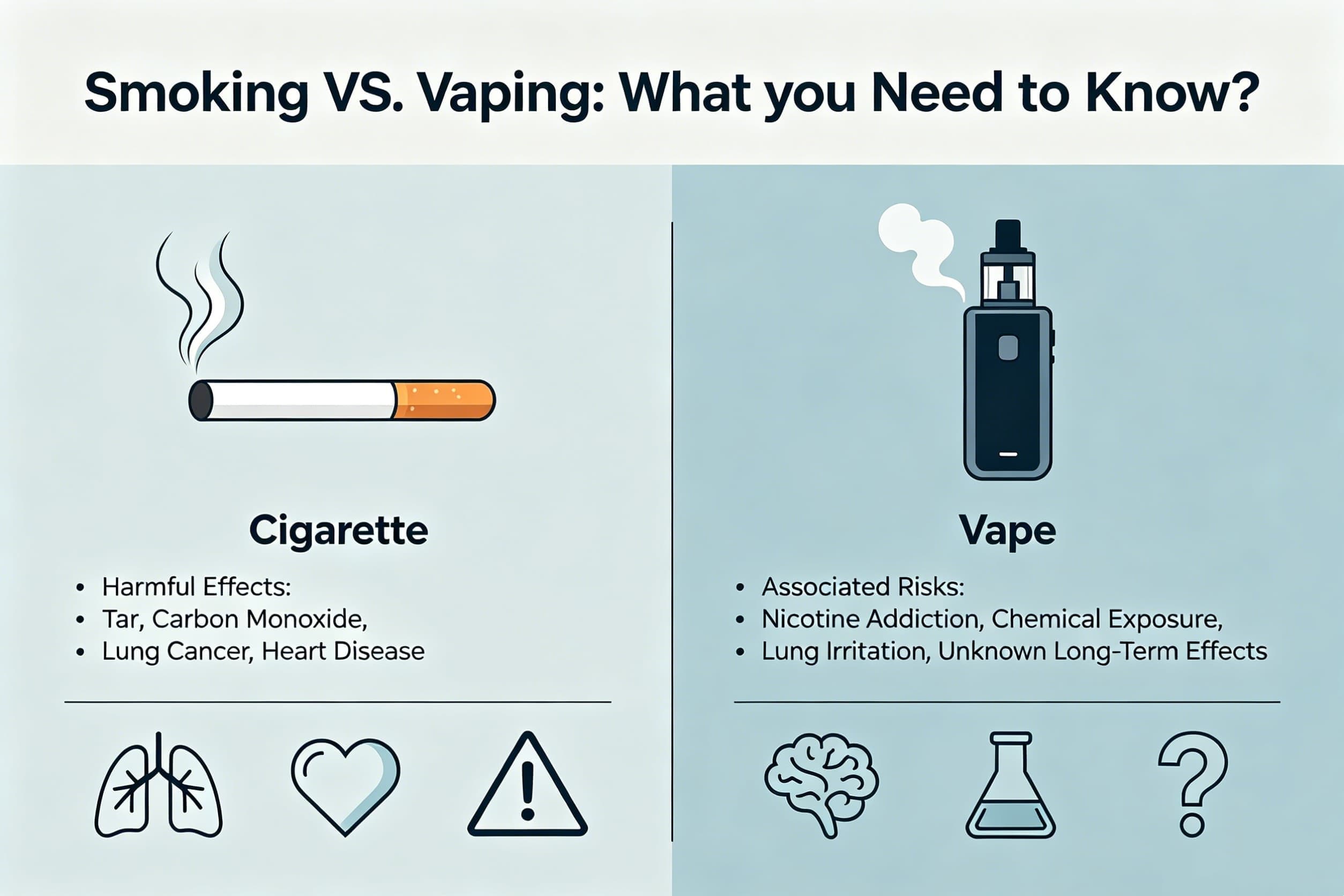
For decades, smoking cigarettes was one of the most common yet deadliest habits worldwide. Then came vaping – marketed as a safer alternative, a tool to quit smoking, and a modern “trend.” But how do they really compare? Is vaping truly less harmful than smoking? And what should you know before picking up either?
This article breaks down the key differences, health implications, and common misconceptions.
How They Work: The Basic Difference
-
Smoking involves burning tobacco. This combustion process releases over 7,000 chemicals, at least 70 of which are known carcinogens (cancer-causing agents). The user inhales smoke filled with tar, carbon monoxide, and nicotine.
-
Vaping uses an electronic device (e-cigarette, vape pen, or mod) to heat a liquid (e-liquid or vape juice) into an aerosol (often called vapor). The user inhales this aerosol. E-liquids typically contain nicotine, flavorings, propylene glycol, and vegetable glycerin – but no tobacco or combustion.
Key takeaway: Smoking = combustion. Vaping = no combustion.
Health Impact: Short-Term vs. Long-Term
Smoking (Well-Documented Harms)
-
Cancer: Leading cause of lung, throat, mouth, bladder, and several other cancers.
-
Heart & Lungs: Causes chronic obstructive pulmonary disease (COPD), emphysema, heart attacks, strokes, and high blood pressure.
-
Addiction: Extremely high addiction potential due to rapid nicotine delivery.
-
Other effects: Premature aging, tooth loss, fertility problems, immune system suppression.
-
Secondhand smoke: Directly harms non-smokers (cancer and respiratory illness).
Vaping (Evolving Science)
Vaping is too recent to have long-term (30-50 year) data. Current consensus (based on studies by Public Health England, the American Heart Association, etc.) suggests:
-
Likely less harmful than smoking because no combustion means no tar or most carcinogens.
-
Still not safe – vaping is linked to:
-
Lung irritation (some users report cough, wheezing, or “popcorn lung” from certain flavoring chemicals like diacetyl).
-
Increased heart rate and blood pressure (nicotine effect).
-
Potential respiratory issues; a 2019 outbreak of EVALI (e-cigarette or vaping use-associated lung injury) was traced mostly to black-market THC cartridges containing vitamin E acetate.
-
Nicotine addiction, especially harmful to adolescent brain development.
-
-
Secondhand vapor: Exposes others to nicotine, fine particles, and heavy metals (from heating coils) – though at far lower levels than cigarette smoke.
Nicotine & Addiction: Not the Only Villain
Both products deliver nicotine, the primary addictive agent. But nicotine itself, while not harmless (it raises heart rate and blood pressure), is not the main cause of smoking-related cancers – tar and combustion byproducts are.
This is why many health organizations support nicotine replacement therapy (gums, patches). Vaping delivers nicotine without most of the toxins – but the devices and e-liquids vary wildly, and some products deliver very high nicotine levels (nicotine salts).
Regulation & Youth Epidemic
One major difference is regulation. Cigarettes are heavily regulated, taxed, and banned from advertising. Vaping occupies a gray area in many countries.
The biggest public health crisis from vaping is the surge in youth use. Flavors like mango, cotton candy, and mint attract teenagers who would never have smoked. Nicotine harms developing brains (affecting memory, attention, and impulse control). As a result, many governments are now banning flavored e-liquids and restricting sales.
What About Quitting Smoking?
For adults who smoke, switching completely to vaping has helped many reduce their health risks. Public Health England famously estimated that vaping is 95% less harmful than smoking (though this figure is debated). However, dual use (smoking and vaping together) may be worse than either alone because it exposes users to both combustion toxins and potential vaping risks.
If you are a smoker trying to quit, evidence suggests FDA-approved medications (nicotine patches, gum, Chantix) or counseling are safer and more proven. But if those fail, some doctors consider vaping a “harm reduction” tool – not a first-line recommendation.
The Bottom Line: What You Need to Know
-
Smoking is proven deadly – causes cancer, heart disease, and lung disease. No amount is safe.
-
Vaping is likely less harmful than smoking for current smokers, but it is not harmless.
-
Non-smokers, especially teens, should never vape – it risks nicotine addiction and unknown long-term effects.
-
Secondhand smoke kills; secondhand vapor is less dangerous but not risk-free.
-
The safest option of all? Avoid both entirely. If you don’t smoke or vape, don’t start. If you smoke, the best choice is to quit completely using proven methods.
The debate continues as more research emerges. But one thing is clear: inhaling anything other than clean air carries risks. Knowing the difference between smoking and vaping helps you make an informed decision – for your health and those around you.