










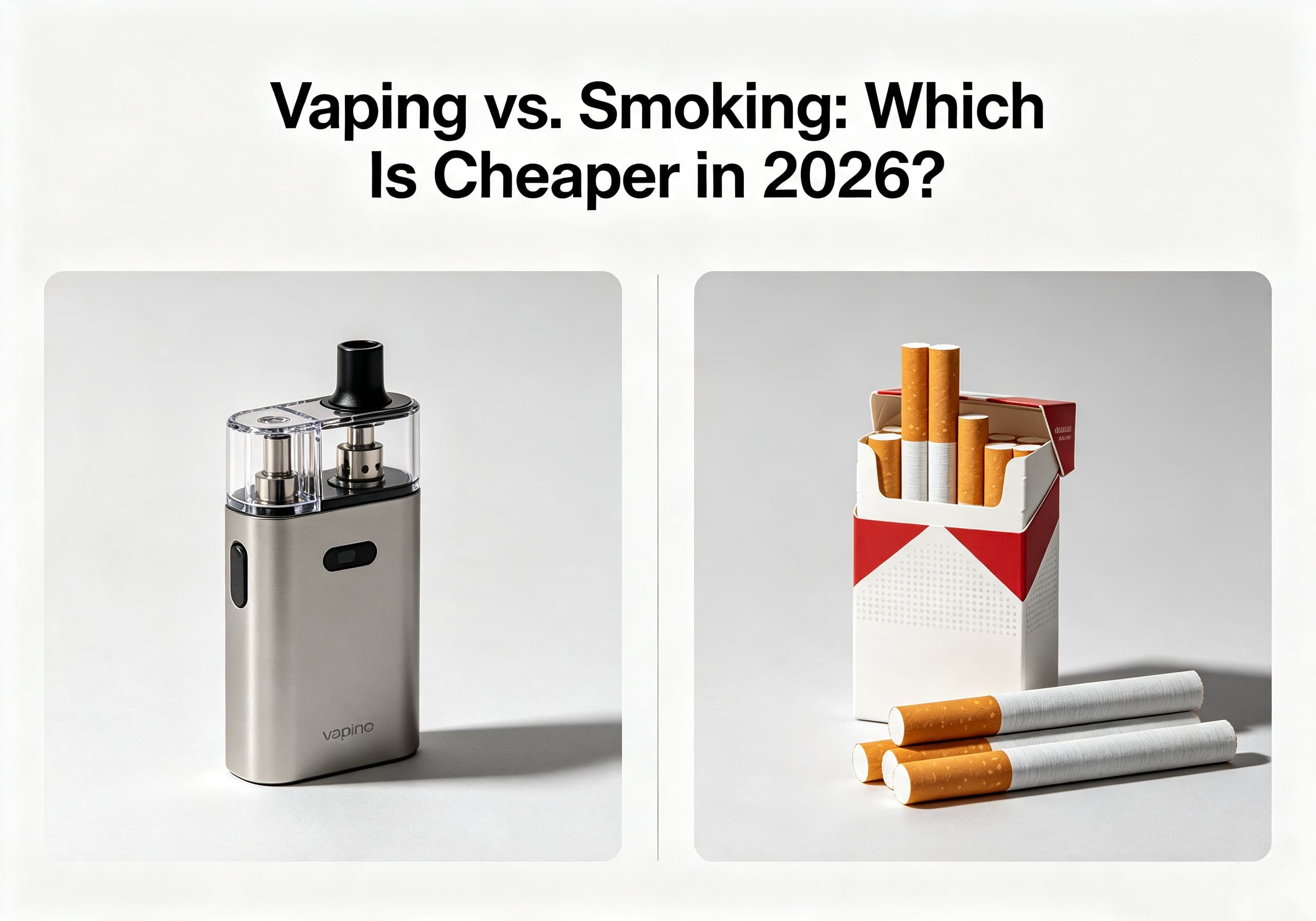
If you are trying to reduce your nicotine spending in 2026, one question naturally comes up: is vaping cheaper than smoking cigarettes?
For most adult smokers who switch completely to vaping, the answer is still yes. However, the size of the saving depends on how much you smoke, what type of vape you use, how frequently you replace pods or coils, and where you buy your products.
In the UK, the cost gap is also being influenced by changes to tobacco taxation and the introduction of the Vaping Products Duty (VPD) from October 2026. Even with the new vape tax, vaping is expected to remain less expensive than smoking for many users.
Vaping vs. Smoking: The Quick Answer
For a regular smoker, vaping can cost substantially less than buying cigarettes every day.
The NHS says that, once the initial vape kit has been purchased, vaping has been estimated to cost about one-third as much as smoking.
The exact saving will vary, though. A refillable pod system with e-liquid can have a very different running cost from frequently buying premium disposable or prefilled products.
Here’s a simplified comparison:
| Cost factor | Smoking | Vaping |
|---|---|---|
| Initial equipment | None | Vape device required |
| Main consumable | Cigarettes | E-liquid/pods |
| Replacement parts | None | Coils/pods may be required |
| Daily cost | Generally higher | Generally lower |
| Long-term cost | High | Usually lower |
| UK tax pressure in 2026 | Very high | Increasing |
| Potential savings | — | Significant for many smokers |
Why Smoking Is So Expensive in 2026
The biggest reason cigarettes are expensive is taxation.
UK cigarette prices include tobacco duty and VAT. The government increased tobacco duty in November 2025, and another increase is scheduled for 1 October 2026. From that date, the cigarette duty rate will rise to £394.09 per 1,000 cigarettes plus 16.5% of the retail price, subject to the minimum excise duty of £518.75 per 1,000 cigarettes.
For someone smoking every day, these costs add up quickly.
Example: A Pack-a-Day Smoker
Imagine an adult smoker buying one 20-cigarette pack every day.
At a hypothetical retail price of £15 per pack, the spending would be:
- £15 per day
- £105 per week
- £450 per 30 days
- £5,475 per year
This is only an example because cigarette prices vary by brand and retailer. If the price of a pack rises, the annual cost rises accordingly.
The important point is that smoking creates a recurring expense that is difficult to reduce without cutting consumption.
Why Vaping Can Be Cheaper
Vaping separates the cost of the device from the cost of the consumable.
A reusable pod system or vape kit may require an upfront purchase, but the device can then be used repeatedly. The ongoing expenses generally involve:
- E-liquid
- Replacement pods
- Replacement coils
- Occasionally a replacement battery or device
This can make the running cost considerably lower than buying a new packet of cigarettes every day.
The NHS specifically states that vaping costs much less than smoking and estimates that, after purchasing a kit, vaping can cost around one-third as much as smoking.
The Cheapest Vaping Setup in 2026
If your primary goal is reducing ongoing costs, a reusable refillable vape is generally worth considering rather than treating vaping as a series of disposable purchases.
A typical cost-conscious setup might include:
- A reusable pod kit
- A bottle of e-liquid
- Replacement pods or coils
- A charger if required
Once the device has been purchased, you only need to replace the consumables.
This is particularly important because the UK has already prohibited the sale or supply of disposable vapes. The NHS notes that disposable vapes can no longer legally be sold or supplied in the UK, while reusable and refillable products remain available.
What About the New Vaping Tax?
One of the biggest changes affecting the vaping-versus-smoking calculation in 2026 is the UK’s new Vaping Products Duty.
From 1 October 2026, the duty on vaping liquid will be £2.20 per 10ml. HMRC’s guidance confirms that the duty is calculated according to the volume of vaping product.
For example:
- 10ml of e-liquid → £2.20 duty
- 20ml → £4.40 duty
- 30ml → £6.60 duty
- 50ml → £11.00 duty
- 100ml → £22.00 duty
This tax is incorporated into the supply chain and can ultimately affect the retail price paid by consumers.
The government has also increased tobacco duty at the same time. It announced a £2.20 increase per 100 cigarettes alongside the introduction of the £2.20-per-10ml vaping duty, with the stated aim of preserving the price difference between vaping and tobacco.
So while vaping is becoming more expensive, cigarettes are also facing substantial tax increases.
Refillable Vapes vs. Disposable Vapes
When comparing vaping costs, it is important not to treat every vape product as equally economical.
Refillable Pod Systems
Refillable pod systems can be one of the more economical approaches because you purchase e-liquid separately and reuse the device.
Their costs include:
- Initial device
- E-liquid
- Pods or coils
- Occasional replacement device
For someone who vapes regularly, spreading the cost of the hardware over many months can reduce the effective daily cost.
Prefilled Pods
Prefilled pod systems are convenient because there is less maintenance and no need to manually fill a tank.
However, convenience can come with a higher cost per unit of nicotine or e-liquid compared with buying larger quantities of refillable e-liquid.
Disposable Vapes
Disposable vapes were once popular partly because of their simplicity, but they are no longer a legal retail option in the UK. The NHS confirms that disposable vapes cannot legally be sold or supplied.
For UK consumers in 2026, therefore, cost comparisons should focus mainly on reusable and refillable vaping products.
A Simple Annual Cost Comparison
Let’s use an illustrative example rather than claiming a universal retail price.
Suppose a smoker spends £15 per day on cigarettes:
£15 × 365 = £5,475 per year
Now suppose a hypothetical vaping setup costs £5 per day on average, including e-liquid, pods/coils and the annualised cost of the device:
£5 × 365 = £1,825 per year
That would represent a potential saving of:
£5,475 − £1,825 = £3,650 per year
The numbers are illustrative rather than a prediction of what every vaper will spend. Your actual cost could be considerably higher or lower depending on consumption and product choice.
The NHS’s estimate that vaping can cost around one-third as much as smoking provides useful context for why these savings can be substantial.
What Can Make Vaping More Expensive?
Vaping is not automatically cheap.
Your spending can increase if you:
- Buy premium devices frequently
- Use high quantities of e-liquid
- Replace pods or coils unnecessarily often
- Buy expensive prefilled products
- Keep multiple devices
- Upgrade hardware frequently
- Vape continuously throughout the day
Someone who regularly buys new devices and premium products may spend much more than someone using a basic refillable pod system.
In other words, your vaping style matters almost as much as the product itself.
What Can Make Smoking Even More Expensive?
Smoking costs can also rise beyond the price of cigarettes.
A smoker may spend additional money on:
- Lighters
- Cigarette cases
- Tobacco accessories
- Travel-related purchases
- Convenience-store premiums
- Tobacco price increases
More importantly, smoking is a daily expense. Even a relatively small increase in the price of a packet can translate into hundreds of pounds of additional spending over a year.
With further tobacco duty increases scheduled for October 2026, this pressure is unlikely to disappear.
Is Vaping Worth It Just to Save Money?
For an existing adult smoker, switching completely from cigarettes to vaping may reduce nicotine-related spending while also reducing exposure to many toxic substances found in cigarette smoke.
The NHS states that vaping is not risk-free, but that nicotine vaping is less harmful than smoking and exposes users to a smaller fraction of the risks associated with smoking.
However, the financial calculation should not be interpreted as a recommendation for non-smokers to start vaping.
If you do not smoke, starting vaping simply to save money does not make financial or health sense. The NHS advises that non-smokers should not vape.
For smokers considering switching, the greatest financial benefit comes from switching completely rather than maintaining both habits.
Dual Use Can Destroy the Savings
One of the biggest mistakes in a vaping-versus-smoking comparison is assuming that someone will completely replace cigarettes with vaping.
For example, if you continue smoking half a pack of cigarettes per day while also vaping, you are paying for two nicotine products.
That can result in:
Cigarette spending + vaping spending = higher total nicotine spending
A complete switch can therefore be much more economical than simply adding vaping to an existing smoking habit.
The NHS also notes that smokers only get the full benefits of switching when they stop smoking completely.
Vaping vs. Smoking: Which Is Cheaper in 2026?
For most adult smokers, vaping remains the cheaper option in 2026, particularly when using a reusable refillable device and buying e-liquid efficiently.
The cost advantage is being narrowed somewhat by the introduction of Vaping Products Duty from October 2026, but tobacco products are also facing higher taxation. The UK government’s policy continues to maintain a price differential between vaping and tobacco.
The Bottom Line
If you’re comparing the two purely on running costs:
Smoking: High and continually rising cost, largely driven by tobacco duty.
Vaping: Lower potential running cost, but affected by device, e-liquid and replacement-pod expenses.
Refillable vaping: Usually the most cost-conscious vaping approach.
Disposable vapes: No longer legally sold or supplied in the UK.
Dual use: Can eliminate much of the potential financial saving.
For a regular smoker, switching completely to a reusable vaping system can potentially save hundreds or even thousands of pounds per year, depending on previous cigarette consumption and vaping habits.
However, cost is only one part of the decision. Vaping is not harmless, and non-smokers should not start vaping. For smokers who want to quit, both financial considerations and health considerations should be taken into account.
Frequently Asked Questions
Is vaping cheaper than smoking in 2026?
Generally, yes. The NHS estimates that vaping can cost about one-third as much as smoking once the initial vape kit has been purchased.
Will vaping become more expensive in October 2026?
Yes. The UK is introducing Vaping Products Duty at £2.20 per 10ml of vaping liquid from 1 October 2026.
Are cigarettes getting more expensive in 2026?
Yes. UK tobacco duty is scheduled to increase again on 1 October 2026, including higher cigarette duty and a higher minimum excise duty.
Are disposable vapes legal in the UK in 2026?
No. The NHS states that disposable vapes cannot legally be sold or supplied in the UK. Reusable and refillable products remain available.
Is vaping completely safe?
No. Vaping is not risk-free. However, NHS guidance says nicotine vaping is less harmful than smoking cigarettes.
What is the cheapest way to vape?
For an adult smoker who chooses to switch, a reusable refillable pod system can generally provide a lower ongoing cost than repeatedly buying prefilled or single-use products. Actual savings depend on e-liquid consumption, hardware costs and purchasing habits.