










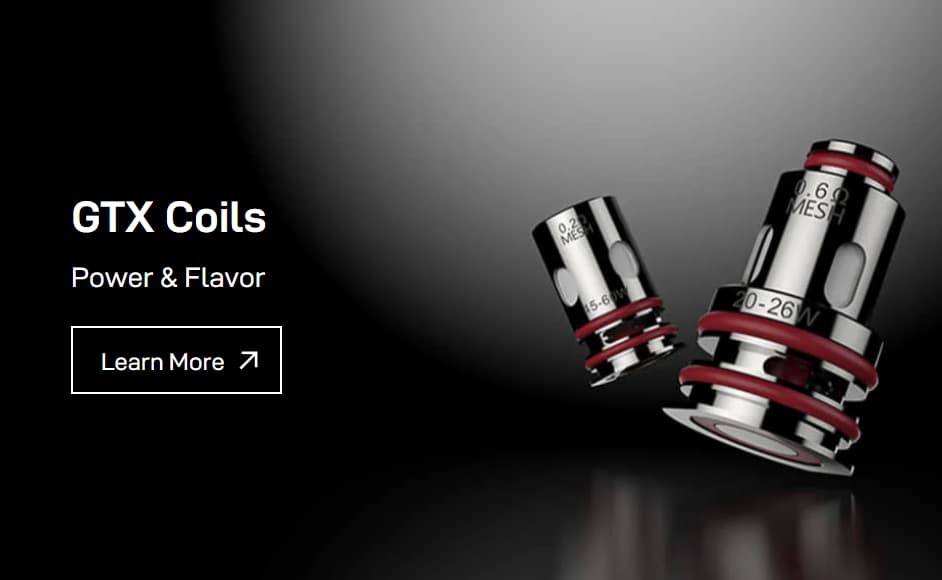
Choosing a replacement coil sounds simple until you see the number of Vaporesso GTX coils available. The resistance printed on the coil affects more than just the number shown on your device. It influences the recommended wattage, vapor production, airflow preference, e-liquid requirements, and the overall style of vaping the coil is designed to deliver.
The GTX platform is particularly flexible because it covers a wide resistance range, from 0.15Ω mesh coils for higher-power DTL vaping to 1.2Ω options designed for lower-power MTL use. VAPORESSO also offers different GTX versions, including standard Mesh and Dual Mesh designs.
This guide breaks down what those resistance numbers actually mean, how to choose the right wattage, which devices support GTX coils, and why GTX and GTi coils should not be treated as interchangeable.
What Are Vaporesso GTX Coils?
GTX coils are VAPORESSO’s replaceable coil platform used across a range of its pod mods and compact vaping devices.
Instead of creating one coil for every type of user, the GTX range gives users several resistance options. That makes it possible to move between tighter, lower-power MTL vaping and more open, higher-power DTL vaping without changing to an entirely different coil platform.
Current GTX options include 0.15Ω, 0.2Ω, 0.3Ω, 0.4Ω, 0.6Ω, 0.8Ω, and 1.2Ω variants, with some versions also available in different mesh or Dual Mesh configurations.
The important point is that lower resistance does not automatically mean better performance. It simply places the coil in a different part of the performance range.
GTX Coil Resistance Explained
The Ω symbol represents electrical resistance. With GTX coils, the resistance number provides a useful starting point for understanding how much power the coil is designed to handle.
As a general rule within the GTX family:
- Lower resistance: higher wattage, warmer vapor, more airflow, and greater vapor production, If you’re comparing different resistance levels, our guide to 0.15Ω vs 0.3Ω GTX coils explains the practical differences in more detail.
- Mid-range resistance: balanced vapor and flavor with moderate power requirements
- Higher resistance: lower wattage, cooler vapor, tighter airflow, and a more MTL-oriented experience
This is why comparing a 0.2Ω GTX coil with a 0.8Ω GTX coil is not simply a matter of choosing the stronger or weaker version. They are intended for different operating ranges.
Vaporesso GTX Coil Wattage Chart
The safest starting point is the wattage range printed for the specific coil. VAPORESSO’s official GTX specifications list the following ranges:
| GTX Coil | Recommended Wattage | Best Wattage Listed by VAPORESSO | General Style |
|---|---|---|---|
| 0.15Ω Mesh | 60–75W | 70W | DTL |
| 0.2Ω Mesh | 45–60W | 55W | DTL |
| 0.3Ω Mesh | 32–45W | 40W | DTL / RDL |
| 0.4Ω Mesh | 26–32W | 30W | RDL |
| 0.6Ω Mesh | 20–30W | Around 28W | RDL / MTL |
| 0.8Ω Mesh | 12–26W | Around 18W | MTL |
| 1.2Ω Mesh | 7–11W | 11W | MTL |
| 1.2Ω Regular | 8–12W | 11W | MTL |
There are slight differences between VAPORESSO’s current regional product listings for some of the recommended ranges, particularly the 0.6Ω and 0.8Ω versions. For that reason, the wattage printed on your specific coil should take priority over a generic chart.
Which GTX Coil Should You Choose?
Rather than choosing a coil based only on resistance, start with the type of draw you prefer.
GTX 0.15Ω and 0.2Ω: High-Power DTL
The 0.15Ω and 0.2Ω GTX Mesh coils sit at the high-power end of the platform.
The 0.15Ω version is rated at 60–75W, with 70W listed as its best setting. The 0.2Ω version operates at 45–60W, with 55W listed as the best setting.
These coils make more sense for users who prefer an open draw, warmer vapor, and substantial vapor production.
They also consume e-liquid more quickly than higher-resistance GTX options, so they are not the most economical choice if your priority is low liquid consumption.
GTX 0.3Ω and 0.4Ω: The Middle Ground
The 0.3Ω GTX Mesh is rated at 32–45W, while the 0.4Ω version is rated at 26–32W.
These coils occupy a useful middle section of the GTX lineup. They can appeal to users who want more vapor than a traditional MTL setup without moving all the way into the highest-power part of the range.
The 0.4Ω coil is particularly interesting for users looking for a restricted direct-to-lung style without the power requirements of the 0.15Ω or 0.2Ω options.
GTX 0.6Ω and 0.8Ω: Lower-Power Options
Moving to 0.6Ω and 0.8Ω reduces the power requirement considerably.
VAPORESSO lists the 0.6Ω GTX Mesh around the 20–30W range and the 0.8Ω version in a lower-power range, making both options more suitable for users who prefer a less aggressive setup.
These coils can make sense when you want a balance between flavor, vapor production, and battery efficiency rather than maximum cloud output.
GTX 1.2Ω: Designed for MTL
At the top end of the resistance range, the 1.2Ω GTX coil is designed around much lower power.
VAPORESSO lists the 1.2Ω Mesh version at 7–11W, while the 1.2Ω Regular version is listed at 8–12W.
This makes the 1.2Ω option fundamentally different from a 0.15Ω coil. It is better suited to users who prefer a tighter MTL draw, lower vapor output, and low-power operation.
If you normally use higher-resistance coils, jumping directly to a 0.15Ω GTX coil simply because it produces more vapor may result in an experience that does not match your preferred draw style.
GTX Mesh vs GTX Dual Mesh
Not every GTX coil is built in exactly the same way.
VAPORESSO’s GTX lineup includes Mesh and Dual Mesh versions. The company describes its Dual Mesh design as using a dual-layer mesh structure intended to provide more even heating and vaporization.
The practical takeaway is that two GTX coils with similar resistance can still have different internal designs.
Therefore, when buying replacements, check both the resistance and the exact coil type printed on the packaging.
Which Devices Use GTX Coils?
GTX compatibility covers several VAPORESSO pod mods and related devices. If you’re also comparing VAPORESSO’s newer high-power devices, see our Vaporesso Armour GS2 vs Armour G2 comparison for a closer look at their differences. The company’s current compatibility information includes products such as the LUXE XR series, LUXE X family, TARGET PM platform, SWAG PX80, GEN PT series, and other GTX-compatible devices, although compatibility varies by individual coil and device.
This is where buyers should be careful.
A device being made by VAPORESSO does not automatically mean that it accepts GTX coils. Different VAPORESSO product families use different coil and pod platforms.
Before ordering a replacement, check the exact device model and the specific GTX resistance you want to use.
GTX vs GTi: Are They the Same?
No. GTX and GTi are separate VAPORESSO coil platforms and are not interchangeable. If you’re researching VAPORESSO’s higher-power devices, our Vaporesso Armour G2 review provides more information about the hardware and tank setup used with compatible coils.VAPORESSO’s current compatibility guide specifically separates GTX coils from GTi coils.
GTX is primarily used across VAPORESSO’s pod-mod and compact-device ecosystem, while GTi coils are aimed at higher-power DTL tank systems such as the ARMOUR ULTRA and iTank T family.
This distinction is important when shopping online because the names are similar enough to cause confusion.
GTX does not mean GTi, and a GTi coil should not be purchased as a replacement simply because the resistance looks similar.
How to Get Better Performance From a GTX Coil
The coil itself is only part of the equation. Wattage, e-liquid, airflow, and priming all affect how a GTX coil performs.
Start at the Lower End of the Wattage Range
If a coil is rated at 26–32W, starting around 26W gives you room to increase power gradually.
Rather than immediately selecting the highest number on the package, increase the wattage in small steps until the balance of flavor, warmth, and vapor suits you.
Prime a New Coil
A new coil needs to absorb e-liquid before regular use.
After installing a replacement coil, fill the pod or tank and allow sufficient time for the wick to become saturated. Taking several gentle puffs at low power can also help the coil settle in.
Avoid immediately running a completely new coil at its maximum rated wattage.
Match the E-Liquid to the Coil
E-liquid viscosity also matters. Lower-resistance, higher-power coils generally work better with e-liquids intended for more open-airflow vaping, while higher-resistance MTL coils are commonly paired with thinner formulations.
The right combination depends on the specific device, coil, and e-liquid, so the manufacturer’s recommendations should be checked before use.
How Often Should You Replace a GTX Coil?
There is no universal replacement interval.
A GTX coil may need replacement when you notice:
- A persistent burnt taste
- Noticeably weaker flavor
- Reduced vapor production
- Gurgling or inconsistent performance
- A significant change in the coil’s normal taste
Coil lifespan depends on wattage, e-liquid composition, frequency of use, and how well the wick stays saturated. Running a coil continuously at the top of its recommended range can also place more stress on the heating element and wick.
Instead of replacing a coil after a fixed number of days, use performance changes as the main indicator.
The Bottom Line on Vaporesso GTX Coils
The GTX platform is useful because it does not force every user into the same vaping style. Its resistance range stretches from 0.15Ω high-power options to 1.2Ω low-power MTL coils, giving users considerably more flexibility than a single fixed-resistance pod system.
The easiest way to choose the right GTX coil is to work backward from your preferred experience:
Want more vapor and higher power? Look toward the 0.15Ω–0.3Ω range.
Want a balanced RDL setup? The 0.4Ω–0.6Ω range is worth considering.
Prefer a tighter MTL draw and lower power? The 0.8Ω–1.2Ω options are the more natural fit.
Most importantly, check device compatibility first, resistance second, and wattage third. A coil can have the right resistance but still be unsuitable for a particular device. And before buying, make sure the package says GTX, rather than GTi or another VAPORESSO coil platform.