










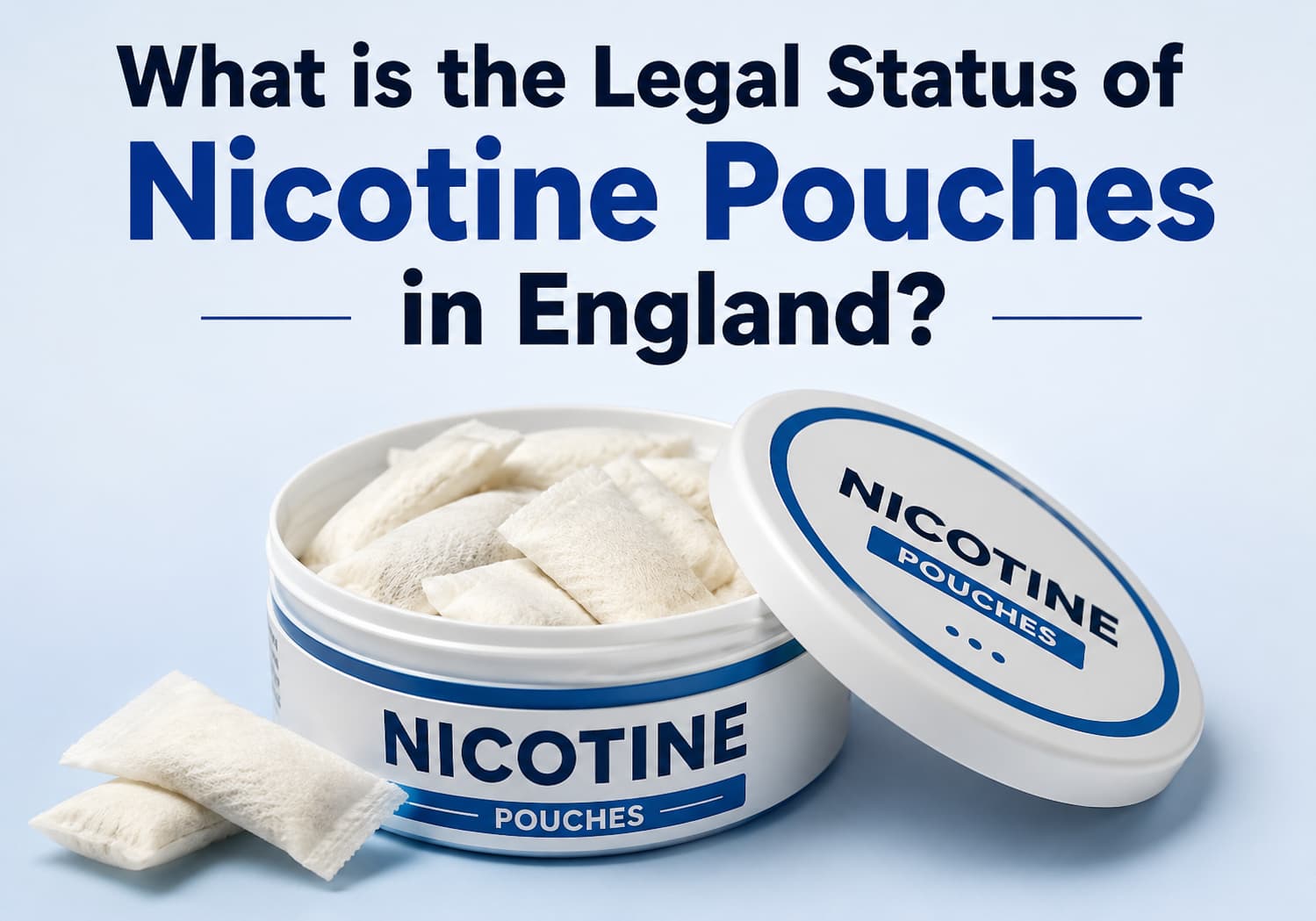
Nicotine pouches have become one of the fastest-growing smoke-free nicotine products in England. As more adult smokers and vapers look for tobacco-free alternatives, many consumers are asking: Are nicotine pouches legal in England?
The short answer is yes—nicotine pouches are legal to buy, sell, and use in England. However, the legal framework has changed significantly with the introduction of the Tobacco and Vapes Act 2026, which brings new rules on age restrictions, advertising, and sales.
This guide explains the current legal status of nicotine pouches in England, how the regulations compare with cigarettes and vapes, and what consumers and retailers should know.
Are Nicotine Pouches Legal in England?
Yes. Nicotine pouches are legal throughout England, as well as the rest of the United Kingdom.
Unlike traditional snus, nicotine pouches do not contain tobacco leaf. Instead, they contain nicotine (often tobacco-derived or synthetic), plant-based fillers, flavorings, and food-grade ingredients. Because they are tobacco-free, they are not covered by the long-standing UK ban on the sale of oral tobacco products such as snus.
Consumers can legally purchase nicotine pouches from:
- Supermarkets
- Convenience stores
- Pharmacies
- Vape shops
- Online retailers
How Are Nicotine Pouches Regulated?
For several years, nicotine pouches existed in a regulatory gap because they were neither tobacco products nor vaping products.
The Tobacco and Vapes Act 2026 changes this by introducing specific rules for nicotine products, including nicotine pouches. The legislation aims to reduce youth nicotine use while allowing adult smokers access to lower-risk alternatives.
Age Restrictions
One of the biggest legal changes concerns the minimum purchasing age.
Under the Tobacco and Vapes Act:
- Sales of nicotine pouches to anyone under 18 are prohibited.
- The 18+ age restriction takes effect on 29 October 2026.
- Retailers are required to verify customers’ ages before completing sales.
Previously, there was no dedicated statutory age restriction for nicotine pouches because they were not covered by tobacco legislation. The new law closes that loophole.
Advertising Rules
The UK government is also tightening controls on how nicotine pouches are promoted.
The legislation introduces restrictions on:
- Television advertising
- Online advertising
- Sponsorship
- Promotional campaigns
- Free product giveaways
Advertising restrictions are intended to reduce the appeal of nicotine products to children and teenagers while still allowing adult consumers to access information. Some measures begin in late 2026, with broader advertising restrictions taking effect in 2027.
Packaging and Product Standards
The Tobacco and Vapes Act also gives ministers powers to regulate:
- Packaging design
- Product branding
- Product displays
- Ingredient requirements
- Product information
These powers are intended to prevent packaging that may appeal to young people and to improve consumer safety.
Are Nicotine Pouches Safer Than Smoking?
Although nicotine itself is addictive, it is not the primary cause of smoking-related diseases.
Nicotine pouches do not involve:
- Burning tobacco
- Smoke inhalation
- Tar
- Carbon monoxide
Because they are tobacco-free and smokeless, they generally expose users to far fewer harmful chemicals than combustible cigarettes. However, they are not risk-free and are intended for adult nicotine users rather than non-smokers or young people. Public health experts continue to emphasize that they should not be used by people who have never used nicotine.
Can You Use Nicotine Pouches in Public?
In England, nicotine pouches can generally be used in places where smoking and vaping may be restricted because they:
- Produce no smoke
- Produce no vapor
- Leave no odor
However, private businesses, workplaces, schools, public transport operators, and event venues may set their own policies restricting their use indoors.
Are Nicotine Pouches Taxed Like Cigarettes?
Nicotine pouches are not taxed in the same way as tobacco cigarettes because they contain no tobacco.
Their pricing is generally determined by manufacturers and retailers, although future fiscal policies could change as the market continues to grow.
England vs Snus: What’s the Difference?
Many consumers confuse nicotine pouches with Swedish snus, but the law treats them differently.
| Nicotine Pouches | Snus |
|---|---|
| Tobacco-free | Contains tobacco |
| Legal in England | Sale banned in the UK |
| Smokeless | Smokeless |
| Subject to new nicotine regulations | Prohibited under tobacco legislation |
The key distinction is that nicotine pouches contain nicotine without tobacco, allowing them to be sold legally in England.
What Should Retailers Know?
Retailers selling nicotine pouches in England should:
- Verify customers are aged 18 or over.
- Follow new advertising and promotional restrictions.
- Stay informed about packaging and product standards as they are introduced.
- Source products from reputable manufacturers that comply with UK requirements.
Future Outlook
The UK government views nicotine pouches as a distinct category of smoke-free nicotine products. While they remain legal, regulation is becoming more comprehensive to balance adult access with youth protection.
Future updates may include:
- Additional packaging requirements
- Marketing restrictions
- Product standards
- Flavor or display regulations, if deemed necessary
Consumers and retailers should monitor official government guidance as implementation of the Tobacco and Vapes Act continues.
Final Thoughts
Nicotine pouches remain legal in England and continue to be available as a tobacco-free alternative for adult nicotine users. The introduction of the Tobacco and Vapes Act 2026 marks the beginning of a more structured regulatory framework, including a nationwide 18+ age restriction, tighter advertising controls, and new powers over packaging and product standards.
For adult smokers seeking smoke-free alternatives, nicotine pouches remain an accessible option. However, consumers should buy only from reputable retailers and stay informed about evolving regulations as the UK continues to refine its public health policies.