









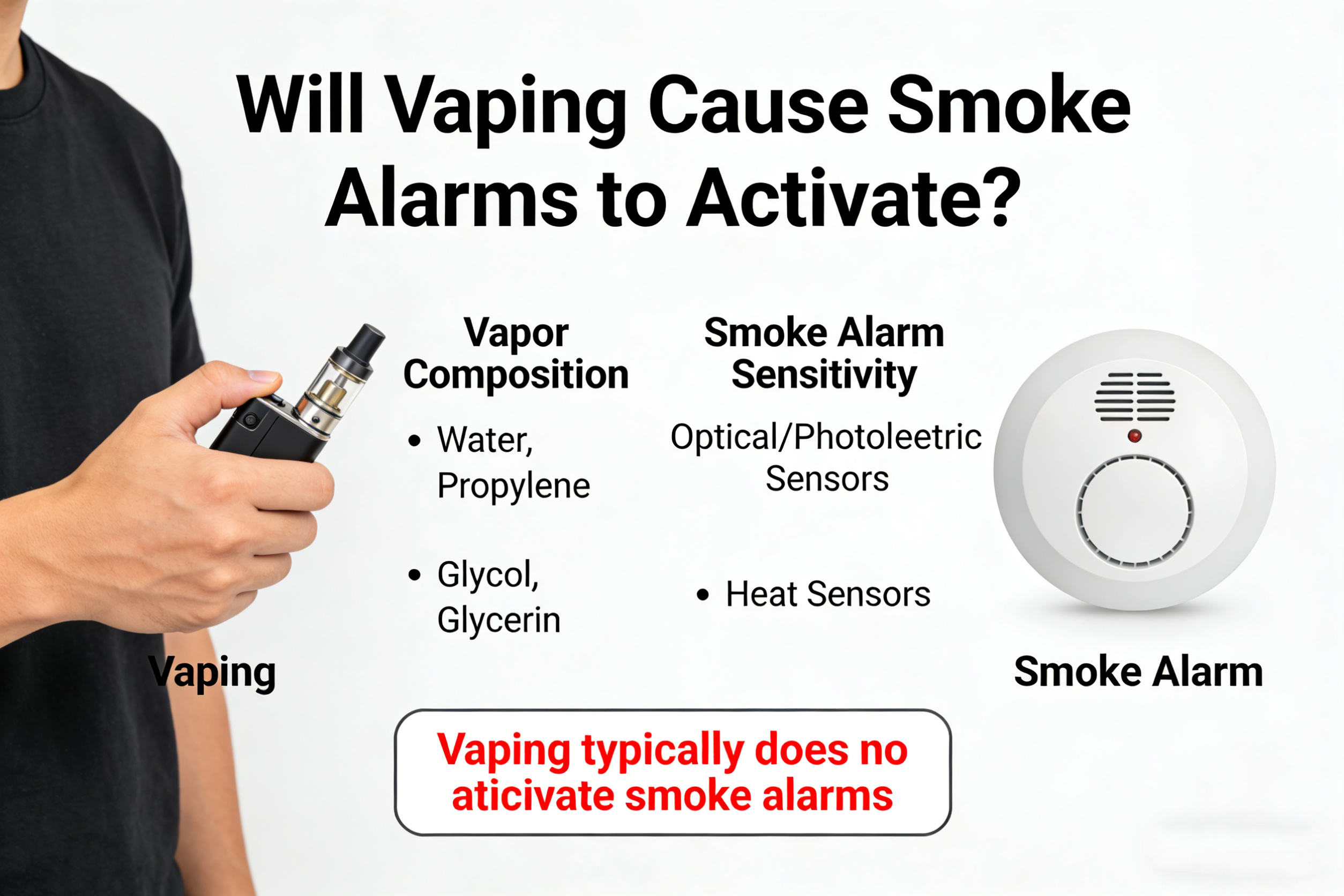
As vaping continues to rise in popularity, many people have questions about its effects on various environments. One common concern is whether or not vaping can trigger smoke alarms. Whether you’re vaping in your own home, at a friend’s place, or in a public area, it’s understandable to wonder if the vapor produced could set off smoke detectors, which are often sensitive to airborne particles.
In this article, we’ll explore how smoke alarms work, the difference between smoke and vapor, and whether vaping can cause smoke alarms to activate.
How Do Smoke Alarms Work?
Smoke alarms are designed to detect particles in the air that may indicate a fire or smoke. There are two common types of smoke alarms:
- Ionization Smoke Alarms: These detectors use a small amount of radioactive material to ionize the air inside the sensing chamber. When smoke enters the chamber, it disrupts the ionization process, triggering the alarm.
- Photoelectric Smoke Alarms: These detectors use a light beam directed at a sensor. When smoke enters the chamber, it scatters the light, causing the sensor to detect the change and activate the alarm.
Both types of alarms are highly sensitive to any particles that disrupt the airflow or the light beam, which is why they can detect smoke even in low concentrations. But the question is, can vaping cause a similar disruption?
Smoke vs. Vapor: Key Differences
The primary difference between smoke and vapor lies in their composition and how they are created:
- Smoke is made up of tiny particles (soot) that are produced when something burns, such as tobacco or wood. These particles are solid and can be heavy, which is why smoke alarms are sensitive to them.
- Vapor is produced by heating a liquid (like e-liquid in a vape) until it turns into a gas. This gas contains nicotine and flavoring agents, but it doesn’t have the same solid particles as smoke. As a result, vapor is much less dense than smoke.
Since smoke alarms are designed to detect particles in the air, vapor does not have the same particulate matter that would typically set off a smoke alarm. In theory, vaping should not trigger most smoke detectors, especially in well-ventilated areas where the vapor can dissipate quickly.
Can Vaping Still Set Off Smoke Alarms?
While vaping doesn’t produce the solid particles associated with smoke, it is still possible for certain conditions to cause a smoke alarm to activate:
- Large Amounts of Vapor: If you vape in a small, poorly ventilated room, large amounts of vapor can build up in the air, which may trigger a smoke alarm. Some smoke detectors, especially ionization models, may mistake this dense vapor cloud for smoke particles.
- Proximity to the Smoke Detector: If you’re vaping too close to the smoke alarm, the concentration of vapor around the sensor could potentially cause a false reading, especially if the alarm is particularly sensitive or located in a small, enclosed space.
- Type of Smoke Alarm: Some older or more sensitive smoke detectors might be more prone to false alarms from anything that disrupts the air in the vicinity, including vapor. This is especially true for ionization smoke alarms, which are more sensitive to airborne particles.
- Use of Vaping with Other Factors: In some cases, vaping in combination with other factors, such as cooking smoke or excessive steam from showers, could lead to conditions where the alarm is more likely to trigger. While vaping alone might not activate a smoke detector, it could contribute to the overall particulate load in the air.
How to Vape Safely Without Setting Off Smoke Alarms
If you enjoy vaping indoors but want to avoid setting off your smoke alarm, there are a few tips you can follow to minimize the risk:
- Vape in Well-Ventilated Areas: The more airflow there is, the quicker the vapor will disperse, reducing the chances of it setting off the smoke alarm.
- Avoid Vaping Near Smoke Detectors: If possible, try to vape away from the immediate area where smoke detectors are installed. This will reduce the concentration of vapor around the sensors.
- Use Low-Vapor Devices: Some vaping devices produce larger clouds of vapor than others. Opting for a device that produces less vapor can help avoid triggering the alarm.
- Turn Off the Smoke Alarm Temporarily: If you are planning on vaping in a room, you could consider temporarily turning off the alarm (if it’s safe to do so) or covering it with a towel while vaping. However, always remember to turn it back on afterward.
What to Do if the Smoke Alarm Goes Off
If your vape has triggered a smoke alarm, don’t panic. Most likely, it’s just a false alarm caused by the vapor. To clear the alarm:
- Ventilate the Room: Open windows and doors to allow fresh air to circulate and clear out the vapor.
- Press the Reset Button: Many smoke alarms have a reset button you can press to stop the alarm.
- Check the Alarm: If the alarm continues to sound, there could be another issue with the detector, such as dust or a malfunction, and you may need to clean or replace the unit.
Conclusion
In most cases, vaping is unlikely to set off smoke alarms since vapor doesn’t contain the same solid particles as smoke. However, if you vape in a small, poorly ventilated space or produce a large amount of vapor, it is still possible for certain alarms, especially ionization models, to trigger a false alarm. To avoid any issues, it’s best to vape in well-ventilated areas and stay mindful of your proximity to smoke detectors. If you do experience an alarm, simply ventilating the room and resetting the alarm should solve the issue.
By following these simple precautions, you can enjoy your vaping experience without causing unnecessary disruptions!