









Igeekphone News reported on February 4th: According to industry norms, Xiaomi is expected to officially launch the brand-new Hyper OS 4 operating system in the second half of this year. Recently, developers analyzing the code of Paiming OS 3.1 discovered that Xiaomi is systematically and in stages removing the old code that has been in use for many years.
Based on the current progress, Hyper OS 3.1 has begun to remove the MIUI SDK from some system modules such as weather and photo album. This indicates that Hyper OS 4, which is expected to be released in August 2026, will become the first truly zero-residue iteration version of MIUI. At that time, all the residual codes accumulated from the initial MIUI stage until now will be completely removed.
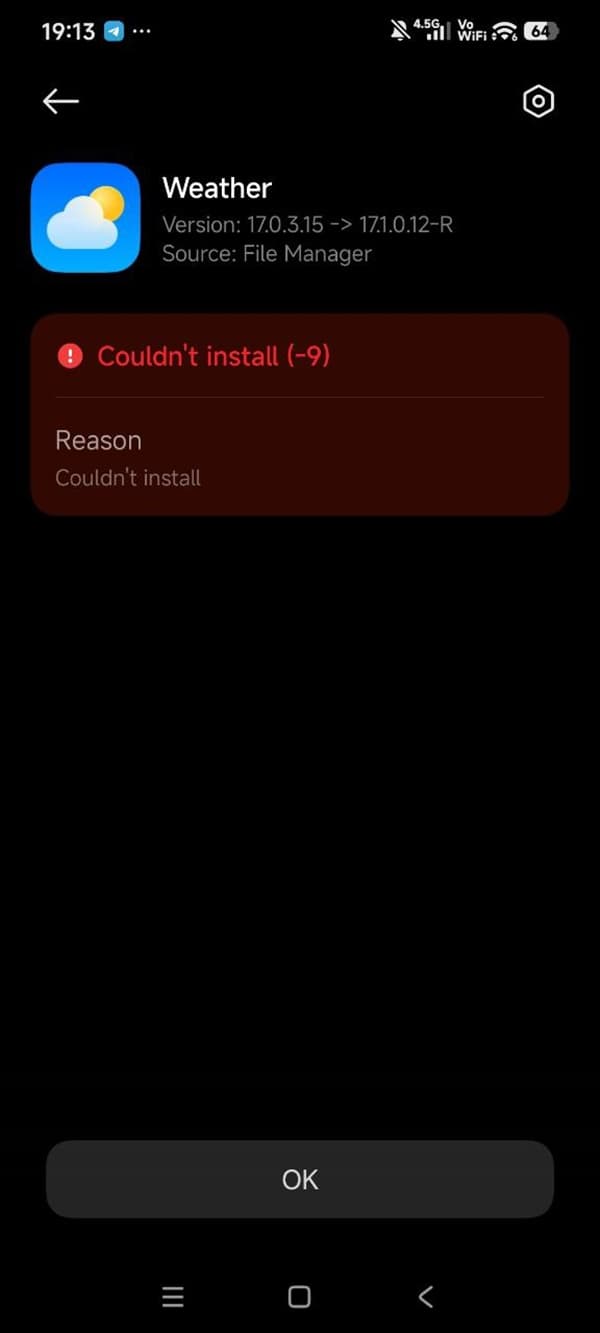
This transformation brought a qualitative change in technology for Xiaomi, marking that Hyper OS 4 would exist as a completely independent operating system, completely shedding its status as a derivative version of MIUI. With the removal of the heavy historical burden, the smoothness and response speed of the system are expected to undergo a qualitative leap.
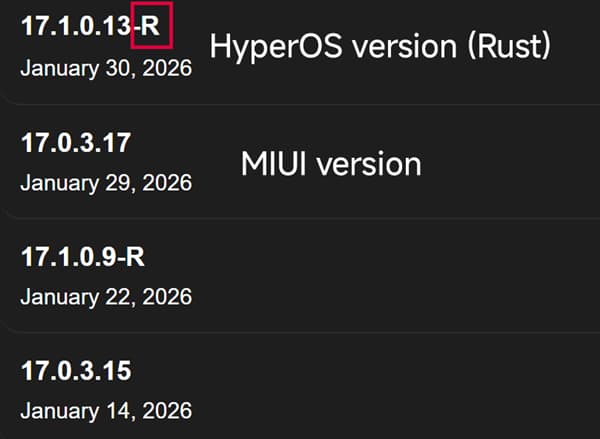
In the Hyper OS 3.1 version, some forward-looking attempts can already be observed, such as the reconfiguration of the core system applications using Google’s Flutter toolkit and the Rust language. This not only indicates that Hyper OS is moving towards a modular application architecture, but also represents a bold innovation in the underlying logic of Xiaomi.
By introducing the Flutter engine, Hyper OS 4 will achieve standardization of UI rendering and logical stability across the entire system’s partitions, thereby replacing the fragmented Java or Kotlin legacy structures present in earlier versions. This deep restructure demonstrates that Xiaomi is attempting to fundamentally address the long-standing problems of lag and fragmentation in the Android system.
For the majority of users, older models and entry-level, mid-range devices will be the biggest beneficiaries. By completely eliminating those bloated legacy processes, the new system directly addresses the resource bottleneck issues that low-end processors often encounter in environments with limited memory. Even under conditions where hardware performance is limited, the Pengpai OS 4 can still bring significant improvements in smoothness for these devices.