









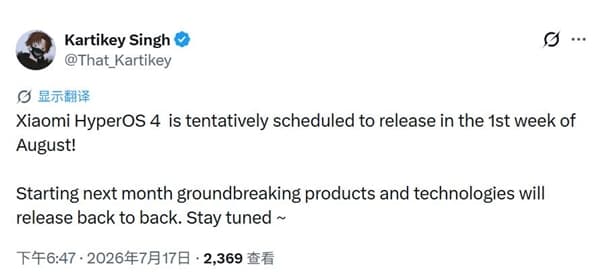
Igeekphone, July 17 – Xiaomi is reportedly preparing to unveil HyperOS 4 in early August, introducing what could be the company’s most significant operating system upgrade since replacing MIUI with HyperOS. According to information shared by a well-known Chinese tech blogger, the upcoming release focuses on a complete reconstruction of the system’s underlying architecture rather than incremental feature additions.
A Fresh Start Beyond MIUI
The biggest highlight of HyperOS 4 is said to be its “zero legacy” architecture.
According to previous leaks, Xiaomi’s software engineers have completely removed outdated code and legacy software development kits (SDKs) inherited from the MIUI era. As a result, HyperOS 4 is expected to become the first Xiaomi operating system built entirely without legacy MIUI components.
This extensive cleanup is designed to improve system efficiency while simplifying future software development and long-term maintenance.
Core System Rewritten with Modern Technologies
On the technical side, Xiaomi has reportedly rebuilt many of HyperOS 4’s core modules using the Rust programming language alongside the Flutter framework, replacing much of the older Java- and Kotlin-based architecture that accumulated over years of MIUI development.
The transition to a modern software stack is expected to provide several benefits, including:
- Improved system stability
- Better security through Rust’s memory-safe architecture
- More efficient resource management
- Easier future software maintenance
- A stronger foundation for AI-powered features
This represents one of the most ambitious architectural changes Xiaomi has made to its mobile operating system.
Significant Performance Improvements
The underlying redesign is also expected to deliver noticeable gains in everyday performance.
According to the leaked information, HyperOS 4 offers:
- Higher background app retention
- Lower idle memory consumption
- Faster application launching
- More efficient resource scheduling
- Improved multitasking performance
Perhaps most importantly, Xiaomi is reportedly addressing one of Android’s long-standing pain points: gradual performance degradation over time.
The company claims the new architecture dramatically reduces the slowdown that many smartphones experience after months or years of use, allowing devices to maintain smoother performance throughout their lifespan.
Better Experience for Mid-Range Devices
The lightweight kernel redesign is also expected to benefit more affordable smartphones.
By optimizing system resource scheduling, HyperOS 4 should allow mid-range and entry-level Xiaomi devices to deliver a smoother and more consistent user experience without requiring flagship-level hardware.
This optimization reflects Xiaomi’s broader strategy of improving software efficiency rather than relying solely on increasingly powerful chipsets.
New Liquid Glass-Inspired Interface
Alongside performance improvements, HyperOS 4 is also rumored to introduce a refreshed visual identity.
The new interface reportedly adopts a liquid glass-inspired design language, featuring translucent effects and dynamic animations similar to the design trends currently emerging across the mobile industry.

Users will reportedly be able to choose between two visual styles:
- Transparent Mode
- Soft Mode
The updated interface is designed to create a more modern, fluid, and immersive user experience while offering greater personalization options.
Enhanced Cross-Device Connectivity
Xiaomi is also expected to further expand its cross-device ecosystem with HyperOS 4.
The update reportedly improves connectivity and collaboration between Xiaomi smartphones, tablets, wearables, smart home products, and other ecosystem devices, making transitions between devices faster and more seamless.
These enhancements align with Xiaomi’s long-term strategy of building a fully connected intelligent ecosystem.
Rollout Schedule
According to the leaked roadmap, Xiaomi plans to prioritize its newest flagship devices during the initial rollout.
The first smartphones expected to receive the stable version include:
- Xiaomi 17 series
- REDMI K90 series
- Other flagship models launched within the past year
Meanwhile, Xiaomi’s upcoming Xiaomi 18 series is expected to ship with HyperOS 4 pre-installed, allowing buyers to experience the redesigned operating system immediately out of the box.
Looking Ahead
If the leaked information proves accurate, HyperOS 4 will represent far more than a routine software update. By eliminating legacy MIUI code, rebuilding core components with modern programming technologies, and introducing a redesigned user interface alongside deeper ecosystem integration, Xiaomi appears to be laying the groundwork for the next generation of its software platform.
With an official announcement reportedly planned for early August, more details about HyperOS 4—including its complete feature set, supported devices, and rollout timeline—are expected to emerge in the coming weeks.