









Xiaomi has officially introduced the Xiaomi Pad 9 Pro Max, a large-screen Android tablet aimed at users who want stronger productivity capabilities without moving to a traditional laptop. The new model combines a high-end Xuanji O3 chip with a large display and 12,000mAh battery, giving it a clear focus on performance and longer working sessions. In China, the tablet starts at 4,299 yuan with the applicable subsidy, while its regular retail price begins at 4,799 yuan.
Xiaomi tablet was unveiled on the evening of September 7 and focuses heavily on performance, professional productivity, large-screen multitasking and connectivity with other devices.
Xiaomi Pad 9 Pro Max Price and Configurations
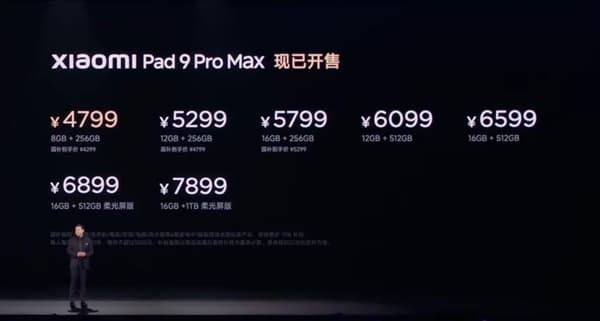
Xiaomi is offering the Pad 9 Pro Max in multiple RAM and storage combinations:
- 8GB + 256GB: 4,799 yuan
- 12GB + 256GB: 5,299 yuan
- 16GB + 256GB: 5,799 yuan
- 12GB + 512GB: 6,099 yuan
- 16GB + 512GB: 6,599 yuan
- 16GB + 512GB Soft Light Display Edition: 6,899 yuan
- 16GB + 1TB Soft Light Display Edition: 7,899 yuan
Three configurations — 8GB + 256GB, 12GB + 256GB and 16GB + 256GB — qualify for China’s national subsidy program. After the subsidy, their prices fall to 4,299 yuan, 4,799 yuan and 5,299 yuan, respectively.
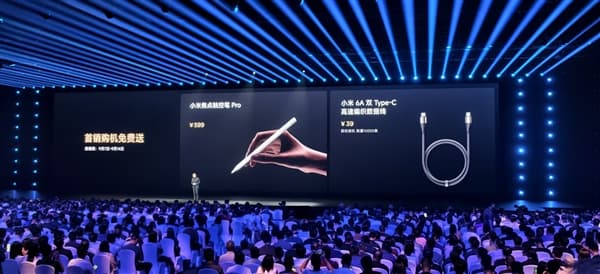
Early buyers can also receive a Xiaomi Focus Touch Pen Pro, valued at 599 yuan, together with a 6A dual USB-C high-speed braided cable, valued at 39 yuan.
13.3-Inch Display and Slim 645g Body
The Xiaomi Pad 9 Pro Max features a 13.3-inch display, giving it considerably more screen space than conventional compact tablets.
Despite the large panel and high-capacity battery, the tablet measures just 5.67mm thick and weighs approximately 645 grams.
The combination of a large display and relatively thin body is intended to make the device suitable for both desk-based productivity and mobile use.
Xuanji O3 Chip Targets Desktop-Class Performance
One of the biggest highlights of the Xiaomi Pad 9 Pro Max is its processor. The tablet is the first Xiaomi tablet to feature the company’s Xuanji O3 chip, which Xiaomi positions as its most powerful in-house platform for high-end Android devices.
According to Xiaomi, the tablet achieves a claimed 5.61 million points in benchmark testing. The company also compares its performance with Apple’s M5 desktop platform and says the device is capable of running professional PC-class applications smoothly.
This performance focus makes the Pad 9 Pro Max more than a conventional media tablet. Xiaomi is targeting users who want to edit documents, work with professional software and handle demanding multitasking without carrying a traditional laptop.
Built for PC-Style Productivity
The Xiaomi Pad 9 Pro Max supports a more desktop-oriented workflow, including keyboard, mouse and touch input.
The tablet also comes with optimized PC-style editing capabilities and support for WPS 365, giving users access to a broader range of office and productivity tools.
Xiaomi has also incorporated enhanced AI functions into the device. These features are designed to assist with everyday work while taking advantage of the processing power offered by the Xuanji O3 platform.
For users who regularly work with documents, presentations or spreadsheets, the combination of a large display and desktop-style controls could make the Pad 9 Pro Max a more practical laptop alternative.
Use the Tablet as an External Monitor
Another interesting feature is its support for professional DisplayPort input.
When connected through a full-featured USB-C cable, the tablet can accept an external video signal at up to 3.4K resolution and 120Hz. This allows the Pad 9 Pro Max to function as an external monitor for compatible devices.
The feature could be particularly useful for people who travel frequently. Instead of carrying a separate portable monitor, users can potentially use the tablet’s high-resolution display as an additional screen.
Turn the Pad 9 Pro Max Into a Laptop-Style Second Screen
Xiaomi also demonstrates the tablet working alongside a notebook computer.
Once connected, the Pad 9 Pro Max can serve as an additional 3.4K high-resolution display. For example, a user could keep a document or presentation on the laptop’s primary screen while using the tablet to display reference material.
This setup can reduce the need to repeatedly switch between application windows and could be useful for writing, research, editing and other multitasking-heavy workflows.
A Large Gaming Display for Handheld Consoles
The tablet isn’t limited to productivity.
When paired with a compatible gaming handheld, the Xiaomi Pad 9 Pro Max can serve as a large-screen gaming display. This gives portable-console users a way to enjoy their games on a much larger screen while taking advantage of the tablet’s display and audio capabilities.
For travelers, the combination of a handheld console and the Pad 9 Pro Max could provide a more immersive gaming setup without requiring a dedicated monitor.
32MP Front Camera and 50MP Rear Camera
The Xiaomi Pad 9 Pro Max also features a 32-megapixel front camera and a 50-megapixel rear camera.
The high-resolution front camera is particularly relevant for video calls and remote meetings, while the rear camera can be used for document scanning, photography and general tablet photography.
12,000mAh Battery for Long Sessions
Powering the Xiaomi Pad 9 Pro Max is a substantial 12,000mAh battery.
The large battery capacity complements the tablet’s productivity-oriented design, particularly for users who intend to spend extended periods working away from a power outlet.
Combined with the slim 5.67mm body, the battery capacity is one of the more notable aspects of the tablet’s hardware configuration.
Xiaomi Pad 9 Pro Max Is More Than a Traditional Android Tablet
Xiaomi Pad 9 Pro Max is clearly designed to compete beyond the conventional Android tablet category. Its 13.3-inch display also supports DisplayPort input, allowing the tablet to receive video signals from another device at up to 3.4K resolution and 120Hz.
More importantly, features such as 3.4K/120Hz DisplayPort input, multi-device connectivity, keyboard and mouse support, PC-style applications and large-screen multitasking expand what the tablet can do.
With a starting price of 4,299 yuan after China’s national subsidy, the Xiaomi Pad 9 Pro Max targets users who want a larger, more capable Android tablet without giving up portability. Its combination of a spacious display and productivity-focused features makes it suitable for tasks that traditionally require a laptop or external portable monitor.