









Wireless earbuds can be perfectly comfortable while sitting at a desk and become a completely different product once you start moving. Running, cycling, working out, or even commuting on a crowded street puts more pressure on the fit than ordinary listening does.
The YESIDO YSP32 approaches that problem with an open-earhook-style sports design, Bluetooth 5.4, dual 12mm drivers, spatial audio, touch controls, and a charging case with a digital battery display. Those specifications make it look competitive on paper, but specifications alone don’t explain whether a sports earbud is actually useful.
The more interesting question is whether the YSP32’s earhook design provides enough stability for active use without making everyday listening uncomfortable.
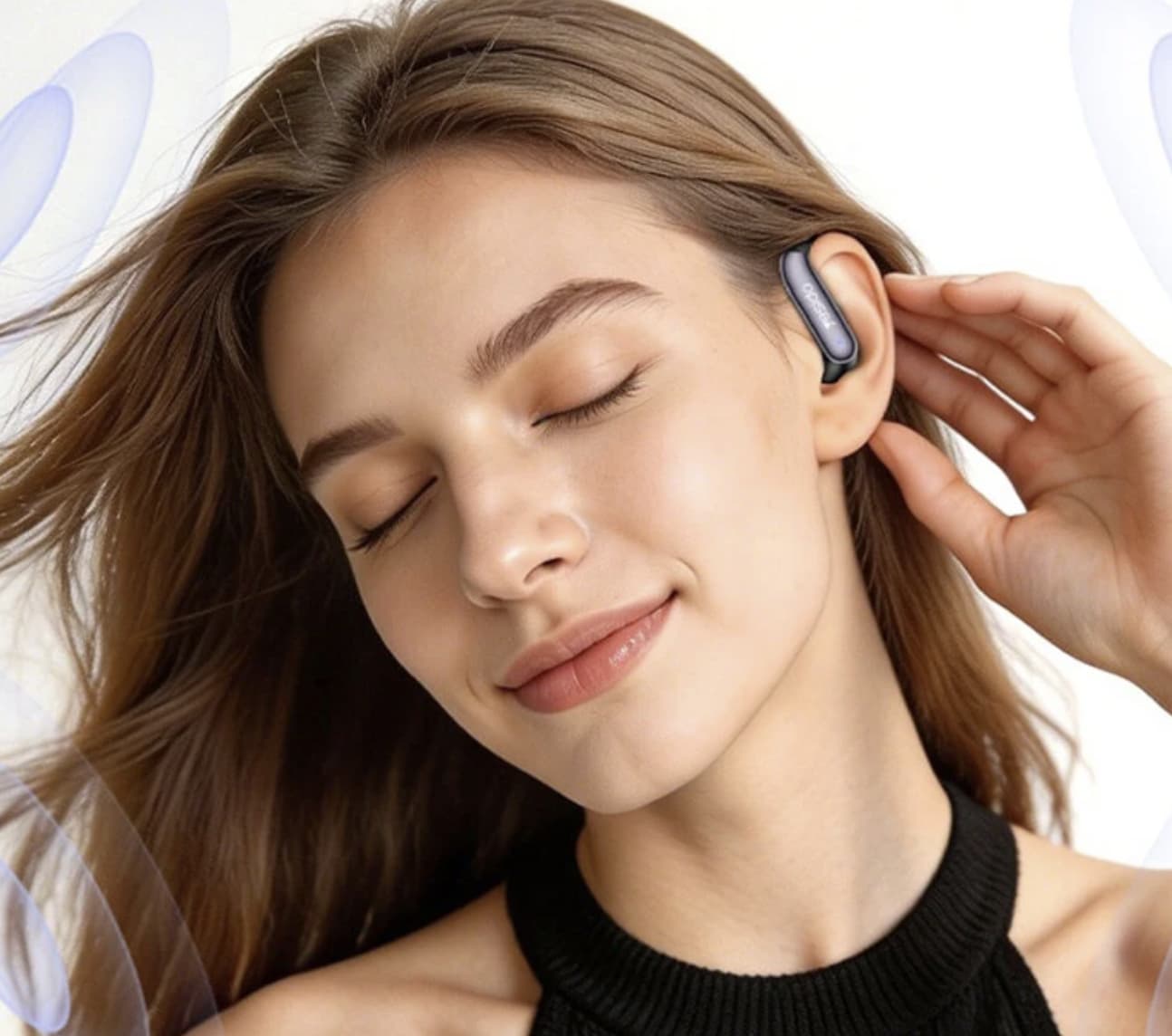
The Earhook Is the YSP32’s Main Story
The most important part of the YSP32 isn’t Bluetooth 5.4 or the size of its drivers.
It’s the way the earbuds stay attached to your ears.
The flexible silicone earhooks extend around the ears instead of relying entirely on the pressure of an in-ear tip. That changes the wearing experience considerably.
For activities involving repeated head movement, a conventional earbud can gradually loosen. An earhook design has a mechanical advantage because part of the earbud’s weight is supported around the ear rather than only inside the ear canal.
That doesn’t automatically make it more comfortable for everyone.
People who prefer tiny, barely noticeable in-ear earbuds may find the YSP32’s structure more noticeable. But for users who regularly experience earbuds moving during exercise, the additional support can be a worthwhile trade-off.
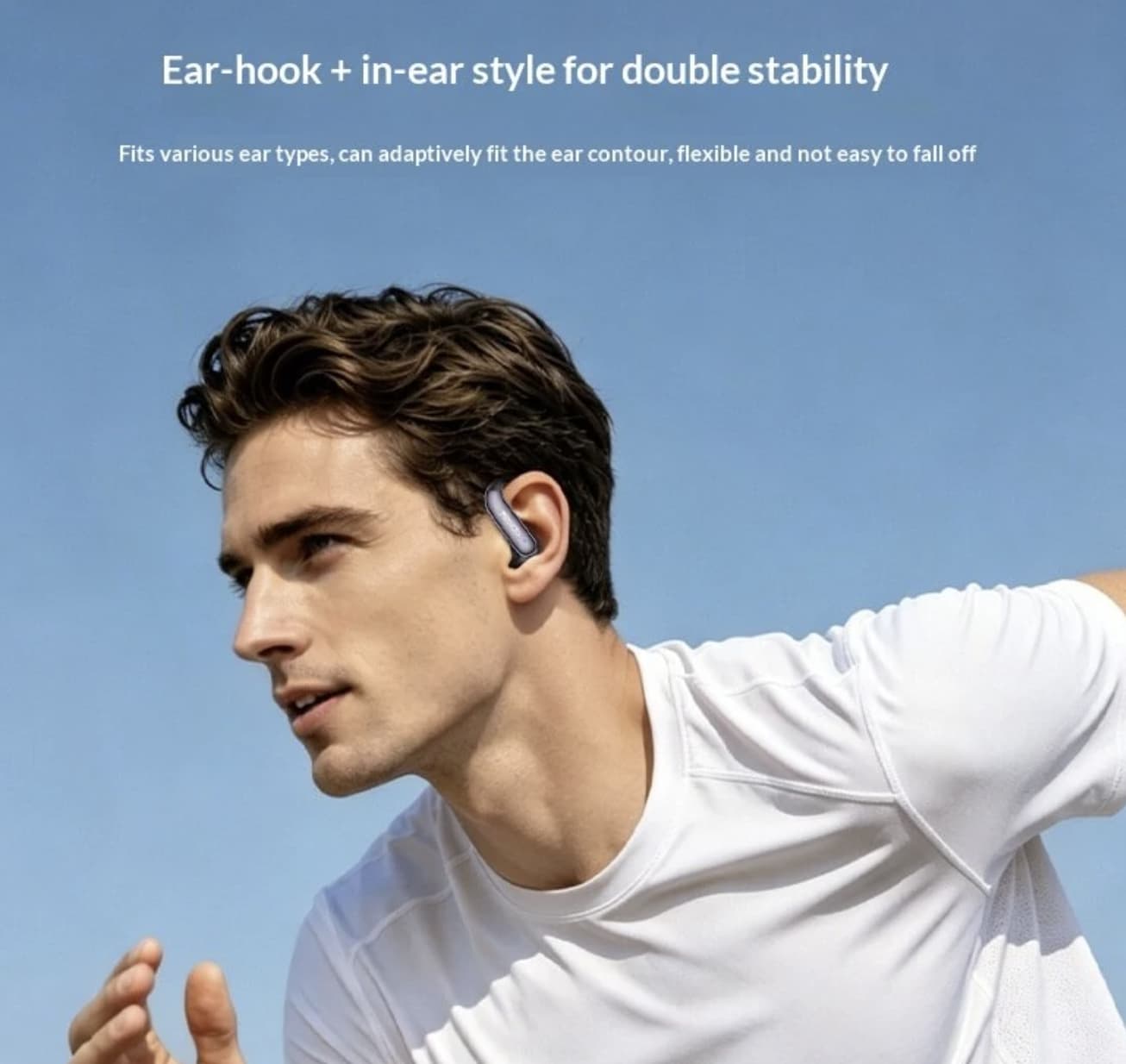
Sports Use Should Be Judged by Stability, Not Marketing
Calling an earbud a “sports earbud” doesn’t tell you much by itself.
The real test is whether it stays positioned when the user is moving. If you’re comparing other models designed specifically for active use, our sports earbud reviews cover different approaches to fit, stability, and everyday usability.
The YSP32’s earhooks are designed specifically around that requirement. They can be useful for activities such as walking, gym workouts, running, cycling, and outdoor exercise.
The advantage becomes more obvious during movements that repeatedly shake the head.
Instead of constantly pushing an earbud back into position, the user can rely on the hook to provide additional physical support.
However, the ideal fit will still depend on individual ear shape. An earhook that feels secure for one person may feel too noticeable for another.
That’s one reason I would consider the YSP32 more of a fit-focused sports earbud than a universal replacement for conventional TWS models.
Open-Earhook Design vs. Traditional In-Ear Earbuds
The YSP32’s design creates an interesting compromise. Our guide to open-ear and earclip headphones looks at designs that prioritize comfort and environmental awareness in a different way.
Traditional in-ear earbuds generally depend on an ear tip forming a secure fit inside the ear canal. That can provide strong passive isolation, but some people dislike the pressure or sealed feeling.
The YSP32 takes a different approach.
Its earhook helps keep the unit positioned while reducing reliance on a deep in-ear fit.
The benefit is greater wearing stability and a less intrusive approach for users who don’t enjoy conventional silicone ear tips.
The trade-off is equally important: you shouldn’t expect the same level of passive isolation from an open or less-sealed sports-oriented design as from a well-fitted closed in-ear earbud.
That makes the YSP32 potentially more suitable for outdoor awareness than an isolation-focused model, although exact environmental awareness depends on how the earbuds fit and how loudly they’re used.
Bluetooth 5.4 Isn’t a Sound-Quality Guarantee
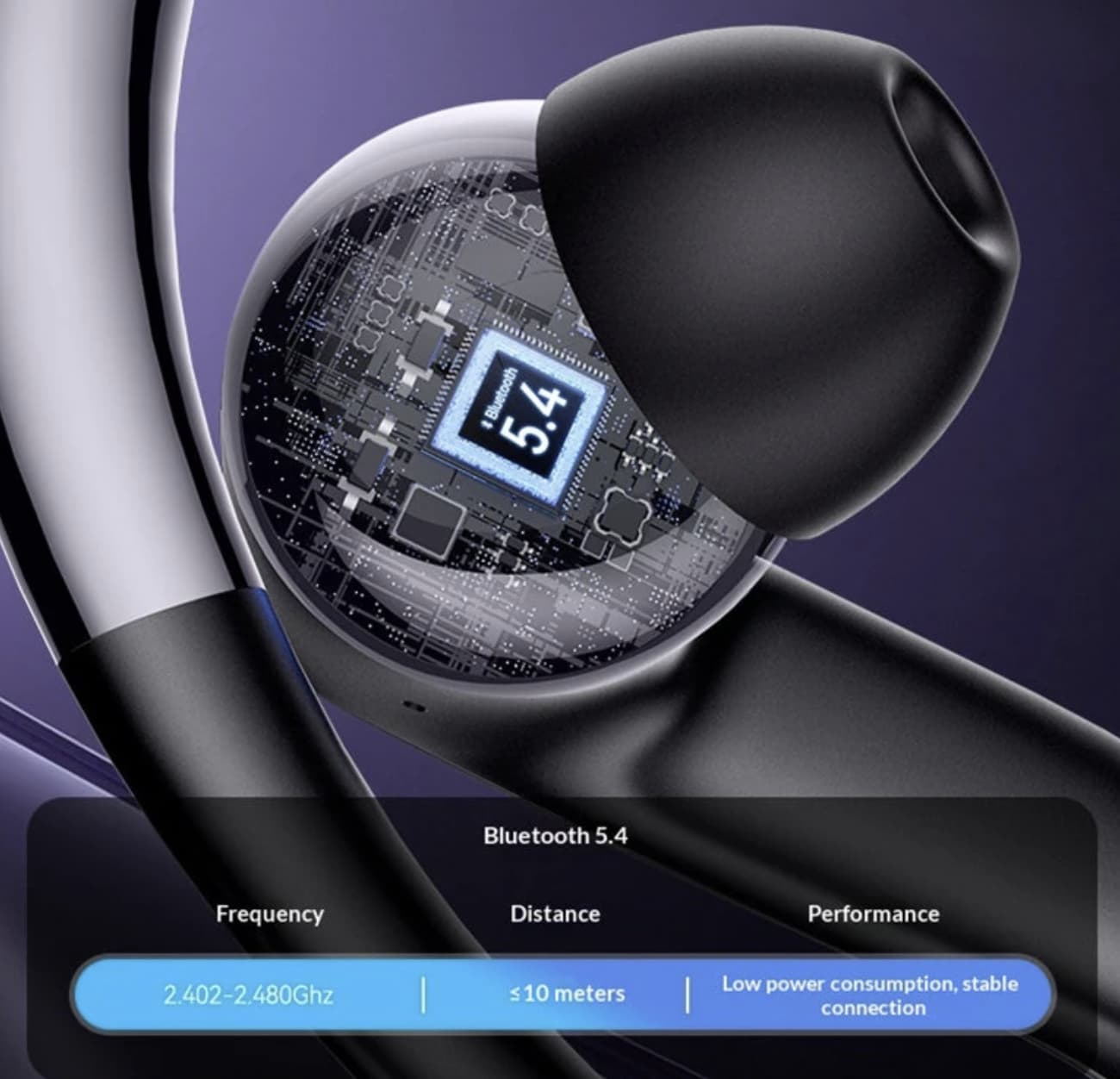
The YSP32 uses Bluetooth 5.4, and the product page highlights stable connectivity, low latency, and power efficiency.
It’s worth separating the wireless standard from audio quality.
Bluetooth 5.4 doesn’t automatically mean that an earbud will sound better than a Bluetooth 5.2 or 5.3 product.
Actual listening performance depends on factors including the audio codec, tuning, drivers, software, and source device.
Where a newer Bluetooth implementation can matter is in areas such as connectivity behavior, efficiency, and compatibility with newer devices.
So I would treat Bluetooth 5.4 as a modern connectivity feature, not the primary reason to buy the YSP32. For a broader comparison of wireless designs, you can also explore our TWS earbuds reviews to see how different models approach connectivity, comfort, and audio performance.
What the 12mm Drivers Actually Tell Us
The YSP32 uses dual 12mm genuine copper ring drivers.
A 12mm driver is relatively large for a compact wireless earbud, but driver diameter alone cannot predict sound quality.
A larger driver can potentially move more air and contribute to stronger low-frequency reproduction, but the final result also depends on tuning, enclosure design, acoustic implementation, and how the earbuds sit relative to the listener’s ears.
For the YSP32, the more useful expectation is a presentation aimed at giving music and entertainment enough body to remain engaging during active use.
That doesn’t mean the YSP32 should be automatically described as an audiophile product.
Its priorities are different.
The design is primarily about combining secure wearing, everyday wireless convenience, and an energetic listening experience.
Spatial Audio Is Interesting, But Don’t Overlook Its Limitations
Spatial Audio is another headline feature.
The technology is intended to create a greater sense of width, positioning, or three-dimensionality compared with conventional stereo playback.
That can be particularly interesting for movies, games, and other content where spatial positioning contributes to the experience.
But spatial audio is not a universal upgrade.
Its effectiveness depends on the implementation, compatible content, source device, and software processing.
For ordinary music, some listeners may prefer the straightforward presentation of conventional stereo.
Therefore, I would consider Spatial Audio a bonus feature on the YSP32 rather than the core reason to choose it.
The Digital Battery Display Is Surprisingly Useful
One feature that deserves more attention is the charging case’s digital battery display.
Many TWS cases use a few LEDs to indicate approximate remaining battery capacity.
The YSP32 instead provides a numerical-style battery indication, making it easier to determine whether the case needs charging before leaving home.
This is a small convenience, but it solves a genuine problem.
There’s a difference between:
“The case still has some battery.”
and:
“The case is almost empty.”
For people who use earbuds throughout the day, knowing the approximate remaining charge is useful.
Touch Controls Keep the Phone in Your Pocket
The YSP32 also uses touch controls for common functions such as music playback, calls, track changes, volume, and voice-assistant access.
This makes sense for a sports-oriented product.
When you’re exercising, reaching for a smartphone every time you want to pause music is inconvenient.
Touch controls allow basic interaction without stopping the activity.
There is, however, a familiar problem with touch-sensitive earbuds: accidental touches can happen.
Sweat, clothing, hair, or adjusting the earbuds can sometimes interact with touch controls depending on the implementation.
That means convenient controls are useful, but they don’t necessarily make physical buttons obsolete.
Call Quality Matters More for Commuters
Sports earbuds aren’t used exclusively during workouts.
Many people wear the same pair while commuting, walking between meetings, shopping, or working.
The YSP32 includes built-in microphones for hands-free calls.
That’s important because a sports-focused earbud becomes much more versatile when it can also handle everyday conversations.
Still, microphone performance should be evaluated according to the environment.
A quiet room is very different from a busy road, gym, train station, or windy outdoor trail.
So I wouldn’t interpret microphone support as a guarantee of perfect voice quality in noisy environments.
Battery Features Focus on Convenience
The YSP32 uses a rechargeable charging case and USB-C charging, while the case includes the digital battery display.
The current product information does not provide enough detailed battery testing to treat a specific playback figure as guaranteed real-world performance.
That’s worth mentioning because battery life can vary significantly depending on:
- volume level
- Bluetooth connection
- audio processing
- Spatial Audio usage
- call frequency
- temperature
- device settings
For everyday use, the more meaningful advantage is having a portable case that can recharge the earbuds between listening sessions.
Where the YSP32 Makes the Most Sense
The YSP32 has a fairly clear target audience.
Running
The earhooks can provide additional physical stability when the head is repeatedly moving.
Gym workouts
The design can be more practical than loose-fitting earbuds during strength or cardio sessions.
Walking and commuting
The less-isolated approach can be preferable for people who want to remain more aware of their surroundings.
Casual daily listening
The YSP32 isn’t limited to exercise. Its wireless controls and charging case make it suitable for general music, podcasts, and calls.
Where It May Not Be the Best Choice
The YSP32’s strengths also reveal its limitations.
If you want maximum passive noise isolation for airplanes, trains, or noisy offices, a sealed in-ear design may be more appropriate.
If you prefer extremely small earbuds that disappear into your ears, the earhook construction may feel unnecessarily large.
And if sound quality is your only priority, there are specialized TWS models that put more emphasis on advanced codecs, noise cancellation, and detailed audio tuning.
The YSP32 is therefore better understood as a balanced sports-oriented earbud rather than an attempt to compete with every premium TWS category simultaneously.
YSP32 vs. a Conventional TWS Earbud
The choice is relatively simple.
Choose a conventional TWS design if your priorities are:
- compact size
- strong passive isolation
- minimal physical structure
- discreet appearance
The YSP32 makes more sense if you prioritize:
- secure movement
- earhook stability
- sports use
- easier awareness of the environment
- a more secure physical fit
Neither approach is universally better.
The right choice depends on how you actually use your earbuds.
What I Like About the YSP32
The strongest part of the product is that its design has a clear purpose.
The earhooks aren’t there simply to make the earbuds look different. They address a real problem: keeping wireless earbuds in position while the wearer is moving.
The digital battery display is another practical addition.
Bluetooth 5.4, USB-C charging, touch controls, large drivers, and Spatial Audio give the product a modern feature set, but none of those features is more important than getting the basic fit right.
That’s where the YSP32 has its strongest argument.
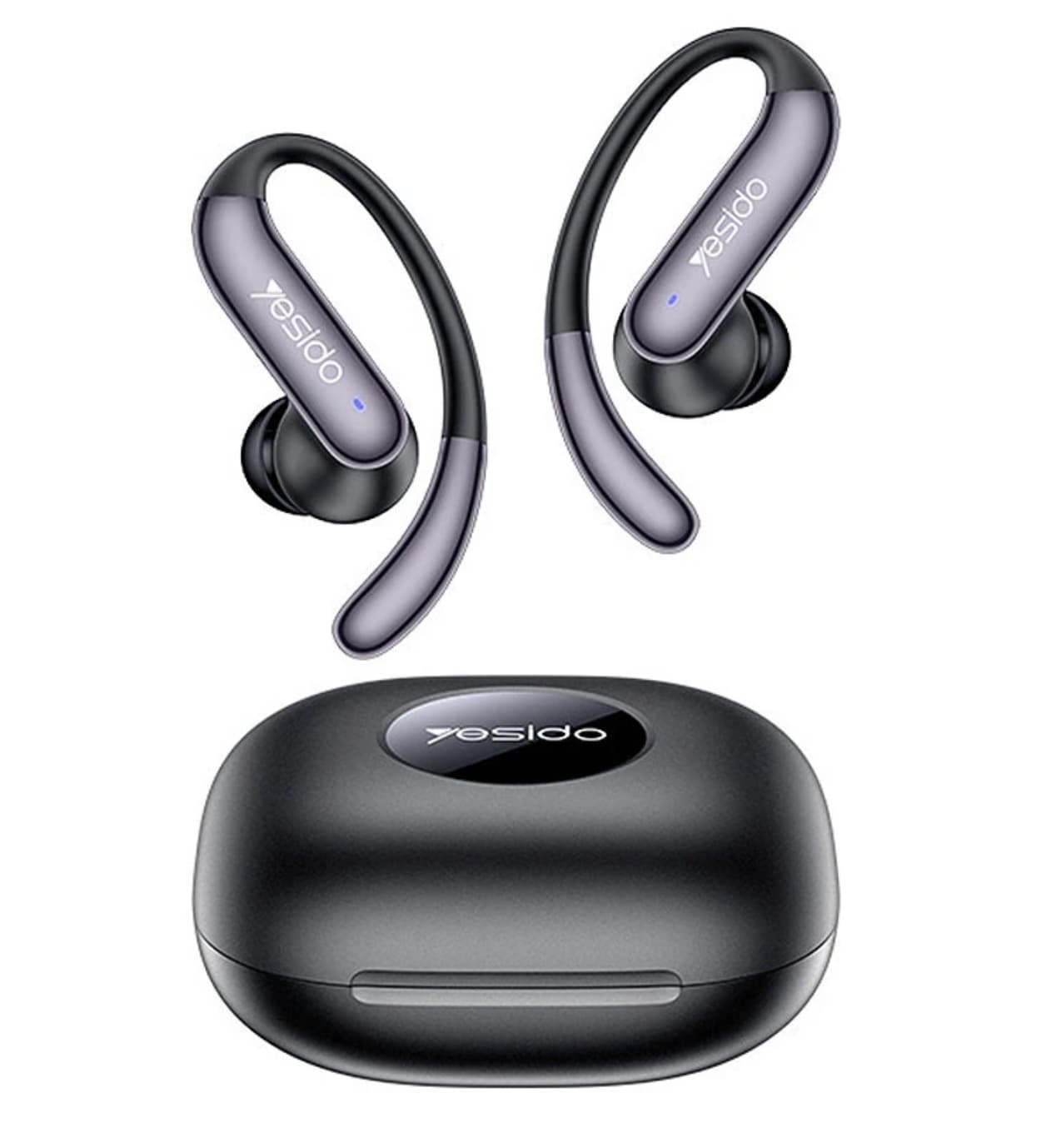
What I Would Keep in Mind
The YSP32 isn’t a perfect choice for every listener.
The earhook format is more visible than a conventional TWS earbud.
The lack of active noise cancellation also means users looking for maximum isolation should consider other designs. The current product page itself lists no ANC and notes that the Spatial Audio experience can vary by source and device.
And while the 12mm drivers are an interesting specification, driver size shouldn’t be used as a shortcut for judging sound quality.
These are reasonable compromises for a product designed around active use.
Final Verdict
The YESIDO YSP32 makes the most sense when stability matters more than having the smallest possible earbuds.
Its earhook design gives it a clear identity, while Bluetooth 5.4, dual 12mm drivers, Spatial Audio, touch controls, USB-C charging, and the digital battery display provide a useful collection of modern features.
But its biggest selling point isn’t the specification sheet.
It’s the fit philosophy.
The YSP32 is designed around the idea that wireless earbuds should stay where you put them when your body starts moving.
If you’re a runner, gym user, cyclist, walker, or commuter who regularly struggles with earbuds slipping loose, that approach makes the YSP32 worth considering.
If you prefer tiny in-ear earbuds, strong passive isolation, or premium noise cancellation, a conventional TWS model may be a better fit.
The YSP32 doesn’t try to win every earbud category. Instead, it focuses on one problem—keeping wireless audio secure during movement—and builds the rest of the product around that idea.
That focused approach is what makes it more interesting than another generic Bluetooth 5.4 earbud.