









You’ve probably seen the headline: 70km/h brushless 1/18 monster truck. Sounds impressive—and every product listing makes sure you know it. But after pushing the YH Toys YH18001 PRO hard for several weeks, I’ve learned that top speed isn’t the specification that matters most when you’re talking about durability. The real story is hidden inside the drivetrain.
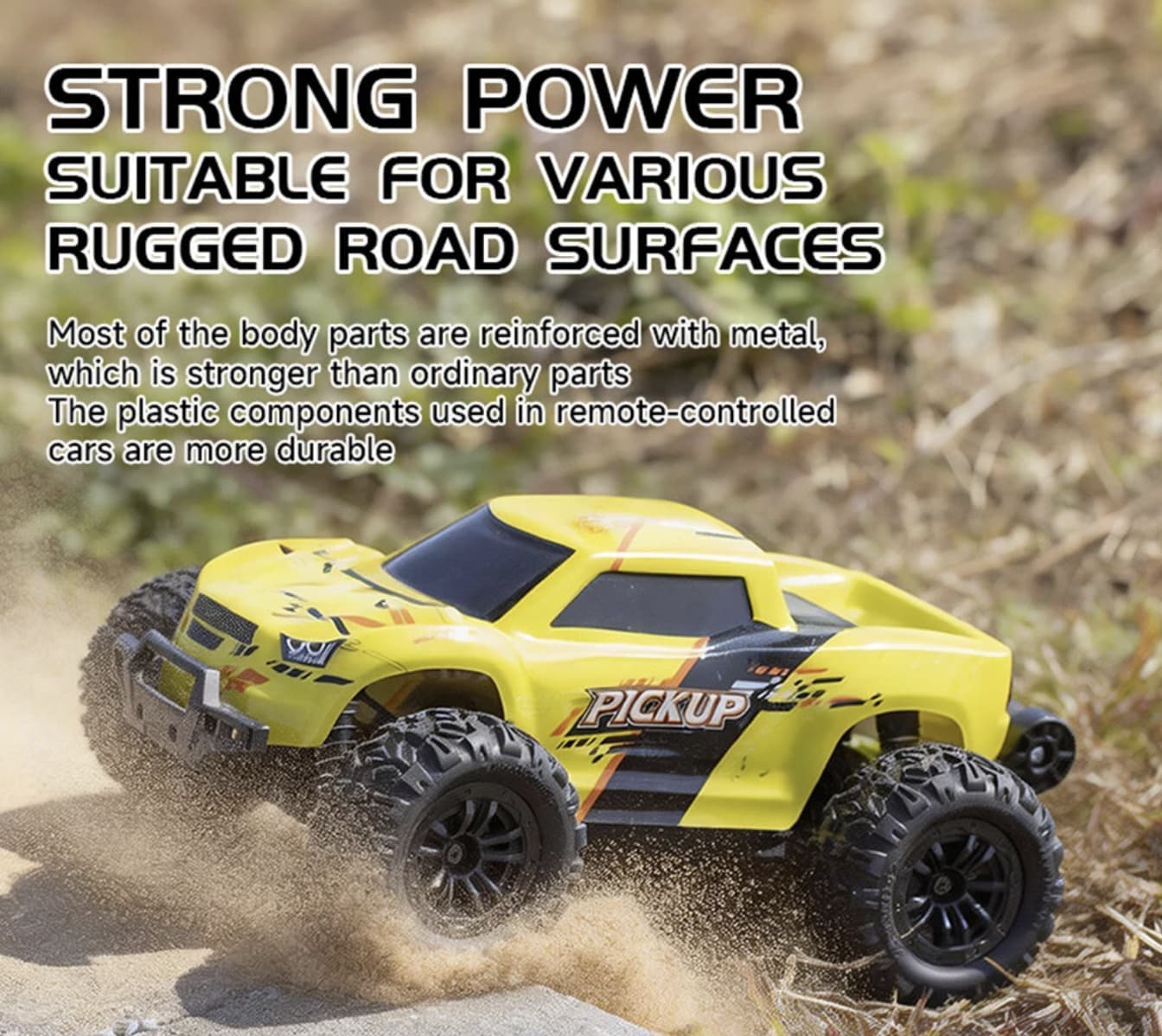
That’s where the metal differential gears make a difference. While many budget RC trucks rely heavily on plastic components, the YH18001 PRO uses metal gears in a part of the drivetrain that takes serious punishment during hard launches, sharp turns, and high-speed runs. It’s not just another item on the spec sheet; it’s a key reason this truck can handle repeated abuse without quickly turning into a pile of broken plastic.
Let me explain why.
The Plastic Diff Problem
If you’ve owned any cheap 1/18 scale RC car, you’ve probably experienced this: you’re ripping across gravel, maybe catch some air, land hard… and suddenly one wheel spins freely while the other does nothing. Or worse, you hear that sickening “click-click-click” of stripped gears.
That’s the plastic differential failing.
Here’s what happens: the differential is the component that lets your left and right wheels spin at different speeds during turns . It’s a critical piece—and in most budget cars, it’s made of cheap plastic. Under the torque of a brushless motor and the weight of a high-speed run, plastic gears do two things:
-
Heat up and soften
-
Skip teeth under load
One experienced RC modder described it perfectly: plastic diffs feel like “using rubber bands to pull heavy objects—the harder you pull, the more they slip” . You’ll feel this as poor cornering stability, unpredictable acceleration, and rear wheels that spin out when you don’t want them to .
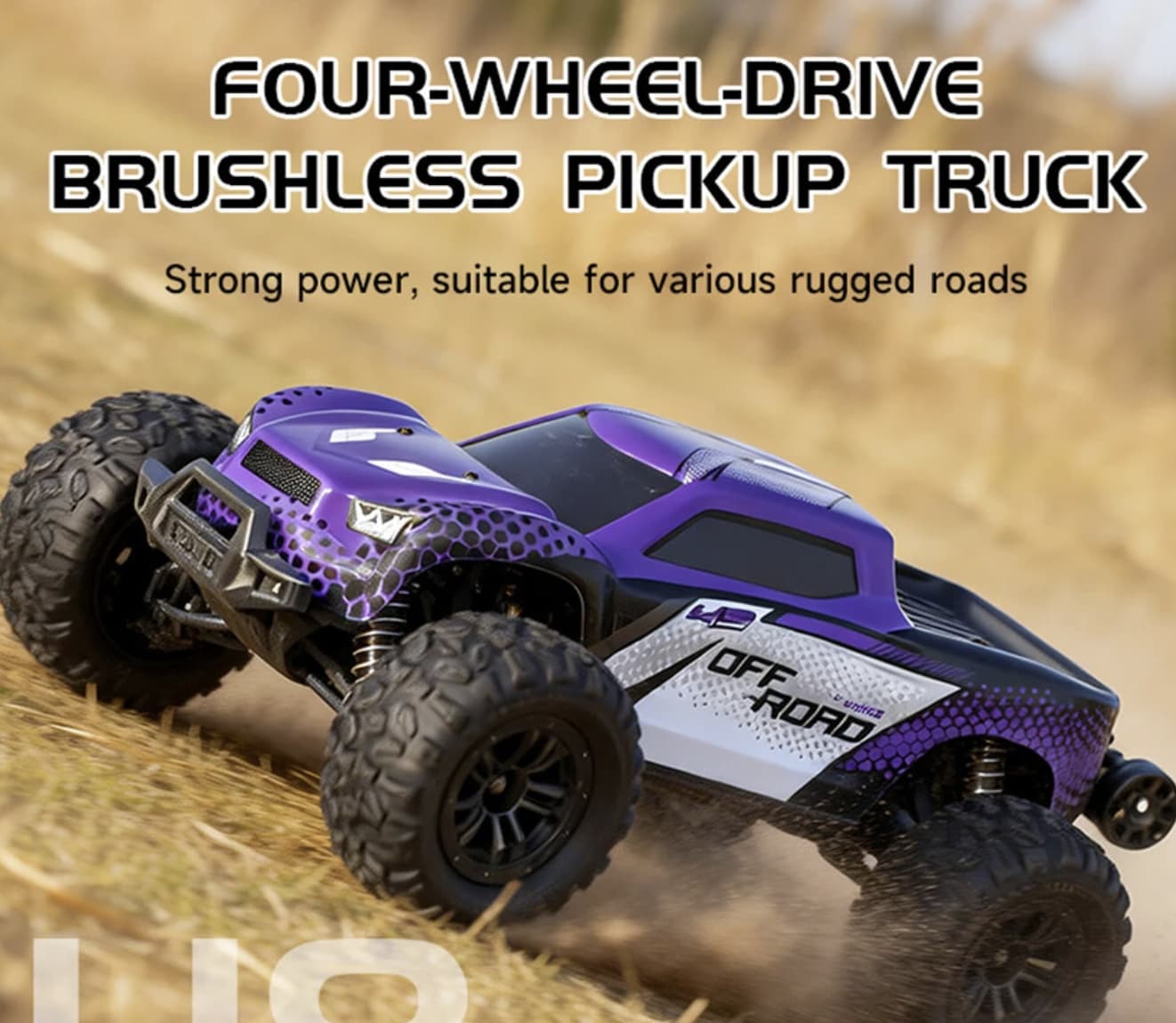
The YH18001 PRO, on paper, solves this with its “Metal Diff Drive Shaft” . But here’s what product listings don’t tell you.
The Quality Control Gamble
Not all metal diffs are created equal. The RC upgrade market is full of “metal” parts that fail just as fast as the plastic ones.
For example, aftermarket metal differentials for the popular Arrma Grom 1/18 series have users reporting “they broke after 30 minutes of driving” and that the quality was “mediocre” . Others find them to be a “perfect fit” that lasts longer than stock . The difference often comes down to metallurgy, machining precision, and proper assembly—things you can’t see in a product photo .
So the real question for any YH18001 PRO buyer isn’t “does it have metal diffs?” It’s “is this a good metal diff, or just a slightly stronger plastic replacement that will still fail?”
Engineering Deep Dive: What Makes a Diff Survive?
Based on what premium upgrade parts (from brands like Hot Racing, GPM, and OZRC) use to actually improve durability, here’s what I’d be looking for in the YH18001 PRO’s drivetrain :
1. Material Quality
High-carbon steel or CNC-machined steel is the gold standard . Cheaper “metal” parts are often pot metal or zinc alloy—brittle and prone to shattering. The product specs mention “metal,” but not what kind. The YH18001 PRO’s metal diff is a genuine upgrade over plastic. If you’re comparing options, check out our guide to the best 1/18 scale RC cars for more choices at this size.
2. Gear Tooth Profile
Helical-cut gears are a huge upgrade over standard bevel gears. They engage more gradually, distribute load across multiple teeth, run quieter, and handle more torque . The YH18001 PRO’s gear type isn’t specified in most listings—and that’s a detail that matters.
3. Precision Fit
An aftermarket metal diff that drops in “like a glove” is dramatically different from one that requires shims and adjustments. Loose tolerances mean slop in the drivetrain, which quickly destroys even good metal gears .
The Real-World Test: What I Did
Here’s how you can tell if the YH18001 PRO’s drivetrain is genuinely robust:
-
The “Open It Up” Inspection: Pop the diff housing open after 5-10 runs. Look for metal shavings in the grease. Those mean wear is happening—fast. Also check if the gears show uneven wear or have developed play (rocking back and forth) in their seating .
-
The Torque Stress Test: Run the truck on high-grip surfaces like asphalt. That’s where the drivetrain takes the most abuse. A good diff handles it; a bad one will start clicking or lose drive to one wheel within minutes.
-
The “Did It Come Greased?” Test: Many budget trucks come with insufficient grease in the diff housing . This is a preventable failure. When you inspect, re-grease with a gear-compatible lubricant. For a complete walkthrough, follow our brushless RC car maintenance guide to keep your drivetrain running smoothly.
Bottom Line: What the Metal Diff Actually Tells You
The YH18001 PRO’s metal diff is a promise. It says: “We designed this truck for brushless power.”
Whether it keeps that promise depends entirely on the quality of the metal, the machining, and the assembly. The presence of a metal differential in a budget 1/18 car is a positive signal—it’s what distinguishes this from WLtoys A949-style metal upgrade components available separately . The YH18001 PRO claims to ship with one standard.
But for serious buyers, the next step is verification: is this a real drivetrain upgrade, or just a tougher-looking part that introduces new failure points?
A durable metal differential is about more than simply using metal gears. In the RC upgrade market, long-term reliability depends on a combination of quality materials, proper lubrication, and precise assembly. If the YH18001 PRO gets all three right at this price point, its metal differential could be a major advantage. If not, serious drivers may eventually find themselves looking for aftermarket replacements.
Our honest verdict for IGeekPhone readers: Buy it for the speed, appreciate the metal differential, but don’t skip a quick inspection before putting it through a hard run. Checking the drivetrain and applying fresh grease if necessary can give you a much better idea of what you’re working with. After all, the real story behind a 70km/h RC truck isn’t just how fast it goes—it’s how well the drivetrain handles that speed.